 As usual, The Book Designer provides important information for those of us learning to market our books. Here, Amy Collins, book distributor and marketer, clears up those pesky Amazon rules on book reviews. I haven’t seen this information laid out more clearly than this.
Tag Archives: fiction
Useful Info on Amazon Review Rules
How Can You Tell Legitimate Publishers from the Bad Guys? – by Anne R. Allen…
Via Chris the Story Reading Ape, one of the most comprehensive guides to publishing options I’ve yet seen. I learned a lot. With a new manuscript almost ready to go that won’t fit into a lot of traditional niches, I am hungry for this kind of guidance and thought you might be, too.


New writers have much to be wary of these days. New publishing scams are landing in writers’ inboxes faster than we can send out warnings.
Probably the most dangerous predators for the newbie writer are phony publishers, because they can shatter dreams as well as drain bank accounts.
Continue reading HERE
20 Tips to Proofread Like A Professional
A great list that gives you a process for proofreading—and I can attest that these steps work for me. I especially want to echo Dave’s advice to read in hard copy. Not only will you spot errors you miss on screen (track changes be darned), you will see your work in a different light. Something changes in your head when you hold a sheet of paper and a pen in your hand. I can’t explain this, but I know it’s true for me.
When you’re done with this process, run your manuscript through my “Things You WILL Miss When You Proofread” posts. They’ll help you catch those little things your eyes will still miss but your computer won’t.

 Proofreading. Some writers love it, some writers despise it. But whatever your feelings, proofreading is your final task when preparing to share your words with the world.
Writers often read their words the way they believe they wrote them, not how they actually wrote them. This means spelling mistakes, typos and grammatical errors, such as poor sentence structure, wrong choice of words and punctuation can all go unnoticed by the writer. These factors impact the context and readability of the work.
The good news is that proofreading skills can be learned, developed and improved. Where is the best source for information on learning how to proofread, I hear you ask (at least I hope you are).
Fear not my friends, help is at hand and The Haunted Pen is here to save the day!
The best source for hands-on information is a professional proofreader – someone who has spent years…
View original post 1,522 more words
Story Questions and “Plights”: Which Did You Leave Out?
 In my own writing and in my various writing groups, I’ve often focused on the need for a “story question.” Basically, if you don’t have a story question, you don’t have a story. You may have a diary, or a set of episodes, or a journal, but you don’t have a story.
I discovered, though, that I was conflating “story question” with a related term, “plight.” I’ve twice posted—my own thoughts and those pilfered from other bloggers—about this mystery word, “plight.”
 “Plight” is what Donald Maass calls “the story beneath the surface.” An important difference between the two: You must have a story question to have a story. A plight is that extra something that elevates your story out of the realm of the mundane.
Basics first, then: what is a story question?
The story question is generally the immediate and concrete problem or goal or issue demanding resolution. Will they escape the marauding hordes? Will they escape the flood? Will the detective find the murderer? Will the evil bully get his or her comeuppance?
A story question does not have to be this simple or easily solvable, but it must be there. Will she stay in the unsatisfying job or leave it? Will he reach his goal of becoming a great rap star? This is where the classic “rising action>crisis>climax>denouement” structure comes into play. The plot rises through all the character’s efforts with obstacles at every turn, to finally reach an answer: “yes or no.”

In a multistory serial, like, for example, Lord of the Rings (a great source of examples), each of the books is built around a story question: will the troop survive the obstacles posed by the various segments of their journey? Each book ends with a “yes” (for most), and each of the first two sets up the question to drive the next.
Even the most supposedly literary of novels/stories (I suppose with a few really outlying exceptions, but I can’t name any offhand), poses this type of “will they or won’t they” question. The “what will happen to them next?” is the page-turning element.
A story can function quite well on this simple principle. If readers are interested enough in the will-they-or-won’t-they, they’ll keep reading. And it doesn’t take a lot of “literary skill,” whatever that is, to build a story like this. All you need is someone about to fall off a cliff or a ravenous lion leaping out of the brush. 
Of course, even with a strong story question, pace and the empathy of characters can affect whether readers keep reading; for my part, I’ve now abandoned two John Grisham novels and won’t try a third because they were sooooo darn slow and didn’t offer me particularly interesting or engaging characters to fill in the slow spots. But most of us have favorite stories based simply on a “what will happen next?” or “what is the answer to the puzzle?” question. (See. e.g., Agatha Christie’s enduring popularity.)
So what is this other thing, “plight”?

Plight comes into play when the entire “what-will-happen” plot asks a second-level question. In my view, such plots almost always ask of the character(s), “Who am I?” Or more precisely, what kind of person do I want to be? What kind of person can I become—or fail to become?
My ideal novel has both these elements: a “will-they-overcome-the obstacles?” story question, and a plight question: “If they do (or don’t), so what?” A story that engages on both levels uses the plot question, the simpler one, to confront the main character with the larger one. Here you are in this demanding concrete situation. How you respond will tell you (and us) something about who you are.
Let’s look again at Lord of the Rings, in which the story question repeatedly puts the characters in a position where they must answer a larger question: whether or not they can resist the temptations offered by the various detours they can choose—detours involving character and heart. For Frodo in particular, the story events ask, “Are you Gollum? Will you give in like Gollum did?” This is the characters’ plight, their struggles to see where they stand in relation to these larger questions of identity and choice, which loom over the whole trilogy and bind it together. It’s not just a story of kids in the woods who have to escape the latest tiger. It’s about a tiger who asks, “Are you ready to show me who you are?”
 I’d argue that most stories, maybe especially those written for younger audiences, work to create such a story-behind-the-story: the
response to the tiger defines character and teaches how to confront fear. That all sounds so simple and self-evident, but of course it can be monstrously hard to achieve.
But I’ve begun to think more and more in terms of these issues when thinking about future books. As a pantser (really don’t like that word, but it does capture the mindset), I often find that the plight takes shape slowly. I’m thinking about a new book in which thinking through the plight before beginning to write seems to be helping. As I work out the immediate problem my developing character must solve, I also find myself thinking, “Okay, he solves that problem, but so what? How will his success change him? What does it matter to his confrontations with the world he has to negotiate every day?”
An important difference between story question and plight is that plight questions can remain open-ended whereas story questions cannot. People can reach turning points in their understanding of who they are, but still have more work to do. Not all tests are as definitive as Frodo’s. Not everybody just retires to a nice hobbit life.

But that’s one thing that makes a character memorable: the sense that they have a life after the book, they’re part of an unfinished journey where we might meet them again—maybe, in fact, not in a book.
So my do-as-I-say-and-I-hope-as-I-do rule: Look first to see if you have a story question that plots the sequence of events in the rising-action-crisis-denouement structure. If not, no story. But then step back and ask, “Once that question is answered, so what?”
That’s where you might discover the element that makes all the difference, your character(s)’s plight.

Do you have favorite books in which the “yes/no” story question asks characters to confront a larger plight?
BELIEVE! Do Not Pay Someone to Publish Your Book! ALLI Agrees.

Dreams of publication? Yes!
Here’s support from ALLI, the Alliance of Independent Authors, for my claim that you SHOULD NEVER PAY SOMEONE TO PUBLISH YOUR BOOK. Yes, there are some reputable book packagers out there who will charge you for various services, but the chances that you will make back what they charge you are slim. YOU CAN DO THIS YOURSELF. This ALLI article explains why it is so easy to fall for vanity scams. Here’s an important quote:
Many vanity presses will try to persuade authors that they are incapable of producing a professional book without an expensive full-service publishing package. This is particularly effective on authors who may not be comfortable with new technology; the idea of handing off the details of publishing to someone who will take care of it for you is alluring.
Do not be fooled. You can start your book off with a very modest investment if you apply very basic skills to get it formatted and posted. Spend your money on a cover and an ISBN, not on thousands of dollars for “publication” you’ll never get back.
Maybe you’ll notice that I’m very passionate about this. I just hate scams.
Can Social Media Ban Your Content? Apparently, Yes.

Caution: Content Police!
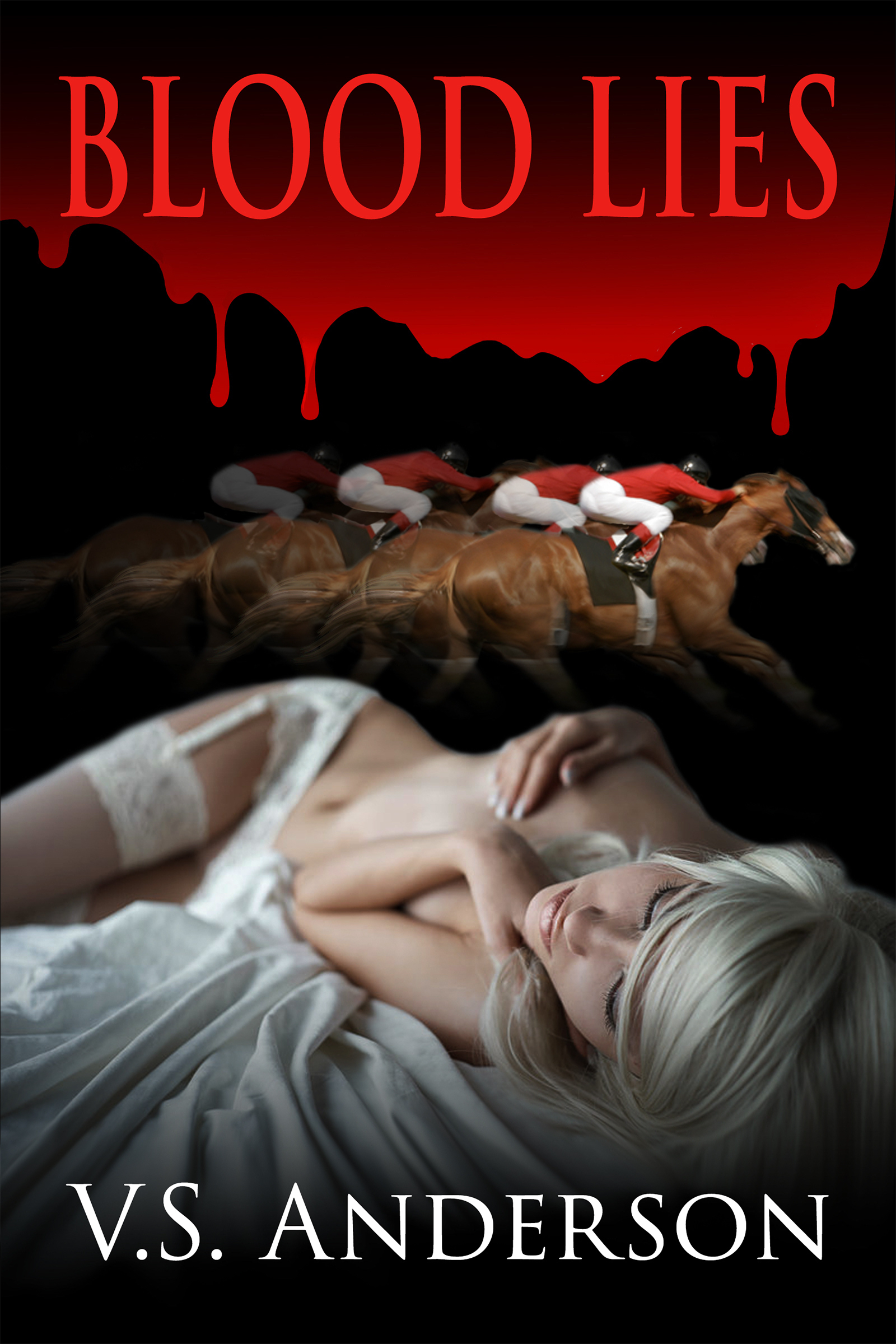
Here are some thoughts from the ever-informative Derek Haines at Just Publishing Advice covering an issue many of us may not have considered seriously: the possibility that social media might refuse to feature our advertising or even allow us to post our content because it violates their “Terms and Conditions.” While I haven’t worried about this very much so far, I do know that my book Blood Lies wouldn’t be accepted for an Amazon ad with the current cover.
What about you? Do you always read the Terms and Conditions? Have you experienced any resistance from social media or other advertising sites when posting information about your books?
SHARE YOUR EXPERIENCES!
Dialogue tags and how to use them in fiction writing – by Louise Harnby…
Here’s an excellent discussion, via Chris the Story Reading Ape, of one of the simplest and most useful tools in a writer’s kit: using and abusing “said” and other dialogue tags. I also note that “said” can control rhythm, acting as a strong beat at the end of a scene sequence or before a break. Try it!
Dialogue tags – or speech tags – are what writers use to indicate which character is speaking.
Their function is, for the most part, mechanical.
This article is about how to use them effectively.
Continue reading HERE
Earn a Salary by Writing Novels? Not So Fast.
 Victoria Strauss of Writer Beware assesses a start-up, “De Montfort Literature,” that promises to hire writers for $24,000 a year plus royalties just to write novels. Strauss and John Doppler from the Alliance of Independent Authors find that there’s a lot less to DML than meets the eye. If you’ve encountered this kind of proposition and it intrigues you, READ THIS CAREFULLY.
For my own part, I take exception to De Montfort’s claim in an interview with The Guardian that in contrast to his arrangement, “self-publishing is costly and time-consuming.” Not so. Anybody with the time and self-discipline to write a novel will find plenty of excellent how-tos that make it possible to publish online in a matter of an hour or so. My book, You CAN Format Your Print-on-Demand Book! is just one of many that make publishing your own paperback the work of just a few days.
Authors have never had so many options and so much freedom. Don’t sell yourself short!
Now That CreateSpace is Being Absorbed: Try Ingram, Too.

Publishing journeys into the unknown?
Now that you’re looking at new options in light of Amazon’s demolition of CreateSpace in favor of KDP Print, here’s help adding Ingram to your mix of choices, from Melinda Clayton at Indies Unlimited. In my how-to book, You CAN Format Your Print-on-Demand Book!, I explain why you SHOULD publish at Ingram as well as at Amazon and show you how to format using InDesign, which Ingram supports. Be sure not to opt for the free ISBN at Amazon. Buy one from Bowker.com that you can take with you anywhere!
THE THINGS YOU MISS WHEN YOU PROOFREAD, PART 3: Creative Finds and Fixes
Part 3: Proofreading Slips You Can Find and Fix with Creative Tricks
Fact: You will miss things when you proofread your manuscript. Your eyes see what they expect to see.
Fact: A little creative use of Find/Replace, in Word or your preferred program, can find these hard-to-spot slips for you—and fix them with a keystroke.
I’ve split this post into three subposts, so you can use what you need when and if you need it:
- Part 1: The Secrets of Find/Replace
- Part 2: Easy fixes you can do in minutes
- Part 3: Fixes that take a little more effort but are still faster than reading the whole darn book for the 1000th time. (You are here.)
These posts are based on Word, but most of the notations are universal. You should be able to apply them in any program you use.
These hard-to-see slips take a little more creativity to find and address than those in Part 2, but most of these searches will return “Not Found,” so you just move on to the next.
In each case below, I will
- List the problem,
- Show you what to type in the Find bar in the Find dialogue box
- Show you when to eyeball if context is important
- Show you what to type in the Replace bar
- Tell you when to click “Replace all” or when to click Replace
In some cases below, I tell you that you can click “Replace all” after eyeballing to check that you’re finding the right combination. However, I generally eyeball each instance (there won’t be that many) and click “Replace.”
Do NOT type “+” in the Find or Replace bars unless you are actually searching for the “plus” sign. I am using it below to indicate “then type.” There should be no spaces between symbols in the bars unless you are specifically searching for a space.
For example, the first direction below would look like ^p’ in your Find bar.
Problem: Single quote marks
These are almost invisible! Apply several formulas to find them, since they can occur in different situations.
Formula 1: Single quotes at the beginning of a paragraph of dialogue
- Find: ^p and a single quote mark (‘). (The ^ lives above the numeral 6.)
- Eyeball one or two to make sure you’re finding the right combination.
- Replace: ^p + a double quote mark (“). (This will look like ^p”)
- Click: Replace all
Formula 2: Single quotes at the beginning of a line of dialogue that’s not at the beginning of a paragraph
- Find: one space (tap space bar) + a single quote mark (‘). (When you tap the space bar, you won’t see anything in the Find bar, but the cursor will move.)
- Eyeball to check that you have not found dialogue within dialogue, which takes a single quote mark.
- Replace: space + double quote (“)
- Click: Replace.
Formula 3: Single quote marks at the end of line of dialogue within a longer paragraph
- Find: a single quote mark (‘), then space (tap the space key).
- Eyeball to check that you have not found dialogue within dialogue, which takes a single quote mark.
- Replace: double quote marks (“), then space
- Click: Replace.
Formula 4: Single quotes at the end of a line of dialogue that ends the paragraph.
- Find: a single quote + ^p. (You might also run a check with single quote, then space, then ^p , since you may have typed a space after the quote mark.)
- Eyeball to check.
- Replace: double quote + ^p
- Click: Replace all.
Problem: An extra space before or after a quote mark.
These can cause your smart quote marks to “turn around,” since Word decides which direction they should face depending on whether they come before or after a line of type.
- Find: space + quote marks + space. (Finds extra spaces at both the beginning or end of a line of dialogue).
- Eyeball each instance.
- Replace: Same as above with incorrect space eliminated.
- Click: Replace.
OR
- Find: ^p + quote marks + space bar.(Finds this problem at the beginning of a paragraph).
- Eyeball each instance.
- Replace: ^p + quote marks
- Click: Replace.
Problem: An extra space at the beginning of a paragraph.
These create a ragged indent line that you may not spot by eyeballing.
- Find: ^p + space
- Replace: ^p
- Click: Replace all
*******
Completely missing quotes like those illustrated in the next section are the most challenging to find. This section suggests a couple of Find tricks you can try—and maybe you can invent your own.
Problem: Missing quotes at the end of a line of dialogue. Example: “It’s cold in here, said Tom.
- Find: comma + space + s. (Make sure you’ve already eliminated double spaces!)
- Eyeball each instance.
- Replace: comma + quote marks + space + s
- Click: Replace.
Repeat with question marks as well as exclamation marks if you use them.
Repeat with the first letter of characters’ names, so you will also catch “It’s cold in here, Tom said.
Repeat with “asked,” “replied,” “demanded,” or whatever dialogue tags you often use.
Problem: Missing quotes at the beginning of a line of dialogue
I haven’t devised a foolproof way of finding these. Here’s one trick that will find some. Examples: X said, It’s warm in here.” OR “Boy,” X said, it’s warm in here.”
- Find: said + comma+ space + ^$ (for “any letter”) (Check “More,” then “Special” to make sure this is the correct notation for “any letter” in your version of Word.)
- Replace: said + comma+ space + quote marks + ^$
- Click: Replace
- Repeat with other dialogue tags you commonly use.
If you can think of a way to find missing quote marks at the beginning of a paragraph or before and after random narrative/actions rather than dialogue tags, please share!
Problem: Capitalized dialogue tags
These errors result when you have Autocorrect turned on, using its default settings. It may be set to capitalize letters after periods, question marks, and exclamation points. Example: “Is it warm in here to you?” Asked Tom.
- Find: relevant punctuation mark + quote marks + A (or S for “said” or R for “replied” or whatever), and then check “Match case.”
- Replace: relevant punctuation mark + quote marks + a (or s for “said” or r for “replied” or whatever)
- Click: Replace
(You can prevent this by adjusting your settings in Autocorrect.)



 Just Can't Help Writing