Tag Archives: Self-publishing

Amazon Categories and Rankings? This Helps!

Learning to market my books: deer in headlights!

Here’s what I sometimes feel like as a marketer: Deer in the headlights!

Well, I bought the book. I’ll report back on how much it helped me in my goal to begin taking marketing seriously. In the meantime, this article on how Amazon rankings and keywords differ in helping me sell my books provided some really useful distinctions.Can you add to this advice?

2 Comments

Filed under business of writing, ebooks publishing and selling, indie publishing, Marketing books, Money issues for writers, Print on Demand for fiction writers, Publishing, Self-publishing, Tech tips for writers, Writing, writing novels

Horse nut/Professor/Writer

My bio on Chuck Suddeth’s site! He’s posting info on sponsors and judges for the Green River Writers 2016 contest, now open. Check out the guidelines! And thanks, Chuck, for sharing!

ctsuddeth's avatarC. T. Suddeth

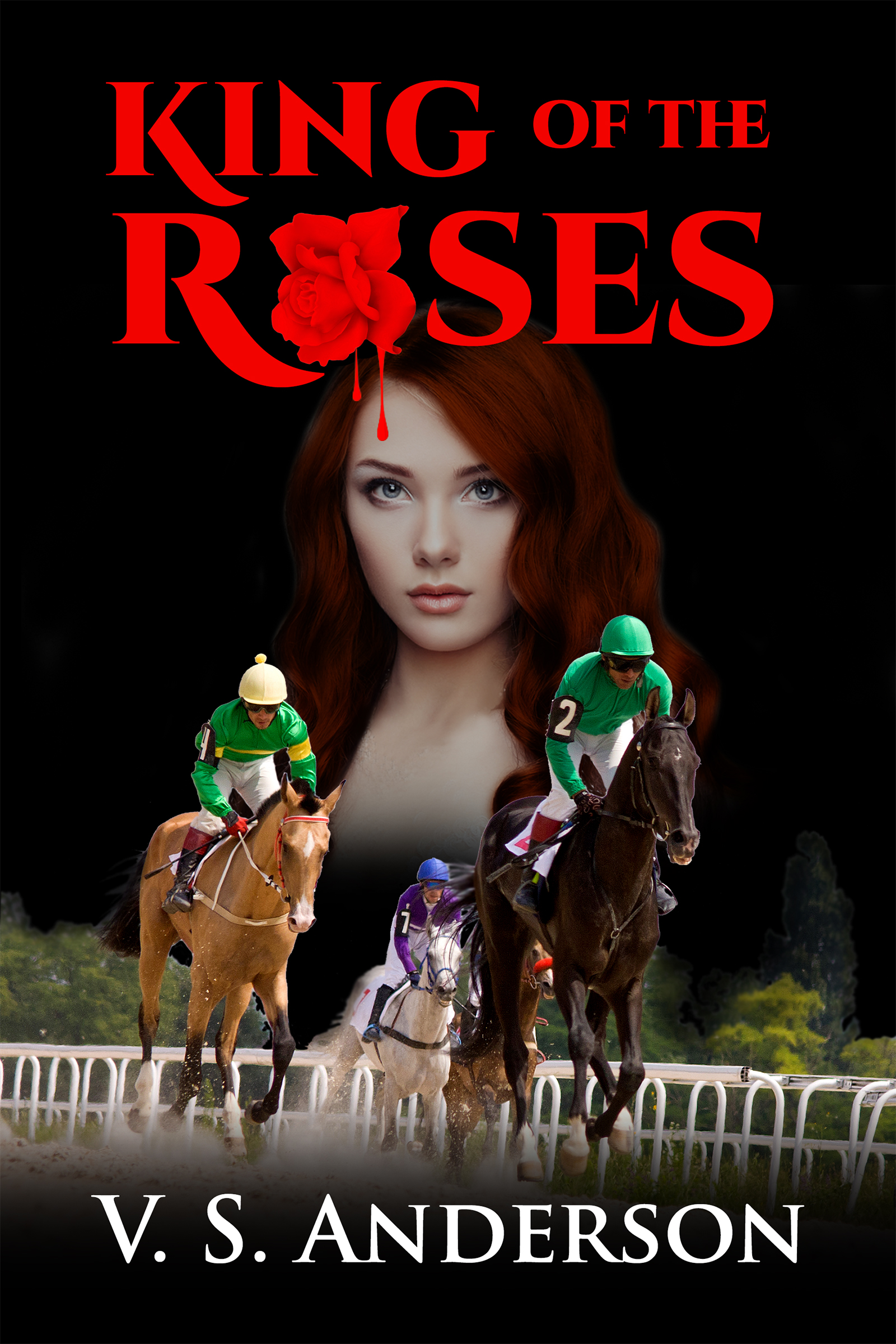
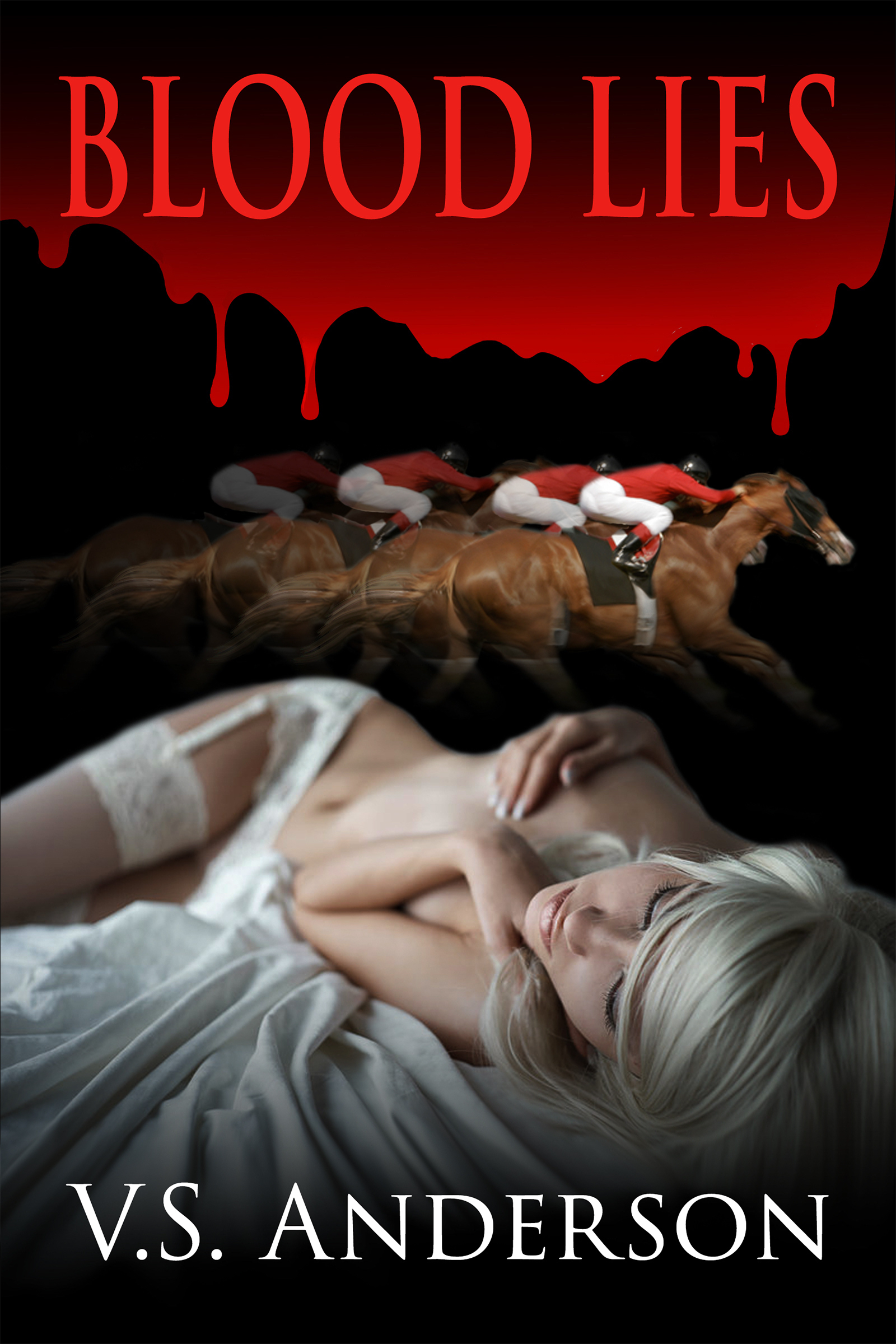
V. S. Anderson always been a horse nut, and as a young person, was a rabid horse-racing fan. So it’s no surprise that her first novels were about horses: the Kentucky Derby and the glamour of a Thoroughbred breeding farm—but with a little mystery and mayhem thrown in! For King of the Roses and Blood Lies, she drew on her years of working in the horse world, teaching riding, showing hunters, moonlighting on the racetrack, and for a while, owning and galloping her own racehorse.

Since then she has used her doctorate in English to teach writing at a regional campus of a Midwestern university—right across the river from Louisville and the Derby, in fact! She lives in New Salisbury, Indiana, where she gardens, watches birds, writes mystery/suspense (three novels in progress!), and rides Paddy, her sweet, sweet horse.

Visit her at

www.virginiasanderson.com

www.justcanthelpwriting.wordpress.com

www.facebook.com/virginiasanderson.writer

www.amazon.com/author/virginiasanderson

or follow her…
View original post 4 more words

Leave a comment

Filed under Blood Lies, ebooks publishing and selling, Green River Writers, indie publishing, King of the Roses, Self-publishing, V. S. Anderson, Writers' groups, Writing, writing contests, writing novels

Grammar Rules: Split Infinitives | Writing Forward

Here’s my take on this article:

I agree with this post: what to do with infinitives is a judgment call. Some observations:
In the 18th century, pundits thought English needed to be more like Latin, a “more mature” language. You can’t split an infinitive in Latin (nor in Romance languages like French or Spanish–such languages have one-word infinitives). But since English needed to emulate Latin, its two-word infinitive needed to be treated like a Latin one-word infinitive. So there. Obviously English is a very different language from Latin–it’s not a Romance language at all, it’s Germanic–so following a rule meant for a Romance language doesn’t make sense.
Second, one reason “to boldly go” sounds so good is that placing “boldly” within the infinitive creates an iambic phrase: ././ Iambic is the “natural” meter for English; it’s Shakespeare’s meter, for example. It just plain has a ring.
So place your adverbs wherever you think they create that ring. (And don’t eschew adverbs universally, either. They have important roles in prose.)

3 Comments

Filed under correct grammar for writers of fiction, Editing your novel, grammar rules for writers, Learning to write, Myths and Truths for writers, self editing for fiction writers, style for writers, Writing, writing novels

Language Warning! But You Better Read Anyway!

alarmed smileyAs usual, Chuck Wendig has his own way of saying things. So put your fingers in your ears so you won’t hear the bad words, and read! 25 Reasons I Stopped Reading Your Book!

I’ve posted my own reasons more than once. Here’s what I wrote on Chuck’s post:

I’ve posted more than once about my own answer to this question. Lack of voice is way up there. Too many characters and scenes feel pasted out of the Universe of Stock that we all have access to. No surprises, not in the characters’ actions, not in the diction, not in the rhythm. All stuff I’ve seen a thousand times (and don’t subject myself to any more).

What I call “illogic” fits several of these points: When something a character does or something that happens serves the prefabricated plot and not the story that wants to emerge from the characters’ interactions. I got into trouble myself once making characters do something they were screaming that they didn’t want to do. Ruined a potentially good novel, and boy, did I pay. Nothing in this post is truer than that the characters write the story. Listen to them.

And gosh, pages of exposition (and no, that’s not “literary fiction”). And too much info, too many characters, on page 1. And books that start with action before I can understand the conflict. And . . . and . . . and . . .

This post could easily be required reading in every “creative writing” class or critique group (though it would require a language warning in most settings, i fear).

Leave a comment

Filed under ebooks publishing and selling, Editing your novel, indie publishing, Learning to write, Plot Development for writers, self editing for fiction writers, Self-publishing, style for writers, What Not To Do in Writing Novels, Writing, writing novels

Closed for business: Two big things that could penalize your Amazon author account (and how to prevent them)

Here’s help negotiating Amazon’s review process! So much mystery!

Troy Lambert's avatar

Make no mistake. If you have heard me speak before almost anywhere or read anything I have to say about writing, I emphasize one thing above all else:

“You can be as artsy as you want to be while you are writing your book, but once it is finished, it is a product. A product you must distribute and market in order for it to sell.”

There’s another part to this reality of writing as a business: the number one distributor of ebooks remains Amazon, and for most authors about 80% of their sales would disappear, should the online giant refuse to sell their work. Discoverability on Amazon is the number one trick authors, publishers, and book marketers are trying to crack. Of course, if it works on Amazon, the same method will likely increase sales on iBooks and Nook as well, provided an author even offers their books for…

View original post 1,331 more words

Leave a comment

Filed under Amazon Kindle Direct Publishing, business of writing, ebooks publishing and selling, indie publishing, Marketing books, Money issues for writers, Print on Demand for fiction writers, Publishing, Reviews, Self-publishing, Writing, writing novels, writing scams

New Writers’ Comprehensive Reality Check!

Whimsical road Depositphotos_17645691_s-2015Joel Friedlander at The Book Designer shares this comprehensive discussion of myths and truths for first-time novelists from Florence Osmund. I would argue that you CAN format your books yourself if they’re not graphically complicated (i.e., just text). Check out my InDesign Beginner’s Cheat Sheet series. But this advice is worth taking to heart!


Leave a comment

Filed under book design for creative writers, business of writing, Editing your novel, indie publishing, Marketing books, Myths and Truths for writers, Publishing, Self-publishing, Writing, writing novels

My First BookBub Rejection

I highly recommend alfageeek’s candid, nuts-and-bolts reports on the marketing process. See, for example, his series on Twitter ads. Now here’s one on Bookbub, which is way out of my league at present. but which might be useful to you.
And may I echo his exhortation: If you’ve read either of my books, PUH-LEEZE post even a few lines of a review.

Joshua Edward Smith's avataralfageeek

EntropyI decided to take a shot at doing a promo with BookBub. Over the past few years, they have become the most effective marketing platform for e-books. Their reputation is that they reject almost all submissions, and they never tell you why they rejected you. But if you manage to get accepted, then you will sell a lot of books. They regularly update a chart that shows exactly how many books people in various categories and price points sell. That’s useful, because if they accept you, the listing is very expensive.

I signed up to their email list to be notified about Erotic Romance novels, since that’s the best category for my novels. (Even though I can’t say that on Amazon.) I was pleased to see that the books being promoted were not out of my league. Of the 24 Erotic Romance books they have listed right now, there…

View original post 810 more words

Leave a comment

Filed under Amazon Kindle Direct Publishing, Amazon pricing policy, business of writing, ebooks publishing and selling, indie publishing, Marketing books, Money issues for writers, Myths and Truths for writers, Reviews, Self-publishing, Writing, writing novels

Barnes & Noble to Start a Print Book Self-Pub Option?

Woman in dress and hat sitting on books and working on laptop

Check out this article from Digital Book World about a new venture at Barnes and Noble to allow self-published writers to offer print versions in B&N venues, hopefully a step that will help keep them afloat. Chime in with your views on whether this new option is worth a look.


9 Comments

Filed under business of writing, ebooks publishing and selling, indie publishing, Marketing books, Print on Demand for fiction writers, Publishing, Self-publishing, Writing, writing novels

Another Good Article on Dialogue

From fellow writer alfageeek, here’s a link to a Scribophile piece on dialogue that provides some excellent elaboration on the piece I reblogged yesterday. Join in the discussion about “actions” as “dialogue tags.”

flipped comma1     !      Comma 1

Leave a comment

Filed under correct grammar for writers of fiction, Editing your novel, grammar rules for writers, indie publishing, Learning to write, punctuation for writers of novels, self editing for fiction writers, Self-publishing, style for writers, Writing, writing novels

Are You Botching Your Dialogue?

This post from Kristen Lamb’s blog gives some good basic guidelines for using and punctuating dialogue. These principles can be surprisingly hard to master, so a good primer is always helpful. The one I see most often is the use of an action as if it were a dialogue tag. To add to Kristen’s list, I’d say, “Watch out for that darn Autocorrect in Word. If you have it turned on and you accidentally type a period instead of a comma after the dialogue, Autocorrect automatically capitalizes the next letter, so you end up with two punctuation gaffes, not one.
Thanks, Kristen!

Author Kristen Lamb's avatarKristen Lamb's Blog

Screen Shot 2016-06-24 at 10.43.36 AM

Today we are going to talk about dialogue. Everyone thinks they are great at it, and many would be wrong. Dialogue really is a lot tricker than it might seem.

Great dialogue is one of the most vital components of fiction. Dialogue is responsible for not only conveying the plot, but it also helps us understand the characters and get to know them, love them, hate them, whatever.

Dialogue is powerful for revealing character. This is as true in life as it is on the page. If people didn’t judge us based on how we speak, then business professionals wouldn’t bother with Toastmasters, speaking coaches or vocabulary builders.

I’d imagine few people who’d hire a brain surgeon who spoke like a rap musician and conversely, it would be tough to enjoy rap music made by an artist who spoke like the curator of an art museum.

Our word choices are…

View original post 1,815 more words

3 Comments

Filed under correct grammar for writers of fiction, ebooks publishing and selling, Editing your novel, grammar rules for writers, indie publishing, Learning to write, Publishing, punctuation for writers of novels, self editing for fiction writers, Self-publishing, style for writers, Writing, writing novels