This article provides excellent, detailed discussion. In critique groups I’ve been enrolled in, some critiquers seem terrified of the progressive tenses, and some believe that using a present-participle phrase as a modifier constitutes “mixing tenses” and therefore incorrect. The article is on point that glomming onto such rigid rules limits writers’ options for rhythm and meaning.
And the discussion here of dangling modifiers should be required reading for all aspiring writers. i see so many of these. Otherwise competent writers seem oblivious to them. The examples here precisely mirror what I see. Here’s my rant on dangling modifiers.
I think writers need to READ, widely, and not just the latest free examples of their favorite genre, to see how good writers make use of many available strategies and apply rules thoughtfully rather than blindly.
If you’ve ever been told to cut “-ing” words, take the time to read this!
Tag Archives: creative writng
Using -ing Words | The Editor’s Blog
How To Set Up An Amazon Giveaway
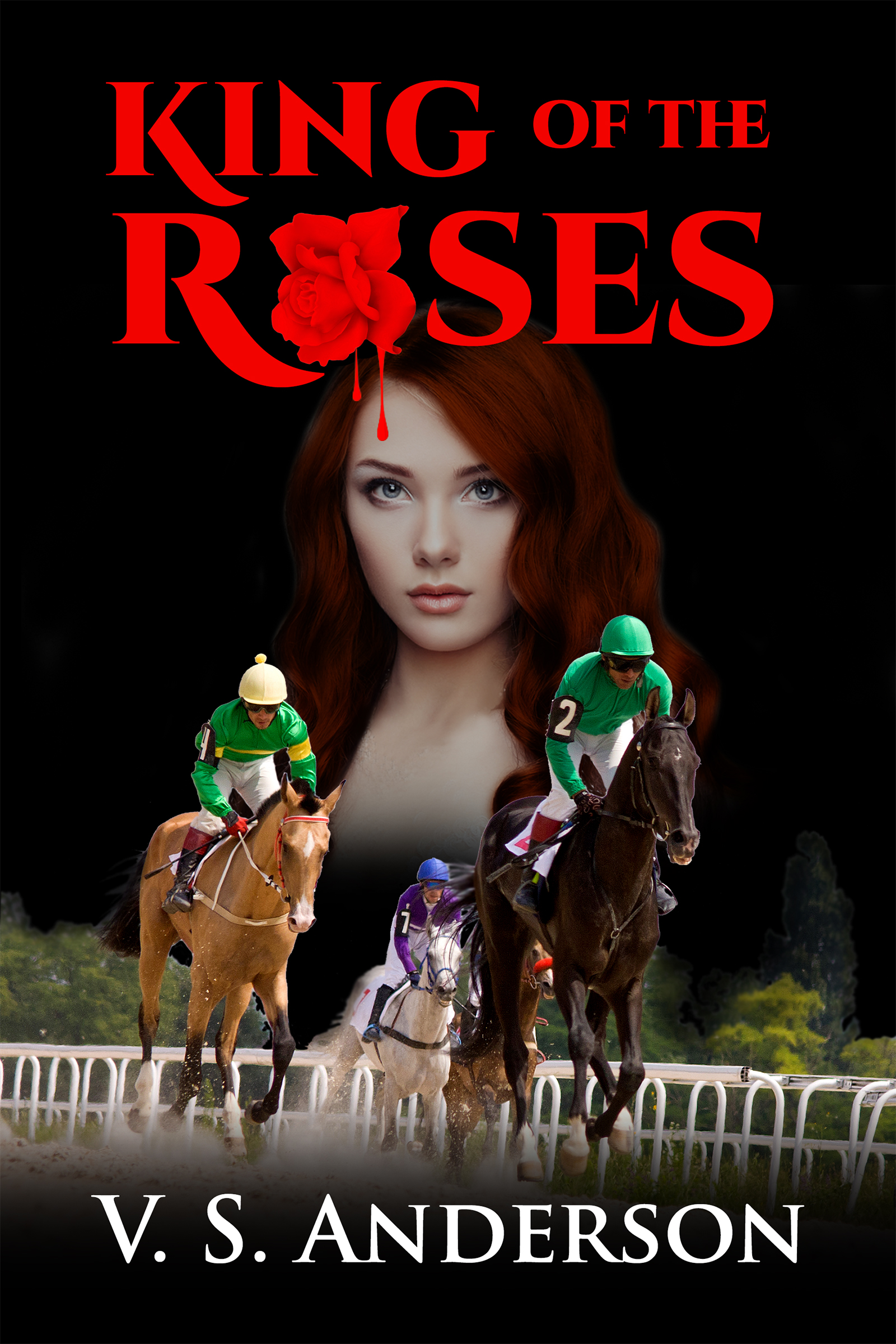
Just what I needed! I was hovering over the Amazon Giveaway screens for King of the Roses and discovered I didn’t know how the odds-setting worked. This post, from February of this year, explains it! This is Nicholas Rossis’s “secondary blog” that shows a reblog button, but you can access the original, with many informative comments, here. Now watch for my Giveaway, coming up next week!

Amazon has recently started offering everyone the opportunity to offer a giveaway. What’s interesting about this is that you can run one for pretty much any item in their inventory – except for ebooks. So, you can run a giveaway for your print edition, but not your Kindle one.
Alternatively, you could go all the way and offer people, say, a Kindle. Or, indeed, an item that is somehow related to your books. For example, if you’ve written a cookbook, you may give away kitchen gadgets or aprons. The key here is to be imaginative and original.
So, how would you go about it? Here’s the complete how-to.
Step 1: Find your book
Right after the reviews, you will see a “Set up an Amazon Giveaway” button. If you can’t find it, press Control-F (for Find) on your browser and enter the word “giveaway”…
View original post 645 more words
Filed under Amazon Kindle Direct Publishing, business of writing, ebooks publishing and selling, Free Books, indie publishing, King of the Roses, Marketing books, Money issues for writers, Print on Demand for fiction writers, Self-publishing, Tech tips for writers, V. S. Anderson, Virginia S. Anderson, Writing, writing contests, writing novels
My Inerview is up at Don Massenzio’s site. Go admire my sweet Paddy!
 Check out my writer’s interview, now available at Don Massenzio’s site! This was a lot of fun to write.
Amazon Categories and Rankings? This Helps!

Here’s what I sometimes feel like as a marketer: Deer in the headlights!
Well, I bought the book. I’ll report back on how much it helped me in my goal to begin taking marketing seriously. In the meantime, this article on how Amazon rankings and keywords differ in helping me sell my books provided some really useful distinctions.Can you add to this advice?
Horse nut/Professor/Writer
My bio on Chuck Suddeth’s site! He’s posting info on sponsors and judges for the Green River Writers 2016 contest, now open. Check out the guidelines! And thanks, Chuck, for sharing!

V. S. Anderson always been a horse nut, and as a young person, was a rabid horse-racing fan. So it’s no surprise that her first novels were about horses: the Kentucky Derby and the glamour of a Thoroughbred breeding farm—but with a little mystery and mayhem thrown in! For King of the Roses and Blood Lies, she drew on her years of working in the horse world, teaching riding, showing hunters, moonlighting on the racetrack, and for a while, owning and galloping her own racehorse.
Since then she has used her doctorate in English to teach writing at a regional campus of a Midwestern university—right across the river from Louisville and the Derby, in fact! She lives in New Salisbury, Indiana, where she gardens, watches birds, writes mystery/suspense (three novels in progress!), and rides Paddy, her sweet, sweet horse.
Visit her at
www.justcanthelpwriting.wordpress.com
www.facebook.com/virginiasanderson.writer
www.amazon.com/author/virginiasanderson
or follow her…
View original post 4 more words
Grammar Rules: Split Infinitives | Writing Forward
Here’s my take on this article:
I agree with this post: what to do with infinitives is a judgment call. Some observations:
In the 18th century, pundits thought English needed to be more like Latin, a “more mature” language. You can’t split an infinitive in Latin (nor in Romance languages like French or Spanish–such languages have one-word infinitives). But since English needed to emulate Latin, its two-word infinitive needed to be treated like a Latin one-word infinitive. So there. Obviously English is a very different language from Latin–it’s not a Romance language at all, it’s Germanic–so following a rule meant for a Romance language doesn’t make sense.
Second, one reason “to boldly go” sounds so good is that placing “boldly” within the infinitive creates an iambic phrase: ././ Iambic is the “natural” meter for English; it’s Shakespeare’s meter, for example. It just plain has a ring.
So place your adverbs wherever you think they create that ring. (And don’t eschew adverbs universally, either. They have important roles in prose.)
Language Warning! But You Better Read Anyway!
 As usual, Chuck Wendig has his own way of saying things. So put your fingers in your ears so you won’t hear the bad words, and read! 25 Reasons I Stopped Reading Your Book!
I’ve posted my own reasons more than once. Here’s what I wrote on Chuck’s post:
I’ve posted more than once about my own answer to this question. Lack of voice is way up there. Too many characters and scenes feel pasted out of the Universe of Stock that we all have access to. No surprises, not in the characters’ actions, not in the diction, not in the rhythm. All stuff I’ve seen a thousand times (and don’t subject myself to any more).
What I call “illogic” fits several of these points: When something a character does or something that happens serves the prefabricated plot and not the story that wants to emerge from the characters’ interactions. I got into trouble myself once making characters do something they were screaming that they didn’t want to do. Ruined a potentially good novel, and boy, did I pay. Nothing in this post is truer than that the characters write the story. Listen to them.
And gosh, pages of exposition (and no, that’s not “literary fiction”). And too much info, too many characters, on page 1. And books that start with action before I can understand the conflict. And . . . and . . . and . . .
This post could easily be required reading in every “creative writing” class or critique group (though it would require a language warning in most settings, i fear).
Closed for business: Two big things that could penalize your Amazon author account (and how to prevent them)
Here’s help negotiating Amazon’s review process! So much mystery!

Make no mistake. If you have heard me speak before almost anywhere or read anything I have to say about writing, I emphasize one thing above all else:
“You can be as artsy as you want to be while you are writing your book, but once it is finished, it is a product. A product you must distribute and market in order for it to sell.”
There’s another part to this reality of writing as a business: the number one distributor of ebooks remains Amazon, and for most authors about 80% of their sales would disappear, should the online giant refuse to sell their work. Discoverability on Amazon is the number one trick authors, publishers, and book marketers are trying to crack. Of course, if it works on Amazon, the same method will likely increase sales on iBooks and Nook as well, provided an author even offers their books for…
View original post 1,331 more words
Fantasy vs. Magical Realism
Here’s a useful article on a meaningful distinction. I’ve started pitching my work in progress, The Drowned Man, as magical realism. It certainly isn’t fantasy. Yet I’m not so sure it meets this definition either. What’s your definition of magical realism? Share your favorite examples!
The Adverb Problem and Why Authors Should Care
Here’s an article about an old controversy: to adverb or not to adverb. My thoughts on this issue:
I agree with one of the comments in the original post that a blanket ban on adverbs is unworkable. In the sentence “After I had breakfast, I went to the store” (okay, it’s not literature), the first dependent clause, “After I had breakfast,” is an adverbial clause. Anything that fleshes out where, when, why, or how may well be adverbial. To ban adverbs completely would be to impoverish a piece of writing beyond recognition. Does “completely” in that sentence add anything? It does add emphasis. Whether it should be cut is a judgment call.
I do agree that it’s better to find the precise verb that does the work rather than to tack an adverb onto a weak verb. Sometimes that can be tricky, though. “He closed the door firmly” conveys an intentionality that ‘He closed the door” does not. “He slammed the door” won’t work. “He jerked the door shut” might work to replace “firmly.” It can take a long time for the word that works best to float up (and “best” is an adverb in that sentence). Finding the word that Mark Twain compared to lightning rather than the lightning bug should always be the goal, IMHO.
What’s your take on adverbs—the “ly” kind and its sometimes (adverb) invisible brethren?


 Just Can't Help Writing