 Lucky enough to attract interest from an agent? Victoria Strauss, on her blog Writer Beware, keeps an eye on our business for us. Check out this short, important read on how NOT to set up your relationship with that friendly agent!
Category Archives: Publishing
Important Advice on Agent Contracts from Victoria Strauss
Small Publishers – A Checklist #wwwblogs #amwriting
What would you add to this thoughtful post from Alison Williams Writing? Have your experiences with small publishers been good or bad? Are indie writers better off self-publishing? What do you think?
Filed under business of writing, ebooks publishing and selling, Editing your novel, indie publishing, looking for literary editors and publishers, Marketing books, Money issues for writers, Myths and Truths for writers, Publishing, publishing contracts, Self-publishing, small presses, Working with literary editors, Writing, writing novels, writing scams
Amazon’s “Gray” Book Market Explained

Is Amazon’s third-party-seller system robbing authors?
Today’s New York Times reports on the change in Amazon’s book-selling practices that allows third-party sellers to sell as “new” books they’ve acquired from remainder stocks or book reviewers as well as other sources. Authors won’t receive royalties on these sales, just as they would not from sales in used-book stores.
I’m posting this because I saw this issue flair up only briefly in a couple of the blogs I follow, and I thought it might be of interest to more writers.
The comments (at this writing there weren’t very many) challenge some of the assumptions and premises in the article. A recurring theme seemed to be that the publishing industry could do a better job of rewarding authors out front so that they were paid for their work regardless. Another is that as publishers buy into the print-on-demand trend, this form of supposed piracy will diminish.
There’s no discussion in the article of indie publishing. The focus is on hard-cover “new” books that would ordinarily provide royalties to the writers.
What about it? Is this a non-issue for you? Is it an issue only for writers aspiring to be traditionally published? I found myself wanting to comment that this article and Amazon’s policy is an argument for becoming one’s own publisher, in wh
ich case no book leaves “the store” unless the author has been paid for it. What do you think?
Need Your Own ISBN? It’s Easy.
Of course, the first question is, do you need your own ISBN?
The long and short of it is—YES, YOU DO.
Here’s a site that provides a quick and dirty explanation of why indie authors should own their own ISBNs instead of letting Amazon or Book Baby or any of the other packagers give you one for “free.” As the site will make clear, there are hidden costs to this perk.
So if you’re convinced, as I was, how do you get an ISBN?
It’s really not hard at all.
In the United States, ISBNs are sold through a company called Bowker. At http://www.bowker.com, you’ll find a link for “Authors.” On this page, you’ll be invited to click on various links promising help with your project, but for now, you’re interested in the link called “ISBN United States.”‘

Next, you’ll click on a link to “Get Started: Order ISBN.”
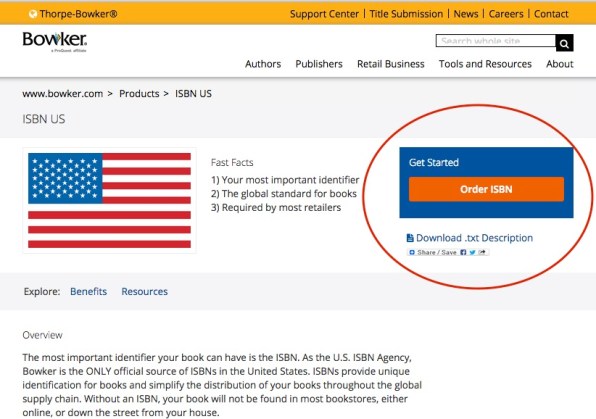
On the next page, you’ll be able to scout the various plans and set up your “MyIdentifiers” account.

At present, Bowker sells a single ISBN for $125, ten for $295 (they were on sale for $250 the day I wrote this), or 100 for $595. What should you do?
This is another personal choice. Experts online vary in their recommendations, but all seem to agree that most authors will need more than one ISBN. For example, if you buy just one at $125, use it for your ebook in the Kindle Store, then choose to create a POD edition needing its own ISBN, you’ve already spent $250—because each edition of your book requires its own ISBN. Most indie authors publish more than one book. Many publish more than ten books! How many books you expect to write will probably dictate the choice you make.
Note that the page offering you the ISBN options also offers you a chance to purchase a bar code. This code will eventually go on the cover of your POD book, providing the ISBN and the price you set for your book.
You can delay the bar-code purchase until you are actually ready to produce your cover. When you buy your ISBN(s) and create your Bowker MyIdentifiers account, you will find a link allowing you to purchase the appropriate bar code for that ISBN.

When you buy a bar code, your MyIdentifiers screen at Bowker will allow you to set the price that will appear on the bar code.
I chose to set this price to zero. Why? Because if you later want to change the price for any reason, you must produce a new cover with a new bar code. Uploading this new cover will cost you $25.
However, if your bar code reads “zero,” you can price the book any way you want, and other sellers can attach their bar codes over yours or charge whatever they want.
You will still set a retail price at Ingram for individual purchasers. Bookstores who might order your books to sell on their shelves get their discounts based on this price. At Ingram, you can edit both the price and discount over time if you like.
Bowker seems set up to accommodate even the most uneducated users. Like all technology, it requires you to follow a set of steps, but in the long run, negotiating these steps will give you the control you want over your work!
Lies told by Small Presses
Some good warnings to take to heart!
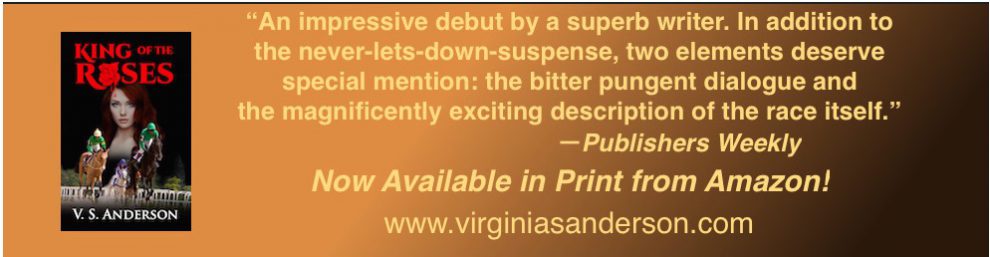
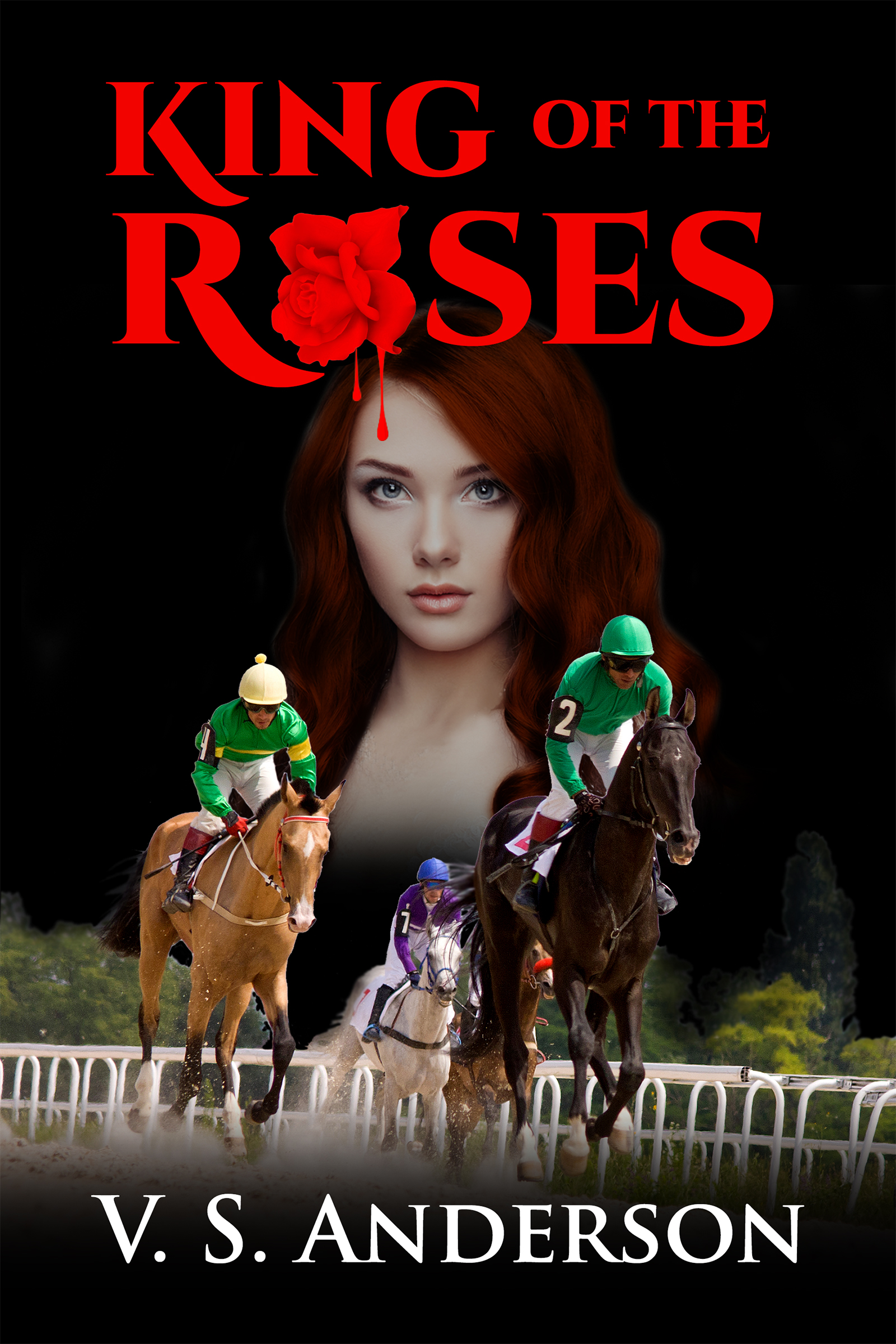
I have a couple of things to add. Unless the market has changed drastically, having a good agent and getting an advance is unlikely to guarantee your book visibility or even entry into mainstream bookstores. I was paid $5000 by St. Martin’s in 1983; even though King of the Roses got superb reviews (check them out in the Amazon preview), the book never made it into any of the many stores, local or national, that existed at the time (before Amazon). I was told St. Martin’s would have had to commit to a massive advertising budget before any of the stores would find spine-out space for my book, let alone any kind of display or prominent position. (This despite the fact that my mother wrote many angry letters to bookstores demanding that they put my book on a stand in the doorway!) St. Martin’s did minimal advertising, but did make sure reviewers got copies and paid attention to them, which is a big deal, and something that will be hard for us to do for ourselves.
It’s my understanding (possibly erroneous?) that publishers’ budgets are even tighter today than they were in 1983. So true traditional publishing by one of the major houses doesn’t mean authors don’t still have work to do to get their books out there. But articles like this help us avoid pitfalls that will make our efforts go for naught!

Like many of my posts, this stems from something I saw in an online writer’s group. Essentially, someone who has been traditionally published from a small press was putting down people who self-publish. Personally, I have my own problems with self-publishing that I discuss in my “Why I’ll Never Self-Publish” post, but that is besides the point. At this point, I’d like to formally begin my rant against small presses.
In my opinion, traditional publishing is best done through an agent and then with a professionally recognized publisher. Small presses, unless they are recongized by writing organizations like Codex or SFWA, often give little more than what someone can do through self-publishing but will suck away 40-60% of the author’s share of royalties and then use self-publishing tools (like Createspace) to produce the book. Small Presses get away with this by telling authors lies in order to get them to sign…
View original post 1,144 more words
8 Tips For Formatting Your Book
These tips from Don Massenzio may help you make formatting decisions. I particularly like the idea of using 1.5 line spacing instead of single spacing in print books. Maybe I’ll try that next time!
Check out my Beginner’s Cheat Sheet for formatting your hard copy book in InDesign!


This blog post is designed to help fellow independently published authors improve the quality of their work, but most of the tips here apply to the formatting of any book. I’m speaking of the formatting of books for the consumption of readers, not formatting your manuscript to send off to an agent or publisher. There are a whole other set of rules for that exercise.
I’ve put together a list of ten tips that you should consider when putting your book together. They are not in order of priority, but together, they can make your book stand out from the millions of others available through your favorite sales channel.
1. Put Some Thought Into Your Cover
I have to admit, this was something I didn’t waste a lot of time on when I published my first book, Frankly Speaking. I just went ahead and used the Kindle cover creator and cranked…
View original post 1,641 more words
February 20, 2017 · 4:43 pm
A Fun Post on Rejection (No Kidding)
 Here’s another good one from over at Writer Unboxed: Louie Cronin, Cronin the Barbarian of Car Talk fame, explains why she became an expert in rejecting submissions—and what her experience means for writers. If you are a Car Talk fan, you’ll get an extra kick out of this! Have you ever thought of rejection this way?
6 Basic Tech Skills for Writers
 Here’s a post about some of those mysterious tech skills that can confound non-tekkie verbal people like us writers. Check it out—whether you need to communicate with editors or with beta readers or if you just want to format your own book for Amazon or Smashwords. I can attest that you DO need Styles, and I’ve found GIMP, a free program recommended by this post, to work wonderfully as a graphics editor. You’ll need this information to format your hard-copy editions as well. Let me know what you think!
Stop Paying People to Read your Book
This is an older post from alfageeek, but like all his posts, it’s full of hands-on, practical advice that actually soothes some of my guilt over my abysmal marketing efforts. While you’re checking out his site, also check out his latest report on his experience with Bookbub ads.

In marketing to consumers, there is a well-established “buying cycle.” There are a lot of different variations on this but they generally go:
- Awareness (finding out your product exists)
- Research (figuring out whether they want it)
- Purchase (woo hoo!)
- Repurchase (they liked it and want another)
I mention this because the business of marketing a book is really no different from the business of marketing anything else to consumers. What I find interesting is that the people marketing books these days are mostly authors, and judging from their behavior, I think many of them are really confused about that whole cycle. So I’m writing this post to help explain it to them, with they hope that they stop throwing their money away solving problems they do not have.
Let’s skip awareness for a second, and dispense with the rest of the cycle.
If you write a great book and get a…
View original post 1,712 more words
A Book Production Checklist for Indie Authors
A comprehensive list for producing your own book for ingram, CreateSpace, KDP, and others! Lots of links and resources. Thanks, Chris!

An extract by Carla King, on BookWorks Site:

Are you ready to upload your book for sale to the online retailers?
Got all your front and back matter, images, fonts, and ISBNs?
Use this checklist to make sure you’ve done everything you can to create a quality book that competes with books produced in the traditional publishing houses.
But first, here’s a quick overview of the entire book production process.
It begins with an unedited manuscript and ends with a check of the final proof before distribution.



 Just Can't Help Writing