Category Archives: Money issues for writers

Tips and experiences for writers about getting paid

Ethics & the Literary Agent: What Rights Do Authors Have?

A must-read! Chris the Story Reading Ape posts guest interviews with agents that shed strong light on what an agent’s life is like and how authors can be better partners.

Chris The Story Reading Ape's avatarChris The Story Reading Ape's Blog

by Sangeeta Mehta  on Jane Friedman Site:

Today’s guest post is a literary agent Q&A by Sangeeta Mehta, a former acquiring editor of children’s books at Little, Brown and Simon & Schuster, who runs her own editorial services company.


By definition, literary agents are writers’ representatives. They work for writers, negotiating offers from publishers until their client deems them acceptable. But in today’s complex agent-author relationship, many writers feel that they aren’t in the position to negotiate with their agent, partly because they don’t understand the publishing landscape as well as their agent does, but also because they are wary of coming across as difficult or demanding.

Although it’s becoming more common for writers to change agents several times during the course of their careers, most would prefer to stay with one agent. But are writers really in the position to speak up if they feel that an agent isn’t honoring their obligations…

View original post 33 more words

Leave a comment

Filed under business of writing, Finding literary agents for writers, Interviews, Money issues for writers, Myths and Truths for writers, Publishing, Writing, writing novels

Important Advice on Agent Contracts from Victoria Strauss

Beware of literary agents who deal in "handshakes'Lucky enough to attract interest from an agent? Victoria Strauss, on her blog Writer Beware, keeps an eye on our business for us. Check out this short, important read on how NOT to set up your relationship with that friendly agent!

Leave a comment

Filed under business of writing, Finding literary agents for writers, Money issues for writers, Publishing, Writing, writing novels, writing scams

Small Publishers – A Checklist #wwwblogs #amwriting

What would you add to this thoughtful post from Alison Williams Writing? Have your experiences with small publishers been good or bad? Are indie writers better off self-publishing? What do you think?

alisonewilliams's avatarAlison Williams Writing

checklist

I recently wrote a bit of a rant about the quality control of some small presses whose books I had read. You can read it here.

If you are thinking of signing with a small publisher, then do bear a few things in mind.

  • Do your homework – start off by Googling the publisher. You might find threads on writing sites that go into a great deal of detail about your chosen publisher. Read them – they can be incredibly enlightening.
  • Ask questions – if your publisher is honest and genuinely wants the best for you, they should accept that you have a right to want to know about them. After all, you are placing your book and all the blood, sweat and tears that went into writing it in their hands.

Ask:

  • Who are they?
  • How long have they been publishing?
  • What exactly is their background and experience?…

View original post 466 more words

Leave a comment

Filed under business of writing, ebooks publishing and selling, Editing your novel, indie publishing, looking for literary editors and publishers, Marketing books, Money issues for writers, Myths and Truths for writers, Publishing, publishing contracts, Self-publishing, small presses, Working with literary editors, Writing, writing novels, writing scams

Amazon’s “Gray” Book Market Explained

Is Amazon's third-party-seller system robbing authors?

Is Amazon’s third-party-seller system robbing authors?

Today’s New York Times reports on the change in Amazon’s book-selling practices that allows third-party sellers to sell as “new” books they’ve acquired from remainder stocks or book reviewers as well as other sources. Authors won’t receive royalties on these sales, just as they would not from sales in used-book stores.

I’m posting this because I saw this issue flair up only briefly in a couple of the blogs I follow, and I thought it might be of interest to more writers.

The comments (at this writing there weren’t very many) challenge some of the assumptions and premises in the article. A recurring theme seemed to be that the publishing industry could do a better job of rewarding authors out front so that they were paid for their work regardless. Another is that as publishers buy into the print-on-demand trend, this form of supposed piracy will diminish.

There’s no discussion in the article of indie publishing. The focus is on hard-cover “new” books that would ordinarily provide royalties to the writers.

What about it? Is this a non-issue for you? Is it an issue only for writers aspiring to be traditionally published? I found myself wanting to comment that this article and Amazon’s policy is an argument for becoming one’s own publisher, in wh

ich case no book leaves “the store” unless the author has been paid for it. What do you think?

Leave a comment

Filed under Amazon pricing policy, business of writing, indie publishing, Marketing books, Money issues for writers, Print on Demand for fiction writers, Publishing, publishing contracts, Self-publishing, Writing, writing novels

Lies told by Small Presses

Some good warnings to take to heart!

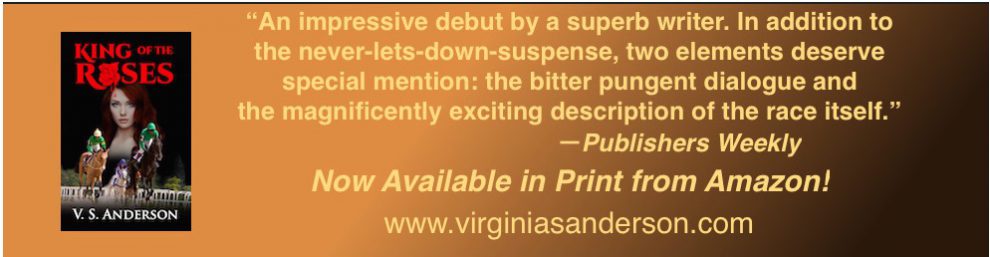
I have a couple of things to add. Unless the market has changed drastically, having a good agent and getting an advance is unlikely to guarantee your book visibility or even entry into mainstream bookstores. I was paid $5000 by St. Martin’s in 1983; even though King of the Roses got superb reviews (check them out in the Amazon preview), the book never made it into any of the many stores, local or national, that existed at the time (before Amazon). I was told St. Martin’s would have had to commit to a massive advertising budget before any of the stores would find spine-out space for my book, let alone any kind of display or prominent position. (This despite the fact that my mother wrote many angry letters to bookstores demanding that they put my book on a stand in the doorway!) St. Martin’s did minimal advertising, but did make sure reviewers got copies and paid attention to them, which is a big deal, and something that will be hard for us to do for ourselves.

It’s my understanding (possibly erroneous?) that publishers’ budgets are even tighter today than they were in 1983. So true traditional publishing by one of the major houses doesn’t mean authors don’t still have work to do to get their books out there. But articles like this help us avoid pitfalls that will make our efforts go for naught!

Steven Capps's avatarBard & Books

Like many of my posts, this stems from something I saw in an online writer’s group. Essentially, someone who has been traditionally published from a small press was putting down people who self-publish. Personally, I have my own problems with self-publishing that I discuss in my “Why I’ll Never Self-Publish” post, but that is besides the point. At this point, I’d like to formally begin my rant against small presses.

In my opinion, traditional publishing is best done through an agent and then with a professionally recognized publisher. Small presses, unless they are recongized by writing organizations like Codex or SFWA, often give little more than what someone can do through self-publishing but will suck away 40-60% of the author’s share of royalties and then use self-publishing tools (like Createspace) to produce the book. Small Presses get away with this by telling authors lies in order to get them to sign…

View original post 1,144 more words

2 Comments

Filed under business of writing, indie publishing, King of the Roses, Marketing books, Money issues for writers, Myths and Truths for writers, Publishing, publishing contracts, Self-publishing, small presses, V. S. Anderson, Writing, writing novels, writing scams

Stop Paying People to Read your Book

Questions answered about self-publishingThis is an older post from alfageeek, but like all his posts, it’s full of hands-on, practical advice that actually soothes some of my guilt over my abysmal marketing efforts. While you’re checking out his site, also check out his latest report on his experience with Bookbub ads.

Joshua Edward Smith's avataralfageeek

In marketing to consumers, there is a well-established “buying cycle.” There are a lot of different variations on this but they generally go:

  • Awareness (finding out your product exists)
  • Research (figuring out whether they want it)
  • Purchase (woo hoo!)
  • Repurchase (they liked it and want another)

I mention this because the business of marketing a book is really no different from the business of marketing anything else to consumers. What I find interesting is that the people marketing books these days are mostly authors, and judging from their behavior, I think many of them are really confused about that whole cycle. So I’m writing this post to help explain it to them, with they hope that they stop throwing their money away solving problems they do not have.

Let’s skip awareness for a second, and dispense with the rest of the cycle.

If you write a great book and get a…

View original post 1,712 more words

2 Comments

Filed under business of writing, ebooks publishing and selling, indie publishing, Marketing books, Money issues for writers, Myths and Truths for writers, Publishing, Self-publishing, Writing, writing novels

Writing a Press Release!

Typing up your press release for your book!These clear instructions and multiple templates and examples for how to write a press release for your book are exactly what I’ve been looking for. Now to get busy and DO IT! Share your experiences writing and sending out releases for your books!

1 Comment

Filed under business of writing, ebooks publishing and selling, indie publishing, Marketing books, Money issues for writers, Print on Demand for fiction writers, Self-publishing, Writing, writing novels

Some Helpful Advice on Copyright, ISBNs, and More

Books leading to a door in a brick wallJoel Friedlander is always a wonderful resource. Today’s “Mailbag” covers some important questions about copyright and ISBNs, as well as some questions about vendors and formatting decisions. Check it out!

Leave a comment

Filed under Amazon Kindle Direct Publishing, business of writing, Copyright for writers, ebooks publishing and selling, indie publishing, Money issues for writers, Print on Demand for fiction writers, Publishing, Self-publishing, Writing, writing novels

Five Things Writers Need to Know About Facebook

This article answers some questions I’ve had recently about my rather desultory use of my Facebook resources. Please let me know if you’ve had a different experience, or if you agree!

mdellert's avatarMDellert-dot-Com

“If you try to use Facebook for something it’s not designed to do, you’re just going to get frustrated over the lack of results.” — Tim Grahl, author of Your First 1000 Copies

Recently, I was posting my latest giveaway opportunity to a variety of promotional groups on Facebook. A fellow author and Facebook friend noticed and messaged me soon after: “You’re posting a lot on Facebook recently. How’s that working out for you?”

What he was really asking me: “How does one successfully use Facebook for author marketing?”

Tim Grahl recently addressed this question on his blog (Facebook and Author Marketing, September 17, 2016), and my own experience in growing my social media platform confirms many of the assertions that he makes in his article. To understand how to use Facebook for author marketing requires an understanding of what Facebook was designed to do.

Facebook is a Peer-to-Peer Network

Exclusivity

Firstly…

View original post 957 more words

Leave a comment

Filed under business of writing, ebooks publishing and selling, indie publishing, Marketing books, Money issues for writers, Myths and Truths for writers, Print on Demand for fiction writers, Self-publishing, Tech tips for writers, Writing, writing novels

Free Book Promotions? What Do You Think?

Book open to the starsHere are some evaluations of book promotion services from The Book Designer (a great site for all things indie). The question is whether sites like these are better than membership in KDP Select.

Share with us your own views! Have you tried any of these services? Do you have others to recommend?


Leave a comment

Filed under Amazon Kindle Direct Publishing, business of writing, ebooks publishing and selling, Free Books, indie publishing, Marketing books, Money issues for writers, Print on Demand for fiction writers, Self-publishing, Writing, writing novels