
Tag Archives: Writing strategies

Why I Quit Reading Your Book

Sad Editing!I just abandoned another indie book.

It always breaks my heart to do this (fortunately, I’ve only done it a very few times). The act sets me to thinking: Was I just being a persnickety grouch, or do I have legitimate things to say about what makes a book work? This question is particularly cogent when I bought this book—two by this author, in fact—on the strength of a glowing review.

Obviously, my reaction isn’t the only one that matters. So is there anything of worth in trying to lay out what went wrong for me?

Writer with questions

I think so. After all, I’ve raised the question of whether we really serve each other if we don’t at least try to explain why a particular element of a book led not to a mild critique but to abandonment, even if we can do so only in generic terms lest we embarrass a fellow writer. And my thoughts here are not idiosyncratic; practicing writers have heard versions of them before.

So. . . .

It took three strikes to force me to turn off my Kindle this time around. Looking at these three strikes, I realize that I would have probably let two of them slide if the third had been in place.

The first of the two strikes I might have forgiven was a plot twist I didn’t buy into. But I’ve persevered, even if grumpily, past what seemed to me far-fetched plot devices before.

The other strike involved some bizarre inaccuracies in the author’s depiction of the setting, which I happen to know intimately. But I’ve hung in through (and enjoyed!) stories that present that setting in ways that don’t completely jibe with my experience.

In both cases, I could have been seduced into accepting or ignoring these slips. It was the seduction that wasn’t there.Eyeglasses and pen

Because the writer lacked voice.

In other words, had this book had voice, the pleasure of voice could have overridden my complaints.

But what in the world do I mean by “voice”?

Writing teachers talk about voice all the time. They know it when they see it. But ask them to give you a formula for acquiring it? They try. Oh, do they try.
Typewriter with questions marks

Like most people, whether you know it or not, you already have many voices. You know how to sound different when writing a Facebook post and an office memo. No one has to teach you that.

But “literary voice” is a little different. You learn the voice of an office memo by writing the way people write office memos. Literary voice, on the other hand, isn’t something you copy outright. There’s learning involved, what rhetoricians call imitatio. But from this learning, it’s something you create.

Here, I’m offering three dimensions of what was missing in the book I abandoned. These do not constitute the ultimate definition of voice. They’re just my attempts to put into “voice” a few of the qualities that make prose come alive for me enough to carry me past plot glitches and other slips. Typewriter and flowers

 

Voice is what says you have moved beyond “the rules.”

In the book I’m discussing, I could see the author conscientiously and visibly filling in the various checklists for what a writer ought to do. BUT: The essence of voice is riding those rules down the road where you want to go.

In this book, the rule that ruled the writer was a common one: Bring readers into the scene! Lots of sensory details! Make it come alive! Think of creative ways to say what you want readers to know!

But in this book, too many details, piled up on top of each other, slowed the action to the point that I skimmed ahead in frustration. You don’t want to confuse readers, but you don’t have to race them through every doorway, show them every blow to your hero’s head. Choose the most necessary, the most telling details. Don’t just pile up information because the rules seem to say you should.

Voice serves the story, not the writer. Book with heart for writers

In the books I’ve abandoned, writers often convolute their prose as if they must sound original—be a unique SOMEBODY—at all costs. But these choices may be robbing the English language of the power of its basic formula: Subject-verb-object. Someone doing something to someone. A basic sentence can have a modifying clause before it or an absolute phrase behind it, but English narrative dodges all sorts of pitfalls when it follows this basic pattern. For an excellent discussion of why this pattern works, try Joseph Williams’s classic Style: Ten Lessons in Clarity and Grace. Let people do things. Some of the most powerful prose in the world aspires to no more than this.

Still, voice means surprising the reader—just enough.

Your characters, your settings, your scenes, stand in a line-up with the characters, settings, and scenes from every other book ever written in your genre. When what you’ve put in your book could just as easily pop up in somebody else’s book, you probably lack voice. In the book(s) I’ve abandoned, I felt that I could predict every move, every sentence. I was looking at what we used to call “stock”—characters, settings, and prose off the shelf.

How can you move beyond stock?

What do you know about your character that no one would expect from a generic description of his age, ethnicity, occupation, etc.? What do you see in your setting that tells a whole story but that everyone else would overlook?

Woman writing

To create such vision, try these two steps: 1) Brainstorm. 2) Cull.

Exercises abound in books, workshops, blog posts, to help us generate details we might or might not actually use in our books. Here’s the place to go for the crazy stretch. Don’t censor. Outlandish is okay!

Then cull. Set aside your exercises as long as you can. Come back to them to see which ones jump off the page. Pick one. Maybe two. Be strict! Only the best. Only the ones that nail something readers really need to know but would never suspect.

And if you can, work toward honoring that famous dictum from Mark Twain (here tweaked because my version sounds better): The difference between the right word and the almost right word is the difference between lightning and the lightning bug.


Lightning, green field

Prose that captures lightning. not in every line but in carefully chosen moments of flash, has voice.

And I’ll forgive a lot if you give me voice.

What have I left out? What is voice to you? Send along examples of writers whose voice you admire.

15 Comments

Filed under indie publishing, Learning to write, Publishing, self editing for fiction writers, Self-publishing, style for writers, Writing, writing novels

8 Words to Seek & Destroy in Your Writing

A great reminder post1 So important to double-check these words to make sure they actually do work in our sentences before letting them stand. I echo Orwell’s advice, though, especially about the various forms of the verb “to be” (was, is, am, are, etc.). I always ask myself whether I can find a strong action verb rather than a being verb when I’m tempted to fall back on one. Yet I’ve also seen sentences where writers twisted themselves into knots trying to avoid “to be.” Once in a while, the shortest distance between two points is a nice little linking verb!

Leave a comment

Filed under ebooks publishing and selling, Editing your novel, grammar rules for writers, indie publishing, Learning to write, Publishing, self editing for fiction writers, Self-publishing, style for writers, Writing

6 qualities of Bad Writing via Marcy Kennedy

Found on Chris The Story Reading Ape this morning: What do you think? Are these YOUR fatal flaws? Which ones have you recently forgiven, and which ones have caused you to stop reading?

Reblogged on WordPress.com

Source: 6 qualities of Bad Writing via Marcy Kennedy

Typewriter with questions marks

1 Comment

Filed under Editing your novel, Learning to write, self editing for fiction writers, Self-publishing, style for writers, Writing, writing novels

10 things that red-flag a newbie novelist.

This is one of the best compendia of guidelines for troubleshooting a novel-in-progress that I’ve recently come across. My own constant struggle is the interior monologue, wherein my character thinks through her motives. Some of this is necessary, but in my current very rough draft I’m noting again and again, “Too long! Cut!” Fortunately, I have an excellent writing group that will call me out on this sin.
I’m working on a post about what has stopped me from finishing some of the books I’ve been reading in my quest to understand the indie landscape. Hamilton’s list captures many of the problems that I’ve encountered (and fight like crazy not to commit): 1) Lack of a story arc–in a couple of cases, everything seemed to be resolved mid-novel; why keep reading? 2) Detail-heavy, clunky prose I had to wade through. 3) Pages and pages of setting and character-building before anything happens. I love the comment that we all should wish to see ourselves as others see us! Hooray for honest readers. May they long thrive!

Kawanee Hamilton's avatar

THE PUBLISHING BUSINESS, WRITING CRAFT

10 THINGS THAT RED-FLAG A NEWBIE NOVELIST

Red_flag_waving.svg

by Anne R. Allen

Beginning novelists are like Tolstoy’s happy families. They tend to be remarkably alike. Certain mistakes are common to almost all beginners. These things aren’t necessarily wrong, but they are difficult to do well—and get in the way of smooth storytelling

They also make it easy for professionals—and a lot of readers—to spot the unseasoned newbie.

When I worked as an editor, I ran into the same problems in nearly every new novelist’s work—the very things I did when I was starting out.

I think some of the patterns come from imitating the classics. In the days of Dickens and Tolstoy, novels were written to be savored on long winter nights or languid summer days when there was a lot of time to be filled. Detailed descriptions took readers out of their mundane lives…

View original post 2,153 more words

Leave a comment

Filed under ebooks publishing and selling, Editing your novel, indie publishing, Learning to write, Myths and Truths for writers, Publishing, self editing for fiction writers, Self-publishing, style for writers, What Not To Do in Writing Novels, Writers' groups, Writing, writing novels

Show, Don’t Tell: Try the Screenplay Exercise

Typewriter and flowersWe fiction, memoir, and essay writers are all bombarded—understandably—with the need to SHOW, not tell. The temptation to tell rather than show—at its simplest level, to write “he felt sad” rather than letting his actions and dialogue reveal his reactions—haunts us all. It’s easier: We don’t have to hunt for ways to describe expressions and behaviors. And after all, “he felt sad” takes up a lot less space than “The room around him seemed to darken, the sounds of cheerful conversation to slow to dirge-like rhythms.” And hey, will readers interpret such descriptions the way you intended? Maybe the guy is just having a heart attack.

Hardest of all may be recognizing when we’ve slipped into telling. In my writing group, we all get called on it regularly.

One exercise I’ve found extremely useful in helping me recognize telling is the SCREENPLAY exercise: convert a troublesome scene to screenplay format.

Typewriter with questions marks

Why does this work? For me, it works because, unless you allow yourself the indulgence of a voice-over, filmgoers must rely on action and dialogue to interpret characters’ moods and thoughts and to understand what’s going on.

The rules are simple: at no point in the conversion of your scene can you indicate in your stage directions that “he thought” or “he worried” or “he felt—afraid, tired, hopeful, disappointed.” You may never enter your character’s mind. After all, your audience can’t. They can only see and hear what’s on the screen.

Too stifling? Surely in a mystery, for example, the character has to speculate internally about the meaning of clues. In a romance, the protagonist has to tell us of her ecstasy. Well, maybe. The screenplay exercise can clarify just how much telling we really have to include.

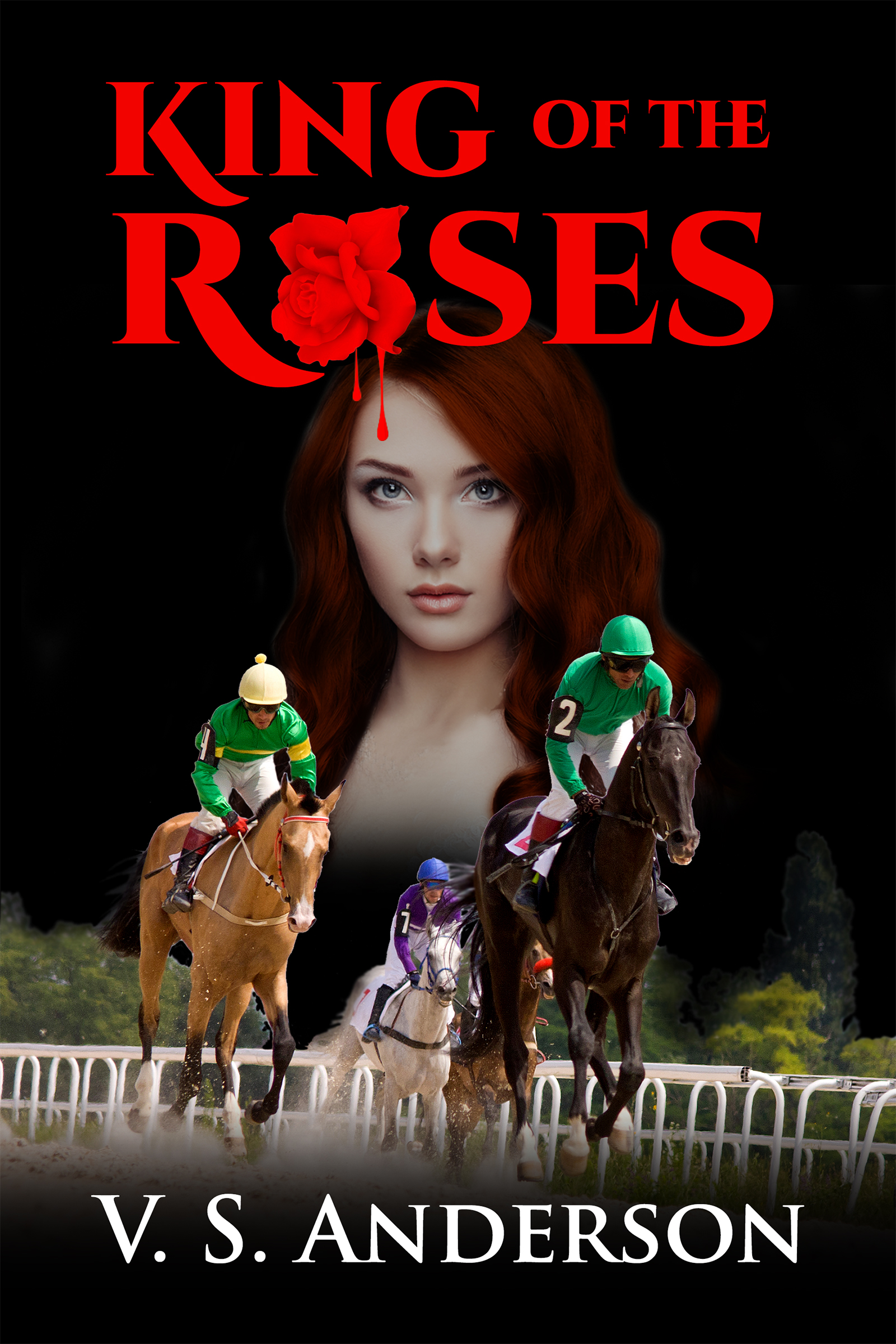
For a sense of what this exercise can contribute, here are a few lines from my novel King of the Roses and the corresponding lines structured as a screenplay. running horseNote that I converted the whole book, a choice that requires me to scrutinize every word because screenplays are radically length restricted (a 358-page book becomes a 100-page play). But casting individual scenes can provide some of the same benefits.

Set-up: A criminal who demands that Chris hold the Derby favorite finds Chris alone in a restaurant and escalates his threats. The criminal speaks the first line.

From the novel:

“I tried to get a hold of you last night. Why didn’t you answer the phone?”

“I was out.”

“No you weren’t. You just didn’t answer the phone. This isn’t a little romance we have here. This is business. What about it?”

Chris felt his spine crawl as if he were already dead, with demons dancing on his grave. The man stared at him steadily, tilting his head a little so that Chris could see his white, speckled scalp where his hair thinned on top.

“So when would I get paid?”

“You jocks is all the same. Money, money.”

“I haven’t seen any money.”

The man’s lower lip went on curling, but his eyes hardened. He stood up suddenly, clutching his overcoat to his paunch.

“I’ll tell you one thing I bet you have seen,” he said. “I bet you’ve seen what a jock looks like when he falls off in a race and gets his face stepped on. I bet you’ve seen that. Huh?”

From the screenplay:

BALDING MAN

I tried to get hold of you last night. Why didn’t you answer your phone?

CHRIS

I was out.

BALDING MAN

This isn’t a little romance we have here. This is business.

CHRIS

So when would I get paid?

BALDING MAN

You jocks is all the same. Money, money, money.

CHRIS

I haven’t seen any money.

The man stands, clutching his coat to his paunch.

BALDING MAN

I tell you one thing I bet you have seen. I bet you seen what a jock looks like when he falls off and gets his face stepped on. I bet you seen that, huh?

So what has this exercise done for me? Above all, it has forced me to look really hard at the inner reactions I’ve chosen to include in the prose-narrative format. Obviously they aren’t essential to meaning. I get to ask myself whether they add enough to justify the departure from action, from showing.

So the conversion allows me to see where my dialogue on its own takes readers. It also forces me to find the actions that express the characters’ reactions. I have to convert feelings into motion. Once discovered, these motions and actions can go back into my prose.

Again, you don’t have to go this spare. But you might make decisions about where to cut and where to add with more insight if you’ve tried the bare-bones telling that screenplays require.

You don’t need fancy software to do this. For the actual screenplay, I used Microsoft Word’s “styles” to create the various format patterns screenplays require. (The formatting didn’t translate directly into this blog post.) By the way, learning to use “styles” helps when you convert your Word document into the format for various e-publishing contexts. The important thing, however you structure your exercise, is to remember: no “feelings.” Just things viewers can see: action and dialogue.bloody rose finished

Do you have strategies for detecting “telling”? Share!

12 Comments

Filed under Editing your novel, indie publishing, King of the Roses, Learning to write, self editing for fiction writers, Self-publishing, Writers' groups, Writing, writing novels

Which is Most Important: Character, Conflict, or Crisis?

Book with heart for writersAs I’ve been reading around in the Indie-verse, I’ve found a couple of books I’ve decided not to finish. As both a writer and a reader, I’ve thought about what triggers me to abandon a book.


One feature that has stuck as a cause for my reaction can be summed up in advice Brian Klems of Writer’s Digest provided at the Writing Day Workshop I attended in Indianapolis in October:

Begin with conflict, not crisis.

Typewriter with questions marks

In other words, writers I’m deciding sadly to give up on often begin with their characters in crisis. But Klems’s advice reminds me of a cruel but vital truth:

If I don’t know your character, I don’t care about her. If I don’t care about her, I honestly don’t care if she gets her brains blown out.

Sorry, but there it is.

Gangster with gun

When these writers begin their books, they have three Cs to deal with: Crisis, Character, and Conflict. It may sound counter-intuitive to state that, of the three, Crisis is the least important!

I know, I know: begin in medias res. But not when the folks in medias are just names on a page.

Can you pile on character, conflict, and crisis in opening scenes? I thought I’d try an experiment to find out.

Consider:

Sally found herself staring down the barrel of a gun. She stumbled backwards. He fired. The shot narrowly missed.

Crisis, big time. And a couple of what Paula Munier calls “micro-story questions,” the elements that help to deliver what she calls “narrative thrust.” Who’s shooting at her? Why? Will she escape the next shot?

cartoonguns.jpg

Okay, I’d read on to the next bit. But if the following three pages consisted of her efforts to flee his escape, I’d be flipping ahead to see whether things got more interesting than an abstract flight-and-pursue.

What if, instead, you read:

Of course Mark was going to pull the trigger. When he threatened, he always delivered. Sally flung her hands up, stupidly, since they wouldn’t stop a bullet, and sprawled on her butt on the wedding dress jumbled on the tack room floor behind her. The gun went off in a brain-numbing explosion, the bullet slamming into the row of bridles hanging just above her head.

Beautiful sexy girl with gun

Take that, Mark, you scum!

We still get to the crisis pretty fast, but now we have many more micro-story questions. First, we’ve got conflict: these people have a history. It’s not just a question of why he’s shooting at her, but what between them has happened before to trigger her recognition that this isn’t a joke. “Why and who?” becomes “How does she know this about him? What has he done to make her think this now?” There’s a whole history of people in those queries.

More importantly, that wedding dress. Wedding dress? How in the world did a wedding dress get in the floor of that tackroom? And why a tackroom? We now know that these people somehow connect with horses, and that someone (Mark? Sally?) has just been through (or approached) a wedding. And he’s the determined sort who shoots first and asks questions later, while she’s (at present) a bit reactive and self-derogatory (calling herself “stupid”). Conflict and character as well as crisis—leading to a cornucopia of story questions! And all in the same number of sentences, four.

Some of my writing group colleagues are absolute minimalists and would opt for the first austere and abstract version. But to me, pure action is not nearly as engaging as action involving people I know or people I’ve been made deeply curious about.

An experiment like this leads to me be suggest that if you must demote one of the three Cs, let it be crisis! What? Start flat, with just characters in conflict? Well, yes.

Torn up drafts

As Stephen King argues, narrative tension arises not from wild, boisterous action but from people in “situations,” where they must react to each other and to the problems their situation presents.

True, you can’t spend pages on this development. It has to happen in that medias res moment, through careful pacing and selection of details.

As an illustration of how little we need a doomsday crisis, consider these opening lines from Suzanne Rindell’s The Other Typist:

They said the typewriter would unsex us.

One look at the device itself and you might understand how they—the self-appointed keepers of female virtue and morality, that is—might have reached such a conclusion. Your average typewriter, be it Underwood, Royal, Remington, or Corona, is a stern thing, full of gravity, its boxy angles coming straight to the point, with no trace of curvaceous tomfoolery or feminine whimsy. Add to that the sheer violence of its iron arms, thwacking away at the page with unforgiving force. Unforgiving. Yes; forgiving is not the typewriter’s duty.

Typewriter publish

We’ve got character, even though we haven’t met the speaker. We’ve got conflict: That nameless “they” is already on trial! I haven’t yet read this book Will I? If it lives up to this crisis-deprived opening, you bet.


Leave a comment

Filed under Editing your novel, indie publishing, Learning to write, Myths and Truths for writers, Publishing, self editing for fiction writers, Self-publishing, Writing, writing novels

Quick Tip: Build Character with Stage Business

Typewriter publishIn my recent exploration of indie novels about horses, I’ve noticed a way that some of these authors could enliven their stories considerably: by making smarter use of stage business.



By stage business, I mean the interactions between characters and their environments, usually involving elements of setting and, in particular, props—the things they handle as they respond to each other.

Most of the authors I’m reading quite rightly use stage business to give readers a sense of setting, to give us a sense of “being there” in the scene, and to punctuate dialogue—for example, to break up a long speech. But this element can work a lot harder than it often does.

Coffee mug for writers

Make that cup of coffee talk!

For example, let’s look at the possibilities offered by a fairly common scene: people sitting around a table drinking coffee. To frame the dialogue, we’re told, “He took a sip of his coffee.”

I guess he would, if he’s got a cup and it’s likely to get cold. So there’s really no information here.

But what if:

He waved the nearly full cup around so violently she was afraid he’d sling the contents onto the spotless white table cloth.

Or

In his huge, clumsy hands, the mug looked as fragile as bone china.

Or

He lifted the cup with both hands clutched around it, as if grateful for its feeble warmth.

Suddenly, “taking a sip” tells us something about the character and the situation he finds himself in.Happy editing!

Here’s another example.

She put on her cowboy hat. “Let’s go see what’s up in the corral.”

There’s a big difference between that bit of info and:

She snatched up a dusty cowboy hat stained and dinged with long use and smashed it onto her short black curls. “Let’s go see what’s up in the corral.”

Lady 2 promises a lot more action once we reach the corral than Lady 1. Now that hat talks!

True, it’s important to practice this strategy in moderation. Pacing a scene requires an author to balance forward momentum with information, no matter how exquisitely revealing that information seems to be. I once got slapped down pretty good over a character fidgeting with a paper clip through a long scene. As I recall it, my reader’s marginal comment was, “That paper clip is really getting on my nerves.”Typewriter and flowers

In drafting, as is usually the best move, over-generate. Come up with stacks of double-duty stage-business gems. Then glean for the one best one, the one that really delivers the “telling detail.”

What are some of your best “stage business” lines? I’d love to hear!Book with heart for writers


Leave a comment

Filed under ebooks publishing and selling, Editing your novel, indie publishing, Learning to write, Publishing, self editing for fiction writers, Self-publishing, Writing, writing novels

Indie Writers: Do you WANT two-star reviews?

Recently, as part of my education in self-publishing, I’ve expanded my reading to include indie books about horses, as my own republished novels feature racing backdrops. My selections have mostly been prompted by mentions in Goodreads groups and the “customers also bought” list at Amazon.

In the past, I’ve tended to stick with books off “year’s best” lists, like those at NPR or the New York Times, so this new reading has taken me into new territory. It has also led me to do a lot of thinking about what works for me and what doesn’t—and whether I’m managing to purge my own writing of a pile of sins.

And it has created a dilemma I’ve read that others face: whether or not to review a book when I can’t give it at least a three-star rating.

As a teacher, I’ve seen enough students’ faces fall to know what a strong critique can do to the kind of relationships I’ve been enjoying through social media, even when the comments are intended in the most constructive of spirits and embedded in the most voluminous praise I can conjure. Do I really want to hurt people whose conversations I’ve enjoyed? And as the recipient of more than one one-star review (in places that, sadly, mattered to a budding career), I know how it feels.

But as I read this new-to-me category of book, I found myself thinking about what’s potentially lost when readers hold back from honest, thoughtful reviews because they’re negative. And I began to wonder:

Do authors of indie books WANT to know what turns readers off?

Should they?

I’ve increasingly subscribed to the view that we don’t know what we’ve written until a reader tells us. We’re too close to our work. Even if we know what to do, what not to do, it’s often only when a sharp reader points out the pitfalls we’ve stumbled into that we realize that we’re in them up to our necks.

Of course, we all know that some one- or two-star reviews offer nothing constructive. The reader didn’t like sci-fi, but reviewed a sci-fi novel and gave it one star because of the sci-fi conventions the reviewer hates! I admit that I am less likely to give even well-done category romances more than three stars, because of the predictability of the plots and conventions I find problematic.

But I’ve given five stars to a very good romance, one in which the circumstances of the predictable elements are so unique and intriguing that I forgot I was technically reading a romance.

So would an aspiring indie romance writer want to know what kept her book from rising in my ranks?

True, she’d have to come in knowing that accepting potential one-star reviews does lay the task of sorting the gold from the pique at the author’s door. Personally, I learned from my negative reviews (although I couldn’t help wishing that my editor and I had been a little more in sync so that we could have headed them off). While I didn’t completely rewrite the book in question, when the chance came to revise for self-publication, I did spot things that had flown completely under my radar the first time around. And I got put on notice about my most persistent pitfall as a writer: the tendency to complicate my plots way too much.

The author of a book I’m reading now commits so many of those writerly sins we all hear about so often that I wonder whether I actually might have something useful to say to him/her. Far too many characters; characters whose relationships with each other and the plot, let alone their goals, are unclear; way too much classic “telling”: in short, can a review serve as a mini-beta reading? Or is it better to hold off on that kind of reading until the author asks?

So—one- and two-star reviews:

Should we as readers write them?

Should we as fellow authors risk writing them?

Should we as authors WANT them?

What qualities make a bad review worth the pain?

What do you think?

Leave a comment

Filed under ebooks publishing and selling, Goodreads, indie publishing, Learning to write, Publishing, Reviews, self editing for fiction writers, Self-publishing, What Not To Do in Writing Novels, Writers' groups, Writing, writing novels

Great Advice on Building Conflict!

Check out this pieceletter scatter novel on strategies for creating conflict from PubCrawl.
Leave a comment

Filed under indie publishing, Learning to write, self editing for fiction writers, Self-publishing, Writing, writing novels

How to Build Beats and Style in Your Writing!

Found this terrific piece on cadence and beats at the sentence level on Writers in the Storm. I especially like the rhetorical devicesTypewriter and flowers guest blogger Margie Lawson provides. As a rhetorician, I’ve encountered many of these in my research, and I’ve used many, even if only intuitively, in my writing.

I’ve written about some of these in my Novel First Lines series, and in my post on the effects of commas on cadence. Meter and rhythm are powerful lures in the first lines of a book or story. For a wonderful discussion of rhythm and cadence as persuasive devices, check out Martha Kolln’s textbook (find used copies), Rhetorical Grammar.

See if you use any already—and what you can learn to use.

Leave a comment

Filed under Learning to write, poetry, punctuation for writers of novels, self editing for fiction writers, style for writers, Teaching writing, Writing