Tag Archives: publishing

Crazy Journey: Designing My Own Book for IngramSpark

Magic book

Advice from a number of other self-published authors and bloggers led me to decide that my preferred path to getting my two previously published horse-racing mysteries out in print under my own copyright was to buy my own ISBN and start out at Ingram before moving on to Amazon’s CreateSpace. But I’m probably not alone in my panicked reaction at downloading the IngramSpark “file creation” specs.

My experience creating my ebooks for both Smashwords and Kindle Direct Publishing at Amazon was a breeze. I formatted my mss. in Word, uploaded them, and voilà, I had books. No errors, no “tickets.” But IngramSpark? Holy barf, Batman! What does all this stuff mean!

I hereby report that I am moving forward in my quest to conquer Ingram’s formatting requirements. I thought I would post progress reports, perhaps in hopes of encouraging others whose guts churn like mine did at the site of all those incomprehensible and unfamiliar commands.

Frustrated man at typewriter

If you’ve been through this, I hope you’ll take a moment in the comments to share your experiences, good or bad! (Even to tell me I’m just plain nuts. I won’t be offended! Really!)


Please note up front: The posts I envision chronicling my journey for better or worse are NOT how-tos! I am not an expert on InDesign, on formatting books, or on Ingram’s requirements. I can’t possibly match the expertise of professional book designers. I am simply sharing some observations and experiences, ideally as encouragement or in solidarity with others.

I have no idea where this effort will land me. I may be wasting my time on a task that doesn’t lend itself to amateur efforts. And after all, Ingram will sell you a template for around $50, as will other book designers—I haven’t tried a ready-made template, but might for the next book. I do have a funny feeling there’ll be some of the same technical work and correcting that I’m doing for my InDesign proof. We’ll see.

But here’s my rationale for moving forward on my own:

green smiley happy

  • First and foremost, it’s possible that I CAN do it. I won’t know till I try.
  • Trying this out is not prohibitively expensive. One blogger who considered Ingram’s requirements beyond the pale counted $500 in purchased ISBNs as part of his costs; I haven’t made a decision about that phase of the process, but I do know I won’t be writing 500 books in the next few years—and I’d still have to buy ISBNs if I want to be distributed through Ingram, whether I hire a professional designer or not. In the meantime, I’m making a $20/month investment in software and an hour or so a day in time.
  • I’m not on a strict deadline: I see this whole business of learning to market my books as a long-term project. Okay, so it takes me a month to do what a professional designer could do in a day. That’s not prohibitive, either, though for others it well might be.
  • Besides, I like learning new skills. Weirdly, I find this fun! It empowers me to see how well I can accomplish what, at the start, looked so daunting. And maybe I’ll put these skills to use in the future. So if it turns out I have to give up and hire a professional, I’ll be out a nominal sum but I’ll have gained an experience I value. Again, my idea of value is probably not everyone’s.
  • I’m not alone! Book designers are wonderfully generous with their expertise. I spent a whole day reading almost every article on Joel Friedlander’s superb site. I’ve found other marvelous sites I’ll share.

Bleu curve

Since this is a preliminary report, I’ll start with some preliminary stuff. Baby stuff.

Like figuring out what “trim size” means.

Basically, it’s about how big (height and width, not page length) I want my book to be. (Here’s an infographic on trim size.) Ingram supplies a list of options, and I measured a few of the trade paperbacks on my shelves with a ruler. Smaller trim size means more pages. I started out choosing 5.5X8.5.

Like figuring out that I needed some software.

Working with the graphic-design program at my university to produce a slick magazine told me that the designers’ preferred platform was Adobe InDesign. But InDesign came with some built-in liabilities:

It’s expensive.

It’s scary as hell.

Could I just use good ol’ Word? After all, even my ancient “2008 for Mac” version offers all kinds of formatting options that I’d already mastered for my ebooks.

Q mark flowersI invested some time searching for “InDesign vs. Word” online. Not surprisingly, the professionals gravitate to InDesign as offering more control and more options even for plain text documents like mine. Not surprisingly, the comments sections were sprinkled with claims that a) everybody already had Word so it was effectively free; b) Word works fine; and occasionally, c) sure, professionals tout something we all have to pay them to do.

To me, comments like c) denigrate professionals and the expertise they’ve built up over the years. But were the rebels right? Could Word do the kind of job Ingram accepts (and readers want)?

I actually don’t know the answer to that. (Do you? Share!)

You can use Word: the File-Creation Guide at Ingram directs you to be to sure to create your pdf using the print dialogue box, which is where you can find the specific Adobe Acrobat formats you need.

But the Guide specifically says that they can’t support material created in Word. So using Word looks as if it might limit my chances for getting help from Ingram if I need it.

According to the designers, justification in Word can’t match an apparent algorithm in InDesign that prevents “rivers” of white space from irregular word spacing and other anomalies from marring your pages. It does seem that InDesign’s kerning, tracking, and leading options are more sophisticated. (Are they? What do you think?)

alarmed smileyChallenge: Money! Adobe stuff costs $$$.

Solution: Adobe allows a 30-day free trial and then the $20 monthly subscription plan. Twenty dollars for a few months—the cost of one meal out each month—doesn’t seem outrageous, especially when I’m having fun.

worried smileyChallenge: Learning Curve! Adobe stuff is hard!

Solution: Buy a freakin’ book! Sorry, all you sweet video producers. A, I can’t watch your videos from home because they devour my data; and B, I can’t remember enough and have to watch again and again. At my university, we have access to the inestimable Lynda.com; I’ve watched the videos several times. But when you’re sitting at home staring at a blinking cursor, you must be able to thumb through the index and look things up!

My local Barnes and Noble offered a few alternatives. I chose Classroom in a Book because I liked the pictures. Uh, okay, I chose it because it did look as if it gave me a step-by-step combination of visual and text instructions. I’ll review it as a learning tool down the line.

I’ll end this first post with a quick word of encouragement: if you’ve ever delved at all into formatting with Word—using Styles, for example—or if you’ve ever worked with an app like the Mac “Preview” program, or “Paint” on a PC, where you can select, resize, edit graphics, etc., you already have a majority of the skills you’ll need to do basic text formatting in InDesign.

big smile smiley.jpg

So, today’s takeaway:

  • You can get definitions and guidance through some terrific online resources.
  • You may or may not need software. If you do decide tackle InDesign, it’s not prohibitively expensive.
  • You can learn the software. You’re probably two-thirds of the way there! I’ll report on how I did it in future posts.


11 Comments

Filed under business of writing, indie publishing, Print on Demand for fiction writers, Publishing, Self-publishing, Writing, writing novels

COPYRIGHT INFRINGEMENT?

Follow up to the post below about book theft! Chris the Story Reading Ape supplies links and specific advice, as well as a DMCA form letter and a way to find the offending server. Keep this page!

VERY IMPORTANT!!! DO NOT SEND THE OFFENDING SITE A DIRECT NOTICE. They may be a click farm looking for you email and you will be infected with a virus. If they are on Facebook – Use Facebook’…

Source: COPYRIGHT INFRINGEMENT?

Leave a comment

Filed under business of writing, Copyright for writers, ebooks publishing and selling, indie publishing, Money issues for writers, Myths and Truths for writers, Publishing, Self-publishing, Writing, writing novels

The problem of book theft …

A really scary story! It seems important to make sure that when we buy a book from a new site that we’re actually supporting the actual author. Let Susan know if you’ve seen or experienced anything like this!

islandeditions's avatarBooks: Publishing, Reading, Writing

Close to two years ago, I discovered that my eBooks, both of them, were being listed for sale on a site about which I’d never heard before. They were not under contract to sell my eBooks nor was I receiving any payment for the nearly 1000 times the site reported my novel had already been downloaded. There was a link on the site authors could write to, if they felt their copyright had been infringed. So I wrote, asked them to take down my books, and … nothing happened. That’s when I contacted my friend Tim Baker, whose books were also listed on the site, and he wrote this blog post about our experience. Many of our friends also took up the cause, sharing this blog post and following up with more information as they heard of it – good friends like Chris Graham who blogs as The Story…

View original post 816 more words

2 Comments

Filed under business of writing, Copyright for writers, ebooks publishing and selling, indie publishing, Publishing, Self-publishing, Writing, writing novels

How Would You Solve These 4 Writing Challenges?

Buble quote speech on cloud space for text

Writers who want to create a compelling story never stop looking for solutions to certain eternal problems. Sometimes, though, a particular story you want to tell runs you smack up against these problems. That’s the case in the book I’m working on right now.

This is the second book in a three-part project, in which university professor Sarah Crockett must come to terms with the disappearance of her eleven-year-old daughter while finding herself entangled with other endangered children over the course of the books. The first book is out for beta reads right now; the new one resides in five notebooks, slowly evolving from a handwritten first draft to a word-processed second. Something about this second book has made me think hard about some of the conundrums writers face.

Do you face these problems in your writing? How do you solve them?

Confused business man, short term memory loss

Writing SCENES, not streams of thought

It’s all too easy to simply let the characters spin out their thoughts and emotions in what just feels like the loveliest prose. After reading about a page of this stuff in my own writing, I recognize how deadly it is. Sarah presents a particular challenge: She has a professional life, and there’s a lot she can’t talk about with her colleagues. (Your conviction that your ex-husband murdered your child doesn’t make good conference-banquet banter.)

So how do you solve this? How do you insert the necessary backstory or information readers need without letting your characters blather away?

Writing scenes where things HAPPEN

Blue computerI remember seeing commentaries on Breaking Bad episodes in which the writers and directors discussed their worry that long scenes of information-heavy dialogue would turn off viewers. They used movement within the setting as much as possible, and of course there was so much action in other scenes that the talky ones never felt static. (By the way, I much prefer commentaries that feature writing and staging problems and solutions, not how much all the cast members love each other!)

Dialogue can be quite dramatic—even violent, both in meaning and in the way it’s conveyed. But I’m faced with too many scenes that are mostly dialogue. My worry, though, is that too much effort to make a scene active can lead to contrived events.

So how do you solve this? If you’re not writing a Mad Max script where nobody can catch his breath long enough to talk, how do you keep dialogue-heavy stories lively?

Finding the PERFECT word

Lightning, green field

I’ve (mis)quoted Mark Twain on writing before: the difference between the right word and the almost right word is the difference between lightning and the lightning bug. How do you tap the lightning? The thesaurus helps, but often the word I’m looking for isn’t really a literal synonym. Just as often, it’s a metaphor, especially in a verb. Here’s one I like that popped up out of the blue, from the first chapter of the new book:

For Clauson, interrogation was a daily, a material, practice. His gaze was scissoring me apart even as I tried to decide how I felt.

No thesaurus is going to give me that.

What tricks do you use to chase down those lightning-bolt words?

And while we’re on the subject: Making metaphors WORK

Sometimes I wonder whether I’ve already picked the low-hanging fruit: the metaphors that take me beyond clichés but slip into my prose as easily as my cat into my lap. Recently they seem more prone to circle me warily, making me snatch at them, half the time scaring them away. Here’s one from the first chapter I’ve struggled with:

From the way Clauson seemed to sag as I stared back, I knew he felt what I did: the pull of our history, a chain weighted with an impenetrable anger, so dense and resistant to reason no acid could have dissolved it. I think he knew he had just added a link. He had said the wrong thing.

I don’t dislike it, but it lacks the perfected aptness of, say, Sarah Waters’s metaphors in The Paying Guests:

Frances felt a rush of the abandonment that had overwhelmed her a few nights before. The feeling was like a wailing infant suddenly thrust into her arms: she didn’t want it, couldn’t calm it, had nowhere to set it down.

How do you solve this? What strategies do you use when you’re looking for imagery that leaves cliché far behind, yet doesn’t tangle you up in illogic and improbable comparisons so bad they’re sometimes even funny?

Frustrated man at typewriter

Share your solutions! (Stealing from each other allowed!)

2 Comments

Filed under ebooks publishing and selling, Editing your novel, indie publishing, Learning to write, Publishing, self editing for fiction writers, Self-publishing, style for writers, Writing, writing novels

World-Buiding: Not Just for Fantasy or SciFi!

world building photo

I recall being asked about my enthusiasm for Patrick O’Brian’s 20-novel series about British sea captain Jack Aubrey and his eccentric friend Stephen Maturin as they navigated the Napoleonic Wars. Why would I keep returning to these books, beginning with Master and Commander (in 2003 a movie starring Russell Crowe)? I’d answer, “What’s amazing about these books is that you enter such a complete world!”

This memory has come back recently as I’ve traveled through new reading experiences: sampling indie authors, returning to old favorites, and meeting new traditionally published and often best-selling authors. Like all readers, I’ve found books that work for me and books that don’t. A writer myself, I’m always interested in what makes a book spring into gear or stall out, even if only for me, since I want to sort out strong and weak strategies in my own work.

I know that “voice” can override glitches that try to pull me out of the story. I’ve enjoyed books with plot flaws because I enjoyed hearing the writer talking to me through characters, description, and style.

Image of earth planet on hand

But there’s another important quality akin to voice: the writer’s ability to build a world.

In fact, I’ll take a big chance here: the ability to build a complete, believable world may make a difference if being traditionally published is ever a goal.

What builds such a world?

The quality that makes a book impossible to put down is our total immersion in its reality. That metaphor implies that when we enter a book’s world, we lose sight of our familiar world in which we have to clean house and go to work and wash the car. For that to happen, this new world must be divorced from the mundane. It has to provide us with a set of eyes that see differently, that notice things we would not have noticed until the author seized our gaze.

Writers of historical fiction may find monopolizing our imaginations easier to achieve; even touches of daily life illuminate corners of a universe that takes us out of our own. For example, in Sarah Waters’s The Paying Guests, there’s the sound of shillings clunking into the gas meter, there’s the slog across the yard to the outdoor WC. But modern stories should also be flush with such mind-capturing details. In Americanah, Chimamanda Ngozi Adichie takes me into a Trenton, New Jersey, hair-braiding salon, an atmosphere completely alien to me but starkly evocative in the world she invites me into. I had never seen this corner of a modern city. I walked with her, across the divide between our worlds.

globe concept of idyllic green world

But the trust that sustains that journey is fragile. It can be shaken in many ways. Somehow, above all, a creator of worlds must convince us that her world really could exist, really does exist, even if only in mind.

A sense of accuracy is essential. Creators of worlds in sci-fi and fantasy have more leeway than authors in other genres; details need mostly to be consistent. True, in historical novels we are at the mercy of an author’s research. Patrick O’Brian never sailed on one of the ships he wrote about; how can we trust his depictions of 1800s British naval life?tall-ship-silhouette-1449207-639x931

He seduces with details: How the ship’s company had to tap their biscuits to knock the weevils out before eating; how the men at the cannons had to arch their bodies to avoid being killed by the guns’ recoil. If he knows these things, surely he knows the rest. Again, we’re sucked out of our daily worlds into his by the precision and clarity of what he puts before us. We’re too busy absorbing all the surprising pieces of his universe to look away.

Accuracy is especially vital if you’re writing for a specific community that knows its own contours well. I felt kicked out of a horse book when, among other glitches, the writer had a teenage girl galloping up on one of her farm’s “yearling thoroughbreds.” Now, they do back late yearlings on Thoroughbred farms, since the young horses will all officially turn two on January 1, and these babies often run their first races before they actually turn two. But if this is a real farm, training real racehorses, no teenage girl will be galloping around pastures on a newly broken baby destined for the track. When just a few pages later, a character attached crossties to a bridle. . . !

But this need for convincing accuracy lies at the heart of the world-builder’s dilemma. Immersion depends on strangeness. The details that capture me cannot be details I could have supplied myself. Want me to stick with you on a spring morning in the countryside? Don’t tell me about the bright blue sky or the fluffy clouds or the green fields. I know about those without your help. No, tell me something I wouldn’t have noticed or cared about until you opened my eyes.weird bleu world Depositphotos_12196361_s-2015

Yet if we are to believe, we must be able to connect these new worlds to landscapes where our usual compasses will work. The minute a reader says, “Oh, that would never happen!” or “People wouldn’t act that way!” or “I know that’s not true!”, the trust is gone.

So world-builders must construct double journeys: along a mysterious new road that keeps us gasping, yet one that parallels the world we do know. For example, Bev Pettersen’s Backstretch Baby showed me specifics of racetrack life I hadn’t witnessed myself, but the details that did match what I’d seen for myself prepared me for what she wanted me to accept. I felt I’d entered her version of a world I’d been in before, a version that was going to show me something I’d never have guessed.

In dialogue, this essential double journey shows clear.

Dialogue must be accurate to its time and place. Our characters need to “talk like real people.”

And yet nothing can be deadlier to our immersion in a story’s world than characters who talk like real people. All the little “hellos,” “how are yous,” “fine, thank yous,” with which we coat our exchanges have to be mercilessly expunged. Dialogue has to sound “natural” to the worlds we know while obsessively, ferociously, devoting itself to building the one we don’t.

flipped comma1   flipped comma1              small comma 2     small comma 2

Rereading National Velvet recently showed me how dialogue contributed to the world of this stunningly realized plot. Here’s Mi Taylor (the Mickey Rooney character in the movie) to Velvet early on—he’s just given her money to put down on the raffle ticket for the Piebald:

“. . . And see this, Velvet, I’m a fool to do it. That piebald’s as big a perisher’s the fellow that tipped me the five. ‘M going up to look at him this afternoon and likely I’ll be sorry when I see his murdering white eye.”

“Can we come too, can we come too?”

“You got yer muslins to iron.”

“MUSLINS!” said Velvet, outraged.

“Yer ma’s just wrung ’em out of the suds. I seen ’em. For the Fair.”

“I’m not going to wear MUSLIN,” said Velvet with a voice of iron.

“You’ll wear what yer told,” said Mi placidly. “I’ll slip up after dinner. Nearer one. I got them sheep at twelve. . . .”

If you’ve read the book, you know that its world forms around families and dreams and how they play out or fail in the environment of a small English village in the 1930s. The detail of what the Brown girls will wear to the fair and the distinct voice in which Mi delivers that detail become, in this dialogue, a demonstration of how authority functions in this world, warning of the challenge to that authority from the magical horse with the “murdering white eye.”

bay arabian horse runs gallop

World-building is a little like trying to catch skittish mice. We want to entice readers along the paths we’ve laid with tiny bits of carefully laid-out cheese. If the cheese is stale, they’ll turn up their noses. If the tidbits are too far apart, asking for too much empty wandering between offerings, they’ll venture off the path. If the cheese isn’t recognizable as cheese, if it’s too alien, they’ll be too wary to bite.

When I read your book, I want to follow that path without looking back or aside. I want to be captured. I want to find myself helplessly enclosed in your world. You have a double journey to accomplish; I want you to keep me pressing toward the vista straight ahead.

WHAT MAKES A WORLD COME ALIVE FOR YOU?

Romantic woman using laptop


2 Comments

Filed under ebooks publishing and selling, Editing your novel, indie publishing, Learning to write, Publishing, self editing for fiction writers, Self-publishing, Writing, writing novels

A Writer’s Guide to Defamation and Invasion of Privacy: Important Information!

Reblogged on WordPress.com

Source: A Writer’s Guide to Defamation and Invasion of Privacy

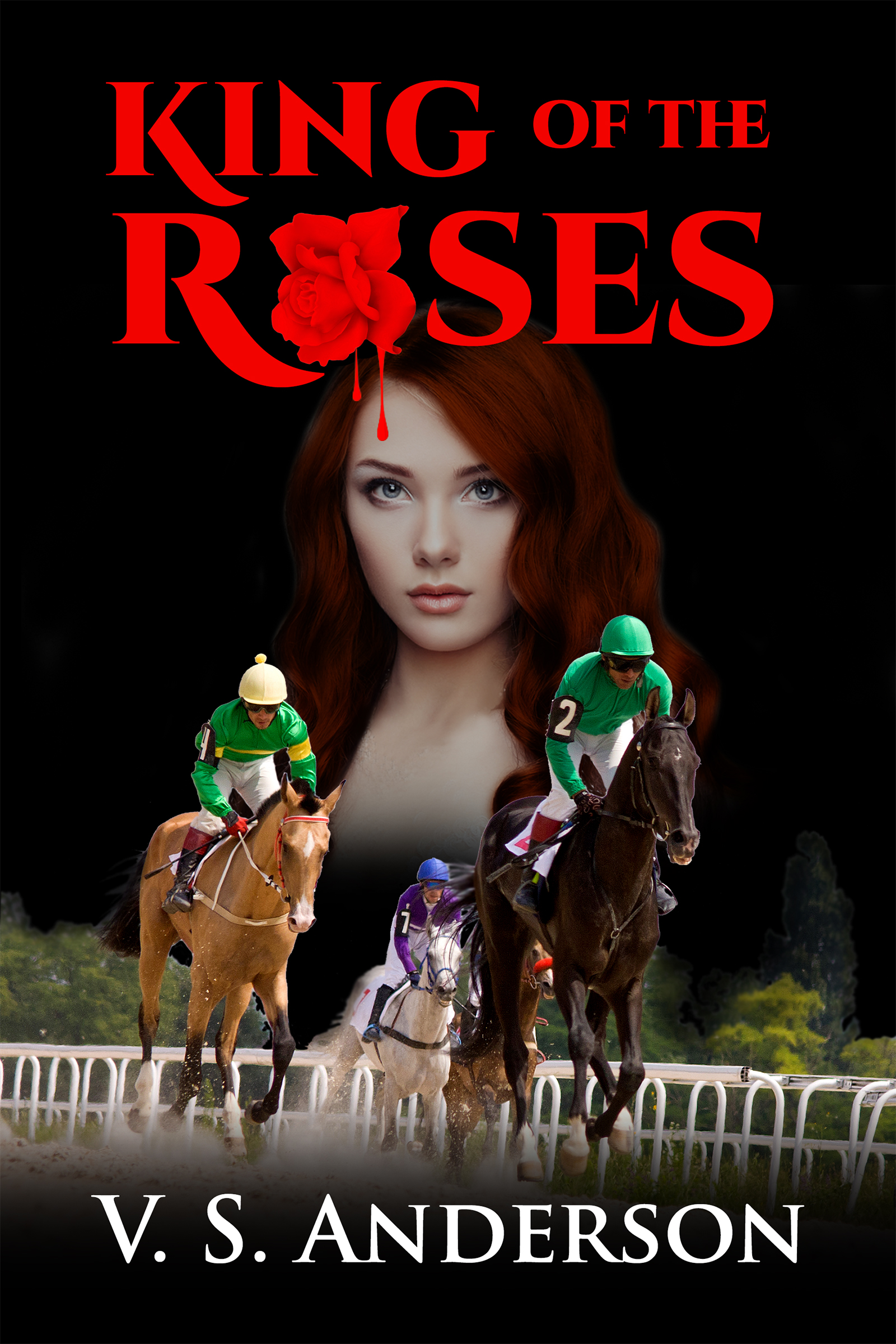
This is excellent information that clarifies many issues. One issue Amy Cook doesn’t address is the definition of (and handling of) “public figures.” Well-publicized lawsuits show they’re not totally fair game; is truthfulness the only line? When my novel King of the Roses first came out, I struggled with this issue since I drew on a horse-racing legend for my inspiration. Since I made him the hero and probably a little better than he was (he’s dead now), and since he never made any attempt to dodge the limelight, I was pretty well protected. But this is a dimension of the privacy/defamation issue with its own dangers.
Thanks to Chris the Story Reading Ape for another great share, this one from Tribalmystic stories!

2 Comments

Filed under business of writing, indie publishing, King of the Roses, Myths and Truths for writers, Publishing, Self-publishing, V. S. Anderson, What Not To Do in Writing Novels, Writing

Why I Quit Reading Your Book

Sad Editing!I just abandoned another indie book.

It always breaks my heart to do this (fortunately, I’ve only done it a very few times). The act sets me to thinking: Was I just being a persnickety grouch, or do I have legitimate things to say about what makes a book work? This question is particularly cogent when I bought this book—two by this author, in fact—on the strength of a glowing review.

Obviously, my reaction isn’t the only one that matters. So is there anything of worth in trying to lay out what went wrong for me?

Writer with questions

I think so. After all, I’ve raised the question of whether we really serve each other if we don’t at least try to explain why a particular element of a book led not to a mild critique but to abandonment, even if we can do so only in generic terms lest we embarrass a fellow writer. And my thoughts here are not idiosyncratic; practicing writers have heard versions of them before.

So. . . .

It took three strikes to force me to turn off my Kindle this time around. Looking at these three strikes, I realize that I would have probably let two of them slide if the third had been in place.

The first of the two strikes I might have forgiven was a plot twist I didn’t buy into. But I’ve persevered, even if grumpily, past what seemed to me far-fetched plot devices before.

The other strike involved some bizarre inaccuracies in the author’s depiction of the setting, which I happen to know intimately. But I’ve hung in through (and enjoyed!) stories that present that setting in ways that don’t completely jibe with my experience.

In both cases, I could have been seduced into accepting or ignoring these slips. It was the seduction that wasn’t there.Eyeglasses and pen

Because the writer lacked voice.

In other words, had this book had voice, the pleasure of voice could have overridden my complaints.

But what in the world do I mean by “voice”?

Writing teachers talk about voice all the time. They know it when they see it. But ask them to give you a formula for acquiring it? They try. Oh, do they try.

Typewriter with questions marks

Like most people, whether you know it or not, you already have many voices. You know how to sound different when writing a Facebook post and an office memo. No one has to teach you that.

But “literary voice” is a little different. You learn the voice of an office memo by writing the way people write office memos. Literary voice, on the other hand, isn’t something you copy outright. There’s learning involved, what rhetoricians call imitatio. But from this learning, it’s something you create.

Here, I’m offering three dimensions of what was missing in the book I abandoned. These do not constitute the ultimate definition of voice. They’re just my attempts to put into “voice” a few of the qualities that make prose come alive for me enough to carry me past plot glitches and other slips. Typewriter and flowers


Voice is what says you have moved beyond “the rules.”

In the book I’m discussing, I could see the author conscientiously and visibly filling in the various checklists for what a writer ought to do. BUT: The essence of voice is riding those rules down the road where you want to go.

In this book, the rule that ruled the writer was a common one: Bring readers into the scene! Lots of sensory details! Make it come alive! Think of creative ways to say what you want readers to know!

But in this book, too many details, piled up on top of each other, slowed the action to the point that I skimmed ahead in frustration. You don’t want to confuse readers, but you don’t have to race them through every doorway, show them every blow to your hero’s head. Choose the most necessary, the most telling details. Don’t just pile up information because the rules seem to say you should.

Voice serves the story, not the writer. Book with heart for writers

In the books I’ve abandoned, writers often convolute their prose as if they must sound original—be a unique SOMEBODY—at all costs. But these choices may be robbing the English language of the power of its basic formula: Subject-verb-object. Someone doing something to someone. A basic sentence can have a modifying clause before it or an absolute phrase behind it, but English narrative dodges all sorts of pitfalls when it follows this basic pattern. For an excellent discussion of why this pattern works, try Joseph Williams’s classic Style: Ten Lessons in Clarity and Grace. Let people do things. Some of the most powerful prose in the world aspires to no more than this.

Still, voice means surprising the reader—just enough.

Your characters, your settings, your scenes, stand in a line-up with the characters, settings, and scenes from every other book ever written in your genre. When what you’ve put in your book could just as easily pop up in somebody else’s book, you probably lack voice. In the book(s) I’ve abandoned, I felt that I could predict every move, every sentence. I was looking at what we used to call “stock”—characters, settings, and prose off the shelf.

How can you move beyond stock?

What do you know about your character that no one would expect from a generic description of his age, ethnicity, occupation, etc.? What do you see in your setting that tells a whole story but that everyone else would overlook?

Woman writing

To create such vision, try these two steps: 1) Brainstorm. 2) Cull.

Exercises abound in books, workshops, blog posts, to help us generate details we might or might not actually use in our books. Here’s the place to go for the crazy stretch. Don’t censor. Outlandish is okay!

Then cull. Set aside your exercises as long as you can. Come back to them to see which ones jump off the page. Pick one. Maybe two. Be strict! Only the best. Only the ones that nail something readers really need to know but would never suspect.

And if you can, work toward honoring that famous dictum from Mark Twain (here tweaked because my version sounds better): The difference between the right word and the almost right word is the difference between lightning and the lightning bug.

Lightning, green field

Prose that captures lightning. not in every line but in carefully chosen moments of flash, has voice.

And I’ll forgive a lot if you give me voice.

What have I left out? What is voice to you? Send along examples of writers whose voice you admire.

15 Comments

Filed under indie publishing, Learning to write, Publishing, self editing for fiction writers, Self-publishing, style for writers, Writing, writing novels

Almost Everything You Need to Know about ISBNs

Found this on Chris the Story Reading Ape and commented,

Pressed this to Just Can’t Help Writing. I read a post where an expert on indie publishing told readers it would cost more than $300 to get an ISBN. Having gotten mine from Smashwords, I couldn’t help wondering what he was talking about. This article helps clear that up. Thanks for sharing it!

Become-a-writer

To read this article, click on the link or photo of Author Laurie Boris below: almost-everything-you-need-to-know-about-isbns/

Source: Almost Everything You Need to Know about ISBNs

Leave a comment

Filed under Amazon Kindle Direct Publishing, business of writing, ebooks publishing and selling, indie publishing, Money issues for writers, Myths and Truths for writers, Publishing, Self-publishing, Smashwords, Writing, writing novels

10 things that red-flag a newbie novelist.

This is one of the best compendia of guidelines for troubleshooting a novel-in-progress that I’ve recently come across. My own constant struggle is the interior monologue, wherein my character thinks through her motives. Some of this is necessary, but in my current very rough draft I’m noting again and again, “Too long! Cut!” Fortunately, I have an excellent writing group that will call me out on this sin.
I’m working on a post about what has stopped me from finishing some of the books I’ve been reading in my quest to understand the indie landscape. Hamilton’s list captures many of the problems that I’ve encountered (and fight like crazy not to commit): 1) Lack of a story arc–in a couple of cases, everything seemed to be resolved mid-novel; why keep reading? 2) Detail-heavy, clunky prose I had to wade through. 3) Pages and pages of setting and character-building before anything happens. I love the comment that we all should wish to see ourselves as others see us! Hooray for honest readers. May they long thrive!

Kawanee Hamilton's avatar

THE PUBLISHING BUSINESS, WRITING CRAFT

10 THINGS THAT RED-FLAG A NEWBIE NOVELIST

Red_flag_waving.svg

by Anne R. Allen

Beginning novelists are like Tolstoy’s happy families. They tend to be remarkably alike. Certain mistakes are common to almost all beginners. These things aren’t necessarily wrong, but they are difficult to do well—and get in the way of smooth storytelling

They also make it easy for professionals—and a lot of readers—to spot the unseasoned newbie.

When I worked as an editor, I ran into the same problems in nearly every new novelist’s work—the very things I did when I was starting out.

I think some of the patterns come from imitating the classics. In the days of Dickens and Tolstoy, novels were written to be savored on long winter nights or languid summer days when there was a lot of time to be filled. Detailed descriptions took readers out of their mundane lives…

View original post 2,153 more words

Leave a comment

Filed under ebooks publishing and selling, Editing your novel, indie publishing, Learning to write, Myths and Truths for writers, Publishing, self editing for fiction writers, Self-publishing, style for writers, What Not To Do in Writing Novels, Writers' groups, Writing, writing novels

Victoria Strauss’s Year-End Post List

Hand in books

Something here for every aspiring writer! Strauss is one of the best resources around! Info on contracts, social media, marketing, promotion—check it out!

1 Comment

Filed under blogging, business of writing, ebooks publishing and selling, Finding literary agents for writers, indie publishing, Learning to write, looking for literary editors and publishers, Money issues for writers, Myths and Truths for writers, Publishing, publishing contracts, reversion of rights clauses, Self-publishing, Writing, writing novels