Tag Archives: ebooks publishing and selling

Parallelism in Writing for Voice and Style!

Bleu curveOne of the hardest writing strategies to teach effectively is “parallel structure.” Yet it’s incredibly useful in all kinds of writing, argumentative and expository as well as literary.

In my last post, I used an example from a terrific education site on grammar to illustrate how sentences could be packed with detail using “absolutes.” This example powerfully illustrates, as well, how parallel structure works.

“Down the long concourse they came unsteadily, Enid favouring her damaged hip, Alfred paddling at the air with loose-hinged hands and slapping the airport carpeting with poorly controlled feet, both of them carrying Nordic Pleasurelines shoulder bags and concentrating on the floor in front of them, measuring out the hazardous distance three paces at a time.
(Jonathan Franzen, The Corrections. Farrar Straus & Giroux, 2001)

What makes this an example of parallelism?

orange curve glippedEach descriptive phrase (in this case absolutes, which consist of a noun and its modifiers) precisely mirrors the grammatical form of the one that came before, with all the phrases ultimately connected to each other by an “coordinating conjunction,” in this case, “and.”

favouring

paddling

slapping

carrying

concentrating

measuring

In this example there’s also a parallelism of meaning: the first two phrases compare Enid’s and Alfred’s physical actions

favouring her damaged hip

paddling at the air with loose-hinged hands and slapping the airport carpeting with poorly controlled feet

But the heart of the parallel structure lies in the perfect repetition of the main verb forms.

green curve

Here’s another example, using participles (“-ing” forms) and nouns to create two parallel scaffolds:

“Her moving wings ignited like tissue paper, enlarging the circle of light in the clearing and creating out of the darkness the sudden blue sleeves of my sweater, the green leaves of jewelweed by my side, the ragged red trunk of a pine.”
(Annie Dillard, Holy the Firm. Harper & Row, 1977)

Note the grammatical precision of the noun set: not just nouns preceded by “the” and adjectives but also each followed with a three-word prepositional phrase:

the sudden blue sleeves of my sweater

the green leaves of jewelweed by my side

the ragged red trunk of a pine

orange curveIn literary writing, the use of parallelism, like the use of absolutes, can help you flow into your details so that they seem to be rhythmic extensions of your original clause, much like water flowing down a stream. In expository or argumentative writing, careful attention to parallelism can keep readers on track as you move through related ideas.

Here’s an example from one of my recent summaries on my other blog, College Composition Weekly (where I summarize recent research on the teaching of college writing). I’m presenting Steve Lamos’s argument in the March 2016 College English that job security for writing teachers not on the tenure track will remain elusive if the negative attitudes of college administrators and other powerful stakeholders are not addressed:

Although emotional labor is devalued across most educational contexts, Lamos writes, within more prestigious research universities it is especially “subject to a kind of gendered dismissal” based on a sense that it involves work that women find “inherently satisfying” and thus not in need of other compensation and that, by its nature, consists more of “pandering to difference” rather than enforcing academic standards (366).*
Whimsical road Depositphotos_17645691_s-2015

Use parallelism to eliminate tangles in your writing!

This sentence appears in the context of an academic discussion and is part of a “summary,” so it requires me to incorporate fairly complex information in a taut space. Parallelism holds the two points of this sentence together through the repetition of “that”:

on a sense

that it involves

and

that, by its nature, [it] consists

Readers of dense texts like this can benefit from knowing that as long as the long clauses are introduced by a repeated word and structure (“that + verb” in this case), they’re still in the same sentence, progressing through related points.

Writers surrender the power of parallelism when they forget that the last element of a list should echo the previous elements:

The lecture was accessible, helpful, and it gave me lots of good information.

He came in dripping sweat, panting for breath, and he was trembling with exhaustion.

Why not:

The lecture was accessible, helpful, and informative.

He came in dripping sweat, panting for breath, and trembling with exhaustion.

In both cases, parallelism has allowed you to cut empty words (in the second case, you could even cut “and”).

So for fiction and essay writers (as well as poets!), parallelism is a tool for adding detail, creating rhythm, and connecting ideas. For writers in other contexts, it can serve as a logical, connective tool.

*Bonus: many constructions other than lists joined with “and” benefit from—and usually actually require—parallelism. Here, the “more of/rather than” construction is cemented through the mirroring verbs “pandering”/”enforcing.” Other constructions requiring parallelism include “neither/nor”; “not only/but also”; and “both/and.”green curve flipped

Do you have favorite examples of parallelism as a literary device, from your own or others’ writing? Share!

1 Comment

Filed under correct grammar for writers of fiction, ebooks publishing and selling, Editing your novel, grammar rules for writers, indie publishing, Learning to write, self editing for fiction writers, Self-publishing, style for writers, Writing, writing novels

The problem of book theft …

A really scary story! It seems important to make sure that when we buy a book from a new site that we’re actually supporting the actual author. Let Susan know if you’ve seen or experienced anything like this!

islandeditions's avatarBooks: Publishing, Reading, Writing

Close to two years ago, I discovered that my eBooks, both of them, were being listed for sale on a site about which I’d never heard before. They were not under contract to sell my eBooks nor was I receiving any payment for the nearly 1000 times the site reported my novel had already been downloaded. There was a link on the site authors could write to, if they felt their copyright had been infringed. So I wrote, asked them to take down my books, and … nothing happened. That’s when I contacted my friend Tim Baker, whose books were also listed on the site, and he wrote this blog post about our experience. Many of our friends also took up the cause, sharing this blog post and following up with more information as they heard of it – good friends like Chris Graham who blogs as The Story…

View original post 816 more words

2 Comments

Filed under business of writing, Copyright for writers, ebooks publishing and selling, indie publishing, Publishing, Self-publishing, Writing, writing novels

World-Buiding: Not Just for Fantasy or SciFi!

world building photo

I recall being asked about my enthusiasm for Patrick O’Brian’s 20-novel series about British sea captain Jack Aubrey and his eccentric friend Stephen Maturin as they navigated the Napoleonic Wars. Why would I keep returning to these books, beginning with Master and Commander (in 2003 a movie starring Russell Crowe)? I’d answer, “What’s amazing about these books is that you enter such a complete world!”

This memory has come back recently as I’ve traveled through new reading experiences: sampling indie authors, returning to old favorites, and meeting new traditionally published and often best-selling authors. Like all readers, I’ve found books that work for me and books that don’t. A writer myself, I’m always interested in what makes a book spring into gear or stall out, even if only for me, since I want to sort out strong and weak strategies in my own work.

I know that “voice” can override glitches that try to pull me out of the story. I’ve enjoyed books with plot flaws because I enjoyed hearing the writer talking to me through characters, description, and style.

Image of earth planet on hand

But there’s another important quality akin to voice: the writer’s ability to build a world.

In fact, I’ll take a big chance here: the ability to build a complete, believable world may make a difference if being traditionally published is ever a goal.

What builds such a world?

The quality that makes a book impossible to put down is our total immersion in its reality. That metaphor implies that when we enter a book’s world, we lose sight of our familiar world in which we have to clean house and go to work and wash the car. For that to happen, this new world must be divorced from the mundane. It has to provide us with a set of eyes that see differently, that notice things we would not have noticed until the author seized our gaze.

Writers of historical fiction may find monopolizing our imaginations easier to achieve; even touches of daily life illuminate corners of a universe that takes us out of our own. For example, in Sarah Waters’s The Paying Guests, there’s the sound of shillings clunking into the gas meter, there’s the slog across the yard to the outdoor WC. But modern stories should also be flush with such mind-capturing details. In Americanah, Chimamanda Ngozi Adichie takes me into a Trenton, New Jersey, hair-braiding salon, an atmosphere completely alien to me but starkly evocative in the world she invites me into. I had never seen this corner of a modern city. I walked with her, across the divide between our worlds.

globe concept of idyllic green world

But the trust that sustains that journey is fragile. It can be shaken in many ways. Somehow, above all, a creator of worlds must convince us that her world really could exist, really does exist, even if only in mind.

A sense of accuracy is essential. Creators of worlds in sci-fi and fantasy have more leeway than authors in other genres; details need mostly to be consistent. True, in historical novels we are at the mercy of an author’s research. Patrick O’Brian never sailed on one of the ships he wrote about; how can we trust his depictions of 1800s British naval life?tall-ship-silhouette-1449207-639x931

He seduces with details: How the ship’s company had to tap their biscuits to knock the weevils out before eating; how the men at the cannons had to arch their bodies to avoid being killed by the guns’ recoil. If he knows these things, surely he knows the rest. Again, we’re sucked out of our daily worlds into his by the precision and clarity of what he puts before us. We’re too busy absorbing all the surprising pieces of his universe to look away.

Accuracy is especially vital if you’re writing for a specific community that knows its own contours well. I felt kicked out of a horse book when, among other glitches, the writer had a teenage girl galloping up on one of her farm’s “yearling thoroughbreds.” Now, they do back late yearlings on Thoroughbred farms, since the young horses will all officially turn two on January 1, and these babies often run their first races before they actually turn two. But if this is a real farm, training real racehorses, no teenage girl will be galloping around pastures on a newly broken baby destined for the track. When just a few pages later, a character attached crossties to a bridle. . . !

But this need for convincing accuracy lies at the heart of the world-builder’s dilemma. Immersion depends on strangeness. The details that capture me cannot be details I could have supplied myself. Want me to stick with you on a spring morning in the countryside? Don’t tell me about the bright blue sky or the fluffy clouds or the green fields. I know about those without your help. No, tell me something I wouldn’t have noticed or cared about until you opened my eyes.weird bleu world Depositphotos_12196361_s-2015

Yet if we are to believe, we must be able to connect these new worlds to landscapes where our usual compasses will work. The minute a reader says, “Oh, that would never happen!” or “People wouldn’t act that way!” or “I know that’s not true!”, the trust is gone.

So world-builders must construct double journeys: along a mysterious new road that keeps us gasping, yet one that parallels the world we do know. For example, Bev Pettersen’s Backstretch Baby showed me specifics of racetrack life I hadn’t witnessed myself, but the details that did match what I’d seen for myself prepared me for what she wanted me to accept. I felt I’d entered her version of a world I’d been in before, a version that was going to show me something I’d never have guessed.

In dialogue, this essential double journey shows clear.

Dialogue must be accurate to its time and place. Our characters need to “talk like real people.”

And yet nothing can be deadlier to our immersion in a story’s world than characters who talk like real people. All the little “hellos,” “how are yous,” “fine, thank yous,” with which we coat our exchanges have to be mercilessly expunged. Dialogue has to sound “natural” to the worlds we know while obsessively, ferociously, devoting itself to building the one we don’t.

flipped comma1   flipped comma1              small comma 2     small comma 2

Rereading National Velvet recently showed me how dialogue contributed to the world of this stunningly realized plot. Here’s Mi Taylor (the Mickey Rooney character in the movie) to Velvet early on—he’s just given her money to put down on the raffle ticket for the Piebald:

“. . . And see this, Velvet, I’m a fool to do it. That piebald’s as big a perisher’s the fellow that tipped me the five. ‘M going up to look at him this afternoon and likely I’ll be sorry when I see his murdering white eye.”

“Can we come too, can we come too?”

“You got yer muslins to iron.”

“MUSLINS!” said Velvet, outraged.

“Yer ma’s just wrung ’em out of the suds. I seen ’em. For the Fair.”

“I’m not going to wear MUSLIN,” said Velvet with a voice of iron.

“You’ll wear what yer told,” said Mi placidly. “I’ll slip up after dinner. Nearer one. I got them sheep at twelve. . . .”

If you’ve read the book, you know that its world forms around families and dreams and how they play out or fail in the environment of a small English village in the 1930s. The detail of what the Brown girls will wear to the fair and the distinct voice in which Mi delivers that detail become, in this dialogue, a demonstration of how authority functions in this world, warning of the challenge to that authority from the magical horse with the “murdering white eye.”

bay arabian horse runs gallop

World-building is a little like trying to catch skittish mice. We want to entice readers along the paths we’ve laid with tiny bits of carefully laid-out cheese. If the cheese is stale, they’ll turn up their noses. If the tidbits are too far apart, asking for too much empty wandering between offerings, they’ll venture off the path. If the cheese isn’t recognizable as cheese, if it’s too alien, they’ll be too wary to bite.

When I read your book, I want to follow that path without looking back or aside. I want to be captured. I want to find myself helplessly enclosed in your world. You have a double journey to accomplish; I want you to keep me pressing toward the vista straight ahead.

WHAT MAKES A WORLD COME ALIVE FOR YOU?

Romantic woman using laptop


2 Comments

Filed under ebooks publishing and selling, Editing your novel, indie publishing, Learning to write, Publishing, self editing for fiction writers, Self-publishing, Writing, writing novels

Commas Control Emphasis. Here’s How!

I have been thinking about the inordinate power of commas.Comma 1I intuitively understood this power from my own writing, but I credit Martha Kolln’s Rhetorical Grammar with making concrete what my instinctive ear told me: how such a simple little mark can help communicate precisely what we want readers to hear.

Grammar books and various grammar web sites, of course, lay down the kinds of apparently sacrosanct rules that drive real writers crazy. “You must, must, must put a comma there because the rules say so.”

Comma 2On the one hand, not necessarily. On the other, it’s important to understand how certain principles governing things like punctuation have consequences for writing. I’ve worked hard not to be the natural Grammar Curmudgeon I am, one who smacks other people’s writing around for rule-breaking, but by golly, punctuation is a tool!

We’ve all seen those fun exercises where simply moving a few little marks around completely changes meaning. A simple example is “Woman without her man is nothing,” which, with just a few tweaks, comes to mean its opposite. (Can you do it? Give it a try!)

But punctuation also controls rhythm and emphasis, and commas are tough little drill sergeants, lining up every word in its place.

Take emphasis. Read this sentence aloud:

  • There is in fact a reason for what happened.

Comma 3Now, in my view, whether or not we should set off the “interrupter” (“in fact”) with commas, as the grammar books instruct, is a judgment call. Leaving out the commas is fine. But when you add them, something happens. Listen:
  • There is, in fact, a reason for what happened.

To my ear, and Kolln substantiates this, the commas change the intonation and emphasis. In the first sentence, without the commas, I hear

  • There is in fact a REASON for what happened.

In the second sentence, the commas do what Kolln and my ear say they do, shifting the emphasis onto the words before the commas. So the sentence now reads

  • There IS, in FACT, a reason for what happened.

The meaning hasn’t particularly changed, but the way we hear it has. We shift our attention to the “facticity” of the claim. We get a beat on the FACT of this utterance.

Comma 4

But that’s not all that happens. The commas break up the flow of the sentence in ways that reinforce meter. In this case, it’s our old favorite, iambic pentameter, the most ubiquitous meter for English speakers (Shakespeare’s meter). And that change not only asks us to hit “is” and “fact” with extra emphasis, but also taps “REAson.” So that the sentence reads,

  • There IS, in FACT, a REAson for what happened.

Comma 5And as a bonus:

In addition to illustrating one of the functions of commas—to reposition emphasis—these examples also illustrate how breaking one of those apparently sacrosanct rules we all hear again and again can actually give you an additional tool to control emphasis. How many times has someone told you to strike out “there is” and “there are” every time they crop up? But if you try to get rid of the “there is’ in this sentence, the emphasis on “reason” that persists through all three versions withers. Compare

  • I can tell you a reason for what happened.
  • The facts reveal a reason for what happened.

Nothing wrong with these sentences. But their message—that what seemed random or accidental is actually the result of some cause that the speaker is about to explain—is flatter, more subtle. That’s fine. But if you want to be assertive, if you want to firmly refute the idea that the event is random, accidental, then “There IS, in FACT, a REAson” is your go-to choice.Comma 6

And there is, in fact, a reason why.

Both the “there is/are” and “it is” force emphasis on the words that immediately follow them.

  • There is NO POINT in not liking asparagus.
  • It is TRUE that I liked asparagus when I was a child.
  • It is SAD that I don’t like asparagus now.

This effect holds for the contraction forms of these constructions —”it’s” and “there’s”—as well.

The bottom line: Punctuation and sentence structure choices give you more control over how readers “hear” what you write. Don’t ignore the rules; just recognize how understanding the flexibility they offer can leverage the power of your writing. Don’t want to emphasize ‘FACT”? Leave the commas out. Want to hit hard on “REAson”? Hang on to that much-maligned “There is.”

Buble quote speech on cloud space for text

Do you have examples of how commas and sentence structure control emphasis in your own writing? Decisions you’ve made about how to re-organize sentences to take advantage of this little power tool?


1 Comment

Filed under correct grammar for writers of fiction, ebooks publishing and selling, Editing your novel, grammar rules for writers, indie publishing, Learning to write, Myths and Truths for writers, punctuation for writers of novels, self editing for fiction writers, Self-publishing, style for writers, Writing

Long List of Free Contests!

Contest Time!

Most show 2015 deadlines, but these might be worth checking out for 2016. A very comprehensive list!

Leave a comment

Filed under writing contests

Why I Quit Reading Your Book

Sad Editing!I just abandoned another indie book.

It always breaks my heart to do this (fortunately, I’ve only done it a very few times). The act sets me to thinking: Was I just being a persnickety grouch, or do I have legitimate things to say about what makes a book work? This question is particularly cogent when I bought this book—two by this author, in fact—on the strength of a glowing review.

Obviously, my reaction isn’t the only one that matters. So is there anything of worth in trying to lay out what went wrong for me?

Writer with questions

I think so. After all, I’ve raised the question of whether we really serve each other if we don’t at least try to explain why a particular element of a book led not to a mild critique but to abandonment, even if we can do so only in generic terms lest we embarrass a fellow writer. And my thoughts here are not idiosyncratic; practicing writers have heard versions of them before.

So. . . .

It took three strikes to force me to turn off my Kindle this time around. Looking at these three strikes, I realize that I would have probably let two of them slide if the third had been in place.

The first of the two strikes I might have forgiven was a plot twist I didn’t buy into. But I’ve persevered, even if grumpily, past what seemed to me far-fetched plot devices before.

The other strike involved some bizarre inaccuracies in the author’s depiction of the setting, which I happen to know intimately. But I’ve hung in through (and enjoyed!) stories that present that setting in ways that don’t completely jibe with my experience.

In both cases, I could have been seduced into accepting or ignoring these slips. It was the seduction that wasn’t there.Eyeglasses and pen

Because the writer lacked voice.

In other words, had this book had voice, the pleasure of voice could have overridden my complaints.

But what in the world do I mean by “voice”?

Writing teachers talk about voice all the time. They know it when they see it. But ask them to give you a formula for acquiring it? They try. Oh, do they try.

Typewriter with questions marks

Like most people, whether you know it or not, you already have many voices. You know how to sound different when writing a Facebook post and an office memo. No one has to teach you that.

But “literary voice” is a little different. You learn the voice of an office memo by writing the way people write office memos. Literary voice, on the other hand, isn’t something you copy outright. There’s learning involved, what rhetoricians call imitatio. But from this learning, it’s something you create.

Here, I’m offering three dimensions of what was missing in the book I abandoned. These do not constitute the ultimate definition of voice. They’re just my attempts to put into “voice” a few of the qualities that make prose come alive for me enough to carry me past plot glitches and other slips. Typewriter and flowers


Voice is what says you have moved beyond “the rules.”

In the book I’m discussing, I could see the author conscientiously and visibly filling in the various checklists for what a writer ought to do. BUT: The essence of voice is riding those rules down the road where you want to go.

In this book, the rule that ruled the writer was a common one: Bring readers into the scene! Lots of sensory details! Make it come alive! Think of creative ways to say what you want readers to know!

But in this book, too many details, piled up on top of each other, slowed the action to the point that I skimmed ahead in frustration. You don’t want to confuse readers, but you don’t have to race them through every doorway, show them every blow to your hero’s head. Choose the most necessary, the most telling details. Don’t just pile up information because the rules seem to say you should.

Voice serves the story, not the writer. Book with heart for writers

In the books I’ve abandoned, writers often convolute their prose as if they must sound original—be a unique SOMEBODY—at all costs. But these choices may be robbing the English language of the power of its basic formula: Subject-verb-object. Someone doing something to someone. A basic sentence can have a modifying clause before it or an absolute phrase behind it, but English narrative dodges all sorts of pitfalls when it follows this basic pattern. For an excellent discussion of why this pattern works, try Joseph Williams’s classic Style: Ten Lessons in Clarity and Grace. Let people do things. Some of the most powerful prose in the world aspires to no more than this.

Still, voice means surprising the reader—just enough.

Your characters, your settings, your scenes, stand in a line-up with the characters, settings, and scenes from every other book ever written in your genre. When what you’ve put in your book could just as easily pop up in somebody else’s book, you probably lack voice. In the book(s) I’ve abandoned, I felt that I could predict every move, every sentence. I was looking at what we used to call “stock”—characters, settings, and prose off the shelf.

How can you move beyond stock?

What do you know about your character that no one would expect from a generic description of his age, ethnicity, occupation, etc.? What do you see in your setting that tells a whole story but that everyone else would overlook?

Woman writing

To create such vision, try these two steps: 1) Brainstorm. 2) Cull.

Exercises abound in books, workshops, blog posts, to help us generate details we might or might not actually use in our books. Here’s the place to go for the crazy stretch. Don’t censor. Outlandish is okay!

Then cull. Set aside your exercises as long as you can. Come back to them to see which ones jump off the page. Pick one. Maybe two. Be strict! Only the best. Only the ones that nail something readers really need to know but would never suspect.

And if you can, work toward honoring that famous dictum from Mark Twain (here tweaked because my version sounds better): The difference between the right word and the almost right word is the difference between lightning and the lightning bug.

Lightning, green field

Prose that captures lightning. not in every line but in carefully chosen moments of flash, has voice.

And I’ll forgive a lot if you give me voice.

What have I left out? What is voice to you? Send along examples of writers whose voice you admire.

15 Comments

Filed under indie publishing, Learning to write, Publishing, self editing for fiction writers, Self-publishing, style for writers, Writing, writing novels

8 Words to Seek & Destroy in Your Writing

A great reminder post1 So important to double-check these words to make sure they actually do work in our sentences before letting them stand. I echo Orwell’s advice, though, especially about the various forms of the verb “to be” (was, is, am, are, etc.). I always ask myself whether I can find a strong action verb rather than a being verb when I’m tempted to fall back on one. Yet I’ve also seen sentences where writers twisted themselves into knots trying to avoid “to be.” Once in a while, the shortest distance between two points is a nice little linking verb!

Leave a comment

Filed under ebooks publishing and selling, Editing your novel, grammar rules for writers, indie publishing, Learning to write, Publishing, self editing for fiction writers, Self-publishing, style for writers, Writing

Almost Everything You Need to Know about ISBNs

Found this on Chris the Story Reading Ape and commented,

Pressed this to Just Can’t Help Writing. I read a post where an expert on indie publishing told readers it would cost more than $300 to get an ISBN. Having gotten mine from Smashwords, I couldn’t help wondering what he was talking about. This article helps clear that up. Thanks for sharing it!

Become-a-writer

To read this article, click on the link or photo of Author Laurie Boris below: almost-everything-you-need-to-know-about-isbns/

Source: Almost Everything You Need to Know about ISBNs

Leave a comment

Filed under Amazon Kindle Direct Publishing, business of writing, ebooks publishing and selling, indie publishing, Money issues for writers, Myths and Truths for writers, Publishing, Self-publishing, Smashwords, Writing, writing novels

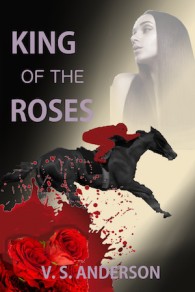
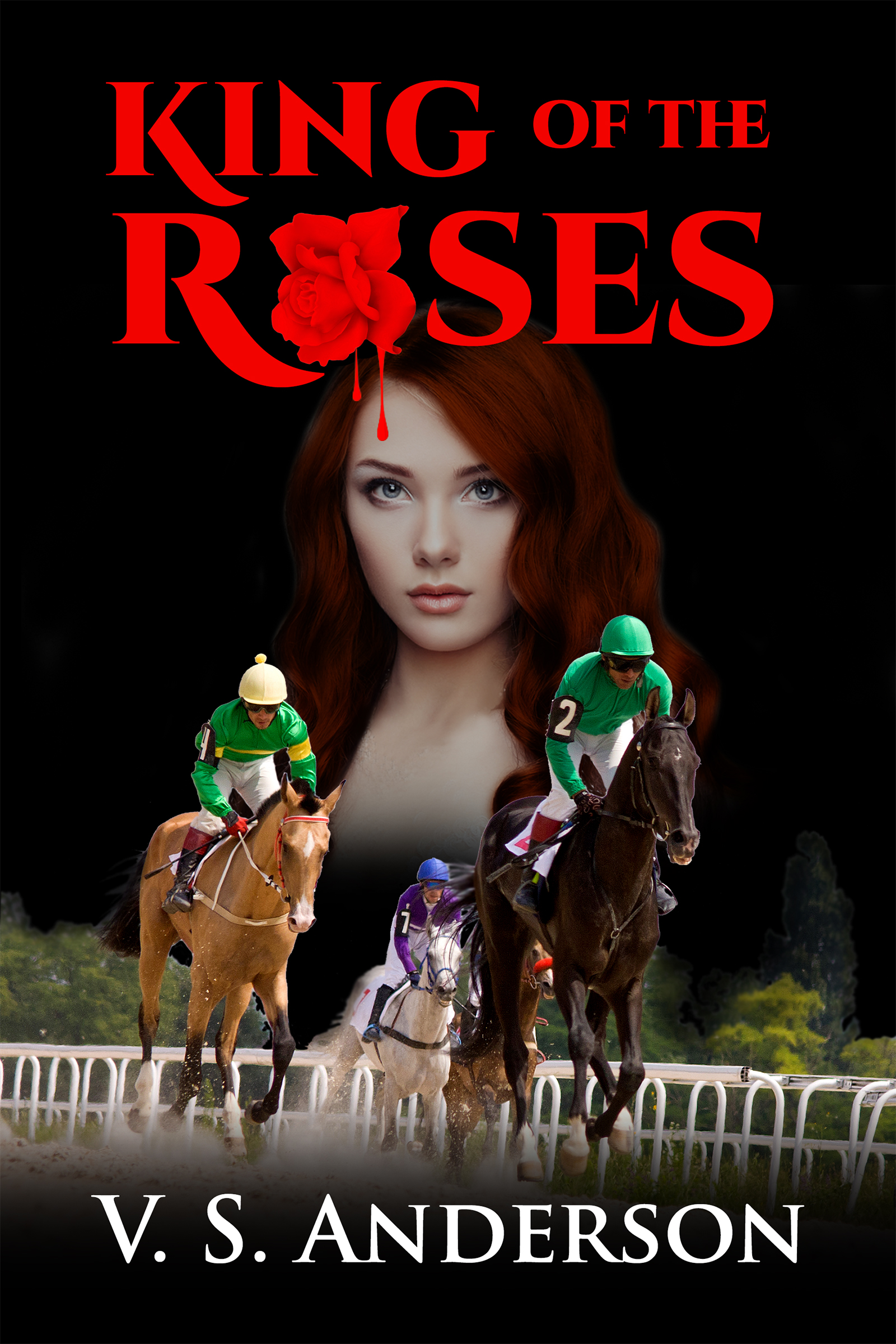
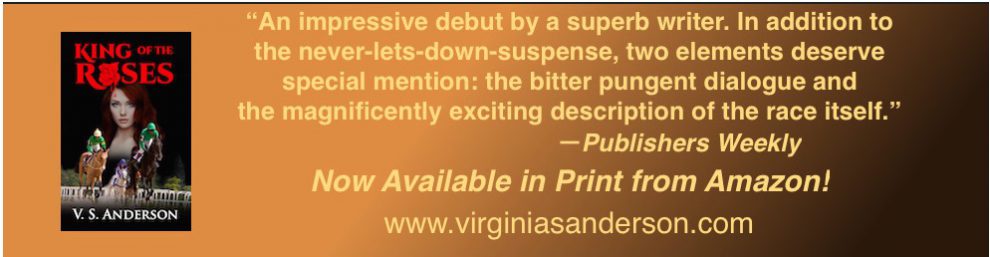
Draft of New Cover for King of the Roses

I’m looking for a cover that will look better in thumbnail. Here’s an effort. All feedback welcomed! kotrnew4300

2 Comments

Filed under King of the Roses, V. S. Anderson

Victoria Strauss’s Year-End Post List

Hand in books

Something here for every aspiring writer! Strauss is one of the best resources around! Info on contracts, social media, marketing, promotion—check it out!

1 Comment

Filed under blogging, business of writing, ebooks publishing and selling, Finding literary agents for writers, indie publishing, Learning to write, looking for literary editors and publishers, Money issues for writers, Myths and Truths for writers, Publishing, publishing contracts, reversion of rights clauses, Self-publishing, Writing, writing novels