Tag Archives: creative writing

Lies told by Small Presses

Some good warnings to take to heart!

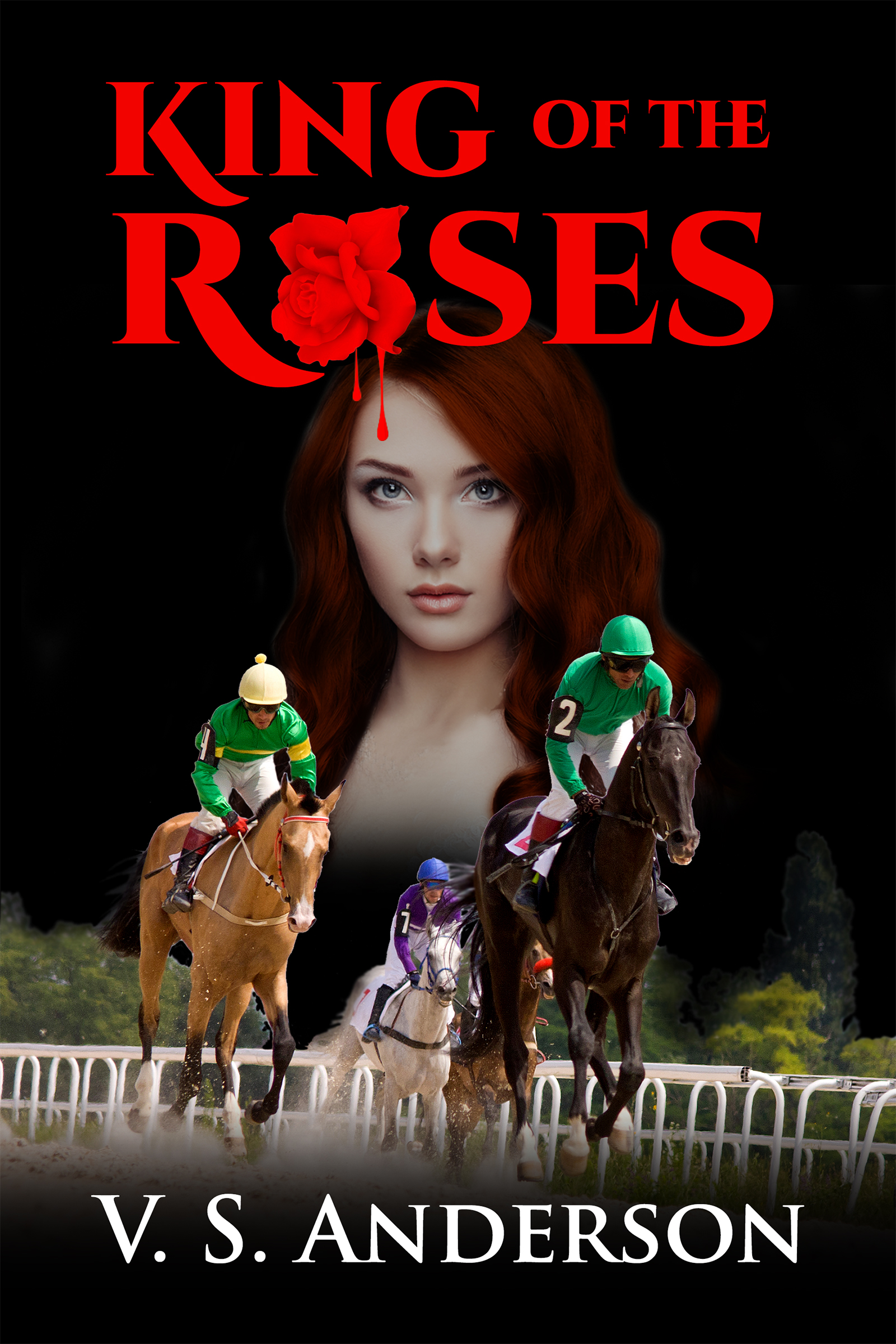
I have a couple of things to add. Unless the market has changed drastically, having a good agent and getting an advance is unlikely to guarantee your book visibility or even entry into mainstream bookstores. I was paid $5000 by St. Martin’s in 1983; even though King of the Roses got superb reviews (check them out in the Amazon preview), the book never made it into any of the many stores, local or national, that existed at the time (before Amazon). I was told St. Martin’s would have had to commit to a massive advertising budget before any of the stores would find spine-out space for my book, let alone any kind of display or prominent position. (This despite the fact that my mother wrote many angry letters to bookstores demanding that they put my book on a stand in the doorway!) St. Martin’s did minimal advertising, but did make sure reviewers got copies and paid attention to them, which is a big deal, and something that will be hard for us to do for ourselves.

It’s my understanding (possibly erroneous?) that publishers’ budgets are even tighter today than they were in 1983. So true traditional publishing by one of the major houses doesn’t mean authors don’t still have work to do to get their books out there. But articles like this help us avoid pitfalls that will make our efforts go for naught!

Steven Capps's avatarBard & Books

Like many of my posts, this stems from something I saw in an online writer’s group. Essentially, someone who has been traditionally published from a small press was putting down people who self-publish. Personally, I have my own problems with self-publishing that I discuss in my “Why I’ll Never Self-Publish” post, but that is besides the point. At this point, I’d like to formally begin my rant against small presses.

In my opinion, traditional publishing is best done through an agent and then with a professionally recognized publisher. Small presses, unless they are recongized by writing organizations like Codex or SFWA, often give little more than what someone can do through self-publishing but will suck away 40-60% of the author’s share of royalties and then use self-publishing tools (like Createspace) to produce the book. Small Presses get away with this by telling authors lies in order to get them to sign…

View original post 1,144 more words

2 Comments

Filed under business of writing, indie publishing, King of the Roses, Marketing books, Money issues for writers, Myths and Truths for writers, Publishing, publishing contracts, Self-publishing, small presses, V. S. Anderson, Writing, writing novels, writing scams

Creating a Universal Amazon Link – One Link Amazon Sites in all Countries

This is really important if you’re trying to run ad campaigns. It worked perfectly for me. Thanks to Don Massenzio for reposting his original advice.

Unknown's avatarDon Massenzio's Author Site

I posted this tip a while ago and got some positive feedback. If you set up buying links for your books, many of you are probably posting Amazon links for each country that you think your book will likely realize some sales.

There is no need to do this.

I was getting frustrated when I ran a free book promotion weekend and experimented with placing a Facebook ad that reached out to multiple countries. My dilemma with doing this is that I didn’t have a way to post all of the links for the various Amazon sites in other countries on my ad without it looking clumsy.

I searched for a way to create a universal link for my book. A universal link, when clicked by a potential reader, is designed to take them to my book on the appropriate Amazon page for their country.

All they needed to do was…

View original post 160 more words

Leave a comment

Filed under business of writing, ebooks publishing and selling, indie publishing, Marketing books, Print on Demand for fiction writers, Self-publishing, Tech tips for writers, Writing, writing novels

Do You Hate Semicolons? Prepare for Battle!

Do you hate semicolons when you read?This lively post by Aliette de Bodard at Chuck Wendig’s Terrible Minds blog not only defends semicolons but also encourages us to learn to use them well.  My take: I’m an enemy of rigid rules, period. That said, there are some conventions writers really need to know, such as how to punctuate dialogue so it’s clear when it begins and ends. Readers get used to some of these conventions, and get jerked out of the story when their expectations are not met.

So whether to break a rule can really be a judgment call. Definitely: you best serve your prose if you know the rule, and the consequences of breaking it.

And by the way, I’ve been reading an awful lot of wonderful books that are unself-consciously replete with adverbs. I think I’m going to go back to some of my stripped-down paragraphs and slip those adverbs back in. Judiciously, of course. And in the dark of night.

3 Comments

Filed under correct grammar for writers of fiction, Editing your novel, grammar rules for writers, indie publishing, Myths and Truths for writers, punctuation for writers of novels, self editing for fiction writers, Self-publishing, style for writers, Writing

4 Ways to Handle Backstory

Thanks to Andrea Lundgren posting over at A Writer’s Path for addressing an issue of craft I see us all struggling with all the time! I like a variation on number 4: dropping in short fragments of backstory in the course of ongoing narration. For example, when a new character engages with the protagonist, he or she can fill in a line or two to bring readers up to speed on the past relationship: “The last time Mark met Jane, the experience had been traumatic for both. He’d been in the middle of X, she’d been involved in Y, etc.”
Similarly, when a character enters a setting, a few lines of backstory can set up the role of that setting in the character’s life: “The first time she visited New York, she had been young and naive. . . . ”
It doesn’t take an entire flashback to establish histories like these. Simple inclusions in description and dialogue can tell us much about characters’ pasts.
The big caveat, for me, is that our readers don’t need to know EVERYTHING we know about our characters. Just as with all descriptions and exposition, I have to work to find the information that is really relevant to the story, perhaps to what’s happening in a particular moment.
Thanks, Andrea, for touching on a part of craft we all wrestle with in our writing!

theryanlanz's avatarRyan Lanz

Four 4

By Andrea Lundgren

Every story has exposition–details of the character and world that you, as the author, need to pass on to the reader. You’ve spent hours fleshing out the world of your story and learning about your characters, and now you have to find some way of getting this information (or at least the essential part) from your head to the readers’. (This is especially true in science fiction and fantasy, where you need to tell how the world of the story differs from our world.)

So what’s an author to do?

View original post 1,059 more words

1 Comment

Filed under Editing your novel, Learning to write, Plot Development for writers, Writing, writing novels

Do you want to know just the right word?

Thanks, Jean! I’ve been using Thesaurus.com with excellent results—way better than that thin list on Word. But this tool looks even more useful. I’ll give it a try today and pass on my results.

Jean M. Cogdell's avatarJean's Writing

Happens to me more than I’d like to admit!

I’ve found a tool to help!

I’m on a roll, typing like a maniac. 

Until I stumble over a word.

My writing comes to a screeching halt. A word isn’t right. But I don’t want to stop my progress. After all, I’m a writing maniac. So I use a placeholder, I’ll come back to this section later and figure out the right word or words to convey my thoughts.

However, I’ve now got an itch I can’t scratch. That thought, that missing word or phase will not leave me alone.

Ever happen to you?

My protagonist whispers he can’t work like this, it’s too unprofessional.

Sigh, okay, I cave, save what little progress I’ve made and return to my placeholder. So I…

  • Think, think, think, I’ve got nothing.
  • Look up the placeholder word. Huh? Not even close. What was I thinking?
  • Check thesaurus. What…

View original post 261 more words

Leave a comment

Filed under ebooks publishing and selling, Editing your novel, indie publishing, Print on Demand for fiction writers, self editing for fiction writers, Self-publishing, style for writers, Tech tips for writers, Writing, writing novels

March/April 2017 Writing Contests

Here’s another useful list of contests from Rachel Poli!

Leave a comment

Filed under indie publishing, poetry, Writing, writing contests

8 Tips For Formatting Your Book

These tips from Don Massenzio may help you make formatting decisions. I particularly like the idea of using 1.5 line spacing instead of single spacing in print books. Maybe I’ll try that next time!

pile of letters for writing

Check out my Beginner’s Cheat Sheet for formatting your hard copy book in InDesign!

Unknown's avatarDon Massenzio's Author Site

This blog post is designed to help fellow independently published authors improve the quality of their work, but most of the tips here apply to the formatting of any book. I’m speaking of the formatting of books for the consumption of readers, not formatting your manuscript to send off to an agent or publisher.  There are a whole other set of rules for that exercise.

I’ve put together a list of ten tips that you should consider when putting your book together. They are not in order of priority, but together, they can make your book stand out from the millions of others available through your favorite sales channel.

1. Put Some Thought Into Your Cover

I have to admit, this was something I didn’t waste a lot of time on when I published my first book, Frankly Speaking. I just went ahead and used the Kindle cover creator and cranked…

View original post 1,641 more words

2 Comments

February 20, 2017 · 4:43 pm

EDITING 101: 24 – Split Infinitives and Dangling Participles…

This column is near and dear to my heart. I’ve posted on dangling modifiers before, and I see them all the time in my critique groups.

A couple of thoughts:

First, the aversion to “splitting infinitives” comes from an 18th-century spurt of wishfulness that English could be elevated to the status of Latin—in which infinitives are one word and can’t be “split.” Note that in Romance languages like French and Spanish, this still holds true; how can you “split” an infinitive like “hablar”? But English is not a Romance language, despite having picked up many words from French, Spanish, and Italian, in particular. So those “rules” never rightly applied.

Second, note that “to boldly go” is in iambic pentameter, Shakespeare’s meter, and a natural meter in English. That’s why “to go boldly” just doesn’t have the same ring.

Dangling modifiers, on the other hand, cause problems for me because there’s a brief mental hiccup when the modifier has to hunt for its appropriate noun or pronoun. Sure, I can figure out who or what is doing the action of the modifier, but do writers really want readers stopping, even for a second, to puzzle?

This column is clear and concise, presenting these issues well. Thanks to both Chris the Story Reading Ape and Adirondack Editing.

Chris The Story Reading Ape's avatarChris The Story Reading Ape's Blog

Originally posted as the Dun Writin’—Now Whut? series on this blog, EDITING 101 is a weekly refresher series for some of you and brand new for others.

Courtesy of Adirondack Editing

Split Infinitives and Dangling Participles

Editors frequently correct both of these, but one is actually ok to use, while the other is not. Care to make a wager on which one is which before I get started?

Ante up!

What is a split infinitive, after all? It’s a sentence where a word, usually an adverb, interrupts a full verb (or full infinitive). A full infinitive is the verb with the word “to” in front of it—to run, to walk, to spit. The most famous split infinitive is “to boldly go.” Editors and teachers used to mark this as incorrect, but it’s all right to split an infinitive. Some examples are:

  • Lyn continued to quickly run toward the burning building.

  • Willow…

View original post 552 more words

3 Comments

Filed under correct grammar for writers of fiction, Editing your novel, grammar rules for writers, indie publishing, Learning to write, Myths and Truths for writers, self editing for fiction writers, Self-publishing, Writing

Avoid Writing Contest Scams!

Beware of writing contest scams!Writer Unboxed (via, as so often, Chris the Story Reading Ape) is hitting  on all cylinders these days. Here’s an extremely useful post detailing how to assess a publishing contest BEFORE you enter! Thanks to Susan Spann for this excellent list. Read the comments, too.

6 Comments

Filed under Copyright for writers, publishing contracts, Writing, writing contests, writing scams

A Fun Post on Rejection (No Kidding)

rejection made funny!Here’s another good one from over at Writer Unboxed: Louie Cronin, Cronin the Barbarian of Car Talk fame, explains why she became an expert in rejecting submissions—and what her experience means for writers. If you are a Car Talk fan, you’ll get an extra kick out of this! Have  you ever thought of rejection this way?

1 Comment

Filed under business of writing, Finding literary agents for writers, looking for literary editors and publishers, Marketing books, Myths and Truths for writers, Publishing, Writing, writing novels