Category Archives: indie publishing

A Writer’s Guide to Defamation and Invasion of Privacy: Important Information!

Reblogged on WordPress.com

Source: A Writer’s Guide to Defamation and Invasion of Privacy

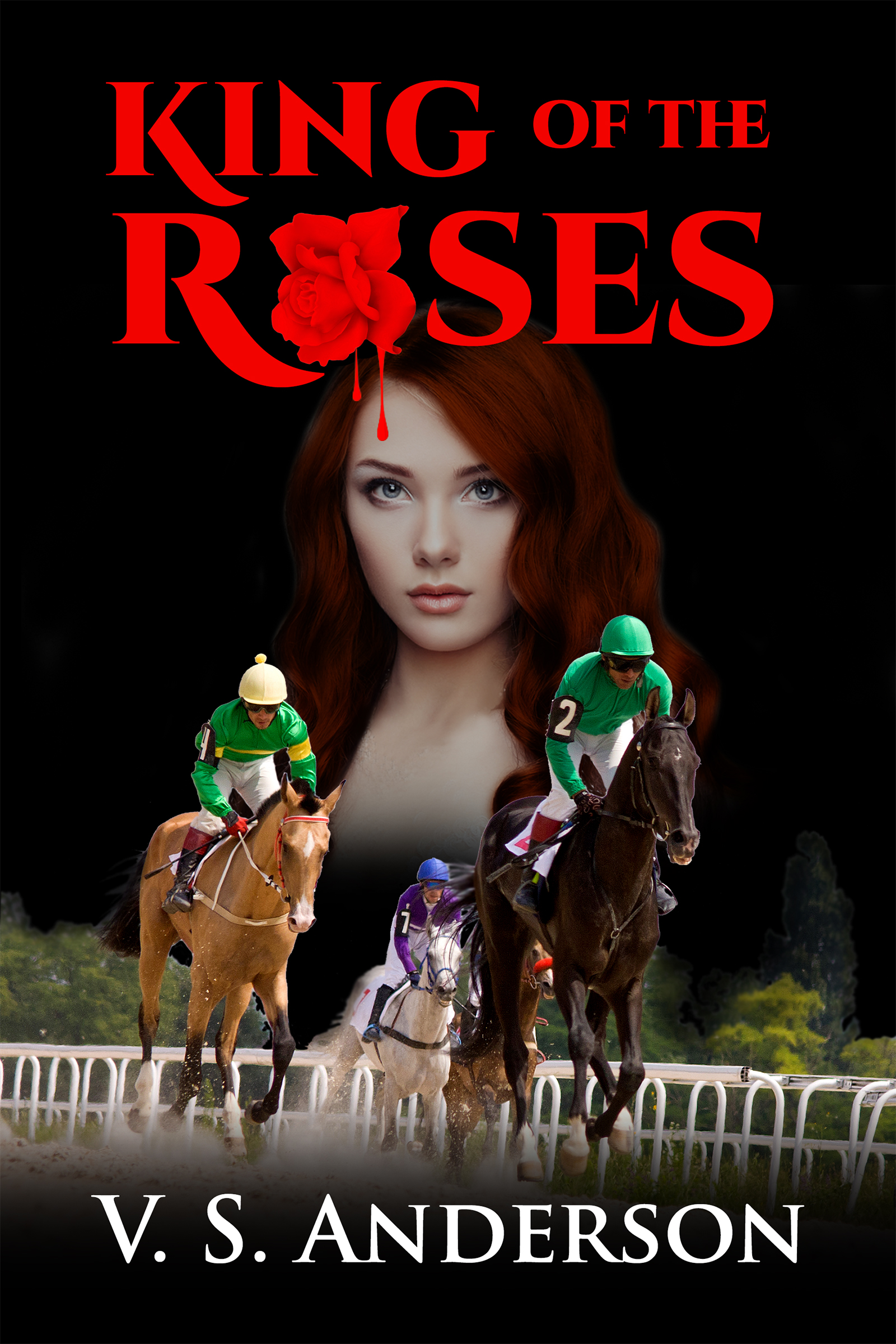
This is excellent information that clarifies many issues. One issue Amy Cook doesn’t address is the definition of (and handling of) “public figures.” Well-publicized lawsuits show they’re not totally fair game; is truthfulness the only line? When my novel King of the Roses first came out, I struggled with this issue since I drew on a horse-racing legend for my inspiration. Since I made him the hero and probably a little better than he was (he’s dead now), and since he never made any attempt to dodge the limelight, I was pretty well protected. But this is a dimension of the privacy/defamation issue with its own dangers.
Thanks to Chris the Story Reading Ape for another great share, this one from Tribalmystic stories!

2 Comments

Filed under business of writing, indie publishing, King of the Roses, Myths and Truths for writers, Publishing, Self-publishing, V. S. Anderson, What Not To Do in Writing Novels, Writing

Why I Quit Reading Your Book

Sad Editing!I just abandoned another indie book.

It always breaks my heart to do this (fortunately, I’ve only done it a very few times). The act sets me to thinking: Was I just being a persnickety grouch, or do I have legitimate things to say about what makes a book work? This question is particularly cogent when I bought this book—two by this author, in fact—on the strength of a glowing review.

Obviously, my reaction isn’t the only one that matters. So is there anything of worth in trying to lay out what went wrong for me?

Writer with questions

I think so. After all, I’ve raised the question of whether we really serve each other if we don’t at least try to explain why a particular element of a book led not to a mild critique but to abandonment, even if we can do so only in generic terms lest we embarrass a fellow writer. And my thoughts here are not idiosyncratic; practicing writers have heard versions of them before.

So. . . .

It took three strikes to force me to turn off my Kindle this time around. Looking at these three strikes, I realize that I would have probably let two of them slide if the third had been in place.

The first of the two strikes I might have forgiven was a plot twist I didn’t buy into. But I’ve persevered, even if grumpily, past what seemed to me far-fetched plot devices before.

The other strike involved some bizarre inaccuracies in the author’s depiction of the setting, which I happen to know intimately. But I’ve hung in through (and enjoyed!) stories that present that setting in ways that don’t completely jibe with my experience.

In both cases, I could have been seduced into accepting or ignoring these slips. It was the seduction that wasn’t there.Eyeglasses and pen

Because the writer lacked voice.

In other words, had this book had voice, the pleasure of voice could have overridden my complaints.

But what in the world do I mean by “voice”?

Writing teachers talk about voice all the time. They know it when they see it. But ask them to give you a formula for acquiring it? They try. Oh, do they try.

Typewriter with questions marks

Like most people, whether you know it or not, you already have many voices. You know how to sound different when writing a Facebook post and an office memo. No one has to teach you that.

But “literary voice” is a little different. You learn the voice of an office memo by writing the way people write office memos. Literary voice, on the other hand, isn’t something you copy outright. There’s learning involved, what rhetoricians call imitatio. But from this learning, it’s something you create.

Here, I’m offering three dimensions of what was missing in the book I abandoned. These do not constitute the ultimate definition of voice. They’re just my attempts to put into “voice” a few of the qualities that make prose come alive for me enough to carry me past plot glitches and other slips. Typewriter and flowers

 

Voice is what says you have moved beyond “the rules.”

In the book I’m discussing, I could see the author conscientiously and visibly filling in the various checklists for what a writer ought to do. BUT: The essence of voice is riding those rules down the road where you want to go.

In this book, the rule that ruled the writer was a common one: Bring readers into the scene! Lots of sensory details! Make it come alive! Think of creative ways to say what you want readers to know!

But in this book, too many details, piled up on top of each other, slowed the action to the point that I skimmed ahead in frustration. You don’t want to confuse readers, but you don’t have to race them through every doorway, show them every blow to your hero’s head. Choose the most necessary, the most telling details. Don’t just pile up information because the rules seem to say you should.

Voice serves the story, not the writer. Book with heart for writers

In the books I’ve abandoned, writers often convolute their prose as if they must sound original—be a unique SOMEBODY—at all costs. But these choices may be robbing the English language of the power of its basic formula: Subject-verb-object. Someone doing something to someone. A basic sentence can have a modifying clause before it or an absolute phrase behind it, but English narrative dodges all sorts of pitfalls when it follows this basic pattern. For an excellent discussion of why this pattern works, try Joseph Williams’s classic Style: Ten Lessons in Clarity and Grace. Let people do things. Some of the most powerful prose in the world aspires to no more than this.

Still, voice means surprising the reader—just enough.

Your characters, your settings, your scenes, stand in a line-up with the characters, settings, and scenes from every other book ever written in your genre. When what you’ve put in your book could just as easily pop up in somebody else’s book, you probably lack voice. In the book(s) I’ve abandoned, I felt that I could predict every move, every sentence. I was looking at what we used to call “stock”—characters, settings, and prose off the shelf.

How can you move beyond stock?

What do you know about your character that no one would expect from a generic description of his age, ethnicity, occupation, etc.? What do you see in your setting that tells a whole story but that everyone else would overlook?

Woman writing

To create such vision, try these two steps: 1) Brainstorm. 2) Cull.

Exercises abound in books, workshops, blog posts, to help us generate details we might or might not actually use in our books. Here’s the place to go for the crazy stretch. Don’t censor. Outlandish is okay!

Then cull. Set aside your exercises as long as you can. Come back to them to see which ones jump off the page. Pick one. Maybe two. Be strict! Only the best. Only the ones that nail something readers really need to know but would never suspect.

And if you can, work toward honoring that famous dictum from Mark Twain (here tweaked because my version sounds better): The difference between the right word and the almost right word is the difference between lightning and the lightning bug.

Lightning, green field

Prose that captures lightning. not in every line but in carefully chosen moments of flash, has voice.

And I’ll forgive a lot if you give me voice.

What have I left out? What is voice to you? Send along examples of writers whose voice you admire.
15 Comments

Filed under indie publishing, Learning to write, Publishing, self editing for fiction writers, Self-publishing, style for writers, Writing, writing novels

‘Dear Lucky Agent’ Contest

Do you write women’s fiction? Check out this contest!

Reblogged on WordPress.com

Source: ‘Dear Lucky Agent’ Contest

Leave a comment

Filed under ebooks publishing and selling, Finding literary agents for writers, indie publishing, Self-publishing, Writing, writing contests, writing novels

8 Words to Seek & Destroy in Your Writing

A great reminder post1 So important to double-check these words to make sure they actually do work in our sentences before letting them stand. I echo Orwell’s advice, though, especially about the various forms of the verb “to be” (was, is, am, are, etc.). I always ask myself whether I can find a strong action verb rather than a being verb when I’m tempted to fall back on one. Yet I’ve also seen sentences where writers twisted themselves into knots trying to avoid “to be.” Once in a while, the shortest distance between two points is a nice little linking verb!

Leave a comment

Filed under ebooks publishing and selling, Editing your novel, grammar rules for writers, indie publishing, Learning to write, Publishing, self editing for fiction writers, Self-publishing, style for writers, Writing

Almost Everything You Need to Know about ISBNs

Found this on Chris the Story Reading Ape and commented,

Pressed this to Just Can’t Help Writing. I read a post where an expert on indie publishing told readers it would cost more than $300 to get an ISBN. Having gotten mine from Smashwords, I couldn’t help wondering what he was talking about. This article helps clear that up. Thanks for sharing it!

Become-a-writer

To read this article, click on the link or photo of Author Laurie Boris below: almost-everything-you-need-to-know-about-isbns/

Source: Almost Everything You Need to Know about ISBNs

Leave a comment

Filed under Amazon Kindle Direct Publishing, business of writing, ebooks publishing and selling, indie publishing, Money issues for writers, Myths and Truths for writers, Publishing, Self-publishing, Smashwords, Writing, writing novels

New! “Book Reviews for Horse Lovers” Page!

Check out these reviews. I’ve found some gems!

I plan to keep adding to the list as I continue reading others’ stories of the world of horses.

Paddy, my horse.

Paddy has opinions, too.

Leave a comment

Filed under ebooks publishing and selling, Goodreads, indie publishing, Reviews, Writing, writing novels

10 things that red-flag a newbie novelist.

This is one of the best compendia of guidelines for troubleshooting a novel-in-progress that I’ve recently come across. My own constant struggle is the interior monologue, wherein my character thinks through her motives. Some of this is necessary, but in my current very rough draft I’m noting again and again, “Too long! Cut!” Fortunately, I have an excellent writing group that will call me out on this sin.
I’m working on a post about what has stopped me from finishing some of the books I’ve been reading in my quest to understand the indie landscape. Hamilton’s list captures many of the problems that I’ve encountered (and fight like crazy not to commit): 1) Lack of a story arc–in a couple of cases, everything seemed to be resolved mid-novel; why keep reading? 2) Detail-heavy, clunky prose I had to wade through. 3) Pages and pages of setting and character-building before anything happens. I love the comment that we all should wish to see ourselves as others see us! Hooray for honest readers. May they long thrive!

Kawanee Hamilton's avatar

THE PUBLISHING BUSINESS, WRITING CRAFT

10 THINGS THAT RED-FLAG A NEWBIE NOVELIST

Red_flag_waving.svg

by Anne R. Allen

Beginning novelists are like Tolstoy’s happy families. They tend to be remarkably alike. Certain mistakes are common to almost all beginners. These things aren’t necessarily wrong, but they are difficult to do well—and get in the way of smooth storytelling

They also make it easy for professionals—and a lot of readers—to spot the unseasoned newbie.

When I worked as an editor, I ran into the same problems in nearly every new novelist’s work—the very things I did when I was starting out.

I think some of the patterns come from imitating the classics. In the days of Dickens and Tolstoy, novels were written to be savored on long winter nights or languid summer days when there was a lot of time to be filled. Detailed descriptions took readers out of their mundane lives…

View original post 2,153 more words

Leave a comment

Filed under ebooks publishing and selling, Editing your novel, indie publishing, Learning to write, Myths and Truths for writers, Publishing, self editing for fiction writers, Self-publishing, style for writers, What Not To Do in Writing Novels, Writers' groups, Writing, writing novels

For Authors: E-mail Marketing Companies Compared

Thanks to Brittney Sahin for a look at some of the promotion options available! I haven’t tried this yet, but this post encourages me to consider it!

brittneysahin's avatarbrittneysahin

facebook bnnr

During the holiday season I decided to try out 3 different e-mail marketing companies for my first novel, Silenced Memories. I will discuss the results of each below. I did attempt to submit my book to 3 other websites as well, but they were booked (because many other authors were probably thinking the same thing-holiday promotion!)

  1. December 5th- ENT- E-Reader News Today

Sale price Dec. 5th-Dec. 6th

Price for ‘romance suspense’ – $45 (price varies depending on genre)

E-book discounted from $2.99 to $.99

Books sold on day 1: 208 Amazon; less than 10 between ibooks & nook

Books sold on day 2 (no promo running): 46 Amazon; less than 5 (ibooks/nook)

Overall results: I think this campaign was very successful. Gaining that many new readers was great. I also reached #69 on romance suspense on Amazon (for a few hours!) & #49 on romance military. I made my money back…

View original post 532 more words

Leave a comment

Filed under Amazon Kindle Direct Publishing, business of writing, ebooks publishing and selling, indie publishing, Money issues for writers, Self-publishing, Writing, writing novels

Victoria Strauss’s Year-End Post List

Hand in books

Something here for every aspiring writer! Strauss is one of the best resources around! Info on contracts, social media, marketing, promotion—check it out!

1 Comment

Filed under blogging, business of writing, ebooks publishing and selling, Finding literary agents for writers, indie publishing, Learning to write, looking for literary editors and publishers, Money issues for writers, Myths and Truths for writers, Publishing, publishing contracts, reversion of rights clauses, Self-publishing, Writing, writing novels

Important advice on publishing contracts!

Writer with questionsFound this at Writers in the Storm today. Here’s what I wrote as a comment:

I had old contracts that required me to give notice and then wait 90 days for the publisher to decide whether or not to re-activate the titles. While I was pretty sure the rights to at least one of the books had already been passed on and then returned to me by another publisher, I went through the steps as laid out in the contracts. The hard part was finding the right place to send my notice. The web site (of a major publisher) was no help. I found a “permissions” link and wrote asking that my request be forwarded to the right person. That eventually happened. and I eventually received written confirmation of the reversion.
The clauses you provide would have saved me a lot of trouble. I’m not sure they were standard when my books were originally published, but for future publications, I’ll be on the lookout! Thanks for some solid advice!

Leave a comment

Filed under business of writing, ebooks publishing and selling, indie publishing, Money issues for writers, Myths and Truths for writers, Publishing, publishing contracts, reversion of rights clauses, Self-publishing, Writing, writing novels