Category Archives: Myths and Truths for writers

A whole bunch of things I’ve learned about writing and selling my writing

Terrific Post on Style for Writers!

Chuck Wendig responds to a reader who finds sentence fragments troublesome (they make writing “unreadable,” in the commenter’s view). If you haven’t met Chuck yet, you’re in for a ride, though you’d best leave your Sunday-go-to-meetin’ expectations at home. I envy his verbal energy!

Explosive set

What I love about this post is that it celebrates the incredible flexibility of language, all the ways that writers can whip it up and lay it down and make it their own (in the great tradition of Humpty Dumpty in Alice in Wonderland!). Wendig illustrates the power of the dreaded fragment with examples from some of the greatest of writers. He reminds us that rules are the groundwork but imagination and a writer’s ear are the scaffolding that builds palaces on those placid rules.

My own caveat is that when I was teaching, so many of my students had a tough time recognizing things like fragments. Especially fragments! The lack of some kind of internal sense of what “a sentence” is may not have handicapped those with the drive and verve to become creative writers; imagination and ear may have been enough.

But I argue (and Wendig cautions) that it’s vital to learn such “basics” of language because if you don’t, you can’t make choices. You can’t switch your verbal code to fit it to different contexts, for example, to a business setting where a lively fragment-sequined style will simply be out of place. You probably can’t write that query letter we all sweat over. At least you can’t write it with confidence that you can decide when to explode on the page and when to hold back.

So many of my students hoped to be great novelists. I couldn’t help worrying that without the ability to choose the linguistic strategies they needed in a given context, they would be handicapped if the whole great-novelist thing didn’t come off. As it so often doesn’t . . . at least not as fast as we’d like it to.

Do you agree with Wendig? What is your fragment strategy? Do you have a favorite “fragment passage” to pass on?

Novel!


Leave a comment

Filed under correct grammar for writers of fiction, Editing your novel, grammar rules for writers, indie publishing, Learning to write, Myths and Truths for writers, punctuation for writers of novels, self editing for fiction writers, Self-publishing, style for writers, Teaching writing, Writing, Writing and teaching writing, writing novels

A Writer’s Guide to Defamation and Invasion of Privacy: Important Information!

Reblogged on WordPress.com

Source: A Writer’s Guide to Defamation and Invasion of Privacy

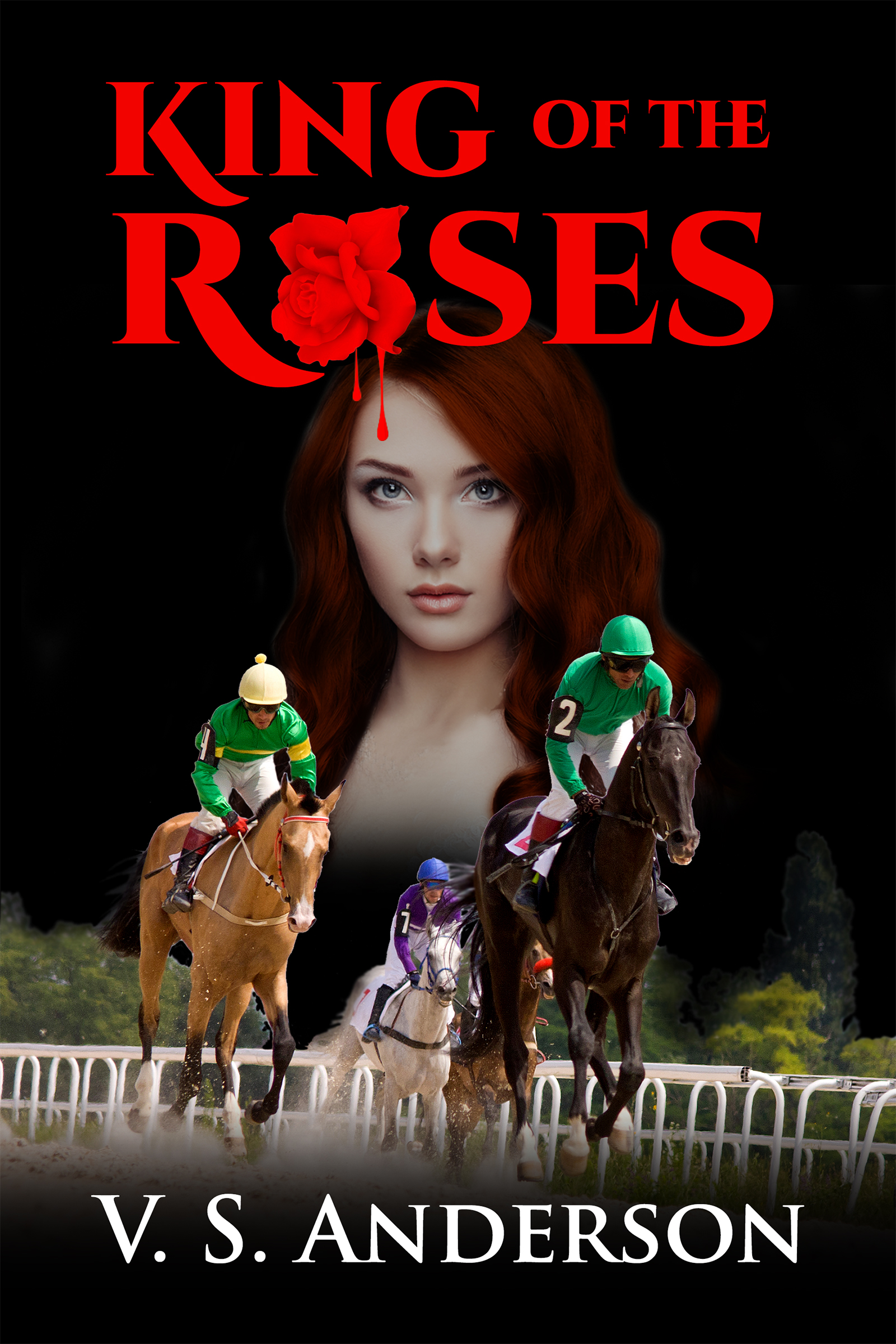
This is excellent information that clarifies many issues. One issue Amy Cook doesn’t address is the definition of (and handling of) “public figures.” Well-publicized lawsuits show they’re not totally fair game; is truthfulness the only line? When my novel King of the Roses first came out, I struggled with this issue since I drew on a horse-racing legend for my inspiration. Since I made him the hero and probably a little better than he was (he’s dead now), and since he never made any attempt to dodge the limelight, I was pretty well protected. But this is a dimension of the privacy/defamation issue with its own dangers.
Thanks to Chris the Story Reading Ape for another great share, this one from Tribalmystic stories!

2 Comments

Filed under business of writing, indie publishing, King of the Roses, Myths and Truths for writers, Publishing, Self-publishing, V. S. Anderson, What Not To Do in Writing Novels, Writing

Almost Everything You Need to Know about ISBNs

Found this on Chris the Story Reading Ape and commented,

Pressed this to Just Can’t Help Writing. I read a post where an expert on indie publishing told readers it would cost more than $300 to get an ISBN. Having gotten mine from Smashwords, I couldn’t help wondering what he was talking about. This article helps clear that up. Thanks for sharing it!

Become-a-writer

To read this article, click on the link or photo of Author Laurie Boris below: almost-everything-you-need-to-know-about-isbns/

Source: Almost Everything You Need to Know about ISBNs

Leave a comment

Filed under Amazon Kindle Direct Publishing, business of writing, ebooks publishing and selling, indie publishing, Money issues for writers, Myths and Truths for writers, Publishing, Self-publishing, Smashwords, Writing, writing novels

10 things that red-flag a newbie novelist.

This is one of the best compendia of guidelines for troubleshooting a novel-in-progress that I’ve recently come across. My own constant struggle is the interior monologue, wherein my character thinks through her motives. Some of this is necessary, but in my current very rough draft I’m noting again and again, “Too long! Cut!” Fortunately, I have an excellent writing group that will call me out on this sin.
I’m working on a post about what has stopped me from finishing some of the books I’ve been reading in my quest to understand the indie landscape. Hamilton’s list captures many of the problems that I’ve encountered (and fight like crazy not to commit): 1) Lack of a story arc–in a couple of cases, everything seemed to be resolved mid-novel; why keep reading? 2) Detail-heavy, clunky prose I had to wade through. 3) Pages and pages of setting and character-building before anything happens. I love the comment that we all should wish to see ourselves as others see us! Hooray for honest readers. May they long thrive!

Kawanee Hamilton's avatar

THE PUBLISHING BUSINESS, WRITING CRAFT

10 THINGS THAT RED-FLAG A NEWBIE NOVELIST

Red_flag_waving.svg

by Anne R. Allen

Beginning novelists are like Tolstoy’s happy families. They tend to be remarkably alike. Certain mistakes are common to almost all beginners. These things aren’t necessarily wrong, but they are difficult to do well—and get in the way of smooth storytelling

They also make it easy for professionals—and a lot of readers—to spot the unseasoned newbie.

When I worked as an editor, I ran into the same problems in nearly every new novelist’s work—the very things I did when I was starting out.

I think some of the patterns come from imitating the classics. In the days of Dickens and Tolstoy, novels were written to be savored on long winter nights or languid summer days when there was a lot of time to be filled. Detailed descriptions took readers out of their mundane lives…

View original post 2,153 more words

Leave a comment

Filed under ebooks publishing and selling, Editing your novel, indie publishing, Learning to write, Myths and Truths for writers, Publishing, self editing for fiction writers, Self-publishing, style for writers, What Not To Do in Writing Novels, Writers' groups, Writing, writing novels

Victoria Strauss’s Year-End Post List

Hand in books

Something here for every aspiring writer! Strauss is one of the best resources around! Info on contracts, social media, marketing, promotion—check it out!

1 Comment

Filed under blogging, business of writing, ebooks publishing and selling, Finding literary agents for writers, indie publishing, Learning to write, looking for literary editors and publishers, Money issues for writers, Myths and Truths for writers, Publishing, publishing contracts, reversion of rights clauses, Self-publishing, Writing, writing novels

Important advice on publishing contracts!

Writer with questionsFound this at Writers in the Storm today. Here’s what I wrote as a comment:

I had old contracts that required me to give notice and then wait 90 days for the publisher to decide whether or not to re-activate the titles. While I was pretty sure the rights to at least one of the books had already been passed on and then returned to me by another publisher, I went through the steps as laid out in the contracts. The hard part was finding the right place to send my notice. The web site (of a major publisher) was no help. I found a “permissions” link and wrote asking that my request be forwarded to the right person. That eventually happened. and I eventually received written confirmation of the reversion.
The clauses you provide would have saved me a lot of trouble. I’m not sure they were standard when my books were originally published, but for future publications, I’ll be on the lookout! Thanks for some solid advice!

Leave a comment

Filed under business of writing, ebooks publishing and selling, indie publishing, Money issues for writers, Myths and Truths for writers, Publishing, publishing contracts, reversion of rights clauses, Self-publishing, Writing, writing novels

Battle is Lost!

A sad day for grammar purists: The Washington Post will allow “singular they”!

Leave a comment

Filed under correct grammar for writers of fiction, Editing your novel, grammar rules for writers, indie publishing, Myths and Truths for writers, self editing for fiction writers, Self-publishing, style for writers, Teaching writing, Writing

Which is Most Important: Character, Conflict, or Crisis?

Book with heart for writersAs I’ve been reading around in the Indie-verse, I’ve found a couple of books I’ve decided not to finish. As both a writer and a reader, I’ve thought about what triggers me to abandon a book.

One feature that has stuck as a cause for my reaction can be summed up in advice Brian Klems of Writer’s Digest provided at the Writing Day Workshop I attended in Indianapolis in October:

Begin with conflict, not crisis.
Typewriter with questions marks

In other words, writers I’m deciding sadly to give up on often begin with their characters in crisis. But Klems’s advice reminds me of a cruel but vital truth:

If I don’t know your character, I don’t care about her. If I don’t care about her, I honestly don’t care if she gets her brains blown out.

Sorry, but there it is.

Gangster with gun

When these writers begin their books, they have three Cs to deal with: Crisis, Character, and Conflict. It may sound counter-intuitive to state that, of the three, Crisis is the least important!

I know, I know: begin in medias res. But not when the folks in medias are just names on a page.

Can you pile on character, conflict, and crisis in opening scenes? I thought I’d try an experiment to find out.

Consider:

Sally found herself staring down the barrel of a gun. She stumbled backwards. He fired. The shot narrowly missed.

Crisis, big time. And a couple of what Paula Munier calls “micro-story questions,” the elements that help to deliver what she calls “narrative thrust.” Who’s shooting at her? Why? Will she escape the next shot?

cartoonguns.jpg

Okay, I’d read on to the next bit. But if the following three pages consisted of her efforts to flee his escape, I’d be flipping ahead to see whether things got more interesting than an abstract flight-and-pursue.

What if, instead, you read:

Of course Mark was going to pull the trigger. When he threatened, he always delivered. Sally flung her hands up, stupidly, since they wouldn’t stop a bullet, and sprawled on her butt on the wedding dress jumbled on the tack room floor behind her. The gun went off in a brain-numbing explosion, the bullet slamming into the row of bridles hanging just above her head.

Beautiful sexy girl with gun

Take that, Mark, you scum!

We still get to the crisis pretty fast, but now we have many more micro-story questions. First, we’ve got conflict: these people have a history. It’s not just a question of why he’s shooting at her, but what between them has happened before to trigger her recognition that this isn’t a joke. “Why and who?” becomes “How does she know this about him? What has he done to make her think this now?” There’s a whole history of people in those queries.

More importantly, that wedding dress. Wedding dress? How in the world did a wedding dress get in the floor of that tackroom? And why a tackroom? We now know that these people somehow connect with horses, and that someone (Mark? Sally?) has just been through (or approached) a wedding. And he’s the determined sort who shoots first and asks questions later, while she’s (at present) a bit reactive and self-derogatory (calling herself “stupid”). Conflict and character as well as crisis—leading to a cornucopia of story questions! And all in the same number of sentences, four.

Some of my writing group colleagues are absolute minimalists and would opt for the first austere and abstract version. But to me, pure action is not nearly as engaging as action involving people I know or people I’ve been made deeply curious about.

An experiment like this leads to me be suggest that if you must demote one of the three Cs, let it be crisis! What? Start flat, with just characters in conflict? Well, yes.

Torn up drafts

As Stephen King argues, narrative tension arises not from wild, boisterous action but from people in “situations,” where they must react to each other and to the problems their situation presents.

True, you can’t spend pages on this development. It has to happen in that medias res moment, through careful pacing and selection of details.

As an illustration of how little we need a doomsday crisis, consider these opening lines from Suzanne Rindell’s The Other Typist:

They said the typewriter would unsex us.

One look at the device itself and you might understand how they—the self-appointed keepers of female virtue and morality, that is—might have reached such a conclusion. Your average typewriter, be it Underwood, Royal, Remington, or Corona, is a stern thing, full of gravity, its boxy angles coming straight to the point, with no trace of curvaceous tomfoolery or feminine whimsy. Add to that the sheer violence of its iron arms, thwacking away at the page with unforgiving force. Unforgiving. Yes; forgiving is not the typewriter’s duty.

Typewriter publish

We’ve got character, even though we haven’t met the speaker. We’ve got conflict: That nameless “they” is already on trial! I haven’t yet read this book Will I? If it lives up to this crisis-deprived opening, you bet.



Leave a comment

Filed under Editing your novel, indie publishing, Learning to write, Myths and Truths for writers, Publishing, self editing for fiction writers, Self-publishing, Writing, writing novels

Visiting Bryan Garner’s “Language Change Index” for Grammar Rules

Bill, the dog, critiques

When in doubt, I ask Bill.

Lurking around on an NCTE forum for English teachers, I learned about Bryan A. Garner’s Language Change Index and thought it nicely complemented some thoughts I’ve posted on this blog about grammar and usage. An interview and a critique discuss his efforts to do more formally what I did informally in ranking usage practices by how widely they’re likely to actually be noticed (see “split infinitive”) by the learned folks aspiring authors need to impress. What emerges for me, based on the examples in these articles, is how idiosyncratic grammar prescriptives can be. BTW, “hopefully” is now a Stage 5, not, in my view, because it ever was an “error,” but because it has been recognized as a perfectly good sentence modifier along the lines of “unfortunately” or Garner’s example of a “correct” sentence modifier, “regrettably.” No identifiable subject has to “hope” any more than an identifiable subject has to “regret.” So there.

Leave a comment

Filed under correct grammar for writers of fiction, Editing your novel, grammar rules for writers, Interviews, Learning to write, Myths and Truths for writers, self editing for fiction writers, style for writers, Writing

Grammar Rules I’m on the Fence On. Are You?

Typewriter with questions marksI’m curious what people think because I am on the fence. Unlike ending a sentence with a preposition, these are not nonsensical non-rules. And unlike using “who” when “whom” is technically called for, they’re not completely invisible—or are they? That’s my question: If you were advising a beginning indie author wanting to self-edit, would these go on your “must know” list?

In fact, very well-credentialed writers do ignore them. Is that enough to move them to “okay to ignore”?

I’ll start with one that seems to have been ripped up and stomped on:

The dangling modifier.

I recall the first time I heard a dangling construction on an episode of NPR’s Nova. What??!! Since then, I’ve seen so many of these that if I had a penny for every one, I could pave my driveway in copper.Sad Editing!

The pattern’s ubiquitous.

“An accomplished author, her books have sold millions.”

“Long known for her steamy romances, her fans number in the millions.”

“His heart broken, the loss of his lover left him devastated.”

“Running across the street, a car almost hit me.”

Does only an ex-English teacher shrivel inside her arid little syntactical shell when the modifier doesn’t modify the noun or noun phrase that immediately follows? When it’s not her books that are an accomplished author? When it’s not her fans that are known for her books? When it’s not the car running across the street?

It’s not that readers can’t make out what goes with what. Is it only an ex-English teacher who shivers in delight when parts of sentences link together so precisely that they’re like the rocks in Inca walls—you couldn’t force a needle between them?

It’s amazing how obviously problematic these seem in isolation. Yet, zoomed over in texts, it can be hard to catch them. (Hah! See?)

But readers know what’s meant perfectly well, don’t they? So what’s the fuss?

Lie and Lay.Writer with questions

I just saw “laying” when it should have been “lying” in a book I deeply respected. Which editor’s job is it to catch this? Am I silly to care?

I’m going to make the radical claim that the English language has decided. “Lie” and “lay” in the progressive tenses (she was lying/laying, he is lying/laying) are interchangeable, as they are in the simple past (he lay/laid down). Let go of it, you hyperventilators! The distinction has deserted you.

Or has it? Is it worth fighting for?

pile of lettersIncomplete comparisons.

If you look this one up online, you’ll be told that you “complete” a comparison by making sure to state what is being compared with what. In other words, it’s “incomplete” if you say that “Painkiller X is better.” You must say better than what. Nor can you say, “Product X has the most nutritious ingredients.” You must designate the category in which nutritious ingredients are being measured. The first hits in an online search tie such “incomplete comparisons” to misleading advertising. These hits are correct: We do hear claims like these all the time. But they’re fairly easy to spot if we’re looking.

However, here’s what seems to be a more subtle form of incomplete comparison, given how often it pops up:

1) Education in Europe is a lot cheaper than the United States.

2) The restaurants in Louisville are better than Cincinnati.

3) My friend’s grammar skills are better than some English teachers.

Here’s a sentence I read this morning in an academic journal (I have changed some relevant nouns lest some enterprising soul try to figure out where it came from):

My years as a low-wage employee have been a lot better than some others at many locations.

Now, one could make the case, given the exceptional level of literacy this writer demonstrates throughout the article, that “some others” here refers to “years,” not other, comparable employees. If the referent is “employee,” however, the sentence would have to read (with the “understood” parts in brackets):

My years as a low-wage employee have been a lot better than [they have been] FOR some others at many locations.

Would you have read this sentence as I did? Would you have revised it, possibly to clarify the referent? What about the others above (1-3)? Would they have jumped out at you if you weren’t looking for them?Torn up drafts

And then there are these:

Each of these, in some camps, is wrong. Yet I bet we read over them as often as we catch them. So. . . if you were editing your own work or your critique partner’s, would you flag these?

Neither of us are going to be there.

The data explains why the theory is wrong.

McDonald’s raised their prices again.

None of us like making mistakes.

Verdicts? Let me know what you think!Woman writing

2 Comments

Filed under correct grammar for writers of fiction, Editing your novel, grammar rules for writers, indie publishing, Learning to write, Myths and Truths for writers, self editing for fiction writers, Writing and teaching writing