
Caution: Grammar Police!
Still on my “grammar rules” kick, but this is pure glee.
The 2019 American Copy Editors Society Conference!
As reported in The New Yorker. See what you now can and cannot do!
#amediting, folks!
Caution: Grammar Police!
Still on my “grammar rules” kick, but this is pure glee.
The 2019 American Copy Editors Society Conference!
As reported in The New Yorker. See what you now can and cannot do!
Every now and then, I just can’t resist a rant about hyper-devotion to “rules.” The many lists of THINGS YOU MAY NOT DO and surprising admonitions from writing-group colleagues (Eeek! A sentence that ends with a preposition!) remind me that such hyper-devotion thrives.
My topic today is adverbs. We’ve all been scolded about our adverbs, especially those frightful -ly words. I’ve been sensitized to the point that those two letters set sirens blaring in my writerly mind—even as here when the -ly word is not an adverb. The spirit of Stephen King will haunt you. Strunk and White will be over to flog you this afternoon.
Like all writing rules, this one should be applied judiciously. (Or should I say “with judicious attention?” Whatever for?) The slightest perusal of some excellent fiction reminds us that even the cursed -ly words have a place. For example, here’s a short passage from Donna Tartt’s Pulitzer Prize-winning novel, The Goldfinch. Theo is describing horseplay he and his close friend Boris indulge in:
I knew people would think the wrong thing if they knew, I didn’t want anyone to find out and I knew Boris didn’t either, but all the same he seemed so completely untroubled by it that I was fairly sure it was just a laugh, nothing to take too seriously or get worked up about. And yet, more than once, I had wondered if I should step up my nerve and say something: draw some kind of line, make things clear, just to make absolutely sure he didn’t have the wrong idea. (pages 300-301)
I could say a lot about this excerpt, not just about its use of -ly adverbs but also about how blithely it runs afoul of all sorts of rules. But here I want to note one quality that the passage owes to its adverbs: how natural, how human, how conversational, it sounds. The expressions sinfully adulterated by -ly adverbs are examples of the way people actually talk.
Yes, you could take out three of the four and lose very little. But these are common expressions by which we normally, instinctively, express exactly what Theo is grappling with. The emphasis added by “absolutely” and its counterpoint, the qualification inserted by “fairly,” lace in Theo’s discomfort, his lack of confidence in his own judgment. We’re all often “fairly sure” about some things, we all often want to be “absolutely sure” about others. The nuances differentiating those attitudes, so common in our everyday handling of our emotions, are the “very little” we lose.
The value of what’s lost by a too-pious fear of adverbs comes through even more vividly in a delightful short article I recently summarized for my other blog, College Composition Weekly. In this blog, I report on scholarship about teaching college writing from major journals in the field. My latest entry was Peter Wayne Moe’s “Inhabiting Ordinary Sentences” from the journal Composition Studies.
Moe, who teaches at Seattle Pacific University, urges writing teachers to look beyond the gems produced by the “greats” to value the day-to-day work that unremarkable sentences do and to recognize how even first-year college writers naturally and skillfully use the tools such everyday language supplies. The article explores how choice of subject, insertion of parenthetical asides, the use of “and” and “but” all convey how the writer “places” ideas in relation to each other. His short section on adverbs I found particularly rich.
He deals only peripherally with the -ly words, focusing instead on the kinds of adverbs that disguise themselves. Adverbs, he notes, are the stuff of context. They are the scene-setters, the clarifiers, the words that position the content in the nexus from which meaning derives. He provides a striking illustration of the work that adverbs do.
Here’s a student sentence. The student is writing about classroom activities following the 2016 election:
Often times we talk about race, gender and identity and my professor is always willing to share her opinions on these issues. After the election, she firmly expressed her political views to our class.
Setting aside views on whether this teacher should have expressed her views, firmly or otherwise, here’s what Moe does that speaks to a writer’s craft: “These sentences could be pared of their adverbs and prepositional phrases [all of these prepositions are adverbial] and would remain grammatically sound—”
We talk and my professor is willing to share her opinions. She expressed her political views.
When we strip these adverbial elements, including “firmly,” Moe writes, “everything is lost. The sentences are decontextualized, devoid of urgency, devoid of relevance, devoid of exigency” (page 88). And I would suggest that in the subtle context that the adverbial components supply, we can see a hint of how the student feels about her teacher’s actions, a hint missing from the denuded lines.
I suppose if this student were John Updike, she could have come up with a single, forceful verb that would do the work of “always willing to share,” including the delicate emphasis embedded in that “always,” and we would applaud her, call her the next Updike. But I love Moe’s attention in this article to how we all speak and write everyday and how much work that ordinary writing can do if we use all the resources it provides.
Absolutely vital information for readers and authors alike. I found this through Chris the Story Reading Ape, to whom I am ever grateful for all the good posts he shares.
A while back, alerted by various sources, I learned that my books were turning up on “free download” sites.* Some of these sites had their own “takedown” screens, but using those led only to cryptic error messages. Takedown notices I sent independently received no response. In most cases, there were no contact options or claims of ownership. No way to actually assign responsibility for the thefts.
Bottom line: I decided I didn’t have time to hunt down all those thieves.
So, for me, as Suzan Tisdale points out, the burden is on readers and purchasers. Now that you know, beware.**
You might also be doing yourself a favor by avoiding these sites. How often do you click on a link to a dishonest service without just the slightest apprehension that you may be inviting an invasion of your own space?
*I did learn that a legitimate site can, in fact, post your books for free if they do so in formats for readers with access issues. See this thread about the Marrakesh Treaty from last year. These posts will also link you to the Digital Millennium Copyright Act (DMCA) notice disseminated by Science Fiction & Fantasy Writers of America and shared by Victoria Strauss of Writer Beware. Strauss lays out her own struggles to have pirated books taken down.
**And if you MUST download a free book from a pirate site, at least leave the author a nice review at Goodreads or Amazon!
I kinda needed this. Maybe you will, too.
One summer between college semesters, I wrote a book. I had only written several full-length novels before this, so it was not a publish-worthy book by any means. But I was proud of it. And after passing it around to a few friends who were genuinely interested in reading it (and did so — bless them!), I handed the book off to my mom.
She read it (bless her!) and gave it back to me. Of course I asked her what she thought of it, and because I was old enough at that point to handle the truth, she gave me her honest opinion.
“It’s not that I didn’t like it,” she said. “It was just too dark for me. Not my kind of book. But I’m proud of you.”
Aw. Thanks Mom.
This was the first — and certainly not the last — time I learned the difference between…
View original post 658 more words

Are you considering traditional book publishing? Do you have a contract in hand but haven’t signed yet? Did you work with an editor? Then beware.
Victoria Strauss at Writer Beware has another warning for you—and for those of you considering self-publishing your out-of-print books.
Check out the contract language from these publishers claiming that, once your book manuscript has been edited for publication, you can’t claim that version as yours anymore. Not even if you’ve gotten your rights back. Some of these seem to say you can’t republish.
Thanks for about the thousandth time to Victoria Strauss and Writer Beware for keeping abreast of these publishing-contract traps.

Writer Beware shines light where it’s most needed!
If you’re canvassing book publishers and publishing packages, you should always check out Victoria Strauss at Writer Beware. She’s onto every wrinkle and scam in the publishing business, whether you’re self-publishing or submitting to agents and editors. Here’s a super list of her best tips and warnings about the book-publishing business from her 2018 blog.
I often turn to Connie J. Jasperson for good common sense about writing, in this case an issue that looks as if it ought to be simple, yet plagues many of us. I also note the use of an em dash to indicate interrupted dialogue–another use that can be overdone! (em dash intended). Thanks, Connie!
Over the years, I have seen many books written by wonderful authors who overuse em or en dashes.
I also tend to do that in blogging and in Facebook posts, and my first drafts can be peppered with them. Em dashes are a kind of author’s crutch because it is easy to rely on them.
 Trust me, readers find it distracting to see an em dash in every paragraph. Some editors don’t want to see one on every page. Their point of view is that the em dash is like any other repetitive word in a manuscript. As a tool, it’s useful as a way to emphasize certain ideas, and can also be used to good effect in the place of a semicolon. In my opinion, the em dash should be used sparingly to be most effective.
So, what is the difference between the hyphen and the em dash? Aren’t…
View original post 846 more words
One of those dastardly little conundrums of self-editing is the apostrophe.

Our writing center at the institution where I taught had a handout titled “Rogue Apostrophes,” in recognition of the way these nasty squiggles had a way of popping up here and there in student papers, wherever the mood seemed to strike them.
As with many punctuation marks, misplaced apostrophes don’t always get in the way of a reader’s understanding. But they can. When readers encounter something that looks as if it was a possessive but turns out not to be, they’ll mentally backtrack to clear up the confusion. Sometimes the reader doesn’t even notice the glitch in his or her attention, but it’s there all the same.
And even the slightest glitch in attention means that the reader has been kicked out of your story, even if just for a moment. Not good.
There are only three things you need to know about apostrophes, one easy rule and two with some complications that you can learn to handle.

Rule 1 (the easy one): NEVER USE AN APOSTROPHE TO FORM A PLURAL.
Not even when it looks as if an apostrophe might be helpful, as in numerals and letters. This rule reflects the most recent style preferences, so if you learned differently, it’s time to change.
Not “I earned A’s in my math classes.”
But “I earned As in my math classes.”
Not “My scores were all 2’s.”
But “My scores were all 2s.”
Not “I learned my ABC’s”
But “I learned my ABCs.”
Trickiest: In family names
Not “My cousins, the Simpson’s, are coming to dinner.”
But “My cousins, the Simpsons, are coming to dinner.”
Just apply this rule ACROSS THE BOARD.

Rule 2: USE APOSTROPHES TO FORM POSSESSIVES.
When something belongs to something else, that’s the time for an apostrophe.
“I used Jane’s cookie recipe today.”
“The house’s paint job needed touching up.”
Two situations can give you fits:
A) PLURAL possessives—where does that darn squiggle go?
Here’s a rule of thumb that will help you: FORM THE PLURAL FIRST, THEN ADD THE APOSTROPHE.
“I like the trees’ colors in fall.”
Family names are the worst!
The plural of the family name Simpson is Simpsons.
The plural possessive (something belongs to the entire family named Simpson) is Simpsons’ (Not Simpson’s—that’s Mr. or possibly Ms. Simpson, by him- or herself).*
So: “The Simpsons’ new car is really expensive.”
“We went over to the Simpsons’ yesterday” (“house” is understood).
And:
“The families’ main concern was the change in their insurance premiums.”
Most annoying are family names that sound as if the possessive is built into the plural. For example:
The plural of “Wilkes” as a family name is “Wilkeses,” so if you want to talk about something that belongs to the entire Wilkes family, it’s “the Wilkeses’ house.”
Aggravating but true!
The position of the apostrophe is sometimes the only way you can tell whether you have a singular or plural owner:
“The girl’s dresses filled the closet” vs. “The girls’ dresses filled the closet.”
REMEMBER: FORM THE PLURAL FIRST.
B) Hidden possessives—you really need an apostrophe for that?
Yep. Think of it this way:
A wait of four days is something created by those four days, so in a logical sense, the wait belongs to the days.
So: “We had a four days’ wait.”
Remember: Form the plural first, where appropriate.
So: “It was a long day’s wait.”
Any mention of time used to modify (in front of) another noun should have this tricky apostrophe: weeks, years, months, centuries, etc.

Rule 3: APOSTROPHES INDICATE CONTRACTIONS—where a letter has been left out.
Most of these are straightforward, still so natural to us that we won’t mess them up often. I almost never see “cant” for “can’t” or “doesnt” for “doesn’t”—and I really have to discipline my word-processor if I want to deliberately make that mistake.
Two cases, though, tie us into knots:
A) Its vs. It’s
You’ve run into this one, I bet.
It’s maddening because “its” is a possessive and therefore, by Rule 2 above, should have an apostrophe. But it’s a special form of possessive, a possessive pronoun, like “her” or “their” or “his”: her dog, his cat, their pet lion, its paws.
So, as the sentences above illustrate, the ONLY TIME “it” and “s” get an apostrophe is when they form the contractions for “it is” or “it has.”
“It’s about time you got home.”
“It’s been a long time since you left.”
To be honest, this messy little exception gives so many people trouble that, if I were you and I had trouble remembering, I’d feel no shame in simply looking it up.
B) Let’s vs. Lets
This contraction may be in the process of disappearing. I admit to missing it from time to time, in writing I’m critiquing and even in my own. Still, “let’s” is a contraction for “let us,” so it’s legally entitled to an apostrophe.
These rules cover almost every situation you’re likely to find yourself in if you’re writing in Standard Written English (which is what editors, agents, publishers, and most readers expect). If you encounter something that doesn’t seem to fit, you can always search the web until you find a helpful rule.
It’s worth noting, too, that publications almost always specify a “style sheet” such as AP or Chicago Manual of Style, or provide their own. If you’re submitting to particular magazine, do what they say, regardless of “the rules.”
*One minor point I left out above so as not to add confusion: Current style specifies that possessives of PROPER NAMES take not just an apostrophe, but an apostrophe-s.
Not: “That is James’ car”
But: “That is James’s car”

Here’s a quick quiz you can try!
1) There were two Angela’s/Angelas in my high-school class.
2) We went to the Smiths’/Smith’s party last night.
3) The cat licked it’s/its fur constantly.
4) My friend made a lot of money during the late 1990’s/1990s.
5) I felt as if I’d put in a lifetimes/lifetime’s work.
Trick question:
6) Be sure to pick up the dog’s/dogs’ toys.
CONTACT ME AND I’LL EMAIL YOU THE ANSWERS IF YOU WANT!

Contributing writer David Kudler explains the basic terms copyright and license that many new authors may find confusing. (Joel Friedlander’s The Book Designer is a go-to site for a lot of extremely useful information about the publishing business. Check it out!)

I came across this post via Chris the Story Reading Ape (a crucial source for publishing tips and news). Steven Spatz, president of BookBaby.com, a book packager for independent publishers, lays out “Six Myths (and a Few Facts) about Traditional Publishing.”
Just to be clear, “traditional publishing” means having your book produced by an established, for-profit publishing company that will pay you an advance, provide you with an editor and a publicity department, physically manufacture your book—including the cover and format—and, ideally, get it to sell.
In contrast, independent or self-publishing means writing a book and getting it edited, producing a formatted copy with a cover, uploading it as an ebook to an ebook vendor like Amazon or Smashwords or as a “real” book like a paperback or hardcover to a company that “packages” it for you and that may supply some editing, cover production, and marketing, depending on what you pay for.
Whew.
When I contemplated this post, I didn’t know those definitions could be so hard.
Bottom line: A traditional publisher PAYS YOU and does it all (or much of it) for you. As an indie publisher, you either do it all yourself, possibly for free, or pay for certain services you don’t feel you can do well.

With that out of the way, the very first comment on Mr. Spatz’s article pointed out that BookBaby specialized in packaging books for “indie publishing,” and is therefore biased against traditional publishing.
Okay, Spatz may be biased. But as I read, I found myself saying, yeah, yeah, that’s exactly what I found out during my all-too-brief existence as a traditionally published author. Spatz’s observations, in my view, offer a useful “wait-a-minute!” that prospective authors need before they decide how they want to enter the publishing melee.
Note that the experiences I cite here are grounded in my own career: I was traditionally published by three MAJOR houses, St. Martin’s, Bantam/Doubleday, and New American Library. Today’s traditional publishing field is surely more competitive, not less, than in those glory days.
So, with eternal gratitude to Victoria Strauss, read these thoughts as a version of Writer Beware.
This was my first devastating revelation. And my mother’s. We’d walk into a bookstore and she’d gesture at the extravagant front-door displays and demand, “Why don’t they put your books out here?”
Because, I learned, shelf space is a precious, much fought-over commodity. In order to be provided so much as a sliver of space the width of a spine, my books had to have a mega advertising budget behind them. Mega. I had to be Paris Hilton. Or Michelle Obama. Or . . . you know who I mean.
My mass-market paperbacks (these still do exist) did get rack space in drugstores. For about a month.
I can now get my books into independent bookstores by carrying them there and asking for shelf space while presenting a reason why I deserve it. This was as true before indie publishing as it is now. Only it never occurred to me. I didn’t know that was part of my job.
This hope meant almost zilch thirty-five years ago. I can’t imagine it means more now.
No one told me that I really needed to get out there and market. They told me, write the next book. At least now they’re honest about this.
Marketing is the hardest thing asked of authors who really would rather be writing the next book (well, hardest after writing the synopsis). Only some of us have marketing in our blood. I found that my houses had standard “marketing” practices that gave the books a chance to take off but didn’t do anything out of the way to grow them wings. A smart author (I was not) would have noticed all the other things that could have been done, and would have done them.
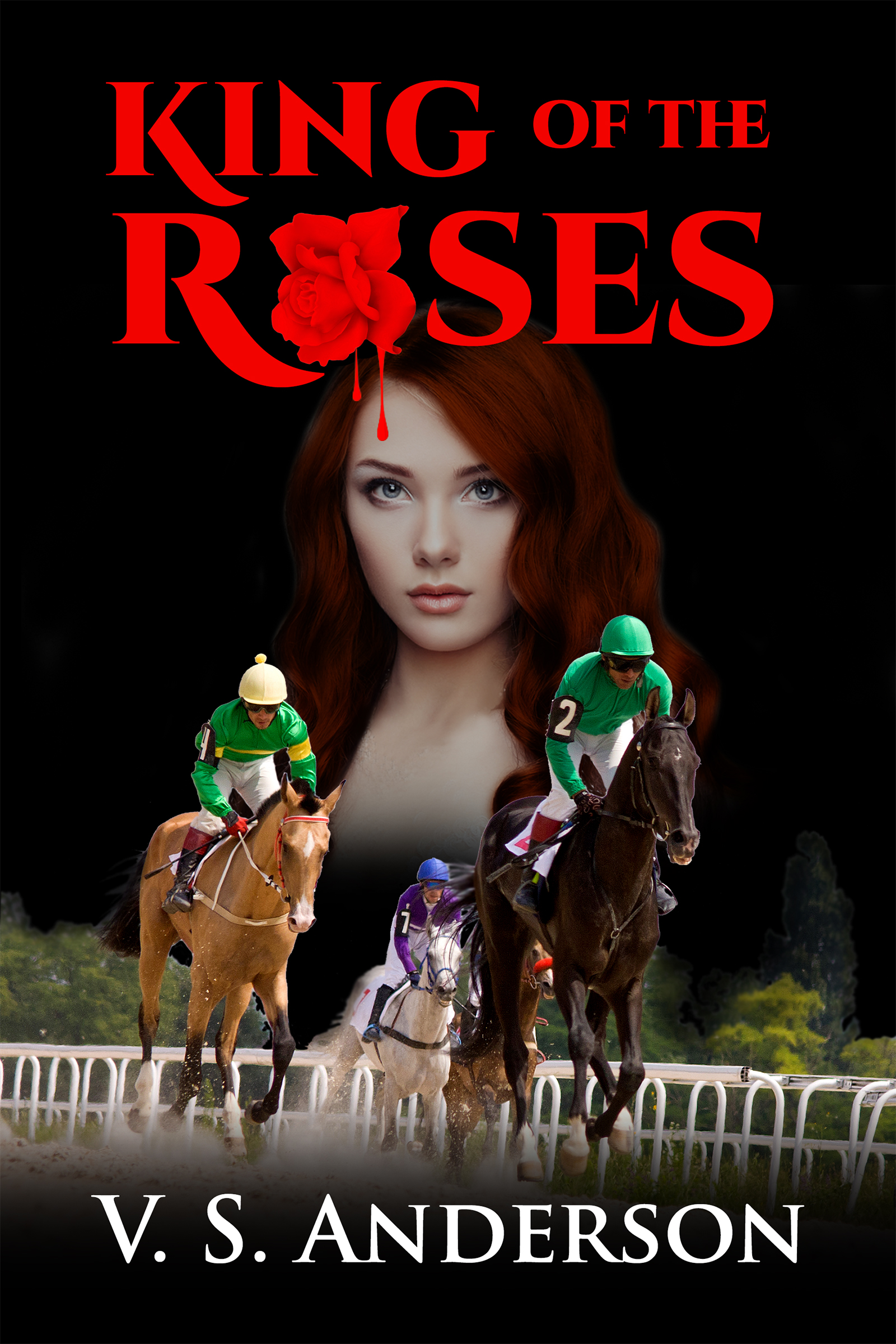
I did do something. For King of the Roses, they asked me for a list of horse-racing celebrities who would endorse the book. I compiled such a list. They wanted to know who on that list I knew whom I could personally ask. Um, no one.
I said, since this book is about the Kentucky Derby, why not run an ad in the Daily Racing Form on Derby Day? Not cost-effective, they said. So I paid for it. Myself. They may have been right. In those days, you couldn’t track clicks to see who responded to what ad.
What a traditional house can do is send your book out to reviewers. They have lists of people who will possibly read your book and write it up in a highly visible place. Much more effective than begging for reader reviews. If the right reviewer—say, at the New York Times—takes a shine to your cover or back-of-book copy, you might really end up on Oprah! (No way of knowing what my brief mention in the prestigious Atlantic Monthly meant to my sales.)

No.
Your career with a traditional publisher will last only as long as you write a) what the publisher thinks will sell; or b) what actually does sell. You want a career in a traditional house, YOU better make sure what you write sells. See Myth 3.
And if what you wrote the first time around doesn’t sell well above average, second chances are hard to come by. More than once agents I’ve approached want sales figures from my previous books. At the very least, they want my platform. How many famous people do I know who will endorse my book?
It takes only one “disappointing” book to end this kind of career. I know.
That doesn’t mean there aren’t ways back into the fold. But they are at least as hard as that first foray, when you stood a chance of being a “discovery” that sent the sales team into raptures. I was there. I know.
**It will take at least a year and probably longer for your traditionally published book to make it into print.
**You have to fight for control over your metadata and cover. If you don’t like cover or the back-cover copy or the book description, you have to assert yourself. I was able to protest the inner jacket flap copy for one of my books and rewrite it. But it was when I saw the back-cover copy of that book that I knew the book was doomed. No blurbs quoting the excellent reviews for my first two books, both in paperback from Bantam. Instead, just an excerpt from the book.
Decent writing, I guess, albeit arguably overwritten. Of course, in Bantam’s defense, in those days, no one could order a mass-market paperback once it was out of print.
**And if your traditionally published book does make it onto bookstore shelves, it will run out its welcome fast. Once it’s last month’s sensation, it’s gone. Maybe you’ll get a paperback deal that may hang onto shelf space in row 6 a little longer. But it if doesn’t sell, bookstores will pull it for this month’s New Thing. People will buy your book from Half-Priced Books or from third-party sellers on Amazon, and you won’t make a cent.

My editor at St. Martin’s was superb, my editor at Bantam horrible, and my editor at NAL nice but not inspirational. (They are all long gone, so don’t ask.) I learned that, in the end, I alone was responsible for the words that got published under my name.
I regularly depressed people at writing conferences by sharing these experiences.
If I’ve depressed you, at least you are forewarned.
If this sounds as if I am biased in favor of self-publishing, well, to a certain extent yes. I would like to be traditionally published again because a “published” book, however doomed in the market, would give me credentials for speaking and guest-posting. I would also like reviews. And my feeble, newbie marketing efforts are unlikely to earn me what I would make from even the most anemic advance.
What I do like about self-publishing is that my prospects are limited only by my energy and creativity. There is no shelf-life for my books. I can try new marketing techniques indefinitely without knowing that next week, or the week after, my books will show up on that pile labeled “remaindered.” I can even revise and republish. I can be a completely new author, in a completely new genre, as fast as I can write.

If you want to submit traditionally, haul out all those grammar books and all those tomes on how to structure a story. Editors and agents do gatekeep based on how much work you’re going to mean for them versus how much you can earn for them. A badly edited, unstructured book means more work for them. A great idea can die because it looks as if it will take too much time to slap into shape. Make their job as easy as you can.
If you want to self-publish, do your due diligence. Book packagers (that includes Kindle Direct Print and Ingram as well as BookBaby, Lulu, etc.) vary widely in quality and cost. Make sure you understand how the self-publishing universe works (it’s all out there online) and don’t pay for anything you can do yourself. You can publish your ebook in an hour at Smashwords or Amazon for free. Your paperback may take a little longer, but you can do it. Don’t pay for anything you can do yourself.


Paddy and his mom!


 Just Can't Help Writing