Tag Archives: Self-publishing

Why Writers MUST Read

A wonderful perk of being retired from teaching is rediscovering what it’s like to read fiction for pleasure. I assume I don’t have to convince any writers of the pleasures of a good book!

But my new reading experience has reminded me why writers MUST read. True, we know we have to read in our own genres. After all, we have to be able to tell agents and editors we query how our own work fits into a landscape with which we had better be intimately familiar. But we need to read—we MUST read—more widely than that.

We need to know, we must know, what works for people who are not us. In my lifetime of reading fiction, slowed but not terminated by my years of teaching, I have always been surprised to discover what other people consider good. I hope I’m not the only reader to roll my eyes once in a while and wonder, “Who’d’a thunk anyone would publish that?”

But “that” turns out to have five-star reviews on Amazon, enormous followings on Goodreads, and thousands of Facebook likes. I’ve moved from “I’d never do that!” to “What can I learn from this?” For example, from watching how different kinds of writers win over readers, I learned the importance of the “pet-the-dog” scene. The protagonist you want your readers to stick with has to do one small “good” thing somewhere, somehow, in the book’s opening moments. Related: the “stop-being-mean-to-her” scene, wherein your protagonist is being treated unjustly. I didn’t learn about these strategies from reading Shakespeare—although I assure you, he does them, too.

In other words, there’s some reason a lot of people like the books you hate. There’s gold in figuring out what that reason is.

We need to know, we must know, that the kinds of books we love do exist, sometimes in the most unexpected places. I read so much about the fall of publishing, about the sheer inability of those of us who might once have been indulgently called “midlist” authors to persevere. I hear so often that unless you’re already a celebrity or a world-renowned expert, you only have two options for your quiet, literary, sort-of-mystery-but-sort-of-not: either self-publish it or stick it in the drawer.

Yet over and over I take a chance on a new book only to discover wonderful writing still bubbling up out there. I don’t say it necessarily gets shelved face-out at Barnes & Noble or makes it to the top at Amazon. I’m reading a terrific book right now that will probably never do either (Mary O’Dell’s Cyn, from Turquoise Morning Press). But good writing gets noticed, and it gets published. And I get to read it by opening myself to that chance.

More to the point, I get the reassurance that continuing to grow as a writer is worth the effort. I can’t write as well as the great writers I admire, but I can learn to write better than I do now, and it’s because I find these great writers out there through reading that I have the faith to soldier on.

We learn what we forgot to do in our own books. This is a little different from the strategies in point one above; it’s not about devices, it’s about fundamentals. Writing every day, deep in a story, we get into habits and patterns that, in my case at least, lull me so that I forget something vital I should be attending to, something I’ve left out. Often it’s something that doesn’t come naturally to me, that I need to work at. For example, the other day I went to our local bookseller (Carmichael’s) to redeem a gift card. The book I wanted, Ben H. Winter’s World of Trouble, was out of stock, but I did find a discounted copy of The Girl on the Train.

I expected some sort of mystery/thriller, not too far from my genre. I expected one of those bang-up openings that set me on the edge of a cliff, teetering. Instead, I found myself in a tranquil, slow-moving country, listening in on the placid observations of a muted soul.

I thought of all my anguish trying to make my opening pages electric. Here I was holding a bestseller whose author saw no such need. Then, slowly, I began to understand what she was doing—something I struggle to do enough.

This was/is a classic, masterly demonstration of that single overriding rule for all writers of fiction: show, don’t tell.

From what this character noticed and how she reacted to what she noticed, she slowly let me build for myself a rich, nuanced sense of a soul in deep trouble, a world alight with danger, if not the guns-and-daggers kind (not yet, at least). A soul in trouble, a soul in danger: the classic “it” that a story either has or doesn’t. And all without ever shaking a finger at me to tell me what I was supposed to see or know.

That night, I got out my notebook. Above one column, I wrote, “What I want readers to know about Sarah.” Above the next column, I wrote, “What she does to show it.” I sat for an hour, working my way out of that all-too-available strategy of having Sarah tell readers how she was feeling, what she feared, worried about. What does Sarah do to let readers sense her danger, understand how she got here, so that they’ll be shouting at her, “No, no, don’t do that! Do this!” and sweating (I hope) to see if she does.

It’s not that I didn’t know this basic rule. But inside the walls of my own imagination, I had lost sight of it. I didn’t even miss it, until I wandered out into other landscapes and saw another writer doing it—when I picked up that book and read.

Leave a comment

Filed under Learning to write, Myths and Truths for writers, self editing for fiction writers, Self-publishing, Teaching writing, writing novels

I Continue to Learn about Publishing. . . .

Following up on the rather alarming article by Dean Wesley Smith that one of my earlier posts linked to, I wrote to some agents and publishing experts requesting their thoughts. Question marksDespite dealing with a family emergency, Victoria Strauss of Writer Beware took the time to write back with a compelling clarification of Smith’s more extreme claims. With her permission, I reproduce her reply here. You’ll note a link to a very thorough article on the issue of reversion-of-rights clauses in contracts. If you’re on the verge of querying or have an offer, this article is well worth your time.

Here is Victoria’s reply to my questions:

Taking your questions in order:

1) Is it true that “life-of-copyright” is now the industry standard,
so that rights never revert, regardless of the original publisher’s
intentions for the book?

Life of copyright has _always_ been the industry standard among large and medium-size publishers. This is nothing new, and I’m bemused that Dean Wesley Smith would say that it is.

I do think that a limited-term contract is far more desirable, if you’re going with a small press (and small presses do often offer limited-term contracts–though life-of-copyright is not at all uncommon in the small press world). But life of copyright doesn’t have to be a problem–as long as there’s a detailed, specific reversion clause that ties rights reversion to minimum sales (for instance, making rights reversion automatic on author request once sales drop below 100 copies in any 12-month period). I’ve written about this in detail here: http://accrispin.blogspot.com/2012/04/importance-of-reversion-clauses-in-book.html .

Unfortunately, it’s not unusual to encounter life of copyright contracts that _don’t_ have adequate reversion clauses–especially in the small press world, where people often don’t know what they’re doing. You may be able to negotiate to add a good reversion clause–my agent has negotiated sales-dependent reversion clauses into all my contracts since at least the early 2000’s–but, depending on the publisher, you may also choose to walk away from a life of copyright contract offer with inadequate reversion provisions. It’s definitely something to watch out for. But the reality is a lot more nuanced than what’s presented in Dean Wesley Smith’s post.

2) Is it true that authors who were once seen as “midlist” should
now assume they will most likely be offered $5000 or less as an
advance? (I received that amount for my first novel, but much more
for subsequent submissions that definitely did not quality as
“best-sellers,” though they sold respectably.)

Advances have generally fallen, especially since the 2008 economic downturn. But they are all over the map, so it’s impossible to make a blanket declaration. Advance amounts depend on all kinds of factors, including your agent (or if you have one; authors without agents tend to get lower advances), the publisher (smaller publishers generally offer smaller advances), what the publisher’s expectations of your books are–and, unfortunately, if you have a publishing track record, the sales of your previous books. In any case, if your sales are good, you’ll get the money owed to you regardless of the advance amount.

As for the whole “midlist” thing (that word doesn’t mean what it used to)–a lot has changed in the publishing world over the past 15 to 20 years, and one of the things that’s changed most is how hard it is to stay in the game. I don’t think it’s any more difficult to break into traditional publishing than it ever was (possibly easier, given the huge volume of books that are being published), but it is a lot more difficult to maintain a career, especially if your sales aren’t stellar.

   3) the proliferation of “royalty only” publishers. How are such
entities regarded in the industry at present? Is this a coming wave?

This really is a phenomenon only in the small press world, which has expanded hugely over the past 15 or so years thanks to digital technology. These days, anyone can set up a publishing company just by registering with CreateSpace or LightningSpark. One of the ways many small presses try to limit their financial outlay is to eliminate advances. This is extremely common, and has been for some time. However, don’t believe anyone who tells you that advances are becoming less common among large and medium-sized publishers, or that debut authors no longer receive advances. This simply isn’t true.

There are some great small presses, but an awful lot of amateur and predatory ones whose staff know little about editing, production, design, and marketing. When Writer Beware was founded in 1998, we mostly got complaints about literary agents and scam vanity publishers; these days, small press problems make up by far the biggest volume of complaints we receive. In many cases, self-publishing is preferable.

– Victoria

1 Comment

Filed under business of writing, ebooks publishing and selling, Finding literary agents for writers, indie publishing, Money issues for writers, Myths and Truths for writers, publishing contracts, reversion of rights clauses, Self-publishing, Working with literary editors, writing novels

Five Questions Indie Authors Should Ask Agents

A couple of posts ago I linked to an article that took me to this post from Dean Wesley Smith, in which he informed us that the current industry standard in traditional publishing is “life-of-copyright,” which basically means that we will never regain the rights to our work, regardless of the publisher’s intentions for our books, and that the most we can expect in the way of advances is $5000 or so.

I’ve posted questions about these claims to a couple of active blogs on the business of writing, including to an agent’s blog, and will be posting to others. In my searches, I came across this post about how indie authors should expect agents to protect their rights, which is directly relevant to these issues.

This appeared on the web site of the Alliance of Independent Authors. I’m following their blog and will share interesting information.

2 Comments

Filed under business of writing, ebooks publishing and selling, Money issues for writers, Myths and Truths for writers, Self-publishing, writing novels

How Much “Grammar” Do You Need? Part III . . . .

Questions?I’m picking up on my last post, in which I discussed Joe Williams’s “Phenomenology of Error,” published in College Composition and Communication in 1982, where he ably demonstrates that even the most erudite language mavens only find errors when they are explicitly looking for them, and thus miss bunches, even in their own work.

Williams developed his own rather complicated categories of errors. Of course, he’s an academic writing for other academics, and the essay is more than 30 years old, so his examples may not be the ones we’d pick today if we wanted to duplicate his categories.

But a couple are.

Briefly, his categories are

  • Rules we notice and respond to with a shriek when they’re violated. (“Shriek” is my word, equivalent to the reactions from experts Williams notes in his introduction, people who label such things as “OK,” “hopefully,” and “He invited Mary and myself to dinner” as examples of an “atrocity,” a “detestable vulgarity,” and “garbage.”) In this category of noticeable rules, Williams places basic violations of Standard English structure, such as “I seen” and “He don’t.” Note that these locutions don’t impede understanding. They’re perfectly clear, and perfectly acceptable in many contexts. (In some dialects, such as Black English, ways of talking that violate Standard English are actually rules of that dialect, with their own influence over such matters as time and continuity of action. See the resources here and here to understand this point better.)
  • Rules we really don’t notice even when they’re violated—despite knowing that the rule exists. Williams specifically offers the that/which distinction, which (see, I used it right) even such eminences as Jacques Barzun cheerfully violated within a page of telling us not to. Later I’ll have a little to say about this rule, since it falls clearly into one of my own categories.
  • Rules we notice when they’re observed because they call attention to themselves, a small class. His example is “It is I,” which is indeed “correct” but which jumps off the page at most people. I suspect that “between you and me” is rapidly becoming such a conspicuous instance of correctness (yes, it is correct) for many. I actually heard someone say “between he and I” this morning on a news show. Looks as if the subjective case after a preposition is coming into its own.
  • Rules that, when violated, actually elicit a favorable reaction from individuals. Williams offers an example of a rule he actually prefers to see broken: using “than” rather than “from” after “differently” when what follows is a clause and not a noun. I think there are more rules like this, rules that, if broken, improve prose. I’ve already pointed out one possible candidate: choosing to start a sentence with “but” (assuming you think this violates an actual rule). I’ll propose more soon.

This is possibly the best place to remember that languages change. Effort like those the French have made to freeze the language are flung down and stomped on on every street corner, in every hostel. All you have to do is read something written in the 1700s—oh, say, Jonathan Swift’s “A Modest Proposal“—to appreciate how punctuation, spelling, and diction have shifted since then. Students required to read such texts complain mightily about how badly written they are. English is, as we speak, in the process of losing the apostrophe (a vagrant and an intruder to start with).

I actually regret this loss; I’ll horrify my college-writing colleagues by siding just a little with Lynne Truss, author of Eats, Shoots & Leaves, agreeing with her that it might sometimes be helpful to know how many people we’re talking about in a sentence like “The travelers bags will fit in the overhead bins.” A simple apostrophe would tell you, and this Wikipedia article gives more examples of useful clarifications an apostrophe can make. But I am not going to emulate the folly of the French.

I’m approaching the task of establishing my own categories of errors. My main concern is to keep things reasonably simple, and not to get tangled up trying to explain things handbooks or sites like the Purdue Owl explain pretty well. I’ll set up the categories here, and then clarify and defend them in upcoming posts:

  • Rules you really don’t need to worry about
  • Rules you absolutely must obey
  • Rules that are actually judgment calls. Breaking one of these rules (like starting a sentence with “but”) is a gamble. If you absolutely hate what following the rule does to your prose—well, you pays your money and you takes your chance.

1 Comment

Filed under correct grammar for writers of fiction, Editing your novel, grammar rules for writers, Learning to write, Myths and Truths for writers, punctuation for writers of novels, self editing for fiction writers, Self-publishing, style for writers, writing novels

I’m venturing into self-publishing …

I’m venturing into self-publishing ….

From brittneysahin, who reposted it from Nicola Prentis. When you click through Brittney’s site to the full piece (Prentis), BE SURE to follow her link to the Dean Wesley Smith argument for self-publishing over traditional publishing. I’m really rethinking all this. I think we get caught up in the fantasy of that six-figure advance, when the reality is going to be much different. And just having retrieved the rights to my earlier novels from Bantam, I’m appalled at the “Life-of-Copyright” language that Smith says is now standard in contracts. If so, that’s a deal breaker, and it should be for us all.

Leave a comment

Filed under Finding literary agents for writers, Myths and Truths for writers, Self-publishing

Off to Upload to Amazon Kindle Direct Publishing

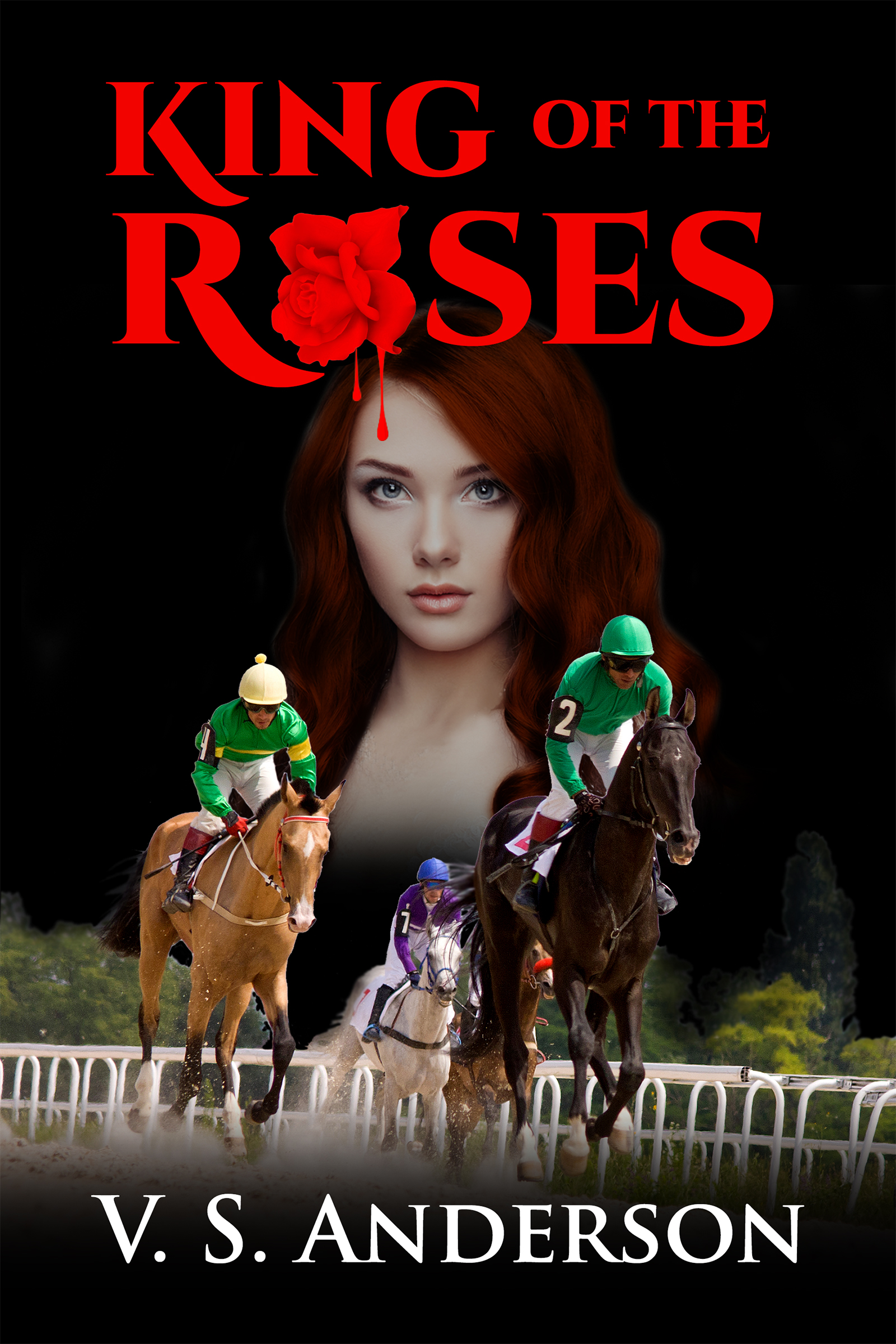
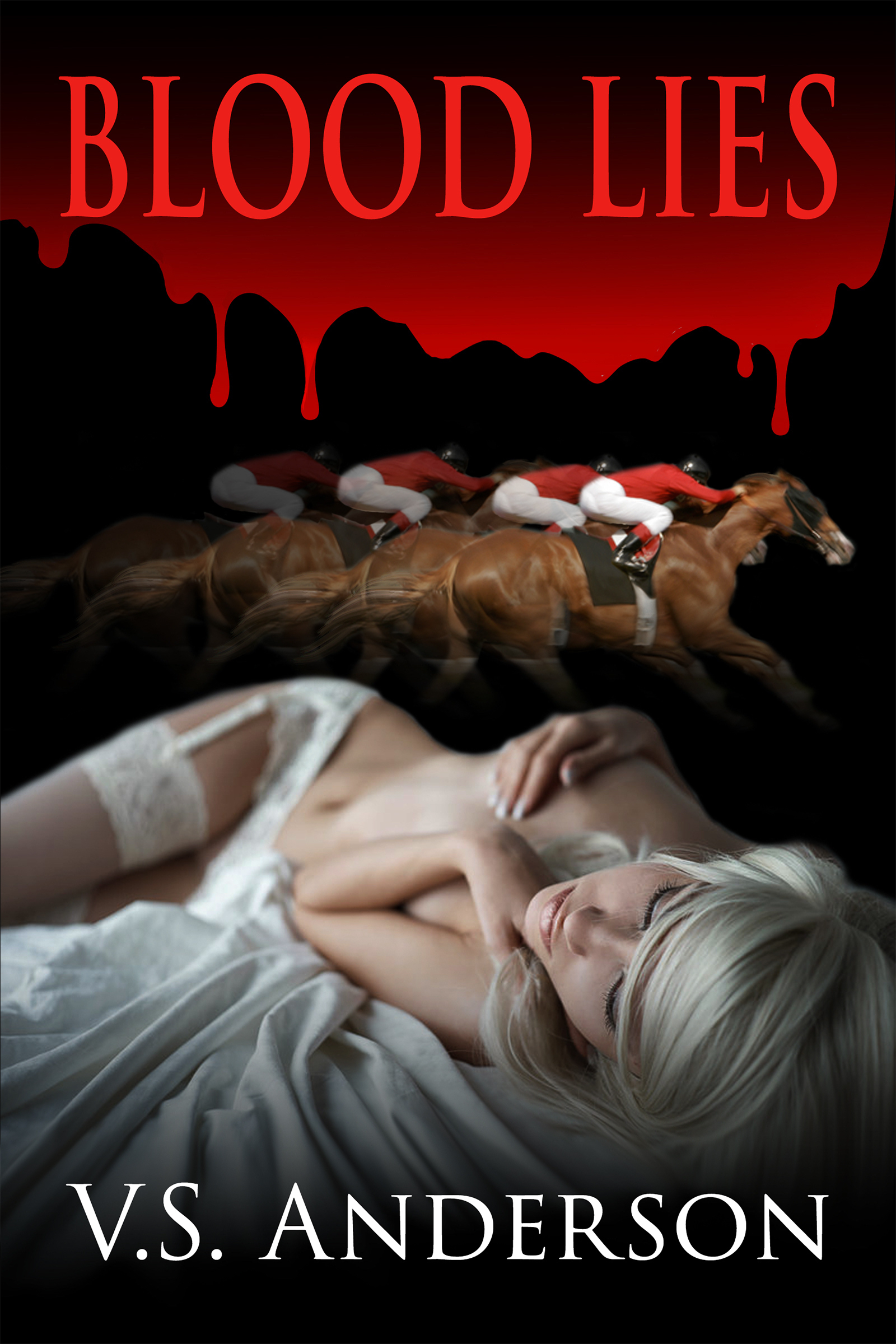
SELF-PUBLISHED BOOK LAUNCH DAY at Smashwords! And the day I bite the bullet and upload to Amazon! So far it looks a lot more complex than uploading to Smashwords. If any of you have been through this process and have any advice for me, please let me hear from you! In the next day or two, I’ll report back on my own experiences. King of the Roses coverIn the meantime, you can now order the books at Smashwords.com in addition to ordering them through any of your favorite ebook retailers, including Barnes and Noble and iBooks. Blood Lies coverLet me know if you run into problems. I may not be able to help, but I will try! Also later today I will post some direct links on my web site, www.virginiasanderson.com.

Leave a comment

Filed under Amazon Kindle Direct Publishing, Blood Lies, ebooks publishing and selling, King of the Roses, Self-publishing, Smashwords, V. S. Anderson, Virginia S. Anderson, writing novels

Authors’ Guild Advocacy on Fair Contracts for Writers

Found this on Twitter today. Absolutely essential knowledge for all of us approaching this point. This information mirrors much of what I learned the hard way when I published in the 1980s and 1990s: for example, that you never get the lump sum you think your advance is going to be. I am lucky in that I had reversion-of-rights language in my contracts (thanks, J and L) so that I have been able to self-publish my previously published books as ebooks. But it looks as if not everyone is so fortunate. In any case, this information is worth keeping up with:

https://www.authorsguild.org/industry-advocacy/the-authors-guild-fair-contract-initiative-a-preview/?utm_content=buffer1c2c9&utm_medium=social&utm_source=twitter.com&utm_campaign=buffer

Leave a comment

Filed under ebooks publishing and selling, Money issues for writers, Myths and Truths for writers, Self-publishing, writing novels

Blog Interview Part 2: Will Lavender!

Welcome to Part 2 of our interview with Will Lavender, author of Obdience and Dominance! Please feel free to shoot me some comments or questions. Is your writing process like Will’s? Have you had similar experiences? What do you think of MFAs and two-book contracts? Let us know!

6. What is the “best education” for a writer? For example, are there particular ways of reading that writers should cultivate? Would you recommend college courses, MFAs, online forums or webinars?

I actually recommend the MFA. It’s gotten a lot of flack over the years (especially recently), but my MFA experience was so unusual, and so outside the realm of anything I’d ever done, that it was highly beneficial. At no other time in your career will have you have that many eyes on your unpublished work. It can be, if used correctly, incredibly helpful.

Otherwise I think writers should always be versed in their medium. If there are novels out there that are like your manuscript, then you should know about them. I do a lot of events with aspiring writers and am often surprised at how poorly read people are. I’ll mention books—extremely popular books—that folks will not recognize. You obviously don’t have to have Penguin’s spring catalog memorized, but it’s always beneficial to know the landscape so that you can write toward it.

7. Do you get feedback on works in progress (from editors, writers’ groups, friends, colleagues)? If so, how do you recommend “managing” feedback: for example, are there ways writers can evaluate feedback to determine what to use and what to set aside?

I generally don’t like to talk about my WIPs, but what happens in publishing is that they need you to talk about your unfinished work—they don’t want to be surprised by anything, especially by someone without a strong history of sales. I’ve gone off-track a few times while working on novels and had to be reigned in by my agent and editor.

But the issue for me is that the more I talk about it, the more mystery that’s sucked out of the thing. I like to work in total secret and then to be confident in the work before I show it to anyone. I’m a firm believer that things can be jinxed, and I’ve jinxed quite a few WIPs by blathering about them.

8. Do you have a sense of how writers should address ongoing changes in the writing/publishing world (online publishing, self-publishing, death of independent bookstores, blogging)?

Writers should always keep their options open. One should never say, “I would never self-publish,” or “I hate traditional publishing,” because you never know when you might have to go that route.

Things have radically changed in publishing just in the last five to seven years. Imagine five to seven years from now. I think there will be an entirely new and unthought-of process for getting books out into the world. Yes, printed books will never die, but they’ve been staggered and the writer should respect that.

The traditional publishing model has also been staggered. When people ask me about self-publishing I always recommend starting at the very, very top. Try to get your dream agent. If that doesn’t happen, then begin to adjust your goals. If you end up having to self-publish, then you do your best with that book and start another one. I think writers make a mistake sometimes by putting their soul into a book. The best and most successful writers are those who are always looking to reinvent themselves and begin something fresh.

9. How do you make a space for writing in your personal life?

It’s difficult with two young children. I generally write on evenings and weekends, but one of the more important things about writing well is sticking to a routine. Very hard to find that when you have a family and a 9-5 job. It takes a rigor that some of these professional novelists have down but the rest of us struggle with daily.

10. Is there anything you’d advise an aspiring writer NOT to do? (Pretty broad, so take it where you will.)

This is a tough one because there’s so much advice that works for some people and not for others, and some “never do this” kind of stuff that great writers do all the time.

I think one of the main things that aspiring writers struggle with is confidence. Confidence is an innate thing, maybe, but I believe a lack of confidence is also a byproduct of “art.” It’s not the coolest thing in the world to stand up for your creation. The artist has been taught to be modest, to be almost shy, and to “let the work speak for itself.” Those that get out in front of the art—and if you’ve ever been to a book fair you’ve seen the people who adamantly try to sell their work—are labeled as hucksters while the quiet ones among us who demure are the geniuses.

But to be published, you have to be able to talk coherently and strongly about your work. And for the work to even be publishable, you have to have belief in it—not the unerring, I’ll-never-change-a-single-word-of-this belief, but more of a sense that you know what the book is going to be and how it’s going to be sold. Many writers I talk to seem unsure about their product; “Well, I’m working on a zombie novel now, but I’m thinking of changing to a…” No, that’s not a good tack. One needs to be firm about their WIP and what it’s going to look like once it’s finished.

11. What are you working on now? In what directions are you taking your career?

I’m still under the aforementioned two-book contract. The novel I’m working on now is a thriller about…well, I don’t want to jinx it. I’ll let everyone know when it’s finished.

Leave a comment

Filed under Interviews, Self-publishing, What Not To Do in Writing Novels, Working with literary editors

Kindle Author? Take a look

In case you haven’t seen it: Kindle author.

Leave a comment

Filed under Money issues for writers, Self-publishing

Writing the Synopsis: Or, What Took Me So Long?

I’ve been away for a few days, and if you’ve been watching the weather reports, you know what I spent much of the day before yesterday dealing with–yes, it’s a four-letter word beginning with “S.”

I’ve also been dealing with an eight-letter word beginning with “S”: “Synopsis.” I’ve never met a writer yet who liked dealing with synopses. I’ve always believed I couldn’t write them–just didn’t get it. I’d tell what I thought was the story I’d told, only to have readers respond, “I’m totally confused.”

I faced the need to confront the demon synopsis because I’m trying to get my out-of-print suspense novels up as e-books, and I need covers. I had some ideas of my own, but my excellent and candid volunteer critics (or should I say “impressed” critics in the sense that sailors off merchant ships were once impressed into the British navy) generally agreed that I should solicit ideas from actual designers. At my university, we have students who do superb work. But could I ask students to read two fairly hefty novels between class assignments? Uh, no, not if I want to get the books up any time soon. Hence, synopses.

My first efforts were on a par with my earlier efforts. A masochistic colleague whose opinion I value actually volunteered to read the books and write the things for me. I spared him: read two hefty books between grading assignments in four (yes, four!) writing classes?!!! So he read the synopses I produced. I reproduce here the bare bones of this experience, because it was a eureka experience. For the first time, I was like, “Oh!” It’s what can happen when you have a truly good reader who is willing to tell you the truth and you are ready to listen–a crucial component, but I was desperate. They always want a synopsis. Who wants two pages to be the death of a three-hundred-page gem?

Here is the heart of what my colleague Tom O’Neal wrote for me:

Continue reading

3 Comments

Filed under Finding literary agents for writers, Learning to write, Self-publishing, Teaching writing, Working with literary editors, Writing and teaching writing