Tag Archives: ebooks publishing and selling

Important advice on publishing contracts!

Writer with questionsFound this at Writers in the Storm today. Here’s what I wrote as a comment:

I had old contracts that required me to give notice and then wait 90 days for the publisher to decide whether or not to re-activate the titles. While I was pretty sure the rights to at least one of the books had already been passed on and then returned to me by another publisher, I went through the steps as laid out in the contracts. The hard part was finding the right place to send my notice. The web site (of a major publisher) was no help. I found a “permissions” link and wrote asking that my request be forwarded to the right person. That eventually happened. and I eventually received written confirmation of the reversion.
The clauses you provide would have saved me a lot of trouble. I’m not sure they were standard when my books were originally published, but for future publications, I’ll be on the lookout! Thanks for some solid advice!

Leave a comment

Filed under business of writing, ebooks publishing and selling, indie publishing, Money issues for writers, Myths and Truths for writers, Publishing, publishing contracts, reversion of rights clauses, Self-publishing, Writing, writing novels

Show, Don’t Tell: Try the Screenplay Exercise

Typewriter and flowersWe fiction, memoir, and essay writers are all bombarded—understandably—with the need to SHOW, not tell. The temptation to tell rather than show—at its simplest level, to write “he felt sad” rather than letting his actions and dialogue reveal his reactions—haunts us all. It’s easier: We don’t have to hunt for ways to describe expressions and behaviors. And after all, “he felt sad” takes up a lot less space than “The room around him seemed to darken, the sounds of cheerful conversation to slow to dirge-like rhythms.” And hey, will readers interpret such descriptions the way you intended? Maybe the guy is just having a heart attack.

Hardest of all may be recognizing when we’ve slipped into telling. In my writing group, we all get called on it regularly.

One exercise I’ve found extremely useful in helping me recognize telling is the SCREENPLAY exercise: convert a troublesome scene to screenplay format.
Typewriter with questions marks

Why does this work? For me, it works because, unless you allow yourself the indulgence of a voice-over, filmgoers must rely on action and dialogue to interpret characters’ moods and thoughts and to understand what’s going on.

The rules are simple: at no point in the conversion of your scene can you indicate in your stage directions that “he thought” or “he worried” or “he felt—afraid, tired, hopeful, disappointed.” You may never enter your character’s mind. After all, your audience can’t. They can only see and hear what’s on the screen.

Too stifling? Surely in a mystery, for example, the character has to speculate internally about the meaning of clues. In a romance, the protagonist has to tell us of her ecstasy. Well, maybe. The screenplay exercise can clarify just how much telling we really have to include.

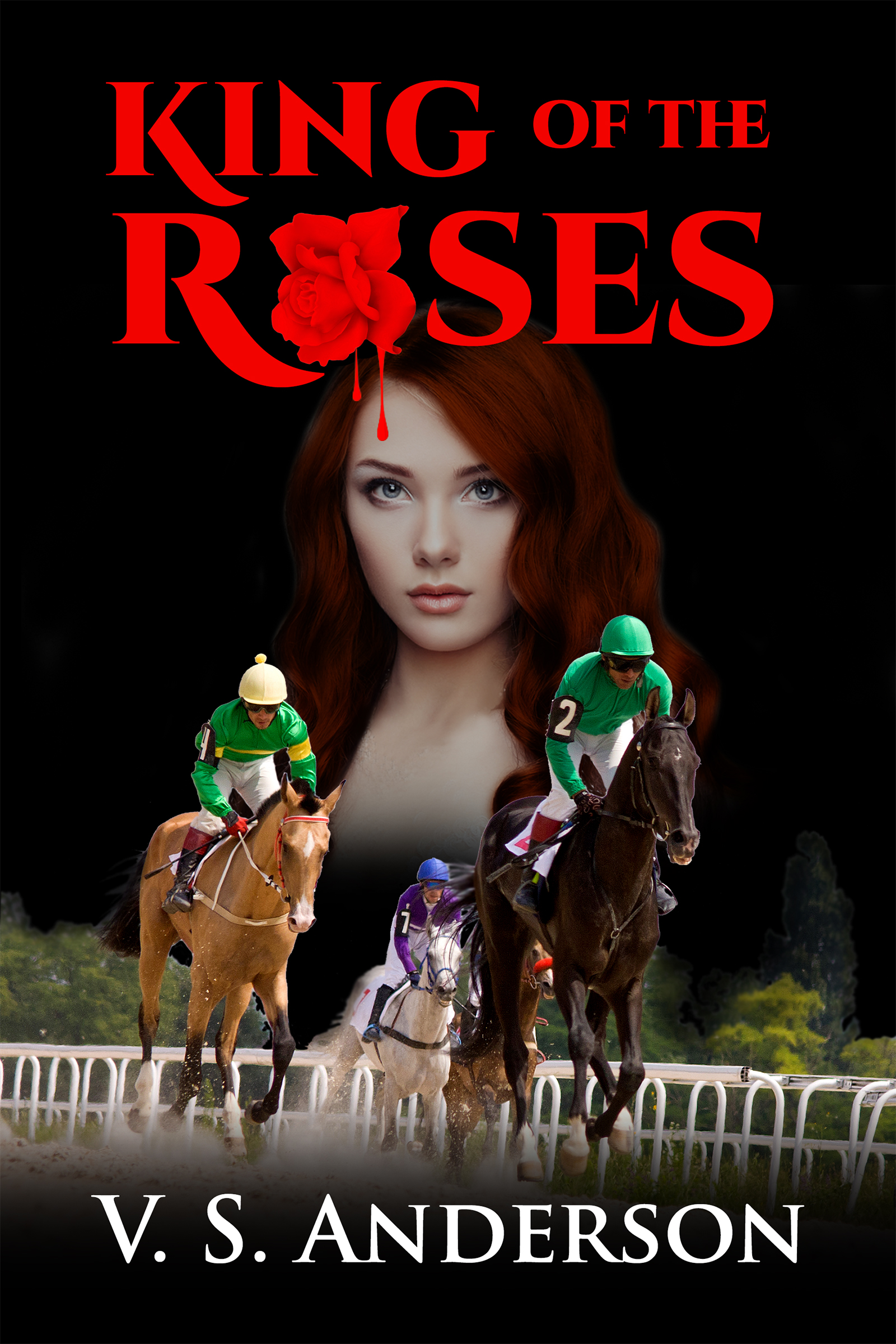
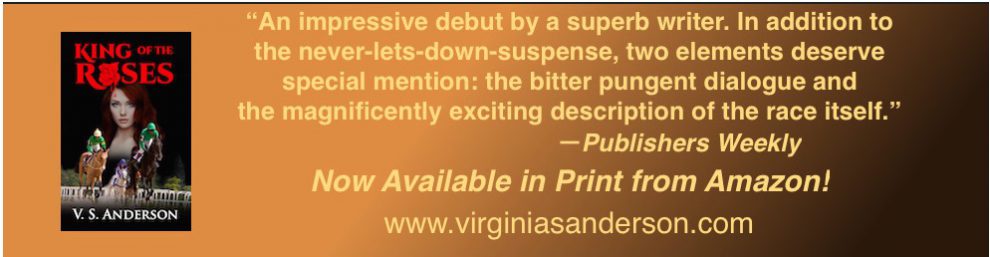
For a sense of what this exercise can contribute, here are a few lines from my novel King of the Roses and the corresponding lines structured as a screenplay. running horseNote that I converted the whole book, a choice that requires me to scrutinize every word because screenplays are radically length restricted (a 358-page book becomes a 100-page play). But casting individual scenes can provide some of the same benefits.

Set-up: A criminal who demands that Chris hold the Derby favorite finds Chris alone in a restaurant and escalates his threats. The criminal speaks the first line.

From the novel:

“I tried to get a hold of you last night. Why didn’t you answer the phone?”

“I was out.”

“No you weren’t. You just didn’t answer the phone. This isn’t a little romance we have here. This is business. What about it?”

Chris felt his spine crawl as if he were already dead, with demons dancing on his grave. The man stared at him steadily, tilting his head a little so that Chris could see his white, speckled scalp where his hair thinned on top.

“So when would I get paid?”

“You jocks is all the same. Money, money.”

“I haven’t seen any money.”

The man’s lower lip went on curling, but his eyes hardened. He stood up suddenly, clutching his overcoat to his paunch.

“I’ll tell you one thing I bet you have seen,” he said. “I bet you’ve seen what a jock looks like when he falls off in a race and gets his face stepped on. I bet you’ve seen that. Huh?”

From the screenplay:

BALDING MAN

I tried to get hold of you last night. Why didn’t you answer your phone?

CHRIS

I was out.

BALDING MAN

This isn’t a little romance we have here. This is business.

CHRIS

So when would I get paid?

BALDING MAN

You jocks is all the same. Money, money, money.

CHRIS

I haven’t seen any money.

The man stands, clutching his coat to his paunch.

BALDING MAN

I tell you one thing I bet you have seen. I bet you seen what a jock looks like when he falls off and gets his face stepped on. I bet you seen that, huh?

So what has this exercise done for me? Above all, it has forced me to look really hard at the inner reactions I’ve chosen to include in the prose-narrative format. Obviously they aren’t essential to meaning. I get to ask myself whether they add enough to justify the departure from action, from showing.

So the conversion allows me to see where my dialogue on its own takes readers. It also forces me to find the actions that express the characters’ reactions. I have to convert feelings into motion. Once discovered, these motions and actions can go back into my prose.

Again, you don’t have to go this spare. But you might make decisions about where to cut and where to add with more insight if you’ve tried the bare-bones telling that screenplays require.

You don’t need fancy software to do this. For the actual screenplay, I used Microsoft Word’s “styles” to create the various format patterns screenplays require. (The formatting didn’t translate directly into this blog post.) By the way, learning to use “styles” helps when you convert your Word document into the format for various e-publishing contexts. The important thing, however you structure your exercise, is to remember: no “feelings.” Just things viewers can see: action and dialogue.bloody rose finished

Do you have strategies for detecting “telling”? Share!
12 Comments

Filed under Editing your novel, indie publishing, King of the Roses, Learning to write, self editing for fiction writers, Self-publishing, Writers' groups, Writing, writing novels

Battle is Lost!

A sad day for grammar purists: The Washington Post will allow “singular they”!

Leave a comment

Filed under correct grammar for writers of fiction, Editing your novel, grammar rules for writers, indie publishing, Myths and Truths for writers, self editing for fiction writers, Self-publishing, style for writers, Teaching writing, Writing

Quick Tip: Build Character with Stage Business

Typewriter publishIn my recent exploration of indie novels about horses, I’ve noticed a way that some of these authors could enliven their stories considerably: by making smarter use of stage business.



By stage business, I mean the interactions between characters and their environments, usually involving elements of setting and, in particular, props—the things they handle as they respond to each other.

Most of the authors I’m reading quite rightly use stage business to give readers a sense of setting, to give us a sense of “being there” in the scene, and to punctuate dialogue—for example, to break up a long speech. But this element can work a lot harder than it often does.

Coffee mug for writers

Make that cup of coffee talk!

For example, let’s look at the possibilities offered by a fairly common scene: people sitting around a table drinking coffee. To frame the dialogue, we’re told, “He took a sip of his coffee.”

I guess he would, if he’s got a cup and it’s likely to get cold. So there’s really no information here.

But what if:

He waved the nearly full cup around so violently she was afraid he’d sling the contents onto the spotless white table cloth.

Or

In his huge, clumsy hands, the mug looked as fragile as bone china.

Or

He lifted the cup with both hands clutched around it, as if grateful for its feeble warmth.

Suddenly, “taking a sip” tells us something about the character and the situation he finds himself in.Happy editing!

Here’s another example.

She put on her cowboy hat. “Let’s go see what’s up in the corral.”

There’s a big difference between that bit of info and:

She snatched up a dusty cowboy hat stained and dinged with long use and smashed it onto her short black curls. “Let’s go see what’s up in the corral.”

Lady 2 promises a lot more action once we reach the corral than Lady 1. Now that hat talks!

True, it’s important to practice this strategy in moderation. Pacing a scene requires an author to balance forward momentum with information, no matter how exquisitely revealing that information seems to be. I once got slapped down pretty good over a character fidgeting with a paper clip through a long scene. As I recall it, my reader’s marginal comment was, “That paper clip is really getting on my nerves.”Typewriter and flowers

In drafting, as is usually the best move, over-generate. Come up with stacks of double-duty stage-business gems. Then glean for the one best one, the one that really delivers the “telling detail.”

What are some of your best “stage business” lines? I’d love to hear!Book with heart for writers


Leave a comment

Filed under ebooks publishing and selling, Editing your novel, indie publishing, Learning to write, Publishing, self editing for fiction writers, Self-publishing, Writing, writing novels

Indie Writers: Do you WANT two-star reviews?

Recently, as part of my education in self-publishing, I’ve expanded my reading to include indie books about horses, as my own republished novels feature racing backdrops. My selections have mostly been prompted by mentions in Goodreads groups and the “customers also bought” list at Amazon.

In the past, I’ve tended to stick with books off “year’s best” lists, like those at NPR or the New York Times, so this new reading has taken me into new territory. It has also led me to do a lot of thinking about what works for me and what doesn’t—and whether I’m managing to purge my own writing of a pile of sins.

And it has created a dilemma I’ve read that others face: whether or not to review a book when I can’t give it at least a three-star rating.

As a teacher, I’ve seen enough students’ faces fall to know what a strong critique can do to the kind of relationships I’ve been enjoying through social media, even when the comments are intended in the most constructive of spirits and embedded in the most voluminous praise I can conjure. Do I really want to hurt people whose conversations I’ve enjoyed? And as the recipient of more than one one-star review (in places that, sadly, mattered to a budding career), I know how it feels.

But as I read this new-to-me category of book, I found myself thinking about what’s potentially lost when readers hold back from honest, thoughtful reviews because they’re negative. And I began to wonder:

Do authors of indie books WANT to know what turns readers off?

Should they?

I’ve increasingly subscribed to the view that we don’t know what we’ve written until a reader tells us. We’re too close to our work. Even if we know what to do, what not to do, it’s often only when a sharp reader points out the pitfalls we’ve stumbled into that we realize that we’re in them up to our necks.

Of course, we all know that some one- or two-star reviews offer nothing constructive. The reader didn’t like sci-fi, but reviewed a sci-fi novel and gave it one star because of the sci-fi conventions the reviewer hates! I admit that I am less likely to give even well-done category romances more than three stars, because of the predictability of the plots and conventions I find problematic.

But I’ve given five stars to a very good romance, one in which the circumstances of the predictable elements are so unique and intriguing that I forgot I was technically reading a romance.

So would an aspiring indie romance writer want to know what kept her book from rising in my ranks?

True, she’d have to come in knowing that accepting potential one-star reviews does lay the task of sorting the gold from the pique at the author’s door. Personally, I learned from my negative reviews (although I couldn’t help wishing that my editor and I had been a little more in sync so that we could have headed them off). While I didn’t completely rewrite the book in question, when the chance came to revise for self-publication, I did spot things that had flown completely under my radar the first time around. And I got put on notice about my most persistent pitfall as a writer: the tendency to complicate my plots way too much.

The author of a book I’m reading now commits so many of those writerly sins we all hear about so often that I wonder whether I actually might have something useful to say to him/her. Far too many characters; characters whose relationships with each other and the plot, let alone their goals, are unclear; way too much classic “telling”: in short, can a review serve as a mini-beta reading? Or is it better to hold off on that kind of reading until the author asks?

So—one- and two-star reviews:

Should we as readers write them?

Should we as fellow authors risk writing them?

Should we as authors WANT them?

What qualities make a bad review worth the pain?

What do you think?

Leave a comment

Filed under ebooks publishing and selling, Goodreads, indie publishing, Learning to write, Publishing, Reviews, self editing for fiction writers, Self-publishing, What Not To Do in Writing Novels, Writers' groups, Writing, writing novels

I Continue to Learn about Publishing. . . .

Following up on the rather alarming article by Dean Wesley Smith that one of my earlier posts linked to, I wrote to some agents and publishing experts requesting their thoughts. Question marksDespite dealing with a family emergency, Victoria Strauss of Writer Beware took the time to write back with a compelling clarification of Smith’s more extreme claims. With her permission, I reproduce her reply here. You’ll note a link to a very thorough article on the issue of reversion-of-rights clauses in contracts. If you’re on the verge of querying or have an offer, this article is well worth your time.

Here is Victoria’s reply to my questions:

Taking your questions in order:

1) Is it true that “life-of-copyright” is now the industry standard,
so that rights never revert, regardless of the original publisher’s
intentions for the book?

Life of copyright has _always_ been the industry standard among large and medium-size publishers. This is nothing new, and I’m bemused that Dean Wesley Smith would say that it is.

I do think that a limited-term contract is far more desirable, if you’re going with a small press (and small presses do often offer limited-term contracts–though life-of-copyright is not at all uncommon in the small press world). But life of copyright doesn’t have to be a problem–as long as there’s a detailed, specific reversion clause that ties rights reversion to minimum sales (for instance, making rights reversion automatic on author request once sales drop below 100 copies in any 12-month period). I’ve written about this in detail here: http://accrispin.blogspot.com/2012/04/importance-of-reversion-clauses-in-book.html .

Unfortunately, it’s not unusual to encounter life of copyright contracts that _don’t_ have adequate reversion clauses–especially in the small press world, where people often don’t know what they’re doing. You may be able to negotiate to add a good reversion clause–my agent has negotiated sales-dependent reversion clauses into all my contracts since at least the early 2000’s–but, depending on the publisher, you may also choose to walk away from a life of copyright contract offer with inadequate reversion provisions. It’s definitely something to watch out for. But the reality is a lot more nuanced than what’s presented in Dean Wesley Smith’s post.

2) Is it true that authors who were once seen as “midlist” should
now assume they will most likely be offered $5000 or less as an
advance? (I received that amount for my first novel, but much more
for subsequent submissions that definitely did not quality as
“best-sellers,” though they sold respectably.)

Advances have generally fallen, especially since the 2008 economic downturn. But they are all over the map, so it’s impossible to make a blanket declaration. Advance amounts depend on all kinds of factors, including your agent (or if you have one; authors without agents tend to get lower advances), the publisher (smaller publishers generally offer smaller advances), what the publisher’s expectations of your books are–and, unfortunately, if you have a publishing track record, the sales of your previous books. In any case, if your sales are good, you’ll get the money owed to you regardless of the advance amount.

As for the whole “midlist” thing (that word doesn’t mean what it used to)–a lot has changed in the publishing world over the past 15 to 20 years, and one of the things that’s changed most is how hard it is to stay in the game. I don’t think it’s any more difficult to break into traditional publishing than it ever was (possibly easier, given the huge volume of books that are being published), but it is a lot more difficult to maintain a career, especially if your sales aren’t stellar.

   3) the proliferation of “royalty only” publishers. How are such
entities regarded in the industry at present? Is this a coming wave?

This really is a phenomenon only in the small press world, which has expanded hugely over the past 15 or so years thanks to digital technology. These days, anyone can set up a publishing company just by registering with CreateSpace or LightningSpark. One of the ways many small presses try to limit their financial outlay is to eliminate advances. This is extremely common, and has been for some time. However, don’t believe anyone who tells you that advances are becoming less common among large and medium-sized publishers, or that debut authors no longer receive advances. This simply isn’t true.

There are some great small presses, but an awful lot of amateur and predatory ones whose staff know little about editing, production, design, and marketing. When Writer Beware was founded in 1998, we mostly got complaints about literary agents and scam vanity publishers; these days, small press problems make up by far the biggest volume of complaints we receive. In many cases, self-publishing is preferable.

– Victoria

1 Comment

Filed under business of writing, ebooks publishing and selling, Finding literary agents for writers, indie publishing, Money issues for writers, Myths and Truths for writers, publishing contracts, reversion of rights clauses, Self-publishing, Working with literary editors, writing novels

Five Questions Indie Authors Should Ask Agents

A couple of posts ago I linked to an article that took me to this post from Dean Wesley Smith, in which he informed us that the current industry standard in traditional publishing is “life-of-copyright,” which basically means that we will never regain the rights to our work, regardless of the publisher’s intentions for our books, and that the most we can expect in the way of advances is $5000 or so.

I’ve posted questions about these claims to a couple of active blogs on the business of writing, including to an agent’s blog, and will be posting to others. In my searches, I came across this post about how indie authors should expect agents to protect their rights, which is directly relevant to these issues.

This appeared on the web site of the Alliance of Independent Authors. I’m following their blog and will share interesting information.

2 Comments

Filed under business of writing, ebooks publishing and selling, Money issues for writers, Myths and Truths for writers, Self-publishing, writing novels

I’m venturing into self-publishing …

I’m venturing into self-publishing ….

From brittneysahin, who reposted it from Nicola Prentis. When you click through Brittney’s site to the full piece (Prentis), BE SURE to follow her link to the Dean Wesley Smith argument for self-publishing over traditional publishing. I’m really rethinking all this. I think we get caught up in the fantasy of that six-figure advance, when the reality is going to be much different. And just having retrieved the rights to my earlier novels from Bantam, I’m appalled at the “Life-of-Copyright” language that Smith says is now standard in contracts. If so, that’s a deal breaker, and it should be for us all.

Leave a comment

Filed under Finding literary agents for writers, Myths and Truths for writers, Self-publishing

A New “Amazon Kindle Direct” Report

Amazon Pricing

After creating considerable confusion earlier about how I could sign up for a 70% royalty rate for my two books, I returned to my site to change my settings to the higher rate. I seem to have succeeded, but not without a further bit of confusion, which I now hope I have clarified.

This time, more intelligently, I queried the support team via the email option, and received a  helpful and timely reply. (One of my hoped-fors for my online ventures: a quick “help” response process.)

Who, exactly, is Amazon.com”?

Here was the problem: When you pick “70%,” you receive a chart showing in which sales territories you will earn 70%. For some (e.g., Brazil, Japan), a small box informs you that in order to earn the higher amount in these countries, you must enroll in Kindle Select, which, you may know, requires you to give Amazon an exclusive for several months. Because I had already uploaded to Smashwords, I couldn’t easlly make this choice, and I’m not sure I would want to.

The confusion for me arose because sales made at “Amazon.com” were shown as paying only the lower rate of 35%. So what sales, specifically, were these? In my idiom, items bought at “Amazon.com” include books bought by U. S. buyers. Did this chart mean that books bought in the U. S. would never earn more than 35% royalty?

Here’s the reply to my query:

“Hello,
You’ll receive 70% royalty for books sold to U.S customers from Amazon.com.
However, customers outside of the U.S. often purchase books on the Amazon.com Kindle store. The books sold to customers outside of the applicable sales territories will be calculated at 35% royalty rate.
The 70% Royalty Option is only applicable for sales to customers in these sales territories:

[I’ve cropped the long list of the countries in which the 70% option is available.]

*70% Royalty in Brazil, Japan, Mexico, and India: Digital Books enrolled in KDP Select are eligible to earn 70% royalty for sales to customers in these countries as long as the 70% List Price requirements are met. Otherwise, you will earn 35% royalty.
Sales to customers in all other locations will receive a 35% royalty and are recorded separately in your royalty reports at the 35% rate.
For more information, please visit our Help Page:
https://kdp.amazon.com/help?topicId=A30F3VI2TH1FR8
I hope this helps. Thanks for using Amazon KDP. Have a nice day!”

Therefore, it looks as if I was successful in making the change, and as if I’ll earn 70% in most cases.

Questions I had about Logging into Amazon Direct Publishing

I had some difficulty figuring out exactly how to return to my KDP account. When I signed in using the account I had created to associate with the books, I could find no links to my KDP account. The customer-service representatives with whom I initiated a chat for help had no idea what to tell me. Finally they directed me to the “contact us” link for KDP, which is apparently a separate section of Amazon. I know now to log in at kdp.amazon.com/bookshelf, where I then sign in with the email address I created.

I hope this help others easing into the process. I assure you, the Smashwords process was less complex, almost certainly because of the complex royalty and distribution components of Amazon.

Leave a comment

Filed under Amazon Kindle Direct Publishing, Amazon pricing policy, ebooks publishing and selling, Self-publishing, Smashwords, writing novels

Amazon Pricing Confusion Resolved!

Brittneysahin (below) got it right (unless I am misreading again :-))!

Here is the text:

“But if you choose the 70% Royalty Option, you must further set and adjust your List Price so that it is at least 20% below the list price in any sales channel for any physical edition of the Digital Book.”

Obviously the operative word here is “physical” edition. In other words, a book can be priced the SAME as a DIGITAL edition at any other sales channel. The 20% reduction is only necessary if you have a print edition (I assume this includes POD editions but that is not clear).

In my defense for missing this word, I was taking in a lot of information at once and was probably not attuned to the idea of a physical versus digital edition, since “physical” versions of my books are out of print. Of course, they’re being sold by used book dealers at all sorts of prices, but presumably this is not relevant since I earn nothing from these used book sales and have no control over them.

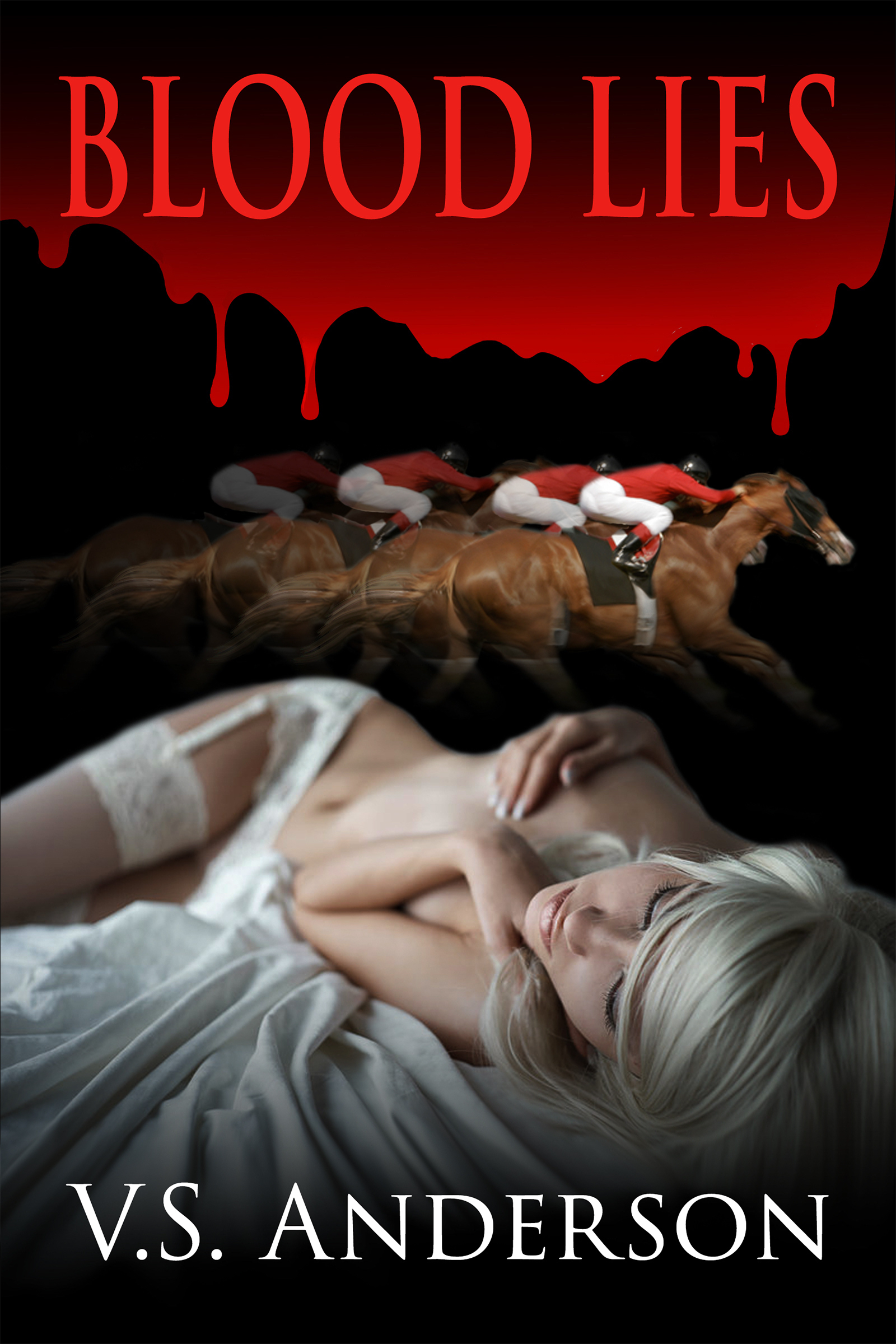
If you’re tempted to buy a copy of the old paperbacks for like $0.01, or some such price, let me know and I’ll send you a Smashwords coupon for a cheaper (yes!) edition. Both books have been revised, Blood Lies a fair amount.

Thanks so much to Brittneysahin and others for input on this. If anyone gets any new information via direct communication with Amazon, thanks in advance for letting us all know. And I’m going to change my royalty rate to 70%.

4 Comments

Filed under Amazon Kindle Direct Publishing, Amazon pricing policy, ebooks publishing and selling, Money issues for writers, Self-publishing, Smashwords, V. S. Anderson, Virginia S. Anderson, writing novels