Tag Archives: creative writng

3 Lessons, 4 Resolutions from the Indiana Writers’ Workshop, October 24, 2015

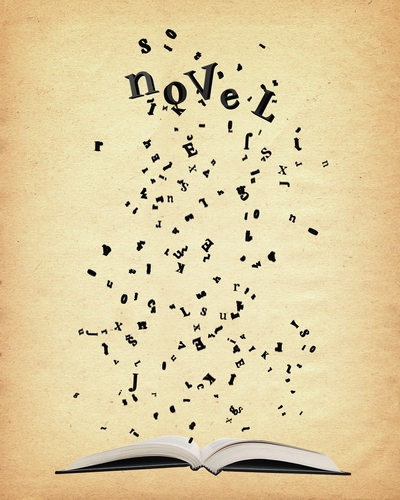
Novel!It’s unusual to find a conference that changes the way I think about my novel and about myself as a writer. This one-day conference, less than a day’s drive away, did just that.

The Workshop featured presentations by Brian Klems, online editor for WritersDigest.com. The basic fee covered four all-group presentations by Klems and a “first-page” critique by four agents of randomly selected submissions. Participants could pay extra for ten-minute pitch sessions with up to six agents and for a personal query-letter critique by Chuck Sambuchino, author of a number of books and blogs on writing as well as humor books.

Klems’s presentations covered a huge amount of nuts-and-bolts information most valuable to writers who had not attended many conferences or mined the web for information on the business of writing. The pitch sessions were well-coordinated; all three of the agents I queried were generous listeners. The published schedule did not build in meals or receptions for the social networking that many writers find rewarding.

So what made this conference so productive? Two things: Sambuchino’s critique of my query and the “first-page” session, at which some 20 or so of the first pages submitted were thrown down and stomped upon.

First: Query-Letter Critique

I didn’t receive Sambuchino’s comments until the Thursday night before the conference, and Friday was hectic, so it was evening before I could settle into my motel room to digest the veritable armada of comments he had supplied. Everyone reading this can probably empathize with my stomach-twisting lurch when I realized that the back-of-the-book blurb I had workshopped over and over with multiple audiences was No Good. Basic questions—what is Michael’s wound, his need? What is at stake? How does this event lead to this one?—still loomed. Sambuchino wanted A LOT more information than any back-of-the-book was going to accommodate.

The feeling of utter inadequacy that settled over me produced a complete rewrite. Was that the right strategy? All I know is that when I sat across from agents and talked from the notes they were glad to let me use, not one broke in with a confused frown to tell me I wasn’t making any sense. (Believe me, this has happened.) There’s no experiment that could tell me whether my response to Sambuchino’s comments made the difference. But I do know that when I revise my query letter, the pitch itself will look a lot more like the one I wrote Friday night than the one I have now.

Lesson learned? First let me talk about

First Page Armageddon

Continue reading

2 Comments

Filed under business of writing, Editing your novel, Finding literary agents for writers, Learning to write, looking for literary editors and publishers, Publishing, self editing for fiction writers, Working with literary editors, Writers' conferences, Writers' groups, Writing, writing novels

Note to Self: Four Editing Rules to Follow THIS TIME!

Do you have rules for your own self-editing sessions? Can you suggest some I ought to apply?

Editing a manuscript that I wrote some time ago has actually turned out to be quite a bit of fun. The story’s there, almost solid; now it’s time to make sure nothing in my style, my pacing, my voice, keeps it from getting across. Line-editing this novel is a lot like cleaning out a closet and finding out which of my old treasures really are treasures and which ones are junk.letter scatter novel

And the thing that’s great about cleaning up the text of your novel: it’s not quite as likely as a closet to get cluttered again.

Actually, “self-editing” is a little bit of a misnomer. A lot of what I’m doing as I revisit the manuscript of my long-shelved “Sarah” novel is responding to the comments and suggestions of my wonderful Green River Writers critique group (see here, for example, to learn more about how and why they’re wonderful). But at the same time, coming back to my writing after a hiatus changes the way I see and hear it. Distance makes the heart grow smarter? Or am I just hearing myself through other people’s ears now?

Since those of us who want to be read (and published) need more than anything to know what we sound like outside of the wind cave of our own brilliance, I hope I’ve assimilated the collective wisdom of my writing group, in which people just plain tell me when I’ve made them start checking the number of pages to see how much more of my brilliance they have to take.

Typewriter and flowersHere are four editing moves that give me consummate pleasure. Who would have thought that slashing a big X across half a page or a black line through a sentence could be so fun? Continue reading

3 Comments

Filed under Editing your novel, Learning to write, self editing for fiction writers, Self-publishing, style for writers, What Not To Do in Writing Novels, Writers' groups, Writing, writing novels

#Bloggers Beware: You CAN get SUED for using Pics on your Blog…

Chris the Story Reading Ape posted this link; it’s important reading. For the record, the pictures I’ve begun using are from stock photo sites that state expressly that they can be used for blogs, book covers, web sites, etc. These sites use the terms “resale and distribution” in ways that I find confusing; for example, depositphotos, which I have used quite a bit, says that the regular license is fine for book covers, but then says this license is only appropriate for ebooks if the photo file plays “a minor role” in the product. Since many of the book-cover designers on Mark’s List at Smashwords use sites like this, it would seem to this non-lawyer that the images are available for such use in ebooks just as in regular books.
In any case, I have found the sites I’ve used to be easy and inexpensive. You can buy images for as little as $1.00. The article this post links to lists a number of free sites, including Creative Commons sites. When I checked out Wiki Commons, I wasn’t particularly impressed with the selection there; the pay (royalty-free) sites seemed to have a larger selection of what I was looking for.
Perhaps others can share their experiences and expertise on this topic!

Chris The Story Reading Ape's avatarChris The Story Reading Ape's Blog

Further to an update from my blog partner

Professional Editor Susan Uttendorfsky

Dun Writin’—Now Whut?

Sharing Content, Copyrights, and Permissions

54 Part 1 and 55 Part 2

also apply to using photos

See this blog post of a blogger who was sued over using a copyrighted photo,

even with a disclaimer:

By clicking on the image or link below:

image

bloggers-beware-you-can-get-sued-for-using-pics-on-your-blog

View original post

3 Comments

Filed under blogging, business of writing, ebooks publishing and selling, indie publishing, Self-publishing, Smashwords, writing novels

How Much Grammar Do You Need, Part V: Rules I’ve Seen Erudite People Break–

—but that other erudite people will definitely notice!

One of Joe Williams’s categories included errors erudite people make but no one notices. Even the erudite people preaching against the error make it and don’t catch themselves.

Bill, the dog, critiques

He tells me when I’m wrong!

But another category: errors erudite people DO notice, and react negatively to—the implication being that these are errors erudite people scrupulously avoid.

Ahem.

I recently read the following in the New York Times:

The Arlington police had went to the Classic Buick GMC dealership Friday just after 1 a.m. when a caller reported that a man was standing on top of a car in the lot “stamping on the windshield trying to break it,” according to a 911 call.

I’m not posting this here as a statement on the events being described (you can learn about that elsewhere.) I’m providing it because it commits—in the New York Times of all places!—one of those fairly egregious errors an agent or editor or any other “well-educated” reader definitely will notice—and judge.Sad Editing!

(Tip for that NYT writer: if “have” or “had” is part of the verb phrase, go with the past participle. Otherwise choose the simple past.)

So Rule #1 that won’t be overlooked is use the correct verb form!

Rule # 2 on this list: Know the difference between “its” and “it’s.”

Trivial? Absolutely. Will not knowing the difference really matter? In some cases, you bet.

I suspect this one results from writing too quickly and proofing on the screen with a deadline looming. If by some chance keeping these straight plagues you, there’s unfortunately no easy way to remember, unless it’s to go with the one that makes the least sense. You’d think a possessive, like “The dog chased its/it’s ball,” would take an apostrophe, wouldn’t you, since possessives are formed with apostrophes? But “its,” the correct choice, is kin to “her” and “his.” Just fix in your mind how silly “He ate hi’s supper” would look, and you may be able to remember to pick the one without the apostrophe.

While we’re on the subject of apostrophes,

Rule #3 on this list is do not form plurals with apostrophes.

I saw this done in the crawl on Good Morning America! But it’s like announcing that the writer has been reading more roadside veggie stands than novels.

Rule #4? Do not put commas in these two places.

Comma rules can look complicated. Recently I eavesdropped on professional editors trying to decide whether to insert a comma based on whether they heard “a pause” or not. But people hear pauses in different places. There are “rules” for commas. I find that the basic list of uses for commas in handbooks, or on sites like this one, make sense.

I consider commas one of the most important tools for clear writing. They mark off sections of sentences and help me, as a reader, know what’s coming next (are we still in the appositive, or have we returned to the independent clause?). In this post, I just want to emphasize two places where I’ve seen commas sneak in. (And my agent from years back said specifically that she’d stop reading a query the minute she spotted one of these.)

Forbidden place A) Between a subject and its verb. “Gloria, went out to lunch.” I don’t hear a pause there. Do you? Or, more understandably: “One of the reasons I don’t like that play, is. . . .” Here, the length of the subject phrase may make a writer feel as if it’s time for a pause.

The only time a subject should be followed by a comma is when some kind of “interrupting” element comes between the subject and its verb: “Gloria, however, hated the restaurant we’d chosen.” Or “Gloria, who hates Chinese food, went with us to the Chinese buffet because it was cheap.”

Forbidden Place B) After a coordinating conjunction.

The most dangerous place for this interloping comma is after the conjunction between two complete sentences: “I hope you will consider representing my novel but, I know you have many submissions to read.” The comma goes before the “but,” never after, unless there’s an interrupter, and then you need two commas: “I hope you will consider representing my novel, but, like all agents, you have many submissions to read.”

None of these errors directly impacts communication. At worst, they create little hiccups in the flow of the text. Except that, as Williams points out, error is in the eye of the beholder. What’s a hiccup for me might well be a coughing fit for someone else. Agents and editors qualify, at least in general, as erudite readers. Even if the staff of the New York Times didn’t catch that “had went,” they probably will.

Do you have your own candidates for rules you really can’t get away with breaking? Leave a comment and let me know!

Cats as kibbitzers

They have their opinions, too!

Leave a comment

Filed under correct grammar for writers of fiction, Editing your novel, grammar rules for writers, indie publishing, Learning to write, punctuation for writers of novels, self editing for fiction writers, Self-publishing, style for writers, Writing, writing novels

Interesting Post on Reading-Level Scales—for Children’s and YA authors?

Here’s a post by Dennis Baron at The Web of Language about the readability scales used by various organizations to dictate the “grade-level” writers should aim for. He argues that these scales are useless, by virtue of the fact that they contradict each other, at the very least, and don’t provide help in creating “clear” language at any level. I’m not sure how these scales relate to the guidelines on language in children’s and YA books that writers in those genres follow. Check out the post, and let me know if you have used scales like these.

Leave a comment

Filed under self editing for fiction writers, Self-publishing, style for writers, Working with literary editors, Writing, writing novels

How Much Grammar Do You Need? Part IV

Here are some “grammar” rules you DON’T need!

That is, rules that aren’t even really rules. And even if they were rules, they’d fall into that category Joe Williams created of “rules” that are more noticeable and disruptive when they are followed than when they aren’t, because they’re alien to the way most of speak and write.Man worrying about his writing

Of course, if you could see into the innermost grammar hearts of all those agents and editors to whom you direct your missives, you would find people who cringe every time you fail to observe one of these mythological rules. My point is that convoluting your prose to avoid them, or obsessing over them to the point that your creativity begins to ice over, is counterproductive. In these cases, let your natural ear as an English speaker rule.

Here they are (I’ll probably come up with others and invite you to submit your candidates):

Beginning a sentence with “because.”

Williams says that there’s no sign of this prohibition in any handbook he ever saw, and I echo that. Yet, even thirty years after Williams debunked it, my students would still cite this “rule” to each other in their peer reviews.

In my view—a pure hypothesis, I admit—this instruction arose from some teacher’s worry that clauses prefaced with “because” all too often were never connected to the necessary independent clause and thus end up as fragments. We do talk this way: “Because I said so.” “Because I don’t want to.” “Because I like it.”

It’s a fact that the minute you put the word “because” in front of a sentence, it becomes “dependent,” in need of a crutch to make sense. In conversation, the missing information is already present in the ongoing conversation. In formal Standard Written English, the missing components should be supplied in an independent clause attached to the “because clause.” “Because I like it, I often swim in the lake in winter.” (Or because I’m a glutton for punishment.)

It’s probably more natural to reverse the clauses: “I often swim in the lake in the winter because. . . .” But there’s nothing grammatically wrong with starting with the “because clause.” It’s a stylistic choice, not a grammar/moral-fiber choice.

Ending a sentence with a preposition.

I was startled years ago when, at my university, the speech communication people presented the writing faculty with a list of the things students ought to be learning in first-year writing, and the list was just a bunch of grammar “rules,” this one prominently among them. Honestly, I thought anyone teaching writing in college would have a more nuanced idea of what “writing” consists of than that list.

In order to follow this supposed rule, you have to become so rigidly formal that your efforts wave and shout from the page. “Who were you talking to?” becomes “To whom were you talking?” Or say you’re synopsizing in a query and you need a sentence like, “His daughter was the only person he’d confessed to.” Is it really better to write, “His daughter was the only person to whom he’d confessed”? It depends entirely on how “formal” you want to sound. Personally, I’d probably find a way to “write around” this conundrum, but I’m making a point. (We’ll get to the who/whom issue soon enough.)

There’s a very famous example of the preposition-at-the-end issue often attributed to Winston Churchill. Supposedly he responded to an editor’s efforts to eliminate terminal prepositions with a note: “This is the sort of bloody nonsense up with which I will not put.” (My dad loved to quote this at me.) For a lively discussion of this supposed quote, see this post by Geoffrey K. Pullum at The Language Log. This post claims, from a reputable source, that the rule that you can’t end a sentence with a preposition “was apparently created ex nihilo in 1672 by the essayist John Dryden.” The post gives several other examples of smart choices in which the preposition stays where it wants to, including a discussion of the kind of English verb that includes words generally defined as prepositions, such as “put up with.” Separate these at your peril.

Splitting infinitives

I’m old enough to remember expletives fired at the epithet for Star Trek as it shifted into warp speed: “To boldly go where no man has gone before.” Eeek! Split infinitive—separating the “to” from its partner, “go,” which together create the “infinitive” form of the verb, which in English is created exactly this way: a main form of the verb plus “to.” To eat. To see. To write. If you’ve ever taken a foreign language, say Spanish or French, you also learned about infinitives, the more-or-less “base” form of the verb: estar, hablar, manger, sortir.

You’ll note that these infinitives belonging to “romance languages” (not because they’re sexy but because they come from “Roman” or Latin ancestors) are one-word infinitives, not two-word infinitives as in English. At some point, some upmarket grammarians decided that Latin was a more “advanced” or “noble” language than English; English needed to be elevated by becoming more like Latin. You can’t split an infinitive in Latin, for obvious reasons; so you shouldn’t split one in English either. I guess you’ve noticed how much better English sounds as a result of this rule.

Or does it? Does “To go boldly where no man has gone before” really sound better? Not to my ear. One of the reasons the revised version clunks is that the original, “to boldly go,” is in “iambic pentameter,” the poetic meter most natural to English—in fact, the one used by Shakespeare. Here’s a nice account of the rule and advice about (not) applying it.

The upshot: listen to your sentences. Put the adverb (the “boldly”) and the preposition where they most want to go.

Send me your candidates: Rules we don’t need!

Happy editing!

3 Comments

Filed under correct grammar for writers of fiction, Editing your novel, Finding literary agents for writers, grammar rules for writers, Learning to write, Myths and Truths for writers, punctuation for writers of novels, self editing for fiction writers, style for writers, Teaching writing, Writing, Writing and teaching writing

Why Writers MUST Read

A wonderful perk of being retired from teaching is rediscovering what it’s like to read fiction for pleasure. I assume I don’t have to convince any writers of the pleasures of a good book!

But my new reading experience has reminded me why writers MUST read. True, we know we have to read in our own genres. After all, we have to be able to tell agents and editors we query how our own work fits into a landscape with which we had better be intimately familiar. But we need to read—we MUST read—more widely than that.

We need to know, we must know, what works for people who are not us. In my lifetime of reading fiction, slowed but not terminated by my years of teaching, I have always been surprised to discover what other people consider good. I hope I’m not the only reader to roll my eyes once in a while and wonder, “Who’d’a thunk anyone would publish that?”

But “that” turns out to have five-star reviews on Amazon, enormous followings on Goodreads, and thousands of Facebook likes. I’ve moved from “I’d never do that!” to “What can I learn from this?” For example, from watching how different kinds of writers win over readers, I learned the importance of the “pet-the-dog” scene. The protagonist you want your readers to stick with has to do one small “good” thing somewhere, somehow, in the book’s opening moments. Related: the “stop-being-mean-to-her” scene, wherein your protagonist is being treated unjustly. I didn’t learn about these strategies from reading Shakespeare—although I assure you, he does them, too.

In other words, there’s some reason a lot of people like the books you hate. There’s gold in figuring out what that reason is.

We need to know, we must know, that the kinds of books we love do exist, sometimes in the most unexpected places. I read so much about the fall of publishing, about the sheer inability of those of us who might once have been indulgently called “midlist” authors to persevere. I hear so often that unless you’re already a celebrity or a world-renowned expert, you only have two options for your quiet, literary, sort-of-mystery-but-sort-of-not: either self-publish it or stick it in the drawer.

Yet over and over I take a chance on a new book only to discover wonderful writing still bubbling up out there. I don’t say it necessarily gets shelved face-out at Barnes & Noble or makes it to the top at Amazon. I’m reading a terrific book right now that will probably never do either (Mary O’Dell’s Cyn, from Turquoise Morning Press). But good writing gets noticed, and it gets published. And I get to read it by opening myself to that chance.

More to the point, I get the reassurance that continuing to grow as a writer is worth the effort. I can’t write as well as the great writers I admire, but I can learn to write better than I do now, and it’s because I find these great writers out there through reading that I have the faith to soldier on.

We learn what we forgot to do in our own books. This is a little different from the strategies in point one above; it’s not about devices, it’s about fundamentals. Writing every day, deep in a story, we get into habits and patterns that, in my case at least, lull me so that I forget something vital I should be attending to, something I’ve left out. Often it’s something that doesn’t come naturally to me, that I need to work at. For example, the other day I went to our local bookseller (Carmichael’s) to redeem a gift card. The book I wanted, Ben H. Winter’s World of Trouble, was out of stock, but I did find a discounted copy of The Girl on the Train.

I expected some sort of mystery/thriller, not too far from my genre. I expected one of those bang-up openings that set me on the edge of a cliff, teetering. Instead, I found myself in a tranquil, slow-moving country, listening in on the placid observations of a muted soul.

I thought of all my anguish trying to make my opening pages electric. Here I was holding a bestseller whose author saw no such need. Then, slowly, I began to understand what she was doing—something I struggle to do enough.

This was/is a classic, masterly demonstration of that single overriding rule for all writers of fiction: show, don’t tell.

From what this character noticed and how she reacted to what she noticed, she slowly let me build for myself a rich, nuanced sense of a soul in deep trouble, a world alight with danger, if not the guns-and-daggers kind (not yet, at least). A soul in trouble, a soul in danger: the classic “it” that a story either has or doesn’t. And all without ever shaking a finger at me to tell me what I was supposed to see or know.

That night, I got out my notebook. Above one column, I wrote, “What I want readers to know about Sarah.” Above the next column, I wrote, “What she does to show it.” I sat for an hour, working my way out of that all-too-available strategy of having Sarah tell readers how she was feeling, what she feared, worried about. What does Sarah do to let readers sense her danger, understand how she got here, so that they’ll be shouting at her, “No, no, don’t do that! Do this!” and sweating (I hope) to see if she does.

It’s not that I didn’t know this basic rule. But inside the walls of my own imagination, I had lost sight of it. I didn’t even miss it, until I wandered out into other landscapes and saw another writer doing it—when I picked up that book and read.
Leave a comment

Filed under Learning to write, Myths and Truths for writers, self editing for fiction writers, Self-publishing, Teaching writing, writing novels

I Continue to Learn about Publishing. . . .

Following up on the rather alarming article by Dean Wesley Smith that one of my earlier posts linked to, I wrote to some agents and publishing experts requesting their thoughts. Question marksDespite dealing with a family emergency, Victoria Strauss of Writer Beware took the time to write back with a compelling clarification of Smith’s more extreme claims. With her permission, I reproduce her reply here. You’ll note a link to a very thorough article on the issue of reversion-of-rights clauses in contracts. If you’re on the verge of querying or have an offer, this article is well worth your time.

Here is Victoria’s reply to my questions:

Taking your questions in order:

1) Is it true that “life-of-copyright” is now the industry standard,
so that rights never revert, regardless of the original publisher’s
intentions for the book?

Life of copyright has _always_ been the industry standard among large and medium-size publishers. This is nothing new, and I’m bemused that Dean Wesley Smith would say that it is.

I do think that a limited-term contract is far more desirable, if you’re going with a small press (and small presses do often offer limited-term contracts–though life-of-copyright is not at all uncommon in the small press world). But life of copyright doesn’t have to be a problem–as long as there’s a detailed, specific reversion clause that ties rights reversion to minimum sales (for instance, making rights reversion automatic on author request once sales drop below 100 copies in any 12-month period). I’ve written about this in detail here: http://accrispin.blogspot.com/2012/04/importance-of-reversion-clauses-in-book.html .

Unfortunately, it’s not unusual to encounter life of copyright contracts that _don’t_ have adequate reversion clauses–especially in the small press world, where people often don’t know what they’re doing. You may be able to negotiate to add a good reversion clause–my agent has negotiated sales-dependent reversion clauses into all my contracts since at least the early 2000’s–but, depending on the publisher, you may also choose to walk away from a life of copyright contract offer with inadequate reversion provisions. It’s definitely something to watch out for. But the reality is a lot more nuanced than what’s presented in Dean Wesley Smith’s post.

2) Is it true that authors who were once seen as “midlist” should
now assume they will most likely be offered $5000 or less as an
advance? (I received that amount for my first novel, but much more
for subsequent submissions that definitely did not quality as
“best-sellers,” though they sold respectably.)

Advances have generally fallen, especially since the 2008 economic downturn. But they are all over the map, so it’s impossible to make a blanket declaration. Advance amounts depend on all kinds of factors, including your agent (or if you have one; authors without agents tend to get lower advances), the publisher (smaller publishers generally offer smaller advances), what the publisher’s expectations of your books are–and, unfortunately, if you have a publishing track record, the sales of your previous books. In any case, if your sales are good, you’ll get the money owed to you regardless of the advance amount.

As for the whole “midlist” thing (that word doesn’t mean what it used to)–a lot has changed in the publishing world over the past 15 to 20 years, and one of the things that’s changed most is how hard it is to stay in the game. I don’t think it’s any more difficult to break into traditional publishing than it ever was (possibly easier, given the huge volume of books that are being published), but it is a lot more difficult to maintain a career, especially if your sales aren’t stellar.

   3) the proliferation of “royalty only” publishers. How are such
entities regarded in the industry at present? Is this a coming wave?

This really is a phenomenon only in the small press world, which has expanded hugely over the past 15 or so years thanks to digital technology. These days, anyone can set up a publishing company just by registering with CreateSpace or LightningSpark. One of the ways many small presses try to limit their financial outlay is to eliminate advances. This is extremely common, and has been for some time. However, don’t believe anyone who tells you that advances are becoming less common among large and medium-sized publishers, or that debut authors no longer receive advances. This simply isn’t true.

There are some great small presses, but an awful lot of amateur and predatory ones whose staff know little about editing, production, design, and marketing. When Writer Beware was founded in 1998, we mostly got complaints about literary agents and scam vanity publishers; these days, small press problems make up by far the biggest volume of complaints we receive. In many cases, self-publishing is preferable.

– Victoria

1 Comment

Filed under business of writing, ebooks publishing and selling, Finding literary agents for writers, indie publishing, Money issues for writers, Myths and Truths for writers, publishing contracts, reversion of rights clauses, Self-publishing, Working with literary editors, writing novels

Five Questions Indie Authors Should Ask Agents

A couple of posts ago I linked to an article that took me to this post from Dean Wesley Smith, in which he informed us that the current industry standard in traditional publishing is “life-of-copyright,” which basically means that we will never regain the rights to our work, regardless of the publisher’s intentions for our books, and that the most we can expect in the way of advances is $5000 or so.

I’ve posted questions about these claims to a couple of active blogs on the business of writing, including to an agent’s blog, and will be posting to others. In my searches, I came across this post about how indie authors should expect agents to protect their rights, which is directly relevant to these issues.

This appeared on the web site of the Alliance of Independent Authors. I’m following their blog and will share interesting information.

2 Comments

Filed under business of writing, ebooks publishing and selling, Money issues for writers, Myths and Truths for writers, Self-publishing, writing novels

How Much “Grammar” Do You Need? Part III . . . .

Questions?I’m picking up on my last post, in which I discussed Joe Williams’s “Phenomenology of Error,” published in College Composition and Communication in 1982, where he ably demonstrates that even the most erudite language mavens only find errors when they are explicitly looking for them, and thus miss bunches, even in their own work.

Williams developed his own rather complicated categories of errors. Of course, he’s an academic writing for other academics, and the essay is more than 30 years old, so his examples may not be the ones we’d pick today if we wanted to duplicate his categories.

But a couple are.

Briefly, his categories are

  • Rules we notice and respond to with a shriek when they’re violated. (“Shriek” is my word, equivalent to the reactions from experts Williams notes in his introduction, people who label such things as “OK,” “hopefully,” and “He invited Mary and myself to dinner” as examples of an “atrocity,” a “detestable vulgarity,” and “garbage.”) In this category of noticeable rules, Williams places basic violations of Standard English structure, such as “I seen” and “He don’t.” Note that these locutions don’t impede understanding. They’re perfectly clear, and perfectly acceptable in many contexts. (In some dialects, such as Black English, ways of talking that violate Standard English are actually rules of that dialect, with their own influence over such matters as time and continuity of action. See the resources here and here to understand this point better.)
  • Rules we really don’t notice even when they’re violated—despite knowing that the rule exists. Williams specifically offers the that/which distinction, which (see, I used it right) even such eminences as Jacques Barzun cheerfully violated within a page of telling us not to. Later I’ll have a little to say about this rule, since it falls clearly into one of my own categories.
  • Rules we notice when they’re observed because they call attention to themselves, a small class. His example is “It is I,” which is indeed “correct” but which jumps off the page at most people. I suspect that “between you and me” is rapidly becoming such a conspicuous instance of correctness (yes, it is correct) for many. I actually heard someone say “between he and I” this morning on a news show. Looks as if the subjective case after a preposition is coming into its own.
  • Rules that, when violated, actually elicit a favorable reaction from individuals. Williams offers an example of a rule he actually prefers to see broken: using “than” rather than “from” after “differently” when what follows is a clause and not a noun. I think there are more rules like this, rules that, if broken, improve prose. I’ve already pointed out one possible candidate: choosing to start a sentence with “but” (assuming you think this violates an actual rule). I’ll propose more soon.

This is possibly the best place to remember that languages change. Effort like those the French have made to freeze the language are flung down and stomped on on every street corner, in every hostel. All you have to do is read something written in the 1700s—oh, say, Jonathan Swift’s “A Modest Proposal“—to appreciate how punctuation, spelling, and diction have shifted since then. Students required to read such texts complain mightily about how badly written they are. English is, as we speak, in the process of losing the apostrophe (a vagrant and an intruder to start with).

I actually regret this loss; I’ll horrify my college-writing colleagues by siding just a little with Lynne Truss, author of Eats, Shoots & Leaves, agreeing with her that it might sometimes be helpful to know how many people we’re talking about in a sentence like “The travelers bags will fit in the overhead bins.” A simple apostrophe would tell you, and this Wikipedia article gives more examples of useful clarifications an apostrophe can make. But I am not going to emulate the folly of the French.

I’m approaching the task of establishing my own categories of errors. My main concern is to keep things reasonably simple, and not to get tangled up trying to explain things handbooks or sites like the Purdue Owl explain pretty well. I’ll set up the categories here, and then clarify and defend them in upcoming posts:

  • Rules you really don’t need to worry about
  • Rules you absolutely must obey
  • Rules that are actually judgment calls. Breaking one of these rules (like starting a sentence with “but”) is a gamble. If you absolutely hate what following the rule does to your prose—well, you pays your money and you takes your chance.

1 Comment

Filed under correct grammar for writers of fiction, Editing your novel, grammar rules for writers, Learning to write, Myths and Truths for writers, punctuation for writers of novels, self editing for fiction writers, Self-publishing, style for writers, writing novels