Why you need both CreateSpace and IngramSpark…

Here’s a post on POD printing options from Build Book Buzz featured on The Story Reading Ape. This post provides reasons why my decision to go with Ingram first rather than CreateSpace in publishing a print version of King of the Roses (and eventually Blood Lies) was a sound one. Follow my series on my “Crazy Journey” through the Ingram process: it doesn’t look all that crazy when seen through the eyes of book-marketing expert Amy Collins!

Chris The Story Reading Ape's avatarChris The Story Reading Ape's Blog

Extract of an article by Author Amy Collins in Build Book Buzz:

I have been asked one question more than any other: “Do I need IngramSpark if I have CreateSpace?”

I know it’s tempting to avoid the extra expense and hassle of taking on a second print on demand (POD) provider, but I want to take a moment and share some of the experiences we’ve had at New Shelves Books with our POD work. I hope these statements help you determine if you need one or both.

So . . . do you need both?

See the full article (and read the comments already there) by clicking the link, or Amy’s photo below:

Why you need both CreateSpace and IngramSpark

Amy-Collins-Photo-240x300

View original post

Leave a comment

Filed under Blood Lies, business of writing, indie publishing, King of the Roses, Marketing books, Money issues for writers, Print on Demand for fiction writers, Publishing, Self-publishing, Writing, writing novels

What is “Literary” Fiction? Donald Maass has a definition!

This post at Writer Unboxed is among the best discussions of the distinction between “literary” and “commercial” that I’ve seen. Donald Maass’s comparison between excerpts from two books, one “commercial,” one “literary,” makes the difference visible. This discussion ties in well with my own attempts to define “voice” and effective “world building.” Let me know what you think! Building a World in Fiction

1 Comment

Filed under Editing your novel, indie publishing, Myths and Truths for writers, Plot Development for writers, style for writers, Writing and teaching writing, writing novels

5 Hard Truths About Being a Published Writer

Some truly HARD truths, and worth reading. I can also add that when you’ve published in the past, a fair number of agents want proof that your prior books were bestsellers before they’ll even consider your current one. “Did well for a first novel” doesn’t seem like enough.

Have you ever had experiences like these in your writing career? Share!

Carrie Cuinn's avatarCarrie Cuinn

You’ve dreamed of being a writer, getting published, and finally – you’ve succeeded. Someone has paid money for your words, and they’re out in the world for people to read! Or, maybe you haven’t yet sold a story or novel, or you’re still writing for free on blogs and hoping that’s going to get you noticed. Either way, you aspire to greatness with your ability to turn a phrase. Here’s five things you definitely need to know, but probably no one has told you:

  1. You’re still going to be rejected. No matter how many sales or awards or accolades you have, you will still not have them all. You’ll submit work that won’t be purchased. You’ll write beautiful prose that doesn’t get nominated for an award, or doesn’t win even if you make it onto the ballot. You’ll be left out of articles talking about the books to read this summer…

View original post 1,509 more words

2 Comments

Filed under business of writing, indie publishing, Myths and Truths for writers, Publishing, Self-publishing, Writing, writing novels

Is Your Child Getting a Good Writing Education? Four Questions to Ask Your Child

Take it from two long-time writing teachers (Ken Lindblom and me), these questions deserve to be shared with every parent. Please pass them along!

drkhturner's avatarWriters Who Care

by Ken Lindblom

You want to make sure your child is getting an excellent education in writing. But if you’re not an expert, how do you really know? Here are four simple questions to ask your children about the writing that they are doing in their classes to determine if they are receiving an education in writing that is based on research and that reflects best practices for authentic writing.

Question 1: How many different genres are you writing in school?

The more genres your child is writing, the better.

Academic writing definitely matters. You want your child to be learning to write academic essays, literary analyses, and writing that will work for exams. But academic writing is just one color in the vast writing rainbow!

You want your child to be comfortable writing in many genres, and you want this for at least two reasons:

  1. Each genre of writing…

View original post 1,077 more words

Leave a comment

Filed under writing novels

All About Google+ For Writers | Savvy Book Writers

It looks as if it’s time to get serious about Google+. Let me know of your experiences with this platform. What do you find works best?

Christoph Fischer's avatarwriterchristophfischer

More than 625,000 People join Google+ EVERY DAY, according to Digital Buzz and Huffington Post statistics.  Before I even joined Twitter, GooglePlus (Google+) was my first Social Media network of c…

Source: All About Google+ For Writers | Savvy Book Writers

View original post

6 Comments

Filed under blogging, business of writing, ebooks publishing and selling, indie publishing, Marketing books, Print on Demand for fiction writers, Self-publishing, Tech tips for writers, Writing, writing novels

8 Common Creative Writing Mistakes | Writing Forward

I’ve responded to this post with the thoughts and comments below. Share your own additions!

I agree on these issues! It’s amazing how many cuts I can find when I know I have to. And the result is almost always an improvement.

I especially have to catch redundancy. It’s a good tool for drafting, since you can try out six different ways of capturing a setting or an emotion. But then come back and pick the best one of the six!
A few points:

  • Additional “filler” (or “filter”) words are “**She heard** the wind whistling through the trees” vs. “The wind whistled through the trees,” and “**She saw,**” which works similarly. These are so hard to catch.
  • RE spell-check: Instead of turning off spell-check, turn off “autocorrect” functions. You will be notified of typos, but the computer will not try to guess what you really intended. I’ve seen some pretty crazy computer-supplied corrections!
  • Also, grammar-checkers are notoriously poor substitutes for your own knowledge. The one on my Word program misidentifies fragments and rails against all kinds of style choices that work beautifully to establish voice.
  • Finally, do give “older” books a chance, even if you know that these days, you don’t dare write in an older style. The Victorians, for example, lived in a slower age, but they wrote some of the most gripping fiction you’ll ever read.

Leave a comment

Filed under correct grammar for writers of fiction, ebooks publishing and selling, Editing your novel, grammar rules for writers, indie publishing, Learning to write, Plot Development for writers, self editing for fiction writers, Self-publishing, style for writers, Writing, writing novels

The art of the hand-sell

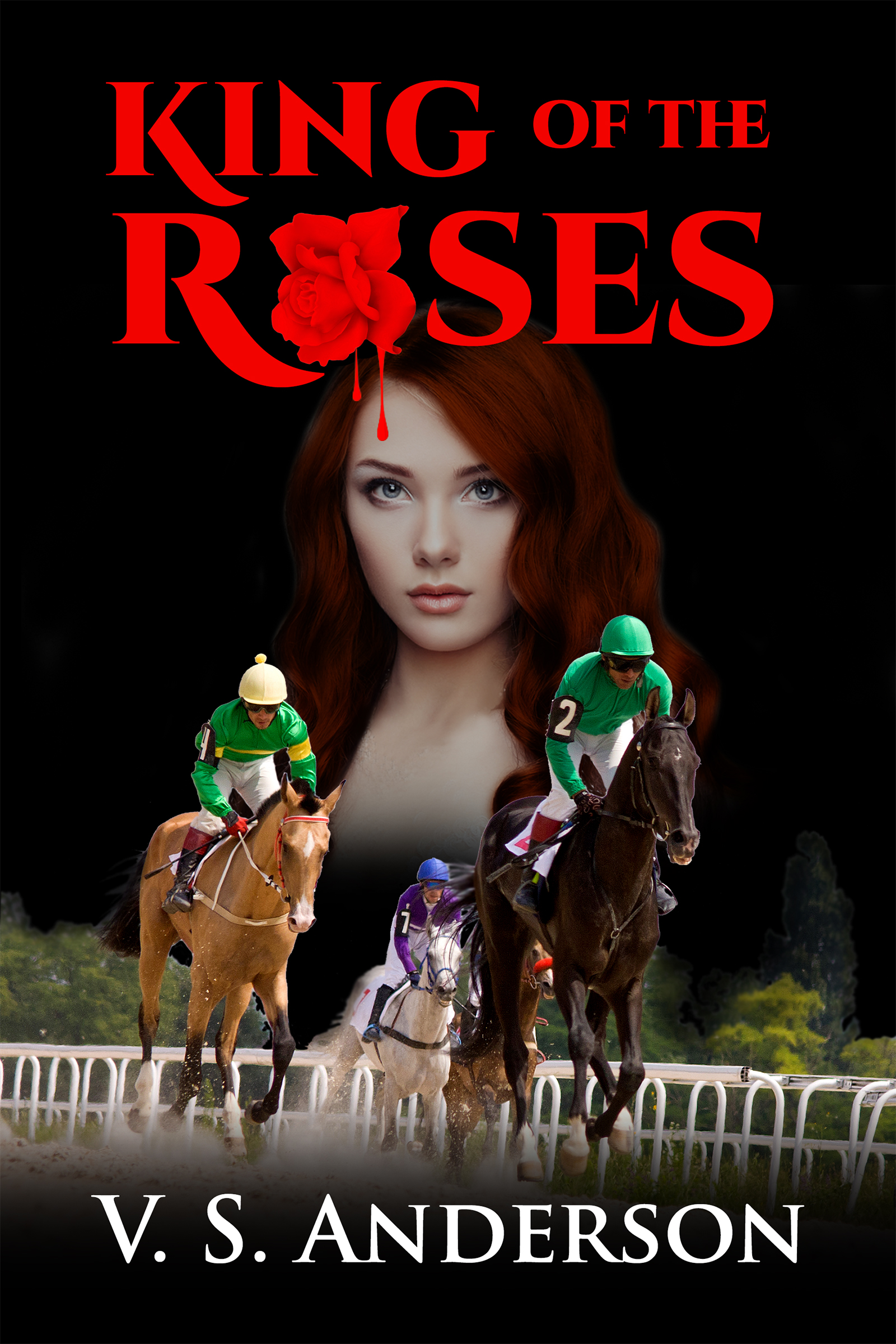
King of the Roses POD edition coverNow that I have a print edition, I need tips like these! Let me know your strategies for “hand-selling.” I need help!

If you want to sell books at an event, you’ll have to master the art of the hand-sell. It all starts with a smile.

Source: The art of the hand-sell

Leave a comment

Filed under business of writing, indie publishing, King of the Roses, Marketing books, Print on Demand for fiction writers, Self-publishing, Writing, writing novels

VICTORY! I CAN Format My Book!

The question of whether I can navigate Ingram’s print-on-demand pathway on my own has been answered.

I have held my book in my hand.

And it looks fine.
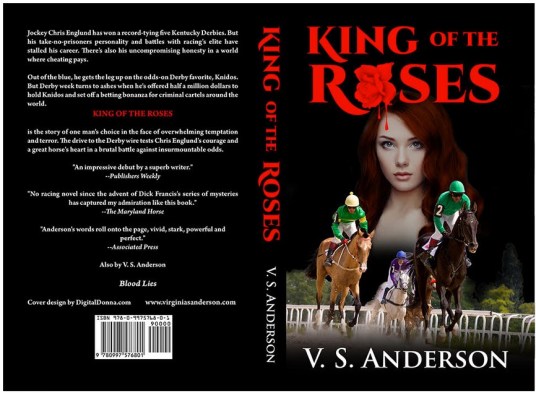
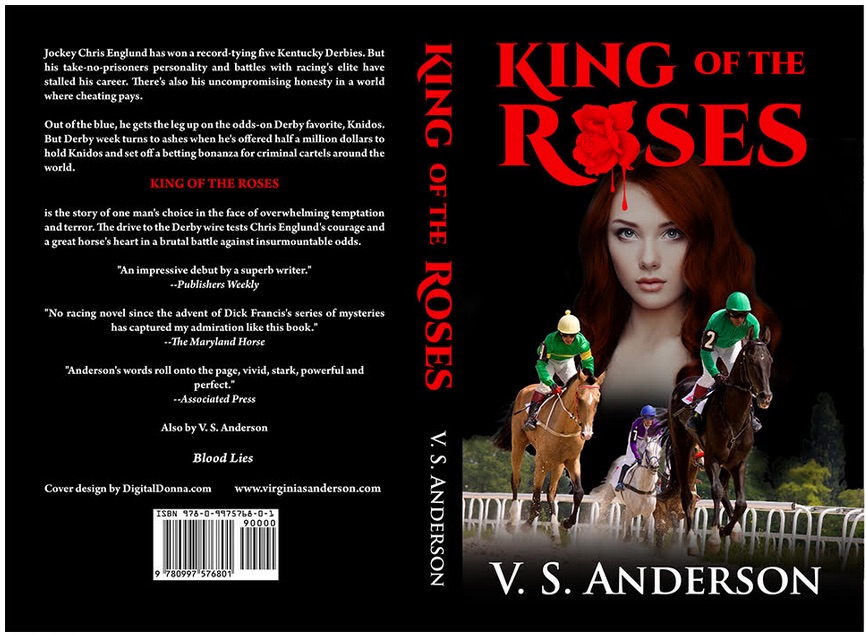
King of the Roses POD edition cover

It looks every bit as good as the editions published by St. Martin’s, Bantam, Mcmillan, and Pan. Personally, I much prefer the bright, striking cover designed for me by Digital Donna to any of the ones the in-house artists produced. Yes, those designs were all created a long time ago, and both tastes and technology have changed. But I remember being a little disappointed even then at covers that just didn’t seem to capture the breakneck pace and dark, escalating menace that I wanted the images to project.

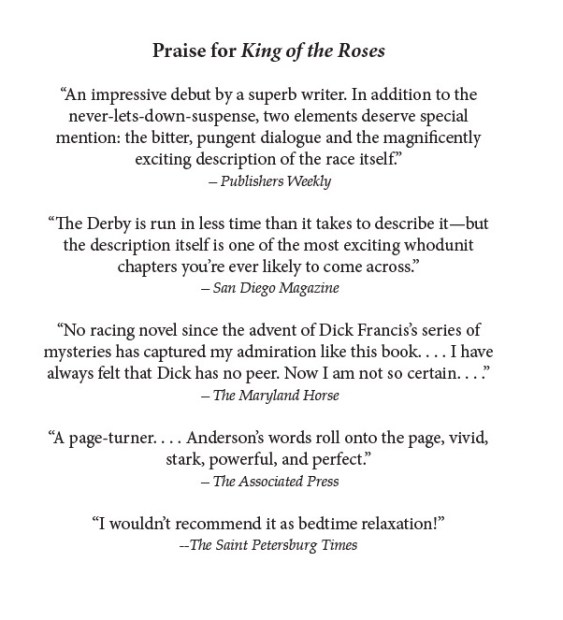
The first thing readers see are the editorial reviews (of which I’m pretty proud). I cropped this a bit from the pdf to fit it here:Praise for King of the Roses
I saw only one change I’ll make next time: I’ll enlarge the gutter slightly. The verso page text slides just a bit more into the fold than I think is ideal. I made a deliberate decision to tolerate widows and orphans because I preferred square to uneven pages. I played around with the text to eliminate as many as I could. Here’s what Page 1 of the main text looks like, with no master applied to remove running heads:

King of the Roses Page 1

The titles are in Minion Pro, the text in Garamond.

As for Ingram’s process, every element that looked hopelessly daunting when I first ventured into the File Creation Guide unraveled itself as I worked my way through.

I do think that the Ingram interface is unnecessarily challenging. Perhaps they’re used to working with experienced publishers and not the newbie authors who might fall into the categories “indie” or “self-” publishers. I do know that many indie and self-publishers are expert at getting their books in print, but Ingram is not welcoming to those who are not. I had to piece together my own “step-by-step” journey in lieu of the one they didn’t really provide.

I am also aware that a professional designer might have handled aspects of my formatting process differently. For example, venturing into and out from The Book Designer site, which I found to be invaluable, I encountered a debate on pairing fonts for text with those for elements like chapter heads and running heads. There’s apparently an aesthetic to such choices that is beyond me. I’m more verbal than visual, and my ultimate choices might dismay people with more highly developed sensibilities. I looked at a lot of books to see how running heads, for example, were handled, and I picked a general direction that I liked. I can’t see readers setting the book on fire because of my choice.

Here is a screen shot of the interior pages with the master applied. Adobe Acrobat wouldn’t display verso (left-hand) and recto (right-hand) pages in a spread; instead it displays the recto page (page 3) and the verso page that would be on the back of page 3 (page 4), so you have to reverse these to see what pages really look like in the book (author’s name on left, title on right):

King of the Roses, pages 3-4

Running heads are in American Typewriter in 10-pt font.

My experience, which I will continue to detail in upcoming posts, speaks to empowerment. Maybe I’m an odd sort of person, but whenever I hear “You can’t do that!”—well, them’s fightin’ words.

One caveat, of course, is to recognize when expert help really does make a difference. I was absolutely thrilled to find that Digital Donna knew exactly how to handle the cover template, including how to open and position the bar code. That was one learning curve I was glad not to negotiate.

And I’ll repeat here a suggestion I made in my first post on this journey: If you want to master a new technical skill—as I did in using InDesign for my formatting process—buy a book!

Let me clarify. Sometimes it pays to learn a new technical skill, even if there is a learning curve.

  • Each new skill set increases your comfort with the technological insanity we all live with.
  • Each new skill will stay with you, even if you have to refresh from time to time.
  • You’ll be familiar with a wider range of options and can make more informed choices.
  • And you’ll realize what you CAN accomplish, which, in my experience, can make you feel good.

But as you take such plunges, I again argue, the right expert help can be an important flotation device. If I hadn’t taken a couple of weeks to work through the first few chapters of a book on using the program, I’d have been utterly flummoxed. With the book’s help, once I learned the basics, the whole program started to make sense.

True, getting the right book can be hard. A couple of years ago, I started learning Python, just for fun. That project has been crowded out by my book-publishing/book-marketing ambitions, but at the time, I ended up buying THREE books because no one book gave me the specific kind of help I needed.

I had much better luck with my InDesign book, Classroom in a Book. It’s not perfect but it got me rapidly over the hump.

Yes, it’s an additional expense. But here’s a thought: even adding together the cost of the book and the year’s Adobe subscription (less than $300), I’m ahead of what I could have paid to have this done for me. If I use this new skill for any future projects, I’m even further ahead.

The link above is for the Kindle edition. I suspect, actually, that older how-to editions for somewhat older versions of InDesign would be cheaper and still adequate for the basics, such as how to create a new project, how to get your text into it, how to generate your paragraph and character styles.

Once you learn those steps, it’s just another word-processing program. Really. I swear.

My next adventure is to play around with different options and report on how they compare. First, Word. I’ve already discovered that Word will let me set up master pages. Whether I can use them as flexibly as InDesign allows remains to be seen.

I’ll be reporting. For now, I’m thrilled!

big smile smiley


2 Comments

Filed under writing novels

Opinion: To Tweet or Not to Tweet? Does Twitter Worthwhile for Self-published Authors?

I’ve heard varied reports on using Twitter to promote books. Is Anna’s process the best to follow? How do you use Twitter?

Swedish indie author Anna Belfrage reports on her trial to see whether Twitter can sell self-published books and queries whether the return justifies the

Source: Opinion: To Tweet or Not to Tweet? Does Twitter Worthwhile for Self-published Authors?

2 Comments

Filed under business of writing, ebooks publishing and selling, indie publishing, Marketing books, Print on Demand for fiction writers, Self-publishing, Writing, writing novels

Five Reasons You Can’t Get Your Novel Published – And Why It’s Not Your Fault

Boy, do we need to hear things like this! Share!

2 Comments

Filed under writing novels