Category Archives: writing novels

All About Google+ For Writers | Savvy Book Writers

It looks as if it’s time to get serious about Google+. Let me know of your experiences with this platform. What do you find works best?

Christoph Fischer's avatarwriterchristophfischer

More than 625,000 People join Google+ EVERY DAY, according to Digital Buzz and Huffington Post statistics.  Before I even joined Twitter, GooglePlus (Google+) was my first Social Media network of c…

Source: All About Google+ For Writers | Savvy Book Writers

View original post

6 Comments

Filed under blogging, business of writing, ebooks publishing and selling, indie publishing, Marketing books, Print on Demand for fiction writers, Self-publishing, Tech tips for writers, Writing, writing novels

8 Common Creative Writing Mistakes | Writing Forward

I’ve responded to this post with the thoughts and comments below. Share your own additions!

I agree on these issues! It’s amazing how many cuts I can find when I know I have to. And the result is almost always an improvement.

I especially have to catch redundancy. It’s a good tool for drafting, since you can try out six different ways of capturing a setting or an emotion. But then come back and pick the best one of the six!
A few points:

  • Additional “filler” (or “filter”) words are “**She heard** the wind whistling through the trees” vs. “The wind whistled through the trees,” and “**She saw,**” which works similarly. These are so hard to catch.
  • RE spell-check: Instead of turning off spell-check, turn off “autocorrect” functions. You will be notified of typos, but the computer will not try to guess what you really intended. I’ve seen some pretty crazy computer-supplied corrections!
  • Also, grammar-checkers are notoriously poor substitutes for your own knowledge. The one on my Word program misidentifies fragments and rails against all kinds of style choices that work beautifully to establish voice.
  • Finally, do give “older” books a chance, even if you know that these days, you don’t dare write in an older style. The Victorians, for example, lived in a slower age, but they wrote some of the most gripping fiction you’ll ever read.

Leave a comment

Filed under correct grammar for writers of fiction, ebooks publishing and selling, Editing your novel, grammar rules for writers, indie publishing, Learning to write, Plot Development for writers, self editing for fiction writers, Self-publishing, style for writers, Writing, writing novels

The art of the hand-sell

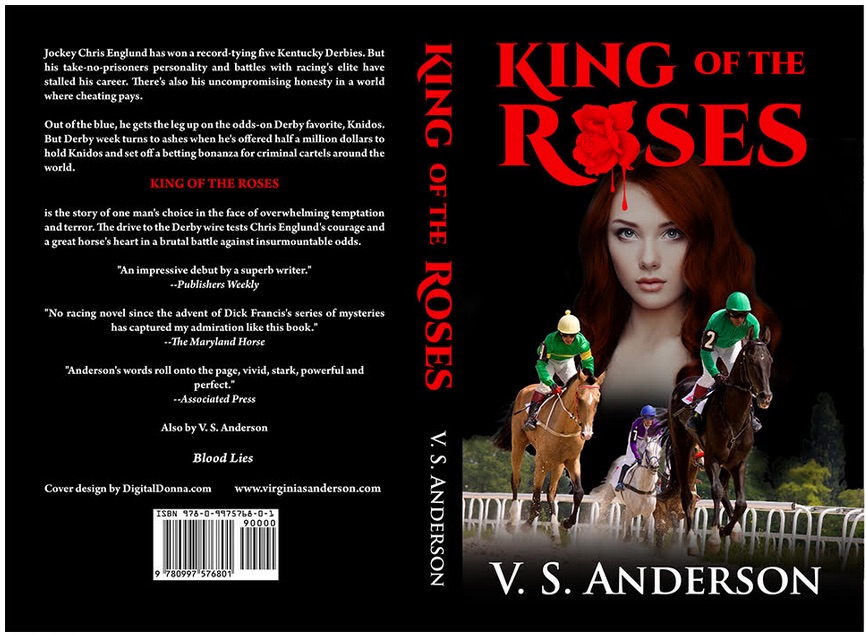
King of the Roses POD edition coverNow that I have a print edition, I need tips like these! Let me know your strategies for “hand-selling.” I need help!

If you want to sell books at an event, you’ll have to master the art of the hand-sell. It all starts with a smile.

Source: The art of the hand-sell

Leave a comment

Filed under business of writing, indie publishing, King of the Roses, Marketing books, Print on Demand for fiction writers, Self-publishing, Writing, writing novels

VICTORY! I CAN Format My Book!

The question of whether I can navigate Ingram’s print-on-demand pathway on my own has been answered.

I have held my book in my hand.

And it looks fine.
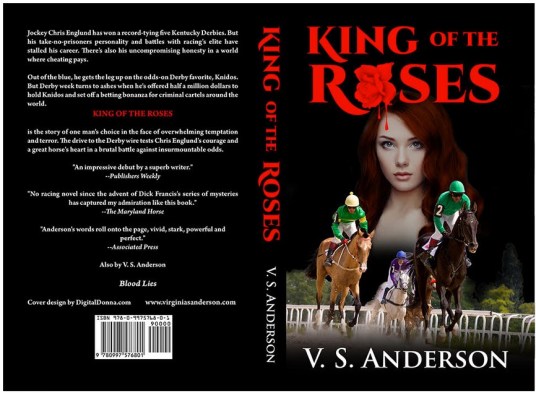
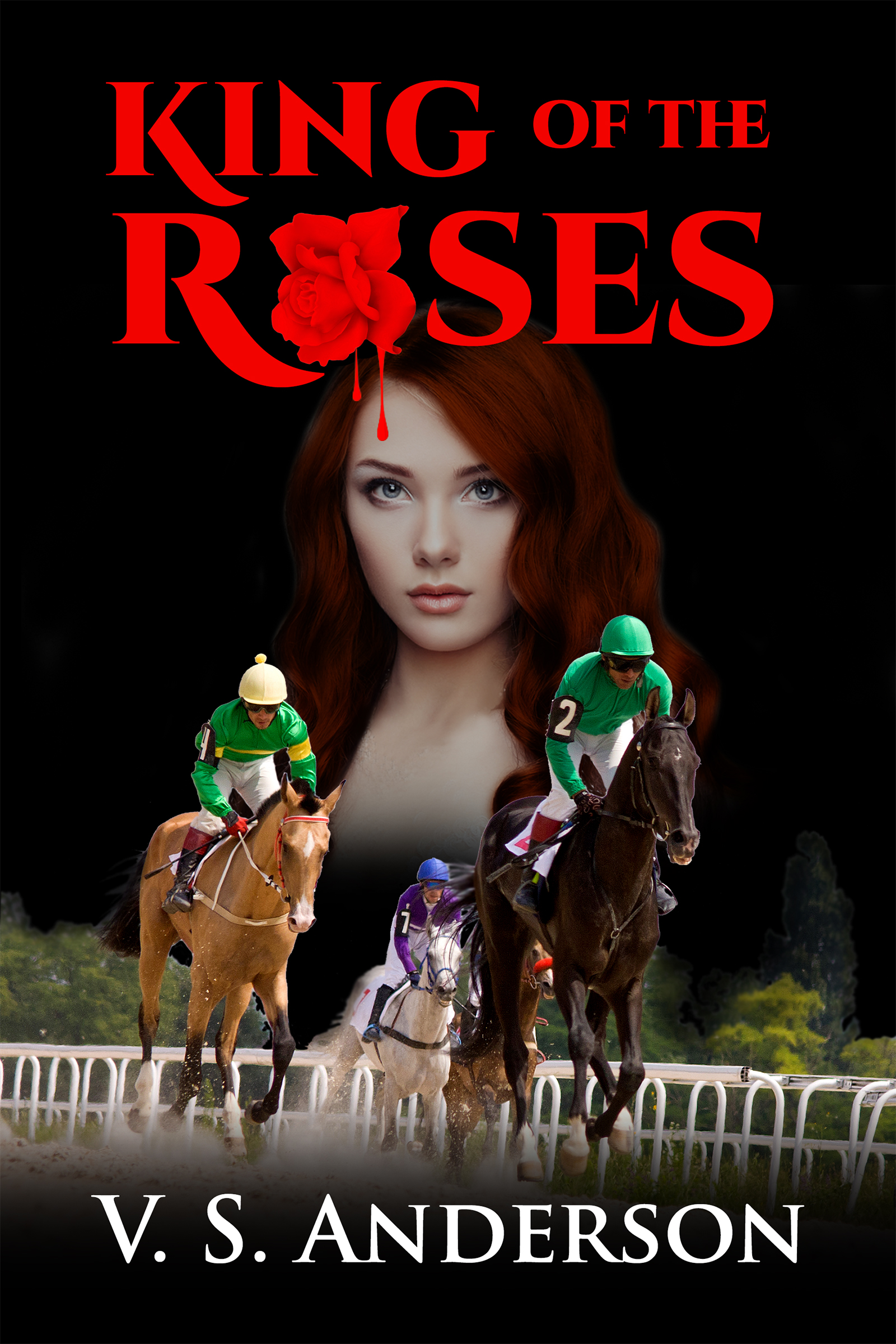
King of the Roses POD edition cover

It looks every bit as good as the editions published by St. Martin’s, Bantam, Mcmillan, and Pan. Personally, I much prefer the bright, striking cover designed for me by Digital Donna to any of the ones the in-house artists produced. Yes, those designs were all created a long time ago, and both tastes and technology have changed. But I remember being a little disappointed even then at covers that just didn’t seem to capture the breakneck pace and dark, escalating menace that I wanted the images to project.

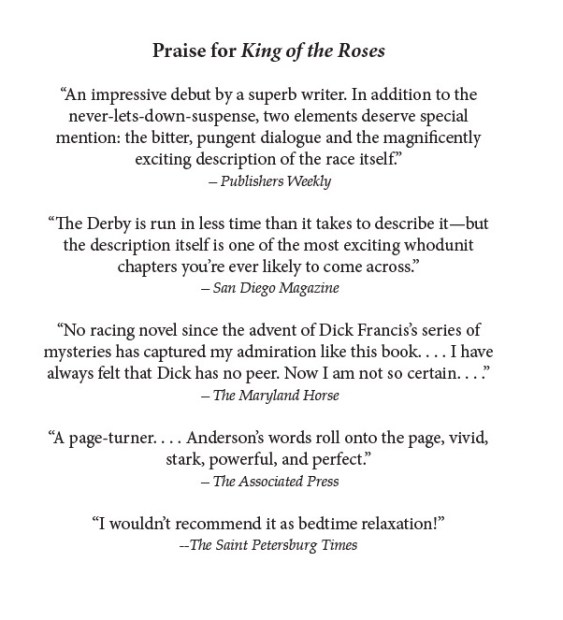
The first thing readers see are the editorial reviews (of which I’m pretty proud). I cropped this a bit from the pdf to fit it here:Praise for King of the Roses
I saw only one change I’ll make next time: I’ll enlarge the gutter slightly. The verso page text slides just a bit more into the fold than I think is ideal. I made a deliberate decision to tolerate widows and orphans because I preferred square to uneven pages. I played around with the text to eliminate as many as I could. Here’s what Page 1 of the main text looks like, with no master applied to remove running heads:

King of the Roses Page 1

The titles are in Minion Pro, the text in Garamond.

As for Ingram’s process, every element that looked hopelessly daunting when I first ventured into the File Creation Guide unraveled itself as I worked my way through.

I do think that the Ingram interface is unnecessarily challenging. Perhaps they’re used to working with experienced publishers and not the newbie authors who might fall into the categories “indie” or “self-” publishers. I do know that many indie and self-publishers are expert at getting their books in print, but Ingram is not welcoming to those who are not. I had to piece together my own “step-by-step” journey in lieu of the one they didn’t really provide.

I am also aware that a professional designer might have handled aspects of my formatting process differently. For example, venturing into and out from The Book Designer site, which I found to be invaluable, I encountered a debate on pairing fonts for text with those for elements like chapter heads and running heads. There’s apparently an aesthetic to such choices that is beyond me. I’m more verbal than visual, and my ultimate choices might dismay people with more highly developed sensibilities. I looked at a lot of books to see how running heads, for example, were handled, and I picked a general direction that I liked. I can’t see readers setting the book on fire because of my choice.

Here is a screen shot of the interior pages with the master applied. Adobe Acrobat wouldn’t display verso (left-hand) and recto (right-hand) pages in a spread; instead it displays the recto page (page 3) and the verso page that would be on the back of page 3 (page 4), so you have to reverse these to see what pages really look like in the book (author’s name on left, title on right):

King of the Roses, pages 3-4

Running heads are in American Typewriter in 10-pt font.

My experience, which I will continue to detail in upcoming posts, speaks to empowerment. Maybe I’m an odd sort of person, but whenever I hear “You can’t do that!”—well, them’s fightin’ words.

One caveat, of course, is to recognize when expert help really does make a difference. I was absolutely thrilled to find that Digital Donna knew exactly how to handle the cover template, including how to open and position the bar code. That was one learning curve I was glad not to negotiate.

And I’ll repeat here a suggestion I made in my first post on this journey: If you want to master a new technical skill—as I did in using InDesign for my formatting process—buy a book!

Let me clarify. Sometimes it pays to learn a new technical skill, even if there is a learning curve.

  • Each new skill set increases your comfort with the technological insanity we all live with.
  • Each new skill will stay with you, even if you have to refresh from time to time.
  • You’ll be familiar with a wider range of options and can make more informed choices.
  • And you’ll realize what you CAN accomplish, which, in my experience, can make you feel good.

But as you take such plunges, I again argue, the right expert help can be an important flotation device. If I hadn’t taken a couple of weeks to work through the first few chapters of a book on using the program, I’d have been utterly flummoxed. With the book’s help, once I learned the basics, the whole program started to make sense.

True, getting the right book can be hard. A couple of years ago, I started learning Python, just for fun. That project has been crowded out by my book-publishing/book-marketing ambitions, but at the time, I ended up buying THREE books because no one book gave me the specific kind of help I needed.

I had much better luck with my InDesign book, Classroom in a Book. It’s not perfect but it got me rapidly over the hump.

Yes, it’s an additional expense. But here’s a thought: even adding together the cost of the book and the year’s Adobe subscription (less than $300), I’m ahead of what I could have paid to have this done for me. If I use this new skill for any future projects, I’m even further ahead.

The link above is for the Kindle edition. I suspect, actually, that older how-to editions for somewhat older versions of InDesign would be cheaper and still adequate for the basics, such as how to create a new project, how to get your text into it, how to generate your paragraph and character styles.

Once you learn those steps, it’s just another word-processing program. Really. I swear.

My next adventure is to play around with different options and report on how they compare. First, Word. I’ve already discovered that Word will let me set up master pages. Whether I can use them as flexibly as InDesign allows remains to be seen.

I’ll be reporting. For now, I’m thrilled!

big smile smiley


2 Comments

Filed under writing novels

Opinion: To Tweet or Not to Tweet? Does Twitter Worthwhile for Self-published Authors?

I’ve heard varied reports on using Twitter to promote books. Is Anna’s process the best to follow? How do you use Twitter?

Swedish indie author Anna Belfrage reports on her trial to see whether Twitter can sell self-published books and queries whether the return justifies the

Source: Opinion: To Tweet or Not to Tweet? Does Twitter Worthwhile for Self-published Authors?

2 Comments

Filed under business of writing, ebooks publishing and selling, indie publishing, Marketing books, Print on Demand for fiction writers, Self-publishing, Writing, writing novels

Five Reasons You Can’t Get Your Novel Published – And Why It’s Not Your Fault

Boy, do we need to hear things like this! Share!

2 Comments

Filed under writing novels

How do readers discover #books #infographic

Do you fit this profile? Where do you hear about the books you end up buying and liking?

Anastasia's avatarRead & Survive

Men don’t trust friends and family as much? 🙈
Facebook 46%? How…where are there books on FB? Have I been living under a rock? 📚
Sales people and publishers can’t be trusted … obviously 😂😂😂

View original post

Leave a comment

Filed under business of writing, ebooks publishing and selling, Goodreads, indie publishing, Marketing books, Self-publishing, Writing, writing novels

How you can avoid my mistakes

Check out these software tools from Jean. Do you use any of them? What was your experience like? Do you have others to recommend?

Jean M. Cogdell's avatarJean's Writing

And boy do I make a lot of them. Or so it seems.

I hope by sharing with you, these posts will stand as a reminder to myself, not to repeat the same mistakes over again.big mistakes

Why? Because mistakes are costly.

Mistakes cost when you have to do something over and over, not just in time but often in money too.

How you can avoid my mistakes…

  • Use the right software for the right job.

I tried to use “workaround” software but that only make the job harder and take longer. You know what I mean like using a shoe to hang a picture instead of hunting down that long-lost hammer in the garage.

  • A little investment is worth your time and sanity.

No one software does everything. Pick the one that works best for each task.

Listed at the bottom are some of the ones I discovered and love.

View original post 379 more words

Leave a comment

Filed under business of writing, ebooks publishing and selling, indie publishing, Self-publishing, Tech tips for writers, Writing, writing novels

Survey Question-Why do you put that book down?

I’ve been writing about this issue quite a bit on this blog, mostly because I’ve been disappointed by a number of the books I’ve picked up recently. My own concern is whether I’m being too curmudgeonly, since the books I can’t make it through often seem to have many fans. Here, I posted about the value of voice for smoothing over glitches that would otherwise stop me. And here, just recently, about a plot device in mysteries and thrillers that made me quit in the final chapters.

Others include what I call “illogic“: people who just don’t act like normal people or events that couldn’t happen because the author needs characters to behave bizarrely or the world to reorganize itself to make the plot work out. Hate that!

And not too long ago I stopped reading a book where everybody was so terminally nice that even when conflict reared its leonine head, everybody smiled and and gave it a gentle hug.

Finally, when I read a scene I could have written myself based on the hundred+ times I’ve already seen that exact scene or read that dialogue (e.g., “I want to be there for you”), I have a hard time pressing on.

Am I being too persnickety? I’m eternally grateful for books that surprise me, even if only just a little, with a view of the world I couldn’t get anywhere else.

Jog on over to the original post and add your thoughts, or share them  here.

Ronovan's avatarLit World Interviews

Here is the first of our LWI Survey Questions. Never a list, just the one. Yes, I know there are two but the second is clarifying the first. The results will be shared, minus names provided.

Make sure to share this post around through social media and reblogging.

View original post

3 Comments

Filed under ebooks publishing and selling, indie publishing, Plot Development for writers, self editing for fiction writers, Self-publishing, style for writers, What Not To Do in Writing Novels, Writing, writing novels

Mystery Plot Slow Reveals: A Cranky Follow-Up


men silhouette in the fog

A post I shared earlier thoughtfully spells out ways to use unreliable narrators to build suspense in mysteries and thrillers by letting readers edge slowly into characters’ personalities and the dilemmas their personalities create for them, so that the journey through the story is one of ongoing discovery. Mulling this post, I found myself lamenting a plot device that in some ways is the antithesis of this slow reveal and, sadly, one I’ve recently encountered more than once.

emoticon face

Cranky Part: I HATE this plot structure.


Mea Culpa Part 1: I tried it once. Got shot down royally by my wonderful St. Martin’s editor.

Mea Culpa Part 2: Yeah, sometimes a little of this strategy sneaks by; sometimes a modicum of it is even necessary to tie up ends in a denouement.

But! In my curmudgeonly view, we should all be highly self-conscious about the degree to which we’re tempted to fall back on this device.

So what is this cardinal plotting sin?

Here’s how it worked in the latest iteration I came across:

Step 1: The heroine/protagonist/amateur sleuth roves around, earnestly enough, learning basically nothing—generally ruling out unlikely suspects.

Okay, I’ll go along. My interest flagged somewhat because throughout her inquiries, the protagonist/sleuth seemed to have nothing personally at stake except satisfying her suspicion that the relevant death had not been adequately explained. Still, I’ll go along. When a character dies in mysterious circumstances, the protagonist really ought to express and act on his or her doubts. In the history of mystery fiction, idle curiosity has uncovered and solved many a crime.

Step 2: Suddenly the identity of the villain is revealed.

In this plot structure, this revelation usually occurs when the protagonist/sleuth is in the company of the villain, inevitably far from help. In the worst iterations, it occurs without warning: “Now I’ve got you, my pretty! How nice that you didn’t suspect!” In the book on which I’m basing this analysis, the protagonist/amateur sleuth abruptly identifies the killer (but without letting us readers know what clued her in)—

At which point, all of a sudden, she realizes that her bumbling inquiries might inspire the bad guy to come after her. And voilà, within mere minutes after she realizes she’s in danger, he shows up. Before I could contain my frustration at being deprived of the basic piece of information that would have allowed me to share her revelation, he has her bound and gagged and completely at his mercy.

Now comes the worst part:

Step 3: For pages and pages, the murderer lectures his captive audience—

That is, his victim(s)—on what happened, why, how he did it, what clues they missed—in short, all the things that the best detective/mystery fiction stack up slowly so that when the final piece settles into place, the protagonist and the readers have done some work, the kind of work that makes both the journey and its resolution an achievement, intellectual but emotional as well.

Night driving on an asphalt road towards the headlights

Yes, many mysteries turn on a sudden realization, a moment in which the detective/sleuth chains together a string of loose clues or recognizes the importance of some minor incident or discovery. The best of these revelations, in my view, are the ones where the sleuth deduces the connection, à la Sherlock Holmes, instead of having the information told to him or her.

But the success of this turning point, regardless of how the sleuth arrives at it, depends on the quality of the groundwork we’ve laid. In other words, if our villain has to explain the case to our hero, we haven’t done our job. In the best mysteries, when the villain pops up, as he or she probably will, the reader and the sleuth, in concert, should be able to exclaim, without pages of tedious instruction, “Now it all makes sense!”

In the kind of slow reveal Jane K. Cleland discusses in “Writing Suspenseful Fiction: Reveal Answers Slowly,” we readers get the information as the protagonist encounters it. We’re not deprived of the building blocks that the protagonist will ultimately use to solve the crime. The beauty of using an unreliable narrator for this process, as Cleland illustrates, is that the information is filtered through the character’s misreading. As we slowly come to understand the character and the emotional or cognitive needs that drive him or her, we have the chance to read through to a coherent solution ourselves.

Mysterious park alley

But even without an unreliable narrator, we mystery writers owe it to our characters as well as our readers to take a hard look at that lecture we’re tempted to let the villain deliver and, instead, piece out the information so that we can lay it before our hero and our readers step by step, obviously with alluring wrong turns along the way. Revelations ought to come from within, not from some obnoxious bad guy pointing a gun at our readers’ bound and gagged and silenced bodies. The slow reveal of character and information gives readers voice. They become our partners, our eager allies, in solving the crime.

Magic book

1 Comment

Filed under ebooks publishing and selling, Editing your novel, indie publishing, Learning to write, Plot Development for writers, self editing for fiction writers, Self-publishing, What Not To Do in Writing Novels, Writing, writing novels