Category Archives: Money issues for writers

Tips and experiences for writers about getting paid

Five Questions Indie Authors Should Ask Agents

A couple of posts ago I linked to an article that took me to this post from Dean Wesley Smith, in which he informed us that the current industry standard in traditional publishing is “life-of-copyright,” which basically means that we will never regain the rights to our work, regardless of the publisher’s intentions for our books, and that the most we can expect in the way of advances is $5000 or so.

I’ve posted questions about these claims to a couple of active blogs on the business of writing, including to an agent’s blog, and will be posting to others. In my searches, I came across this post about how indie authors should expect agents to protect their rights, which is directly relevant to these issues.

This appeared on the web site of the Alliance of Independent Authors. I’m following their blog and will share interesting information.

2 Comments

Filed under business of writing, ebooks publishing and selling, Money issues for writers, Myths and Truths for writers, Self-publishing, writing novels

Amazon Pricing Confusion Resolved!

Brittneysahin (below) got it right (unless I am misreading again :-))!

Here is the text:

“But if you choose the 70% Royalty Option, you must further set and adjust your List Price so that it is at least 20% below the list price in any sales channel for any physical edition of the Digital Book.”

Obviously the operative word here is “physical” edition. In other words, a book can be priced the SAME as a DIGITAL edition at any other sales channel. The 20% reduction is only necessary if you have a print edition (I assume this includes POD editions but that is not clear).

In my defense for missing this word, I was taking in a lot of information at once and was probably not attuned to the idea of a physical versus digital edition, since “physical” versions of my books are out of print. Of course, they’re being sold by used book dealers at all sorts of prices, but presumably this is not relevant since I earn nothing from these used book sales and have no control over them.

If you’re tempted to buy a copy of the old paperbacks for like $0.01, or some such price, let me know and I’ll send you a Smashwords coupon for a cheaper (yes!) edition. Both books have been revised, Blood Lies a fair amount.

Thanks so much to Brittneysahin and others for input on this. If anyone gets any new information via direct communication with Amazon, thanks in advance for letting us all know. And I’m going to change my royalty rate to 70%.

4 Comments

Filed under Amazon Kindle Direct Publishing, Amazon pricing policy, ebooks publishing and selling, Money issues for writers, Self-publishing, Smashwords, V. S. Anderson, Virginia S. Anderson, writing novels

Authors’ Guild Advocacy on Fair Contracts for Writers

Found this on Twitter today. Absolutely essential knowledge for all of us approaching this point. This information mirrors much of what I learned the hard way when I published in the 1980s and 1990s: for example, that you never get the lump sum you think your advance is going to be. I am lucky in that I had reversion-of-rights language in my contracts (thanks, J and L) so that I have been able to self-publish my previously published books as ebooks. But it looks as if not everyone is so fortunate. In any case, this information is worth keeping up with:

https://www.authorsguild.org/industry-advocacy/the-authors-guild-fair-contract-initiative-a-preview/?utm_content=buffer1c2c9&utm_medium=social&utm_source=twitter.com&utm_campaign=buffer

Leave a comment

Filed under ebooks publishing and selling, Money issues for writers, Myths and Truths for writers, Self-publishing, writing novels

Kindle Author? Take a look

In case you haven’t seen it: Kindle author.

Leave a comment

Filed under Money issues for writers, Self-publishing

On Having to Write about Vampires (and Alien Sex)

Apropos of my narrative about being categorized with the vampires and aliens at the most recent conference I went to, here’s a piece from today’s New Republic online newsletter in which a writer of memoirs, Stephen Akey, laments the apparent impossibility of selling anything that by comparison must be considered bletheringly unmarketable. What most resonates for me in this piece is what he tells us about “platform”: agents, gatekeepers to publication, asking “What type of platform do you have for speaking about the issues in your book?” “What is your access to the media or to major experts in your field?”

Because my current project is nonfiction, I’m particularly sensitive to the purported need for a “platform.” I’m fortunate in that I do have access to some “experts” in  my field (and at times have passed for one myself), but I’ve been asked the same question about works of fiction. Yes, I’m sure it would be easier to sell a novel by Regis Philbin than one by one of us unknowns, at least (possibly, since Mr. Philbin might well be a stellar wordsmith) until it gets read.

But I’m not a carpenter by birth or trade, and labor as I will to build something akin to a sound platform, I’m imagining ending up with something more akin to a three-legged seesaw. I’m reminded of an admonition I found somewhere–wish I could tell you where: “Less tweeting, more writing.” Yet, I am rather enjoying picking up my HTML book and envisioning the Web site on which I will advertise and sell my otherwise doomed works of fiction. It will be vibrant, informative, interactive, irresistible. If only I could figure out how to add a background layer to my new logo in GIMP. . . .

Stop reading blogs and get back to work, you.

Leave a comment

Filed under Finding literary agents for writers, looking for literary editors and publishers, Money issues for writers, Myths and Truths for writers

Paying for It: Story II

Okay, let’s get the rant out of the way so we can move on to practical applications.

Like applying due diligence, perhaps?

It’s embarrassing because my second attempt to purchase good feedback was as much of a foreordained conclusion as the first.

I found this fellow in my search for likely looking conferences and workshops. I don’t actually remember his name. I do have the material he finally sent me (see below), but it supplies only a first name. Perhaps that’s just as well.

The workshop was small, private, held on a major university campus, where I was able to acquire a dorm room. The apparent imprimatur of the university disarmed me. And the workshop itself, me and a couple of other people, working with this genial individual with a bucketful of droppable names, was stimulating, full of good exercises, with some useful discussion of our projects. I was beguiled.

I had two efforts underway. I had decided to rewrite my failed novel. And I had a terrific premise that I had turned into a very rough draft of a screenplay. For $450, this person was to advise me on the screenplay. Then he would partner with me to edit my novel, parts of which I had shared at the workshop. (He did not warn me, as a conference panelist was to do soon thereafter, that revising that novel in hopes some editor would take on a chance on republishing a better version of it was pointless: “If it didn’t sell the first time, why would they think it might sell now?”).

In any case, off he went with my $450.

I waited six months.

I emailed him a couple of times, only to be assured my critique was on the way.

We’re used to this from agents. But I had paid.

I finally wrote and asked that he either send my critique or give my money back.

Bad move? I honestly don’t know. It triggered two things. I got my critique. I also got an email, since lost (as an act of psychological self-defense?), that I remember as a bruising, sarcastic excoriation that I would dare to make such an unprofessional, harassing request.

I’ve fished out the critique. Nine pages. Up to about the midpoint of the script, very detailed discussion of problems interspersed with often-specific praise, focusing largely on the nuances of scriptwriting versus writing prose, help I desperately needed as I was a complete beginner at scripts. Rich as well with the kinds of global comments I also desperately needed to hear: What is the story question? It’s hard to know what this character needs or wants. Too many characters playing redundant roles. Some logical missteps, obvious when pointed out. But at midpoint, I’m told, the story veers so far off course that it doesn’t warrant further comment (“organizing deck chairs on the Titanic”). But then: “Tremendous potential. The ending is emotionally arresting and disturbing, the eoncept is unique.” And finally, a cryptic “Well done.”

Of course, now I couldn’t do what I most wanted: arrange a (paid) follow up meeting to nail down my understanding of the technical advice and to talk through how to make the shift of direction in Act II organic and supportive of my larger hope for the story.

I see now that I could have learned from this man. But, struggling under the devastating collapse of relations (by my doing? by his?), I did a further unprofessional thing. I simply set it all aside. I could persuade myself not to trust it. Did his anger at me color his response to the story? Did he really read past page 55? In the end I gave up on the screenplay, turning the premise into a novel. (And rereading that long-ago critique, I am glad for the reminder to ask that crucial question that I’ve heard myself ask others in our writing group: Do we know what this character wants and needs? Now that I’m back to writing, time to double-check, make sure.)

But the more immediate question is whether I could have prevented these two disasters (begging the question, of course, as to whether they really were disasters). The first one, possibly, by not wanting so badly to be misled. The second one, surely. Preditors and Editors existed then; a quick trip to http://pred-ed.com/general.ht?t1 would have given me the basic advice I should have followed, to wit: a) get a written contract specifying what was to be done and when; b) start small and see how it works out.

In short, good advice is worth paying for, but with much greater caution than I exercised.
 

Leave a comment

Filed under Learning to write, Money issues for writers, Writers' conferences, Writers' groups, Writing and teaching writing

Paying for It: Story I

For “book doctor” services, I mean.

I apologize for this long post. This story turned out to take a long time to tell. I apologize as well for what may be my most carping posts, as I have disastrous encounters to report. So you may want to wait for a sunnier discussion. On the other hand, yet again, you may find my mistakes instructive—even though they do tend to fall into the category of “what was she thinking?” if I do say so myself.

At least in each case I wasn’t out more money than I could afford at the time. And I did go into each with the attitude that the money was all I really had to lose.

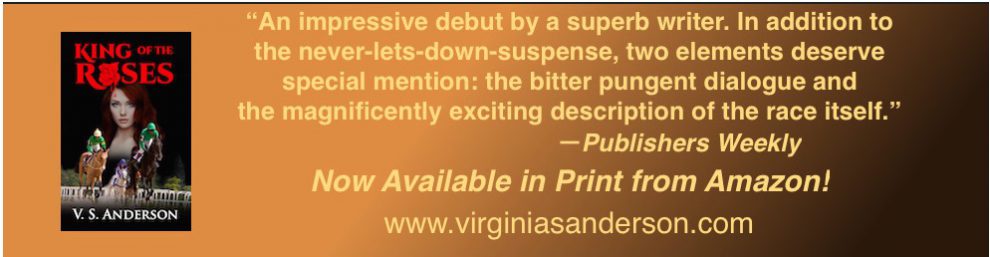
The first episode occurred when King of the Roses was in its pre-agent, pre-St. Martin’s state: stacks of boxes of typed-upon sheets, not quite as imposing as the purported five feet of manuscript that constituted the original draft of Gone with the Wind, but nothing you could tote in a shopping bag, either. I was very young (excuse).

I met this man at the conference my local university regularly hosted (now defunct, sadly—it was a wonderful conference). I don’t recall exactly how we made contact; I must have approached him after his session. I don’t remember exactly how much I paid, but it would have been less than $500. Of him, I can say this: he was conscientious. He did what he said he’d do, in a timely manner. He read the whole book and regularly sent me sections festooned with comments. Recently, in the process of dumping piles upon piles of old rough drafts, I came across the pages he had edited. I set them in the “save even though you know better” stack, to look back at one day. Did anything he told me help me? Possibly. Good advice, in whatever form, is worth reviewing. It’s so hard to come by.

The bait was his assurance that, once we had chiseled the book into shape, he would put me in touch with the New York editors with whom he had professional relationships. Who wouldn’t spend $500 on that?

What rises to the top, probably flushed out by the memories of what finally happened, are not deep, global insights that would eventually make that book publishable; no, they were idiosyncrasies that left me about where I’d started, still wondering whether my ambitious plot (yeah, they’re all ambitious, more’s the pity) was working and what to do if it wasn’t.

Continue reading

Leave a comment

Filed under Learning to write, looking for literary editors and publishers, Money issues for writers, Myths and Truths for writers, Teaching writing, Writers' conferences, Writers' groups, Writing and teaching writing