Category Archives: Editing your novel

Tips on how to make the most of revising your work or hiring editors

6 qualities of Bad Writing via Marcy Kennedy

Found on Chris The Story Reading Ape this morning: What do you think? Are these YOUR fatal flaws? Which ones have you recently forgiven, and which ones have caused you to stop reading?

Reblogged on WordPress.com

Source: 6 qualities of Bad Writing via Marcy Kennedy

Typewriter with questions marks

1 Comment

Filed under Editing your novel, Learning to write, self editing for fiction writers, Self-publishing, style for writers, Writing, writing novels

10 things that red-flag a newbie novelist.

This is one of the best compendia of guidelines for troubleshooting a novel-in-progress that I’ve recently come across. My own constant struggle is the interior monologue, wherein my character thinks through her motives. Some of this is necessary, but in my current very rough draft I’m noting again and again, “Too long! Cut!” Fortunately, I have an excellent writing group that will call me out on this sin.
I’m working on a post about what has stopped me from finishing some of the books I’ve been reading in my quest to understand the indie landscape. Hamilton’s list captures many of the problems that I’ve encountered (and fight like crazy not to commit): 1) Lack of a story arc–in a couple of cases, everything seemed to be resolved mid-novel; why keep reading? 2) Detail-heavy, clunky prose I had to wade through. 3) Pages and pages of setting and character-building before anything happens. I love the comment that we all should wish to see ourselves as others see us! Hooray for honest readers. May they long thrive!

Kawanee Hamilton's avatar

THE PUBLISHING BUSINESS, WRITING CRAFT

10 THINGS THAT RED-FLAG A NEWBIE NOVELIST

Red_flag_waving.svg

by Anne R. Allen

Beginning novelists are like Tolstoy’s happy families. They tend to be remarkably alike. Certain mistakes are common to almost all beginners. These things aren’t necessarily wrong, but they are difficult to do well—and get in the way of smooth storytelling

They also make it easy for professionals—and a lot of readers—to spot the unseasoned newbie.

When I worked as an editor, I ran into the same problems in nearly every new novelist’s work—the very things I did when I was starting out.

I think some of the patterns come from imitating the classics. In the days of Dickens and Tolstoy, novels were written to be savored on long winter nights or languid summer days when there was a lot of time to be filled. Detailed descriptions took readers out of their mundane lives…

View original post 2,153 more words

Leave a comment

Filed under ebooks publishing and selling, Editing your novel, indie publishing, Learning to write, Myths and Truths for writers, Publishing, self editing for fiction writers, Self-publishing, style for writers, What Not To Do in Writing Novels, Writers' groups, Writing, writing novels

Show, Don’t Tell: Try the Screenplay Exercise

Typewriter and flowersWe fiction, memoir, and essay writers are all bombarded—understandably—with the need to SHOW, not tell. The temptation to tell rather than show—at its simplest level, to write “he felt sad” rather than letting his actions and dialogue reveal his reactions—haunts us all. It’s easier: We don’t have to hunt for ways to describe expressions and behaviors. And after all, “he felt sad” takes up a lot less space than “The room around him seemed to darken, the sounds of cheerful conversation to slow to dirge-like rhythms.” And hey, will readers interpret such descriptions the way you intended? Maybe the guy is just having a heart attack.

Hardest of all may be recognizing when we’ve slipped into telling. In my writing group, we all get called on it regularly.

One exercise I’ve found extremely useful in helping me recognize telling is the SCREENPLAY exercise: convert a troublesome scene to screenplay format.

Typewriter with questions marks

Why does this work? For me, it works because, unless you allow yourself the indulgence of a voice-over, filmgoers must rely on action and dialogue to interpret characters’ moods and thoughts and to understand what’s going on.

The rules are simple: at no point in the conversion of your scene can you indicate in your stage directions that “he thought” or “he worried” or “he felt—afraid, tired, hopeful, disappointed.” You may never enter your character’s mind. After all, your audience can’t. They can only see and hear what’s on the screen.

Too stifling? Surely in a mystery, for example, the character has to speculate internally about the meaning of clues. In a romance, the protagonist has to tell us of her ecstasy. Well, maybe. The screenplay exercise can clarify just how much telling we really have to include.

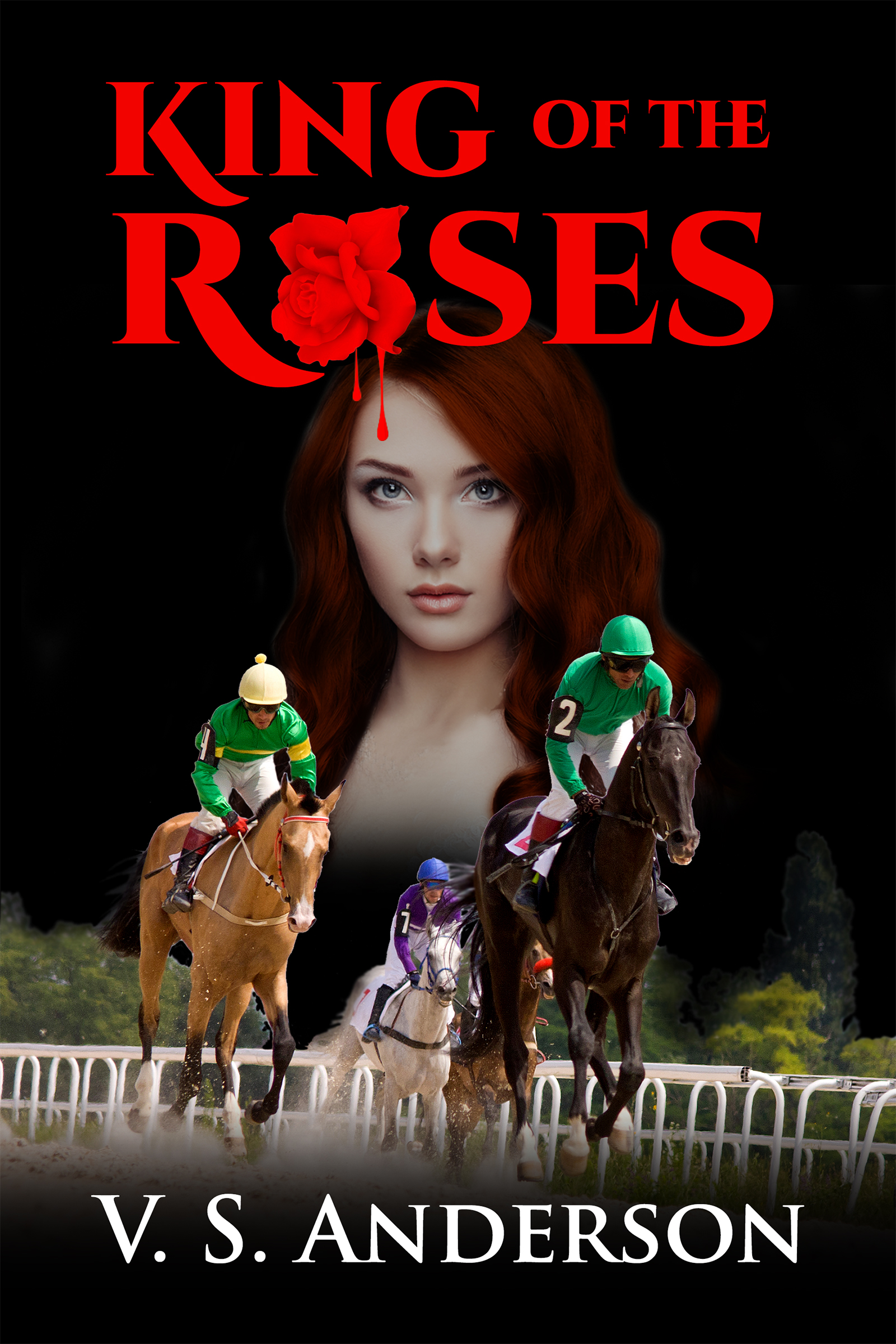
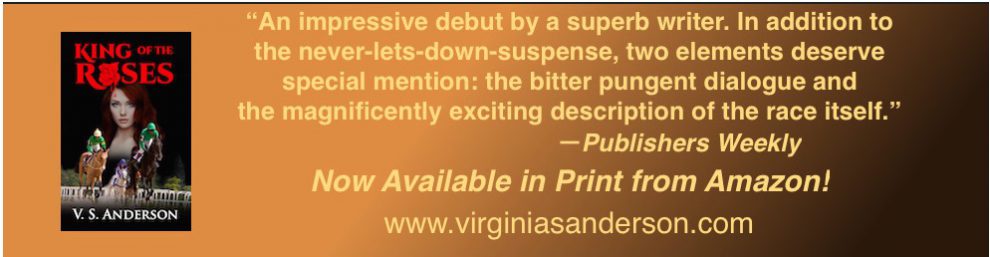
For a sense of what this exercise can contribute, here are a few lines from my novel King of the Roses and the corresponding lines structured as a screenplay. running horseNote that I converted the whole book, a choice that requires me to scrutinize every word because screenplays are radically length restricted (a 358-page book becomes a 100-page play). But casting individual scenes can provide some of the same benefits.

Set-up: A criminal who demands that Chris hold the Derby favorite finds Chris alone in a restaurant and escalates his threats. The criminal speaks the first line.

From the novel:

“I tried to get a hold of you last night. Why didn’t you answer the phone?”

“I was out.”

“No you weren’t. You just didn’t answer the phone. This isn’t a little romance we have here. This is business. What about it?”

Chris felt his spine crawl as if he were already dead, with demons dancing on his grave. The man stared at him steadily, tilting his head a little so that Chris could see his white, speckled scalp where his hair thinned on top.

“So when would I get paid?”

“You jocks is all the same. Money, money.”

“I haven’t seen any money.”

The man’s lower lip went on curling, but his eyes hardened. He stood up suddenly, clutching his overcoat to his paunch.

“I’ll tell you one thing I bet you have seen,” he said. “I bet you’ve seen what a jock looks like when he falls off in a race and gets his face stepped on. I bet you’ve seen that. Huh?”

From the screenplay:

BALDING MAN

I tried to get hold of you last night. Why didn’t you answer your phone?

CHRIS

I was out.

BALDING MAN

This isn’t a little romance we have here. This is business.

CHRIS

So when would I get paid?

BALDING MAN

You jocks is all the same. Money, money, money.

CHRIS

I haven’t seen any money.

The man stands, clutching his coat to his paunch.

BALDING MAN

I tell you one thing I bet you have seen. I bet you seen what a jock looks like when he falls off and gets his face stepped on. I bet you seen that, huh?

So what has this exercise done for me? Above all, it has forced me to look really hard at the inner reactions I’ve chosen to include in the prose-narrative format. Obviously they aren’t essential to meaning. I get to ask myself whether they add enough to justify the departure from action, from showing.

So the conversion allows me to see where my dialogue on its own takes readers. It also forces me to find the actions that express the characters’ reactions. I have to convert feelings into motion. Once discovered, these motions and actions can go back into my prose.

Again, you don’t have to go this spare. But you might make decisions about where to cut and where to add with more insight if you’ve tried the bare-bones telling that screenplays require.

You don’t need fancy software to do this. For the actual screenplay, I used Microsoft Word’s “styles” to create the various format patterns screenplays require. (The formatting didn’t translate directly into this blog post.) By the way, learning to use “styles” helps when you convert your Word document into the format for various e-publishing contexts. The important thing, however you structure your exercise, is to remember: no “feelings.” Just things viewers can see: action and dialogue.bloody rose finished

Do you have strategies for detecting “telling”? Share!

12 Comments

Filed under Editing your novel, indie publishing, King of the Roses, Learning to write, self editing for fiction writers, Self-publishing, Writers' groups, Writing, writing novels

Battle is Lost!

A sad day for grammar purists: The Washington Post will allow “singular they”!

Leave a comment

Filed under correct grammar for writers of fiction, Editing your novel, grammar rules for writers, indie publishing, Myths and Truths for writers, self editing for fiction writers, Self-publishing, style for writers, Teaching writing, Writing

Which is Most Important: Character, Conflict, or Crisis?

Book with heart for writersAs I’ve been reading around in the Indie-verse, I’ve found a couple of books I’ve decided not to finish. As both a writer and a reader, I’ve thought about what triggers me to abandon a book.

One feature that has stuck as a cause for my reaction can be summed up in advice Brian Klems of Writer’s Digest provided at the Writing Day Workshop I attended in Indianapolis in October:

Begin with conflict, not crisis.

Typewriter with questions marks

In other words, writers I’m deciding sadly to give up on often begin with their characters in crisis. But Klems’s advice reminds me of a cruel but vital truth:

If I don’t know your character, I don’t care about her. If I don’t care about her, I honestly don’t care if she gets her brains blown out.

Sorry, but there it is.

Gangster with gun

When these writers begin their books, they have three Cs to deal with: Crisis, Character, and Conflict. It may sound counter-intuitive to state that, of the three, Crisis is the least important!

I know, I know: begin in medias res. But not when the folks in medias are just names on a page.

Can you pile on character, conflict, and crisis in opening scenes? I thought I’d try an experiment to find out.

Consider:

Sally found herself staring down the barrel of a gun. She stumbled backwards. He fired. The shot narrowly missed.

Crisis, big time. And a couple of what Paula Munier calls “micro-story questions,” the elements that help to deliver what she calls “narrative thrust.” Who’s shooting at her? Why? Will she escape the next shot?

cartoonguns.jpg

Okay, I’d read on to the next bit. But if the following three pages consisted of her efforts to flee his escape, I’d be flipping ahead to see whether things got more interesting than an abstract flight-and-pursue.

What if, instead, you read:

Of course Mark was going to pull the trigger. When he threatened, he always delivered. Sally flung her hands up, stupidly, since they wouldn’t stop a bullet, and sprawled on her butt on the wedding dress jumbled on the tack room floor behind her. The gun went off in a brain-numbing explosion, the bullet slamming into the row of bridles hanging just above her head.

Beautiful sexy girl with gun

Take that, Mark, you scum!

We still get to the crisis pretty fast, but now we have many more micro-story questions. First, we’ve got conflict: these people have a history. It’s not just a question of why he’s shooting at her, but what between them has happened before to trigger her recognition that this isn’t a joke. “Why and who?” becomes “How does she know this about him? What has he done to make her think this now?” There’s a whole history of people in those queries.

More importantly, that wedding dress. Wedding dress? How in the world did a wedding dress get in the floor of that tackroom? And why a tackroom? We now know that these people somehow connect with horses, and that someone (Mark? Sally?) has just been through (or approached) a wedding. And he’s the determined sort who shoots first and asks questions later, while she’s (at present) a bit reactive and self-derogatory (calling herself “stupid”). Conflict and character as well as crisis—leading to a cornucopia of story questions! And all in the same number of sentences, four.

Some of my writing group colleagues are absolute minimalists and would opt for the first austere and abstract version. But to me, pure action is not nearly as engaging as action involving people I know or people I’ve been made deeply curious about.

An experiment like this leads to me be suggest that if you must demote one of the three Cs, let it be crisis! What? Start flat, with just characters in conflict? Well, yes.

Torn up drafts

As Stephen King argues, narrative tension arises not from wild, boisterous action but from people in “situations,” where they must react to each other and to the problems their situation presents.

True, you can’t spend pages on this development. It has to happen in that medias res moment, through careful pacing and selection of details.

As an illustration of how little we need a doomsday crisis, consider these opening lines from Suzanne Rindell’s The Other Typist:

They said the typewriter would unsex us.

One look at the device itself and you might understand how they—the self-appointed keepers of female virtue and morality, that is—might have reached such a conclusion. Your average typewriter, be it Underwood, Royal, Remington, or Corona, is a stern thing, full of gravity, its boxy angles coming straight to the point, with no trace of curvaceous tomfoolery or feminine whimsy. Add to that the sheer violence of its iron arms, thwacking away at the page with unforgiving force. Unforgiving. Yes; forgiving is not the typewriter’s duty.

Typewriter publish

We’ve got character, even though we haven’t met the speaker. We’ve got conflict: That nameless “they” is already on trial! I haven’t yet read this book Will I? If it lives up to this crisis-deprived opening, you bet.


Leave a comment

Filed under Editing your novel, indie publishing, Learning to write, Myths and Truths for writers, Publishing, self editing for fiction writers, Self-publishing, Writing, writing novels

Quick Tip: Build Character with Stage Business

Typewriter publishIn my recent exploration of indie novels about horses, I’ve noticed a way that some of these authors could enliven their stories considerably: by making smarter use of stage business.



By stage business, I mean the interactions between characters and their environments, usually involving elements of setting and, in particular, props—the things they handle as they respond to each other.

Most of the authors I’m reading quite rightly use stage business to give readers a sense of setting, to give us a sense of “being there” in the scene, and to punctuate dialogue—for example, to break up a long speech. But this element can work a lot harder than it often does.

Coffee mug for writers

Make that cup of coffee talk!

For example, let’s look at the possibilities offered by a fairly common scene: people sitting around a table drinking coffee. To frame the dialogue, we’re told, “He took a sip of his coffee.”

I guess he would, if he’s got a cup and it’s likely to get cold. So there’s really no information here.

But what if:

He waved the nearly full cup around so violently she was afraid he’d sling the contents onto the spotless white table cloth.

Or

In his huge, clumsy hands, the mug looked as fragile as bone china.

Or

He lifted the cup with both hands clutched around it, as if grateful for its feeble warmth.

Suddenly, “taking a sip” tells us something about the character and the situation he finds himself in.Happy editing!

Here’s another example.

She put on her cowboy hat. “Let’s go see what’s up in the corral.”

There’s a big difference between that bit of info and:

She snatched up a dusty cowboy hat stained and dinged with long use and smashed it onto her short black curls. “Let’s go see what’s up in the corral.”

Lady 2 promises a lot more action once we reach the corral than Lady 1. Now that hat talks!

True, it’s important to practice this strategy in moderation. Pacing a scene requires an author to balance forward momentum with information, no matter how exquisitely revealing that information seems to be. I once got slapped down pretty good over a character fidgeting with a paper clip through a long scene. As I recall it, my reader’s marginal comment was, “That paper clip is really getting on my nerves.”Typewriter and flowers

In drafting, as is usually the best move, over-generate. Come up with stacks of double-duty stage-business gems. Then glean for the one best one, the one that really delivers the “telling detail.”

What are some of your best “stage business” lines? I’d love to hear!Book with heart for writers


Leave a comment

Filed under ebooks publishing and selling, Editing your novel, indie publishing, Learning to write, Publishing, self editing for fiction writers, Self-publishing, Writing, writing novels

Visiting Bryan Garner’s “Language Change Index” for Grammar Rules

Bill, the dog, critiques

When in doubt, I ask Bill.

Lurking around on an NCTE forum for English teachers, I learned about Bryan A. Garner’s Language Change Index and thought it nicely complemented some thoughts I’ve posted on this blog about grammar and usage. An interview and a critique discuss his efforts to do more formally what I did informally in ranking usage practices by how widely they’re likely to actually be noticed (see “split infinitive”) by the learned folks aspiring authors need to impress. What emerges for me, based on the examples in these articles, is how idiosyncratic grammar prescriptives can be. BTW, “hopefully” is now a Stage 5, not, in my view, because it ever was an “error,” but because it has been recognized as a perfectly good sentence modifier along the lines of “unfortunately” or Garner’s example of a “correct” sentence modifier, “regrettably.” No identifiable subject has to “hope” any more than an identifiable subject has to “regret.” So there.

Leave a comment

Filed under correct grammar for writers of fiction, Editing your novel, grammar rules for writers, Interviews, Learning to write, Myths and Truths for writers, self editing for fiction writers, style for writers, Writing

3 Lessons, 4 Resolutions from the Indiana Writers’ Workshop, October 24, 2015

Novel!It’s unusual to find a conference that changes the way I think about my novel and about myself as a writer. This one-day conference, less than a day’s drive away, did just that.

The Workshop featured presentations by Brian Klems, online editor for WritersDigest.com. The basic fee covered four all-group presentations by Klems and a “first-page” critique by four agents of randomly selected submissions. Participants could pay extra for ten-minute pitch sessions with up to six agents and for a personal query-letter critique by Chuck Sambuchino, author of a number of books and blogs on writing as well as humor books.

Klems’s presentations covered a huge amount of nuts-and-bolts information most valuable to writers who had not attended many conferences or mined the web for information on the business of writing. The pitch sessions were well-coordinated; all three of the agents I queried were generous listeners. The published schedule did not build in meals or receptions for the social networking that many writers find rewarding.

So what made this conference so productive? Two things: Sambuchino’s critique of my query and the “first-page” session, at which some 20 or so of the first pages submitted were thrown down and stomped upon.

First: Query-Letter Critique

I didn’t receive Sambuchino’s comments until the Thursday night before the conference, and Friday was hectic, so it was evening before I could settle into my motel room to digest the veritable armada of comments he had supplied. Everyone reading this can probably empathize with my stomach-twisting lurch when I realized that the back-of-the-book blurb I had workshopped over and over with multiple audiences was No Good. Basic questions—what is Michael’s wound, his need? What is at stake? How does this event lead to this one?—still loomed. Sambuchino wanted A LOT more information than any back-of-the-book was going to accommodate.

The feeling of utter inadequacy that settled over me produced a complete rewrite. Was that the right strategy? All I know is that when I sat across from agents and talked from the notes they were glad to let me use, not one broke in with a confused frown to tell me I wasn’t making any sense. (Believe me, this has happened.) There’s no experiment that could tell me whether my response to Sambuchino’s comments made the difference. But I do know that when I revise my query letter, the pitch itself will look a lot more like the one I wrote Friday night than the one I have now.

Lesson learned? First let me talk about

First Page Armageddon

Continue reading

2 Comments

Filed under business of writing, Editing your novel, Finding literary agents for writers, Learning to write, looking for literary editors and publishers, Publishing, self editing for fiction writers, Working with literary editors, Writers' conferences, Writers' groups, Writing, writing novels

Note to Self: Four Editing Rules to Follow THIS TIME!

Do you have rules for your own self-editing sessions? Can you suggest some I ought to apply?

Editing a manuscript that I wrote some time ago has actually turned out to be quite a bit of fun. The story’s there, almost solid; now it’s time to make sure nothing in my style, my pacing, my voice, keeps it from getting across. Line-editing this novel is a lot like cleaning out a closet and finding out which of my old treasures really are treasures and which ones are junk.letter scatter novel

And the thing that’s great about cleaning up the text of your novel: it’s not quite as likely as a closet to get cluttered again.

Actually, “self-editing” is a little bit of a misnomer. A lot of what I’m doing as I revisit the manuscript of my long-shelved “Sarah” novel is responding to the comments and suggestions of my wonderful Green River Writers critique group (see here, for example, to learn more about how and why they’re wonderful). But at the same time, coming back to my writing after a hiatus changes the way I see and hear it. Distance makes the heart grow smarter? Or am I just hearing myself through other people’s ears now?

Since those of us who want to be read (and published) need more than anything to know what we sound like outside of the wind cave of our own brilliance, I hope I’ve assimilated the collective wisdom of my writing group, in which people just plain tell me when I’ve made them start checking the number of pages to see how much more of my brilliance they have to take.

Typewriter and flowersHere are four editing moves that give me consummate pleasure. Who would have thought that slashing a big X across half a page or a black line through a sentence could be so fun? Continue reading

3 Comments

Filed under Editing your novel, Learning to write, self editing for fiction writers, Self-publishing, style for writers, What Not To Do in Writing Novels, Writers' groups, Writing, writing novels

Great Post from Writers in the Storm: 7 Mistakes on the Way to a Publishing Contract

Couldn’t reblog this from Colleen M. Story on Writers in the Storm (no button), but I wish I could. It’s a great post that really resonated with me and might with you.

(Can anybody tell me why some WordPress sites have reblog buttons and others don’t? Is thiis a choice the blogger makes? I HATE seeing good posts I can’t share in their entirety.)

In any case, this could so be me! I’m just now trying to decide whether to self-publish my way-outside-the-conventional-genres novel or to go on submitting to agents. I haven’t gone the small press route because I found myself thinking that if I have to do all the marketing, why share the net? But this post makes me realize that I’m probably thinking too short-term. Having a new novel picked up by a press (I published five with big presses before going back to school) would letter scatter novelbe a gateway to new contacts and new opportunities.

Story’s thoughts on feedback also resonated. Having gone the beta-reader route as well as working with my writing group, I’ve decided not to tear up my work unless it’s for someone who has made a commitment to the book, for the very reasons Story states: six reviews, six different ideas as to what just has to be done. In my excellent writing group, I listen for consensus and a good argument that the advice is well-grounded. I often receive the kind of feedback Story praises, the kind that strikes me instinctively as valuable, sometimes pinpointing a problem I knew at heart needed attention but which I hadn’t quite identified.

Check out the post for her seven inspirational messages. They were a call to action for me, and might be for you.

Leave a comment

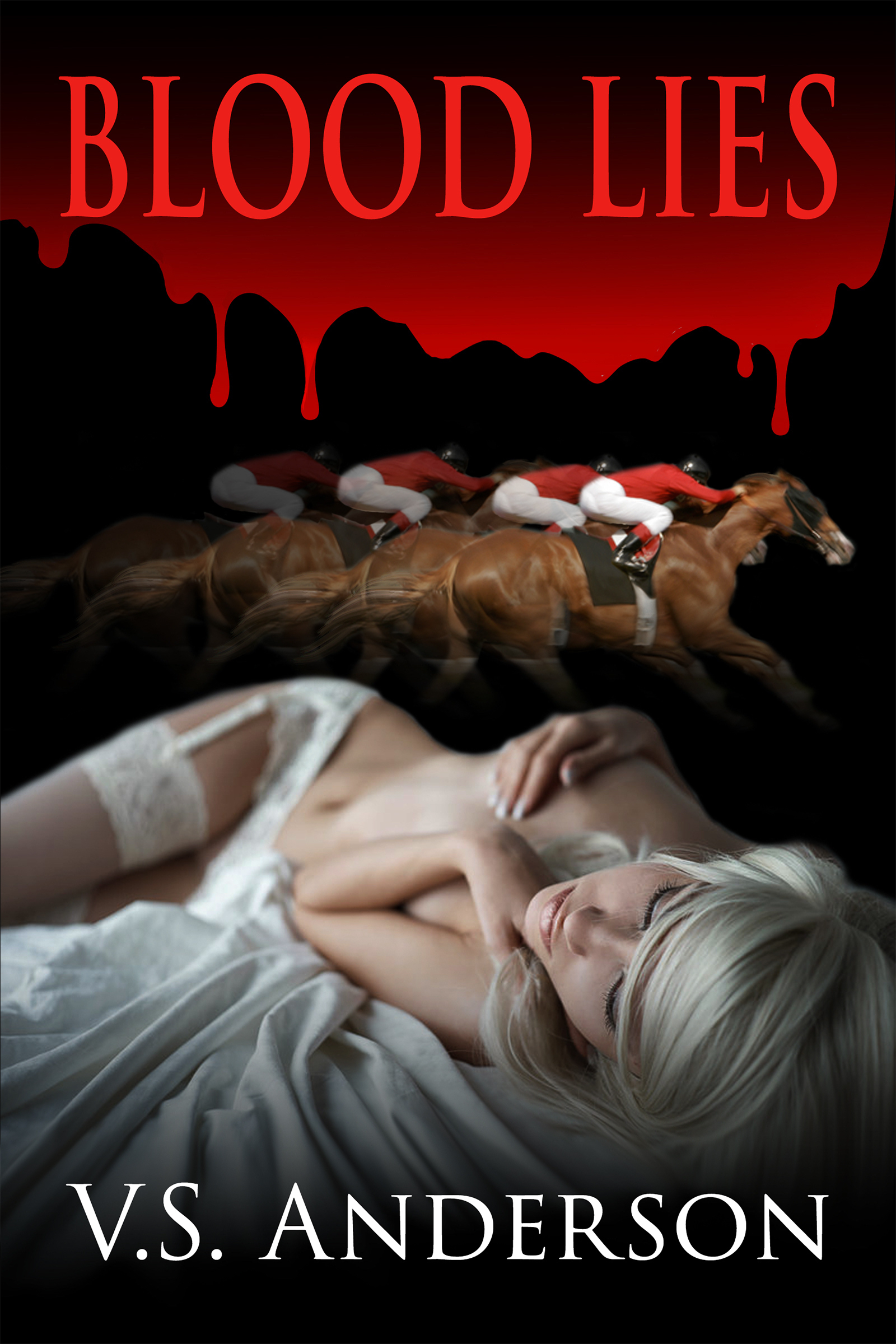
Filed under Blood Lies, business of writing, Editing your novel, Finding literary agents for writers, Publishing, Self-publishing, Writers' groups, Writing