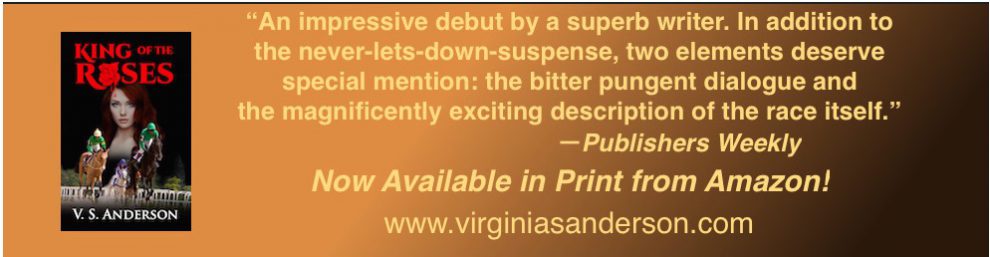
See here for contest details: 17 categories, including a Novel First Chapter category for unpublished and self-published novels (judge: NYT best-selling author Will Lavender!). Still time to get yours postmarked tomorrow. Send yours in!
Category Archives: ebooks publishing and selling
GREEN RIVER WRITERS CONTEST DEADLINE TOMORROW!
#Bloggers Beware: You CAN get SUED for using Pics on your Blog…
Chris the Story Reading Ape posted this link; it’s important reading. For the record, the pictures I’ve begun using are from stock photo sites that state expressly that they can be used for blogs, book covers, web sites, etc. These sites use the terms “resale and distribution” in ways that I find confusing; for example, depositphotos, which I have used quite a bit, says that the regular license is fine for book covers, but then says this license is only appropriate for ebooks if the photo file plays “a minor role” in the product. Since many of the book-cover designers on Mark’s List at Smashwords use sites like this, it would seem to this non-lawyer that the images are available for such use in ebooks just as in regular books.
In any case, I have found the sites I’ve used to be easy and inexpensive. You can buy images for as little as $1.00. The article this post links to lists a number of free sites, including Creative Commons sites. When I checked out Wiki Commons, I wasn’t particularly impressed with the selection there; the pay (royalty-free) sites seemed to have a larger selection of what I was looking for.
Perhaps others can share their experiences and expertise on this topic!

Further to an update from my blog partner
Professional Editor Susan Uttendorfsky
Dun Writin’—Now Whut?
Sharing Content, Copyrights, and Permissions
54 Part 1 and 55 Part 2
also apply to using photos
See this blog post of a blogger who was sued over using a copyrighted photo,
even with a disclaimer:
By clicking on the image or link below:
bloggers-beware-you-can-get-sued-for-using-pics-on-your-blog
I Continue to Learn about Publishing. . . .
Following up on the rather alarming article by Dean Wesley Smith that one of my earlier posts linked to, I wrote to some agents and publishing experts requesting their thoughts.  Despite dealing with a family emergency, Victoria Strauss of Writer Beware took the time to write back with a compelling clarification of Smith’s more extreme claims. With her permission, I reproduce her reply here. You’ll note a link to a very thorough article on the issue of reversion-of-rights clauses in contracts. If you’re on the verge of querying or have an offer, this article is well worth your time.
Here is Victoria’s reply to my questions:
Taking your questions in order:
1) Is it true that “life-of-copyright” is now the industry standard,
so that rights never revert, regardless of the original publisher’s
intentions for the book?Life of copyright has _always_ been the industry standard among large and medium-size publishers. This is nothing new, and I’m bemused that Dean Wesley Smith would say that it is.
I do think that a limited-term contract is far more desirable, if you’re going with a small press (and small presses do often offer limited-term contracts–though life-of-copyright is not at all uncommon in the small press world). But life of copyright doesn’t have to be a problem–as long as there’s a detailed, specific reversion clause that ties rights reversion to minimum sales (for instance, making rights reversion automatic on author request once sales drop below 100 copies in any 12-month period). I’ve written about this in detail here: http://accrispin.blogspot.com/2012/04/importance-of-reversion-clauses-in-book.html .
Unfortunately, it’s not unusual to encounter life of copyright contracts that _don’t_ have adequate reversion clauses–especially in the small press world, where people often don’t know what they’re doing. You may be able to negotiate to add a good reversion clause–my agent has negotiated sales-dependent reversion clauses into all my contracts since at least the early 2000’s–but, depending on the publisher, you may also choose to walk away from a life of copyright contract offer with inadequate reversion provisions. It’s definitely something to watch out for. But the reality is a lot more nuanced than what’s presented in Dean Wesley Smith’s post.
2) Is it true that authors who were once seen as “midlist” should
now assume they will most likely be offered $5000 or less as an
advance? (I received that amount for my first novel, but much more
for subsequent submissions that definitely did not quality as
“best-sellers,” though they sold respectably.)Advances have generally fallen, especially since the 2008 economic downturn. But they are all over the map, so it’s impossible to make a blanket declaration. Advance amounts depend on all kinds of factors, including your agent (or if you have one; authors without agents tend to get lower advances), the publisher (smaller publishers generally offer smaller advances), what the publisher’s expectations of your books are–and, unfortunately, if you have a publishing track record, the sales of your previous books. In any case, if your sales are good, you’ll get the money owed to you regardless of the advance amount.
As for the whole “midlist” thing (that word doesn’t mean what it used to)–a lot has changed in the publishing world over the past 15 to 20 years, and one of the things that’s changed most is how hard it is to stay in the game. I don’t think it’s any more difficult to break into traditional publishing than it ever was (possibly easier, given the huge volume of books that are being published), but it is a lot more difficult to maintain a career, especially if your sales aren’t stellar.
3) the proliferation of “royalty only” publishers. How are such
entities regarded in the industry at present? Is this a coming wave?This really is a phenomenon only in the small press world, which has expanded hugely over the past 15 or so years thanks to digital technology. These days, anyone can set up a publishing company just by registering with CreateSpace or LightningSpark. One of the ways many small presses try to limit their financial outlay is to eliminate advances. This is extremely common, and has been for some time. However, don’t believe anyone who tells you that advances are becoming less common among large and medium-sized publishers, or that debut authors no longer receive advances. This simply isn’t true.
There are some great small presses, but an awful lot of amateur and predatory ones whose staff know little about editing, production, design, and marketing. When Writer Beware was founded in 1998, we mostly got complaints about literary agents and scam vanity publishers; these days, small press problems make up by far the biggest volume of complaints we receive. In many cases, self-publishing is preferable.
– Victoria
Five Questions Indie Authors Should Ask Agents
A couple of posts ago I linked to an article that took me to this post from Dean Wesley Smith, in which he informed us that the current industry standard in traditional publishing is “life-of-copyright,” which basically means that we will never regain the rights to our work, regardless of the publisher’s intentions for our books, and that the most we can expect in the way of advances is $5000 or so.
I’ve posted questions about these claims to a couple of active blogs on the business of writing, including to an agent’s blog, and will be posting to others. In my searches, I came across this post about how indie authors should expect agents to protect their rights, which is directly relevant to these issues.
This appeared on the web site of the Alliance of Independent Authors. I’m following their blog and will share interesting information.
A New “Amazon Kindle Direct” Report
Amazon Pricing
After creating considerable confusion earlier about how I could sign up for a 70% royalty rate for my two books, I returned to my site to change my settings to the higher rate. I seem to have succeeded, but not without a further bit of confusion, which I now hope I have clarified.
This time, more intelligently, I queried the support team via the email option, and received a helpful and timely reply. (One of my hoped-fors for my online ventures: a quick “help” response process.)
Who, exactly, is Amazon.com”?
Here was the problem: When you pick “70%,” you receive a chart showing in which sales territories you will earn 70%. For some (e.g., Brazil, Japan), a small box informs you that in order to earn the higher amount in these countries, you must enroll in Kindle Select, which, you may know, requires you to give Amazon an exclusive for several months. Because I had already uploaded to Smashwords, I couldn’t easlly make this choice, and I’m not sure I would want to.
The confusion for me arose because sales made at “Amazon.com” were shown as paying only the lower rate of 35%. So what sales, specifically, were these? In my idiom, items bought at “Amazon.com” include books bought by U. S. buyers. Did this chart mean that books bought in the U. S. would never earn more than 35% royalty?
Here’s the reply to my query:
“Hello,
You’ll receive 70% royalty for books sold to U.S customers from Amazon.com.
However, customers outside of the U.S. often purchase books on the Amazon.com Kindle store. The books sold to customers outside of the applicable sales territories will be calculated at 35% royalty rate.
The 70% Royalty Option is only applicable for sales to customers in these sales territories:[I’ve cropped the long list of the countries in which the 70% option is available.]
*70% Royalty in Brazil, Japan, Mexico, and India: Digital Books enrolled in KDP Select are eligible to earn 70% royalty for sales to customers in these countries as long as the 70% List Price requirements are met. Otherwise, you will earn 35% royalty.
Sales to customers in all other locations will receive a 35% royalty and are recorded separately in your royalty reports at the 35% rate.
For more information, please visit our Help Page:
https://kdp.amazon.com/help?topicId=A30F3VI2TH1FR8
I hope this helps. Thanks for using Amazon KDP. Have a nice day!”
Therefore, it looks as if I was successful in making the change, and as if I’ll earn 70% in most cases.
Questions I had about Logging into Amazon Direct Publishing
I had some difficulty figuring out exactly how to return to my KDP account. When I signed in using the account I had created to associate with the books, I could find no links to my KDP account. The customer-service representatives with whom I initiated a chat for help had no idea what to tell me. Finally they directed me to the “contact us” link for KDP, which is apparently a separate section of Amazon. I know now to log in at kdp.amazon.com/bookshelf, where I then sign in with the email address I created.
I hope this help others easing into the process. I assure you, the Smashwords process was less complex, almost certainly because of the complex royalty and distribution components of Amazon.
Amazon Pricing Confusion Resolved!
Brittneysahin (below) got it right (unless I am misreading again :-))!
Here is the text:
“But if you choose the 70% Royalty Option, you must further set and adjust your List Price so that it is at least 20% below the list price in any sales channel for any physical edition of the Digital Book.”
Obviously the operative word here is “physical” edition. In other words, a book can be priced the SAME as a DIGITAL edition at any other sales channel. The 20% reduction is only necessary if you have a print edition (I assume this includes POD editions but that is not clear).
In my defense for missing this word, I was taking in a lot of information at once and was probably not attuned to the idea of a physical versus digital edition, since “physical” versions of my books are out of print. Of course, they’re being sold by used book dealers at all sorts of prices, but presumably this is not relevant since I earn nothing from these used book sales and have no control over them.
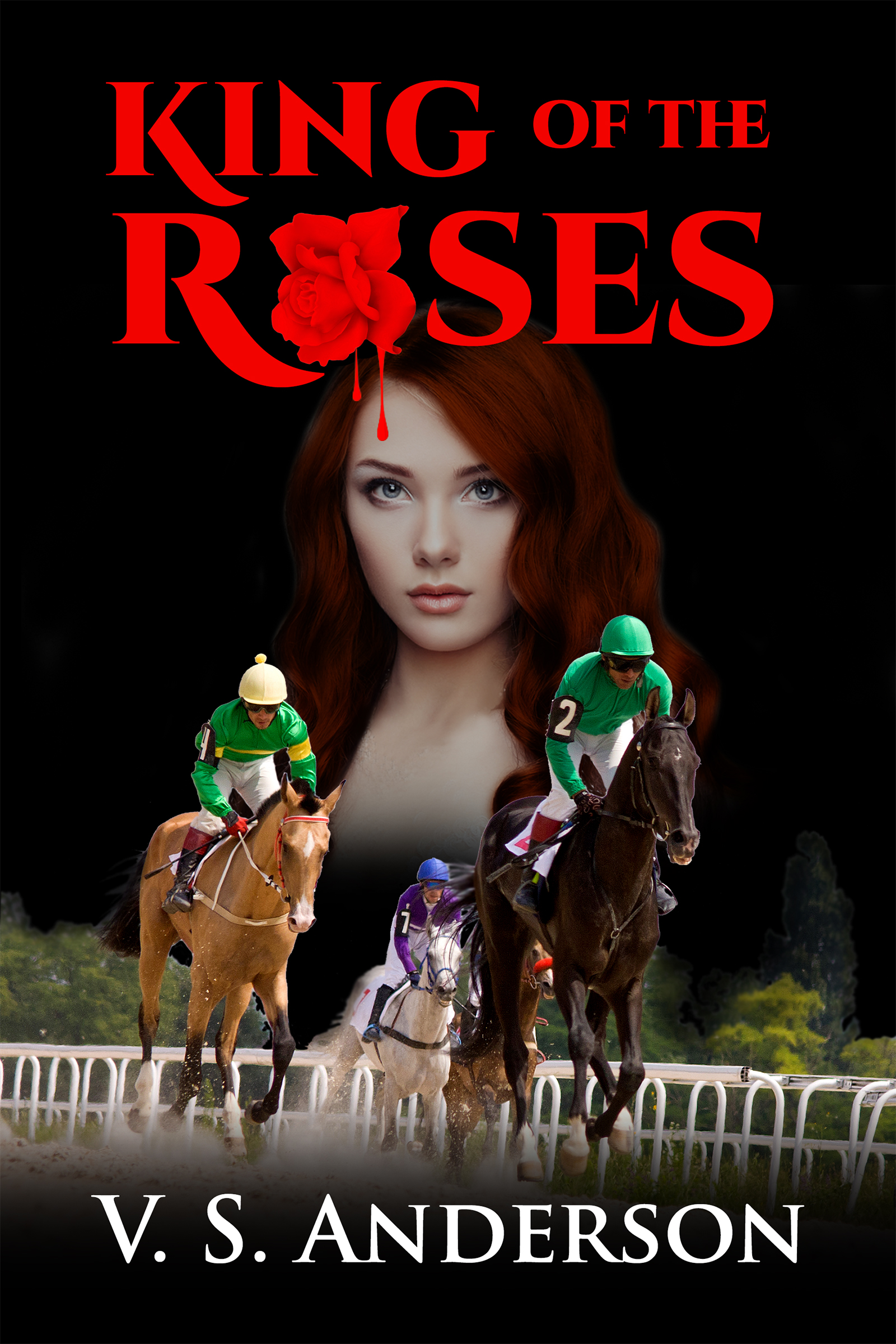
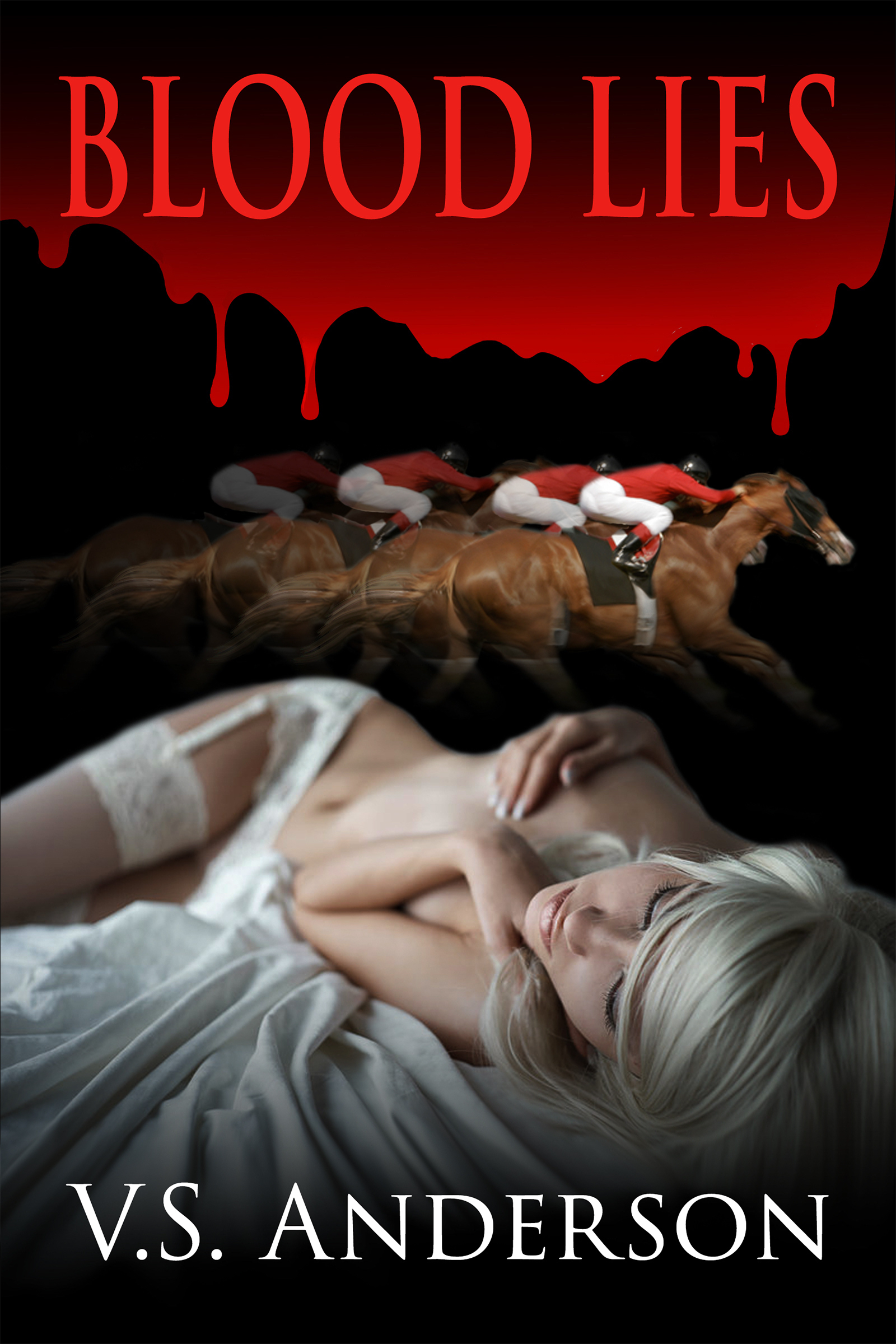
If you’re tempted to buy a copy of the old paperbacks for like $0.01, or some such price, let me know and I’ll send you a Smashwords coupon for a cheaper (yes!) edition. Both books have been revised, Blood Lies a fair amount.
Thanks so much to Brittneysahin and others for input on this. If anyone gets any new information via direct communication with Amazon, thanks in advance for letting us all know. And I’m going to change my royalty rate to 70%.
Off to Upload to Amazon Kindle Direct Publishing
SELF-PUBLISHED BOOK LAUNCH DAY at Smashwords! And the day I bite the bullet and upload to Amazon! So far it looks a lot more complex than uploading to Smashwords. If any of you have been through this process and have any advice for me, please let me hear from you! In the next day or two, I’ll report back on my own experiences.  In the meantime, you can now order the books at Smashwords.com in addition to ordering them through any of your favorite ebook retailers, including Barnes and Noble and iBooks.
  Let me know if you run into problems. I may not be able to help, but I will try! Also later today I will post some direct links on my web site, www.virginiasanderson.com.
How I Got More Reviews On My Self-Published Book | BookDaily #AuthorTips
I came across this just now and thought I would share it with anyone who is interested. As soon as my books are officially released, I’m going to follow this practical tip. BTW, I welcome (and wish for) reviews of King of the Roses and Blood Lies! They’ll be up at Amazon soon.
Authors’ Guild Advocacy on Fair Contracts for Writers
Found this on Twitter today. Absolutely essential knowledge for all of us approaching this point. This information mirrors much of what I learned the hard way when I published in the 1980s and 1990s: for example, that you never get the lump sum you think your advance is going to be. I am lucky in that I had reversion-of-rights language in my contracts (thanks, J and L) so that I have been able to self-publish my previously published books as ebooks. But it looks as if not everyone is so fortunate. In any case, this information is worth keeping up with:



 Just Can't Help Writing