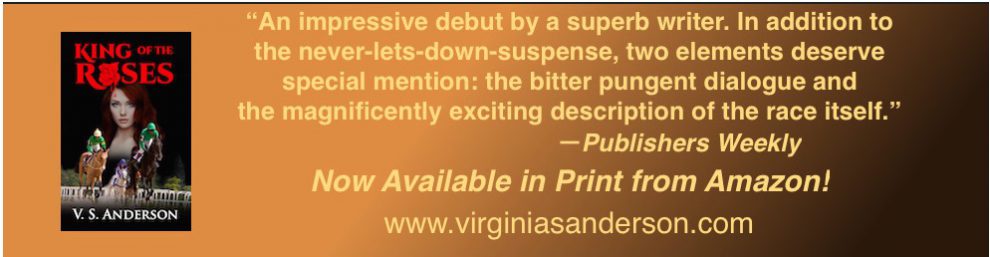
I’ve revised to add some new more information about Gail Strickland’s book, Night of Pan. Check out her site. I hope she will visit soon for a blog interview about bringing her book to publication.
Tag Archives: writing
Writers’ Conference VII: Post-Coda
I promised to report on the fates of my colleagues at the conference I attended a few years ago.
I obviously don’t know all their stories. Emails began to circulate, friendly requests for updates. Not everyone responded. I did not.
Now that I’m contemplating creating (from scratch) a “platform” for the non-fiction book I’m working on (tentatively titled Survive College Writing: What No One Will Tell You about Your First-Year Writing Class), I realize that not becoming part of that somewhat nostalgic network was a missed opportunity. At the time, it seemed clear to me that my job had hustled any real involvement in my personal projects right off the stage. So I withdrew, sat silent, packed away the emotional energy I wanted to invest in writing in hopes it would ferment in its dark corner. I think it has. I get up ready to write every day.
So with regard to the fate of my colleagues at the conference, all I have to go on is that flurry of emails. About ten people took part.
Of those few, up to the last email I received, only one had found a commercial publisher for the book she pitched at the conference. Gail Strickland found a small press (Curiosity Quills Press) that publishes the kind of book she has written and offers her the kind of support she hoped for. Her book, a YA historical fantasy titled Night of Pan can be pre-ordered through her Web site. I’m hoping Gail will give a blog interview about her experiences taking her book through from idea to promotion; if so, I’ll post the date.
The most impressive of the several self-publishing stories is that of one of the attendees who perfected his pitch (not about zombies) and scored a review from Publishers Weekly Select. John J. Kelley’s The Fallen Snow is worth a look–and I especially admire the attention his hard work at promotion has garnered. He’s gotten wonderful reviews! With his permission, I’ve posted his very informative account of the PW Select process here.
Another attendee ended up self-publishing a cookbook based on her expertise at gardening and raising bees. At last account she was still at work on her fiction.
John found the conference helpful in expanding his options for his work. I am still thinking about what I learned, including what I knew before and how the conference changed what I thought I knew. Even so much later (nearly three years), I still have much to process. I think that will take another post.
Writers’ Conference Saga: Pre-Coda
My abortive meeting with my assigned editor took place on the penultimate afternoon of the conference. The next morning we were to finish up in a group summary meeting with Our Leader.
For some reason I can’t recall, I was eager to meet with him one more time. I made my way to the conference site before daylight in order to be at the front of the line. Along with a woman with whom I had been friendly, I managed to get a slot at the table as we ate breakfast in a crowded coffee shop. What in the world did I want from him at that point? To salvage something from the ruins of my experience (“Is it time travel? Reincarnation? Oh, wait, he must be already dead!”)? To pitch my other book? Who knows.
I do remember that he rewrote my friend’s pitch, ad hoc, in one breath, and that, were I a fan of such topics, I would have found his version immeasurably better. She still had her meeting ahead of her. So she faced the day armed with his words.
I remember as well talking about my other book, my “Sarah” book. He began excitedly weaving a resolution to the deep personal crisis Sarah faces, one that in my formulation would carry her through three books, each with its own sub-crisis and plot. I said, “That sounds like something to consider for the third book.”
“Oh, no,” he responded. “That’s the first book!”
I have already written the first book. I said, “I write my own books, thanks.”
I don’t recall that he took offense at this. Perhaps he secretly did.
Our final meeting consisted of congratulations for all those (most) who had been invited to submit manuscripts to major New York houses. This fortunate group included my friend, who was now supposed to write the book she had been given. I think he generously pretended that I had been given permission to send along my Sarah book. Then he said something I didn’t expect.
“I worry,” he said, “that you’ll all send in your stuff before it’s ready. Don’t do that. Make sure it’s ready.”
My perhaps ungenerous translation: “My business is running these workshops. I have to be able to say that publications come out of them. Most of you have no manuscripts, just ideas. Most of you have never produced anything like a book-length manuscript. You don’t actually know what you’re getting into. Please, some of you, take the time to write something that won’t waste these editors’ time.”
I find myself thinking about several things, remembering this comment. We were apparently selected to attend, to have the chance to meet with REAL EDITORS, on the basis of a one-page synopsis and a bio. Such application materials gave us the chance to make a preliminary pitch and gave the conference planners a chance to verify that we could actually construct reasonable English prose. But I wonder: is that enough? Are you really ready to write a book if you can sell an idea?
I have learned enough about my writing process to know, that for me, the answer is an emphatic NO. For me, there is nothing so demoralizing as knowing that the book isn’t working but that I must deliver. Write a draft. Share the draft with a conscientious critique group. Yes, it takes more time, with no more guarantees of eventual attention from an agent or publisher than if I had simply mailed off the first chapter and a treatment. But it makes the process rewarding. I can write a book that has a chance of working. Not being a genius, and not having a formula, for me, that is feat enough.
Digression Again: Struggling with Writing
I’ve been researching how people learn to write and what can stand in their way. My interest in this topic stems, first, from my own experiences as a college writing teacher (with a PhD in “composition studies”), and second, a book project I’m working on for college students facing their first college writing class, whether as recent high-school graduates or returning adults.
A lot of research indicates that, as with many other cognitive functions, early experiences matter. This seems to be particularly true for writing. After all, writing is not “natural.” No one is “hard-wired” to do it, as we all seem to be for speech. Neuroscientist Stanislaus Dehaene explains current theory suggesting that our brains must redirect neural pathways “designed” for other functions into the unnatural and unevolved task of connecting visual images with the sounds that then translate into the words we’re familiar with. The earlier we recognize that these visual stimuli are important components of our environments and have meaning, the more likely this process will occur when our brains are most plastic, most ready to manage this redirection. Intuitively it makes sense that people who had the richest literacy experiences from the earliest ages will have the most time to hone this use of their brains.
It’s also clear that writing makes huge demands on our cognitive resources. I’m reading research that indicates that even such tasks as typing, when they’re not largely automatic, steal working memory and cognitive energy from the higher-order processes that go into more complex writing tasks. And when we’re dealing with multiple tasks with high cognitive load, like accessing new, complex material, something has to give.
So my conundrum: Do I tell potential readers of my book on college writing that if they missed out in those early years, they’re doomed?
Digression: In Praise of My Writing Group
A good writing group keeps you honest. Good readers remind you that you can’t fall back on your genius. I guess if I were a genius, I wouldn’t need readers. From my keyboard to the mind of God.
No, a good group reminds you that you have to work at this stuff. It’s like riding my horse. I keep slipping back into old habits (right knee locking into the saddle, heel slipping up; taking back without realizing it in front of fences). My trainer’s “You’re doing it again” is the only way to create new mind/body memories and make them stick. Little by little I think they do.
So I go to my writing group with major revisions of The Drowned Man (the ms. I took to the conference I’ve been writing about—I’ll get back to that shortly). I decided that one tack would be to veer more toward the “literary.” Now, one thing I’ve learned is that I fall just a few pixels short of literary most of the time. But genre clearly doesn’t cut it. The answer to the “But what is it?” question confounds editors and agents every time. (Well, yes, it’s a sort of mystery, but no, it doesn’t have a knitting shop in it. Not that kind of mystery. Well, not that kind either. Darn.)
Anyway, I thought that even if I didn’t slip across the literary line, I could at least bump up the suspense with some piquant foreshadowing if I changed the point-of-view character. The POV character now telling the story knows what happened in the end, so he can drop some titillating portents here and there. I like the way this works. Problem: as my group told me, I liked his voice a little too much.
They said:
Get rid of the floating talking head. Move the action up front. (Remember, writing fiction depends on the ability to write scenes, not exposition, no matter how piquant.
Did I know this? Yes. Did I do it? Now I am.
Don’t dump a lot of names on us all at once. Get your readers invested in one or two main characters right away. Bring the others on stage when you can give them the stage time they need.
Did I know this? Yes. Did I do it? Now, yes.
Locate your opening scenes in place and time. Let your readers walk into a landscape or a room and meet a flesh-and-blood being (even if he does have to be a vampire). There’s a fine line between being mysterious for the sake of suspense (“I’m confident that that question is going to get answered”) and for the sake of being mysterious (“Who the hell is this person I’m having to listen to? Is there a reason I’m here getting vertigo in this mind fog? Help!”)
Did I know this? See above.
Let readers know early whose story it is. Okay, in someone else’s story told by a narrator (Nick Carraway, for example), readers may have to figure this out. But they should figure it out, IMHO, as they interpret the relationship between the narrator and the other characters. Who embarks on the major trajectory may change with events (and it can even be the reader, IMveryHO). And it quite often is the apparently peripheral character whose trajectory is the most interesting. But starting out in a text, you haven’t won the willingness of readers to do that kind of interpretative work. They want to get started on a road, in somebody’s tracks, before the feral pigs start jumping out of the woods at them (I ended up taking the feral pigs out of my book: see “Deleted Scenes”).
Did I know this? Ditto.
Give readers a sense of something at stake. Okay, they may not get to know right away just how much is at stake. But they need to know somebody’s in trouble, and why. I may still need to work on this. Bellweather knows Michael’s in trouble from Page One and why. He’s telling readers so. But readers have to get a sense of this by themselves. I hope when I take my revisions to readers who weren’t there last time that I get a sense of whether I’ve met this mandate.
Did I know this? Well, yes, but it’s the hardest, least concrete of missions. What makes readers care? Well, someone in trouble. Yes. I want to think about that in tomorrow’s revisions. How do readers know Michael’s in trouble?
You really have to work at this stuff.
On Having to Write about Vampires (and Alien Sex)
Apropos of my narrative about being categorized with the vampires and aliens at the most recent conference I went to, here’s a piece from today’s New Republic online newsletter in which a writer of memoirs, Stephen Akey, laments the apparent impossibility of selling anything that by comparison must be considered bletheringly unmarketable. What most resonates for me in this piece is what he tells us about “platform”: agents, gatekeepers to publication, asking “What type of platform do you have for speaking about the issues in your book?” “What is your access to the media or to major experts in your field?”
Because my current project is nonfiction, I’m particularly sensitive to the purported need for a “platform.” I’m fortunate in that I do have access to some “experts” in my field (and at times have passed for one myself), but I’ve been asked the same question about works of fiction. Yes, I’m sure it would be easier to sell a novel by Regis Philbin than one by one of us unknowns, at least (possibly, since Mr. Philbin might well be a stellar wordsmith) until it gets read.
But I’m not a carpenter by birth or trade, and labor as I will to build something akin to a sound platform, I’m imagining ending up with something more akin to a three-legged seesaw. I’m reminded of an admonition I found somewhere–wish I could tell you where: “Less tweeting, more writing.” Yet, I am rather enjoying picking up my HTML book and envisioning the Web site on which I will advertise and sell my otherwise doomed works of fiction. It will be vibrant, informative, interactive, irresistible. If only I could figure out how to add a background layer to my new logo in GIMP. . . .
Stop reading blogs and get back to work, you.
Digression: What is “College Writing”?
In the course of a project I’ve been working on, a book for people about to take their first college writing course, I’ve been doing some reading to locate the personal experiences I’m drawing on in the continuing conversation among college writing professionals about what a college writing course or major ought to be and do. One source I’ve found usefully provocative is What is “College-Level” Writing?, edited by Patrick Sullivan and Howard Tinberg, both community college professors. High-school and college teachers, students and administrators have contributed.
No Definition for College Writing?
I wonder how surprised most readers would be to learn that the collection begins with the premise that there’s no agreed-upon definition for “college-level” writing. Contributors do seem to resist the idea that writing is de facto “college level” because it is written in college. But many also resist the idea that there should be some set of specific criteria that student writers have to meet if their writing is to be acceptable college work. The perceived danger is that locking college writing to “standards” will drive it the same way “standards” have driven high-school writing: toward shallow and reductive formulas that privilege being able to follow a set of steps over thoughtful analysis of a topic. (George Hillocks’ The Testing Trap: How State Writing Assessments Control Learning, is a lucid exploration of the effects of various rubrics and standards on how teachers teach and how students write.) The writers in this volume tend to agree that college writing should be more flexible, more responsive to the different writing situations students in college will encounter.
So What Is College Writing. . . . ?
And this view of the difference between college and high-school writing points to a consistent thread of consensus among the contributors (and among my colleagues, with whom I shared many discussions of our program and the kinds of writing it was producing). What made me want to insert this post into my narrative of my own struggles was an essay close to the end of the book. By Chris Kearns, then an assistant dean of student services at the University of Minnesota, this essay advocates for what I would consider an absolutely essential component of successful college writing, Kearns writes:
[C]ollege writing proper begins whenever an undergraduate takes the first consequential step from self to other on the grounds of care for one’s audience. This is best done by opening oneself to the fact that meaning does not belong to the writer; it unfolds in the shared space of acknowledgment between the reader and the writer. (350)
This is remarkably in tune with my favorite quotation about writing that I’ve published in these posts at least twice, the quote from the reading historian Alberto Manguel that “[a]ll writing depends on the generosity of the reader.” This idea, Kearns points out, runs counter to the romanticized view that the self-regarding individual is the font of expressive genius. Kearns contends, rightly I think, that we cannot imagine this unfolding of meaning between reader and writer as a linear process of following steps or using the right toolset, and, moreover, it is difficult to explain as a concrete process, which is a possible reason so many college students find that magic something that their college teachers “are looking for” so amorphous and elusive.
Kearns points out that this process requires writers to inhabit three consciousnesses: that of writer, reader, and a third “critical reader” who experiences both perspectives and engages with the tensioned interplay between them. Kearns calls this process “recursive,” by which I interpret him to mean that one begins with an idea or a point, which then blooms in the space in which it is offered, is molded by the critical reader, and then returns, changed. This process repeats as long as a piece of writing is still attached to us intellectually and emotionally, even if it has left our hands.
This is about college writing, but I think it is about all writing that means to do more than sit in a drawer. Readers are the most surprising people. They never give you back what you think you gave them. And when you get back their gift, you–even if you resist–are what has changed.
Against Procrastination (and Panic)
Last night, at a reception for a retiring art professor at my university, another member of the fine arts faculty asked me how my retirement was going. I was extremely busy, I told her, with the writing projects I had been putting off for so many years.
“That’s good,” she said. “I worry about my own retirement. Whenever I’ve had a sabbatical, I get kind of crazy. It’s just me and the blank canvas, alone in the studio, day after day after day.”
I ungenerously said that I didn’t have that problem because of my work strategy. And, indeed, it’s one that has stood me in good stead in many a situation when the blank page could have been an intimidating desert. Sadly, I could not make it work while I was teaching. Every morning of my professional life during the semesters, I had to get cracking on those papers, because if I hadn’t set upon them first, they would have slavered over me all day, fouling the emotional energy I needed for any other task. Summers, after a good whole-body shake, I could get back on schedule—for about ten weeks, enough sometimes to get an academic article out, but not enough for the deep-gut work of a novel. I know many people find the resolve to both teach and write creatively, but my resolve foundered on all those stacks of student words.
I want to write one day soon about reading and responding to student writing, which I consider one of the most important and necessary tasks any person of reasonable intelligence and goodwill can undertake. But anyway: Here are my strategies, for what they’re worth:
I never say, “Today, I have to write a whole chapter,” anymore than I ever said, “Today I have to write a whole article.” (Wish I could have convinced my students of this very simple rule.) Nothing makes a writing project more frightening that when it stretches across a whole day (and night!) and can’t be abandoned until it’s done. Now, I could actually handle this kind of mandate during my abortive foray into romance writing, but in that case, you have your outline, you know how long each chapter needs to be, you’re not hoping for any happy surprises. Totally different head.
Instead, I use one of two strategies.
Set a timer. While that timer’s running, you do nothing but sit in front of the computer and type words on your chosen task. It doesn’t matter how many you type (or handwrite, as I often do). It doesn’t matter how good they are, or whether they’ll even end up in the finished product. It doesn’t matter how much you slow down to self-edit or how much you kick infelicities aside for a more focused assault later. It only matters that they pile up for that particular task. You can’t feed the dogs or take out the compost. Every time you find yourself saying, “I’ll just. . . .”: No. Start short, say thirty minutes. Surprise, surprise, if you don’t have another task on your agenda, the next thing you know, the timer will go off and you’ll ignore it. There’ll be sentences lined up waiting to be written. You’ll write three times what you planned.
The other option is similar, and I’ve used it effectively many times. Say to yourself, “All I have to do is fill up this page.”
A variation on these options is the “45-15” rule I recently read about in my email newsletter from Freelancers Union*: Forty-five minutes on task, then fifteen to feed the dogs, clean up the breakfast dishes, write that thank-you note or check your bank balance. Then another forty-five on task, fifteen off. I never make it work out quite this cleanly—I tend to keep writing too long and impinge on the fifteen. But I like knowing I can get the banal necessities done AND keep writing.
Finally, unless you’re on a hot streak, STOP at a reasonable time. Your brain needs, demands, incubation time. Do something completely different, AFTER your writing quota is done. These days I generally go ride my horse. But I remember that I wrote well when I was a waitperson in the evenings. As anyone who ever waited tables can tell you, in any moderately busy establishment, from the moment the first table fills until you pull your tips out of your pocket hours later, you think of nothing but getting out the drinks and food. You get up the next morning and find out that things have happened in your brain while you were not there.
Everybody, of course, has his or her own strategies and methods. If you’re on deadline, never mind. But the next time I’m on deadline, if ever, I want to be well past the “creation” stage when that page can be so blindingly empty.
Excuse me. My timer went off ten minutes ago.
*If you’re not familiar with Freelancers Union (www.freelancersunion.org), get familiar with it. Invaluable resource.
The Best Advice I Remember Receiving. . . .
. . . . generally, ironically, came from those family members and friends we should ideally avoid.
But they are the ones who will actually read your stuff.
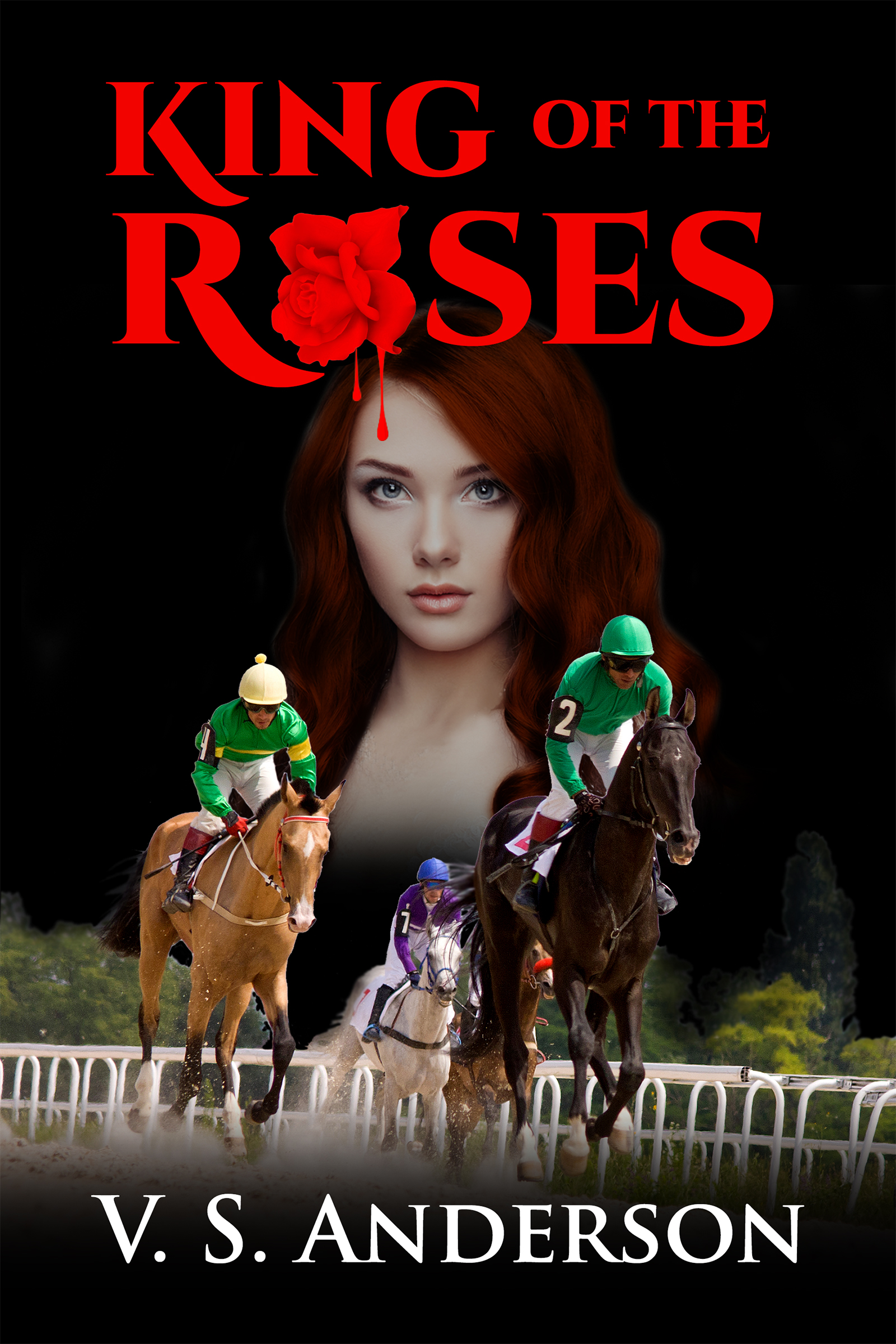
- My sister, who said of an early (and I suspect chaotic) draft of KOTR: “This isn’t a novel, it’s a character sketch.” Bingo. I may misremember, but I seem to recall I was on track with the trajectory that eventually did become a book within days.
- My friend and academic colleague, who said (paraphrase) of a draft of a different novel, “I was so angry at the beginning. I didn’t know who this was, where she was, what was going on. I made myself keep reading [friends may do that], and I loved it. But the beginning doesn’t do it justice. You have to give me more help than that.”
- A former student and one of the best writers and readers I know, who had the temerity to cross out whole pages of “character development” in my then-and-current-and-maybe-forever novel in progress: “They slow me down and besides they’re hard to read. I wanted to know what was going to happen.” Again, bingo. I actually had to admit they were hard for me to read, too, and beastly to write. Note to self: Most of the time, it’s the pace, stupid.
- A former teacher who heroically read everything I gave her, about an even earlier draft of KOTR that I tried to render in first person (the one I went off into the woods to write, convinced that if I did nothing but write I’d make it happen): “I got tired of hearing him whine.” Boy, did that get my attention.
- The professor and friend who said of my failed novel, “I couldn’t get into it. It was just a bunch of people sitting around a room talking.” If ever there was a wake-up call. . !
- All the friends who’ve said, “Whose story is this?” I’ve been trying to keep that question before me in my current revision project, which, like so many of my projects, wants to spill out all over the place (my curse). (And there was the generous academic colleague who said gently of yet another project, “It’s just . . . just sort of overgrown“).
Now if I can just make use of these treasures—and get more.
Filed under Learning to write, Myths and Truths for writers
Paying for It: Story II
Okay, let’s get the rant out of the way so we can move on to practical applications.
Like applying due diligence, perhaps?
It’s embarrassing because my second attempt to purchase good feedback was as much of a foreordained conclusion as the first.
I found this fellow in my search for likely looking conferences and workshops. I don’t actually remember his name. I do have the material he finally sent me (see below), but it supplies only a first name. Perhaps that’s just as well.
The workshop was small, private, held on a major university campus, where I was able to acquire a dorm room. The apparent imprimatur of the university disarmed me. And the workshop itself, me and a couple of other people, working with this genial individual with a bucketful of droppable names, was stimulating, full of good exercises, with some useful discussion of our projects. I was beguiled.
I had two efforts underway. I had decided to rewrite my failed novel. And I had a terrific premise that I had turned into a very rough draft of a screenplay. For $450, this person was to advise me on the screenplay. Then he would partner with me to edit my novel, parts of which I had shared at the workshop. (He did not warn me, as a conference panelist was to do soon thereafter, that revising that novel in hopes some editor would take on a chance on republishing a better version of it was pointless: “If it didn’t sell the first time, why would they think it might sell now?”).
In any case, off he went with my $450.
I waited six months.
I emailed him a couple of times, only to be assured my critique was on the way.
We’re used to this from agents. But I had paid.
I finally wrote and asked that he either send my critique or give my money back.
Bad move? I honestly don’t know. It triggered two things. I got my critique. I also got an email, since lost (as an act of psychological self-defense?), that I remember as a bruising, sarcastic excoriation that I would dare to make such an unprofessional, harassing request.
I’ve fished out the critique. Nine pages. Up to about the midpoint of the script, very detailed discussion of problems interspersed with often-specific praise, focusing largely on the nuances of scriptwriting versus writing prose, help I desperately needed as I was a complete beginner at scripts. Rich as well with the kinds of global comments I also desperately needed to hear: What is the story question? It’s hard to know what this character needs or wants. Too many characters playing redundant roles. Some logical missteps, obvious when pointed out. But at midpoint, I’m told, the story veers so far off course that it doesn’t warrant further comment (“organizing deck chairs on the Titanic”). But then: “Tremendous potential. The ending is emotionally arresting and disturbing, the eoncept is unique.” And finally, a cryptic “Well done.”
Of course, now I couldn’t do what I most wanted: arrange a (paid) follow up meeting to nail down my understanding of the technical advice and to talk through how to make the shift of direction in Act II organic and supportive of my larger hope for the story.
I see now that I could have learned from this man. But, struggling under the devastating collapse of relations (by my doing? by his?), I did a further unprofessional thing. I simply set it all aside. I could persuade myself not to trust it. Did his anger at me color his response to the story? Did he really read past page 55? In the end I gave up on the screenplay, turning the premise into a novel. (And rereading that long-ago critique, I am glad for the reminder to ask that crucial question that I’ve heard myself ask others in our writing group: Do we know what this character wants and needs? Now that I’m back to writing, time to double-check, make sure.)
But the more immediate question is whether I could have prevented these two disasters (begging the question, of course, as to whether they really were disasters). The first one, possibly, by not wanting so badly to be misled. The second one, surely. Preditors and Editors existed then; a quick trip to http://pred-ed.com/general.ht?t1 would have given me the basic advice I should have followed, to wit: a) get a written contract specifying what was to be done and when; b) start small and see how it works out.
In short, good advice is worth paying for, but with much greater caution than I exercised.


 Just Can't Help Writing