This interesting infographic reinforces several things writing teachers know about writing. Writing is a powerful “mode of learning,” to borrow from 1970s writing researcher Janet Emig, because it does so many of the things shown here. One thing it does really well is to SLOW YOU DOWN so information has time to work its way into your synapses and new ideas to bubble up.
And as this infographic shows, writing involves your body and your senses, not just isolated parts of your brain.
And writing pushes you to be more precise in diction and sentence construction, since you can’t just toss a few disjointed words out but must connect them logically to each other.
So when you want to learn or remember something, write about it!
Tag Archives: fiction
What Happens In Your Brain When You Write?

![Amazing Facts on Writing and How it Affects Our Brain [Infographic] - An Infographic from BestInfographics.co](http://www.bestinfographics.co/wp-content/uploads/2013/02/amazing-facts-about-writing-and-the-brain.jpg)
Filed under Writing, Writing and Learning
Some Helpful Advice on Copyright, ISBNs, and More
 Joel Friedlander is always a wonderful resource. Today’s “Mailbag” covers some important questions about copyright and ISBNs, as well as some questions about vendors and formatting decisions. Check it out!
A Perennial Question: What is Literary Fiction?
Check out this discussion about the definition of literary fiction and add your opinion. While you’re at it, here’s literary agent Donald Maass’s answer. I like it. What do you think?
The Story Question is Vital
This article addresses what I find is the most pressing issue in developing a novel. It’s the one I come back to again and again, hoping I’ve made it work and struggling if I think I haven’t.
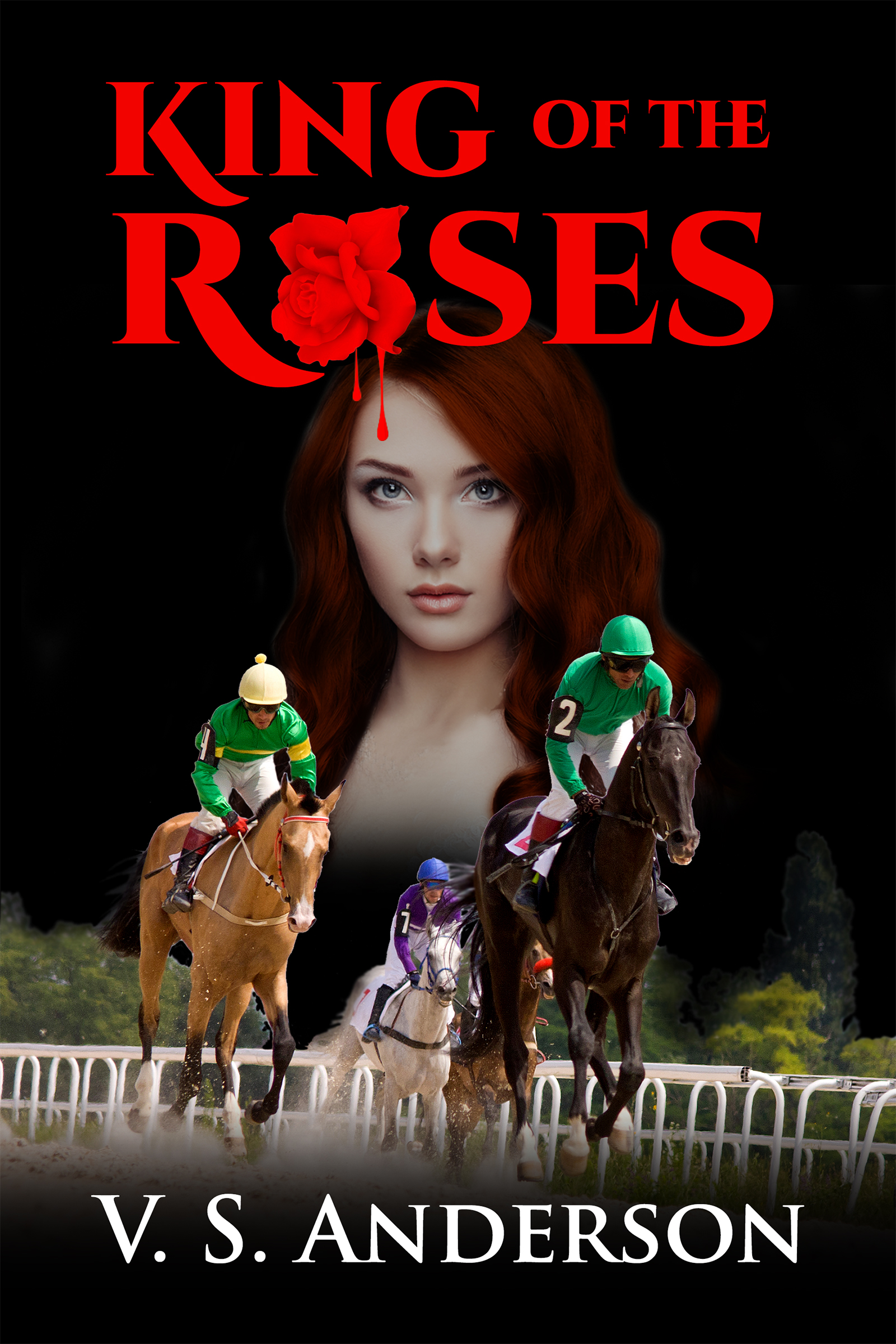
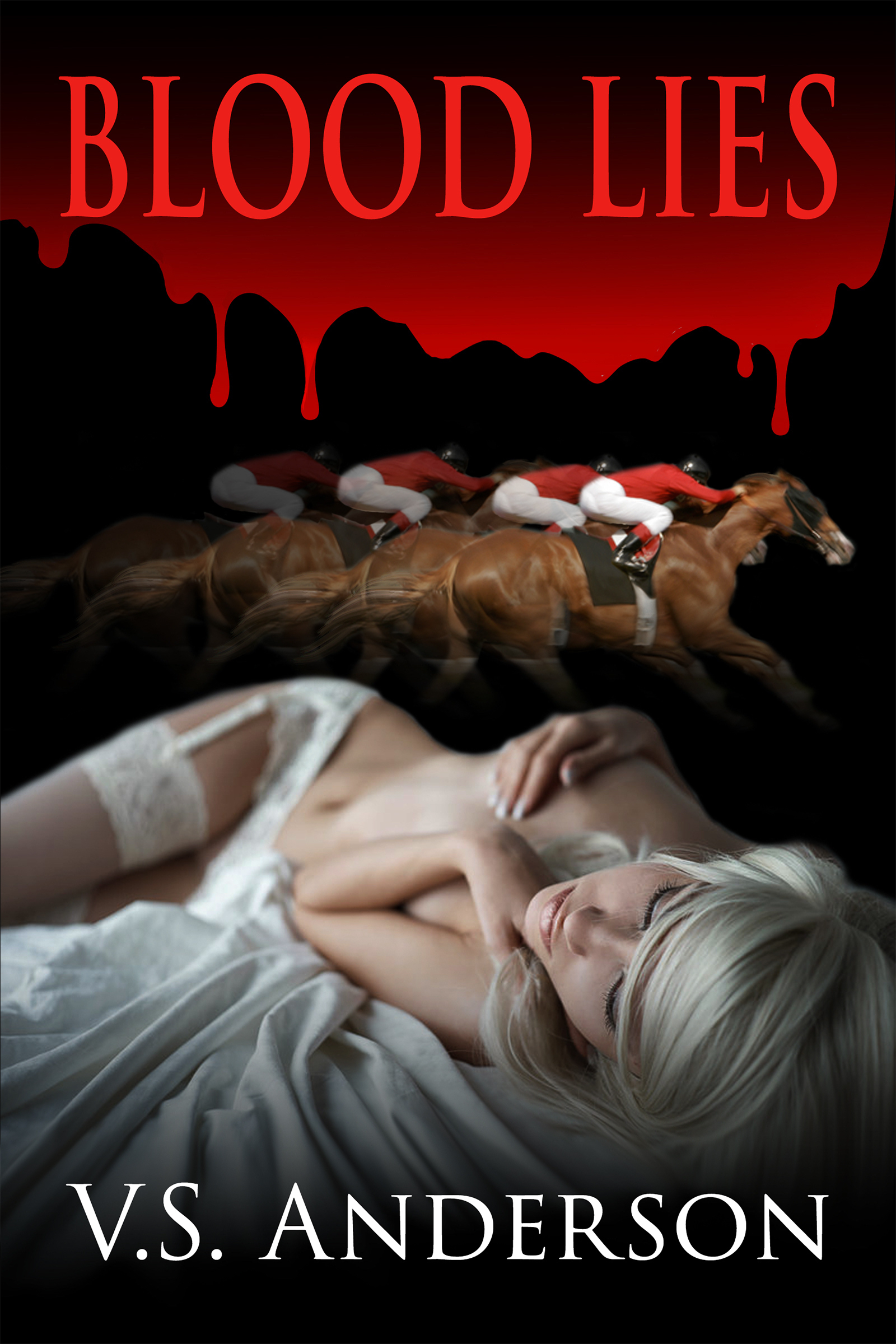
In some ways, I think this article may distill the question down a bit more than I like; sometimes there’s a story question embedded in another story question, and both have to be answered. In Blood Lies, the obvious story question is whether Ted will find out who murdered Alejo. But the larger question that drives and even overrides this one is whether, in the process, Ted will become the man he needs to be to respect himself. So a corollary question to ask in working on story questions is whether the two (or more) questions serve each other. Does finding his best self help Ted find the murderer? Does finding the murderer help Ted find his best self?
In any case, in many unpublished novels I read, it’s the story question that’s missing–or just isn’t compelling. So this article is an excellent primer on this central issue in fiction.
Both the story question and the story problem are vital for crafting cohesive stories and strong fiction. A discussion of the story question in fiction.
Source: The Story Question is Vital
Grammar Check! The Who/Whom Conundrum: When What’s Wrong is Right!
Who/Whom is kind of an odd choice. I call it a conundrum because you’ll do better, much of the time, to go ahead and get it wrong.
That’s because most people won’t even notice if you get it wrong—most of the time. But they probably will notice when you try extra hard to get it right and THEN get it wrong.

Simply speaking, only a rabid grammar termagant will rage if you just use ‘who” ninety-nine percent of the time.
After all, doesn’t it sound more natural to say, “Who did you give that to?” than “Whom did you give that to?”
The “whom” in the second is correct because it’s the object of the preposition “to” and objects have to be in the objective case (like “him,” “her,” “us,” and “me”). But our minds these days just aren’t trained to worry about all such distinctions.

Our rabid termagant will sputter that you shouldn’t end a sentence with a preposition, but that’s another argument. People DO end sentences with prepositions, and the principle stands: the incorrect “who” sounds more natural than the correct “whom,” so most people won’t even blink at this “mistake.”
The only time most people will want “whom” is when it directly follows its preposition, and that usually happens in a question that’s been re-ordered:
- To whom did you give it?
- With whom were you going?
- I don’t remember for whom I bought this hat.
But do you have to write these particular sentences?

I suppose you may if you are writing Downton Abbey fan fiction. But in my view, don’t bother unless you have one of those hyperactive grammar consciences that wake you up in the middle of the night to go fix that comma you misplaced.
But ordinary people will be perfectly okay with
- Who did you give it to?
- Who were you going with?
- I don’t remember who I bought this hat for.
 The problem arises when people assume that because “whom” sounds so much more formal, one MUST use it whenever one wants to sound formal. One word for making choices like this is “hypercorrectness”: going so gaga trying to get it right that we actually get it wrong. For example:
- Whom is going with us?
Ouch, that really grates. Subjects of verbs are always in the “subjective case”: I, you, he, she, it, we, and they. And “who.”
- Who is going with us?

The messier—and understandably more confusing—situation occurs when the who/whom pair has to be sorted out at the beginning of a dependent clause acting as an object. The handbook rule is that you choose “who” or “whom” depending on what it’s doing in its own clause, not in the larger sentence.
- Did you say who is going with us?
(Correct: “who is going with us” is a noun clause acting as the direct object of “say,” but “who” is the subject of its own verb, “Is going.”)
- Did you say whom the hat is for?
(Again correct: Again, “whom the hat is for” is a noun phrase acting as the direct object of “say.” “Whom” is the object of the preposition “for.“).
 But the troll of hypercorrectness comes charging out from under the bridge to wreak havoc on your writing when a writer gets paranoid and decides that “whom” sounds like what a smart person would say regardless of the role “who/whom” is playing in its own clause. Then we end up with
- Did you say whom is going with us?
(Incorrect: yes, once again, “whom is going with us” is the direct object of “say.” BUT “whom” is holding the place of subject of the verb “is going” IN ITS OWN CLAUSE and should be in the subjective case—that is, “who.”)
- Don’t give money to whomever asks for it.
(Again, incorrect. Yes, “whomever asks for it” is the object of the preposition “to.” BUT IN ITS OWN CLAUSE, “whomever” is trying to be the subject of “asks” and therefore should be in the subjective case—that is, “whoever.”)
Brain reeling? Too hard to sort all this out?
I agree.

And to repeat the point of this post, THERE IS NO REASON ON EARTH not to go ahead and use the perfectly natural-sounding”who,” and quit worrying about whether it is technically a mistake. Then you will say
- Did you say who is going with us?
or
- Don’t give money to whoever asks for it.
And you’ll not only be right, you’ll sound right. and the bonus is, you’ll sound right even if you say
- Did you say who you bought the hat for?
So just kick “whom” out of your vocabulary rather than sticking it where it doesn’t belong (here’s a wise soul who agrees!).

Five Things Writers Need to Know About Facebook
This article answers some questions I’ve had recently about my rather desultory use of my Facebook resources. Please let me know if you’ve had a different experience, or if you agree!

“If you try to use Facebook for something it’s not designed to do, you’re just going to get frustrated over the lack of results.” — Tim Grahl, author of Your First 1000 Copies
Recently, I was posting my latest giveaway opportunity to a variety of promotional groups on Facebook. A fellow author and Facebook friend noticed and messaged me soon after: “You’re posting a lot on Facebook recently. How’s that working out for you?”
What he was really asking me: “How does one successfully use Facebook for author marketing?”
Tim Grahl recently addressed this question on his blog (Facebook and Author Marketing, September 17, 2016), and my own experience in growing my social media platform confirms many of the assertions that he makes in his article. To understand how to use Facebook for author marketing requires an understanding of what Facebook was designed to do.

Exclusivity
Firstly…
View original post 957 more words
Free Book Promotions? What Do You Think?
 Here are some evaluations of book promotion services from The Book Designer (a great site for all things indie). The question is whether sites like these are better than membership in KDP Select.
Share with us your own views! Have you tried any of these services? Do you have others to recommend?
World-Buiding: Not Just for Fantasy or SciFi!

I recall being asked about my enthusiasm for Patrick O’Brian’s 20-novel series about British sea captain Jack Aubrey and his eccentric friend Stephen Maturin as they navigated the Napoleonic Wars. Why would I keep returning to these books, beginning with Master and Commander (in 2003 a movie starring Russell Crowe)? I’d answer, “What’s amazing about these books is that you enter such a complete world!”
This memory has come back recently as I’ve traveled through new reading experiences: sampling indie authors, returning to old favorites, and meeting new traditionally published and often best-selling authors. Like all readers, I’ve found books that work for me and books that don’t. A writer myself, I’m always interested in what makes a book spring into gear or stall out, even if only for me, since I want to sort out strong and weak strategies in my own work.
I know that “voice” can override glitches that try to pull me out of the story. I’ve enjoyed books with plot flaws because I enjoyed hearing the writer talking to me through characters, description, and style.

But there’s another important quality akin to voice: the writer’s ability to build a world.
In fact, I’ll take a big chance here: the ability to build a complete, believable world may make a difference if being traditionally published is ever a goal.
What builds such a world?
The quality that makes a book impossible to put down is our total immersion in its reality. That metaphor implies that when we enter a book’s world, we lose sight of our familiar world in which we have to clean house and go to work and wash the car. For that to happen, this new world must be divorced from the mundane. It has to provide us with a set of eyes that see differently, that notice things we would not have noticed until the author seized our gaze.
Writers of historical fiction may find monopolizing our imaginations easier to achieve; even touches of daily life illuminate corners of a universe that takes us out of our own. For example, in Sarah Waters’s The Paying Guests, there’s the sound of shillings clunking into the gas meter, there’s the slog across the yard to the outdoor WC. But modern stories should also be flush with such mind-capturing details. In Americanah, Chimamanda Ngozi Adichie takes me into a Trenton, New Jersey, hair-braiding salon, an atmosphere completely alien to me but starkly evocative in the world she invites me into. I had never seen this corner of a modern city. I walked with her, across the divide between our worlds.

But the trust that sustains that journey is fragile. It can be shaken in many ways. Somehow, above all, a creator of worlds must convince us that her world really could exist, really does exist, even if only in mind.
A sense of accuracy is essential. Creators of worlds in sci-fi and fantasy have more leeway than authors in other genres; details need mostly to be consistent. True, in historical novels we are at the mercy of an author’s research. Patrick O’Brian never sailed on one of the ships he wrote about; how can we trust his depictions of 1800s British naval life?
He seduces with details: How the ship’s company had to tap their biscuits to knock the weevils out before eating; how the men at the cannons had to arch their bodies to avoid being killed by the guns’ recoil. If he knows these things, surely he knows the rest. Again, we’re sucked out of our daily worlds into his by the precision and clarity of what he puts before us. We’re too busy absorbing all the surprising pieces of his universe to look away.
Accuracy is especially vital if you’re writing for a specific community that knows its own contours well. I felt kicked out of a horse book when, among other glitches, the writer had a teenage girl galloping up on one of her farm’s “yearling thoroughbreds.” Now, they do back late yearlings on Thoroughbred farms, since the young horses will all officially turn two on January 1, and these babies often run their first races before they actually turn two. But if this is a real farm, training real racehorses, no teenage girl will be galloping around pastures on a newly broken baby destined for the track. When just a few pages later, a character attached crossties to a bridle. . . !
But this need for convincing accuracy lies at the heart of the world-builder’s dilemma. Immersion depends on strangeness. The details that capture me cannot be details I could have supplied myself. Want me to stick with you on a spring morning in the countryside? Don’t tell me about the bright blue sky or the fluffy clouds or the green fields. I know about those without your help. No, tell me something I wouldn’t have noticed or cared about until you opened my eyes.
Yet if we are to believe, we must be able to connect these new worlds to landscapes where our usual compasses will work. The minute a reader says, “Oh, that would never happen!” or “People wouldn’t act that way!” or “I know that’s not true!”, the trust is gone.
So world-builders must construct double journeys: along a mysterious new road that keeps us gasping, yet one that parallels the world we do know. For example, Bev Pettersen’s Backstretch Baby showed me specifics of racetrack life I hadn’t witnessed myself, but the details that did match what I’d seen for myself prepared me for what she wanted me to accept. I felt I’d entered her version of a world I’d been in before, a version that was going to show me something I’d never have guessed.
In dialogue, this essential double journey shows clear.
Dialogue must be accurate to its time and place. Our characters need to “talk like real people.”
And yet nothing can be deadlier to our immersion in a story’s world than characters who talk like real people. All the little “hellos,” “how are yous,” “fine, thank yous,” with which we coat our exchanges have to be mercilessly expunged. Dialogue has to sound “natural” to the worlds we know while obsessively, ferociously, devoting itself to building the one we don’t.


Rereading National Velvet recently showed me how dialogue contributed to the world of this stunningly realized plot. Here’s Mi Taylor (the Mickey Rooney character in the movie) to Velvet early on—he’s just given her money to put down on the raffle ticket for the Piebald:
“. . . And see this, Velvet, I’m a fool to do it. That piebald’s as big a perisher’s the fellow that tipped me the five. ‘M going up to look at him this afternoon and likely I’ll be sorry when I see his murdering white eye.”
“Can we come too, can we come too?”
“You got yer muslins to iron.”
“MUSLINS!” said Velvet, outraged.
“Yer ma’s just wrung ’em out of the suds. I seen ’em. For the Fair.”
“I’m not going to wear MUSLIN,” said Velvet with a voice of iron.
“You’ll wear what yer told,” said Mi placidly. “I’ll slip up after dinner. Nearer one. I got them sheep at twelve. . . .”
If you’ve read the book, you know that its world forms around families and dreams and how they play out or fail in the environment of a small English village in the 1930s. The detail of what the Brown girls will wear to the fair and the distinct voice in which Mi delivers that detail become, in this dialogue, a demonstration of how authority functions in this world, warning of the challenge to that authority from the magical horse with the “murdering white eye.”

World-building is a little like trying to catch skittish mice. We want to entice readers along the paths we’ve laid with tiny bits of carefully laid-out cheese. If the cheese is stale, they’ll turn up their noses. If the tidbits are too far apart, asking for too much empty wandering between offerings, they’ll venture off the path. If the cheese isn’t recognizable as cheese, if it’s too alien, they’ll be too wary to bite.
When I read your book, I want to follow that path without looking back or aside. I want to be captured. I want to find myself helplessly enclosed in your world. You have a double journey to accomplish; I want you to keep me pressing toward the vista straight ahead.
WHAT MAKES A WORLD COME ALIVE FOR YOU?



 Just Can't Help Writing