Tag Archives: Editors

Interview: NYT Best-Seller Will Lavender!

Hello, all,

This is first of our two-part interview with Will Lavender, author of Obedience and Dominance. It’s always great to hear from people working their way through the publishing world!

Please send comments and questions. If we have some, perhaps we can arrange for a Q&A down the road!

1. Give us a sense of your writing trajectory. For example, what kinds of writing have you done and how have these experiences informed (or not) your fiction writing?

I write what the publisher calls “literary thrillers.” My novels are all set in or around college campuses, and I use my experience as a former writing instructor often in my work. I use not only my interactions with students but also simple things like the geography of the campuses where I’ve taught. For my first novel, Obedience, it was really important for me to have the campus mapped out in my mind, so I used bits and pieces of all the colleges I attended and appropriated certain quirks of each of them to my fictional campus.

Otherwise I think we’re always using bits and pieces of ourselves. It’s impossible to write well without some sense of the biographical. I find myself using phrases and words I overhear in the world; I’ll catch a turn of phrase on NPR and it will invariably end up in my writing. Writers are sort of receptacles for language and culture. The best writers use that information wisely and artfully.

2. Where do you get your ideas for your novels? Do you have a particular creative process for coming up with ideas?

The best ideas I come up with are what-ifs. I find that playing out a scenario in my mind helps kickstart my imagination. When I’m really writing well, I’m coming up with stuff—language, prose, ideas—that’s borderline weird. It’s only in the editing process that you reign in those things. But in the drafting itself, I think writers who really allow themselves to explore and hunt out unfamiliar territories have the most success. It definitely makes the drudgery of writing a novel easier.

3. What, in your experience were the most challenging parts of the publication process (e.g., finding agents and editors, working with editors, working with publishers, etc.) and how did you address these challenges? What were the most rewarding?

The most challenging part about publishing is staying published. I found getting an agent and my first book deal relatively calm. After that things got hectic, because when that first book comes out you’re saddled with the one thing that keeps writers afloat: sales numbers. My second novel didn’t do as well, but I was lucky to have a two-book contract in the bag before that book was released. Fulfilling that contract has taken me the better part of three years, because the publisher is concerned about the numbers of my second book. It’s a nerve-jangling thing, and it’s one of the reasons that I think it’s always better to work from a finished product rather than a novel-in-progress. My first novel was finished except for the editing. My other novels have been unfinished and have been bought at various stages of their completion. This means that the writer has to fulfill the contract by finishing the novel—that feels to me like working backwards. I would rather be rewarded for a completed thing than have to push to complete that thing under a set of parameters that are at times not my own.

4. Writers in all genres today have to do a lot of self-promotion. Have you been involved in promotion for your books, and if so, what has that experience been like? For example, what has been most difficult, what has been most effective, how did you develop your marketing skills?

All writers are going to have to do some marketing. I’ve done a little, but I’m not very good at it. Some people—a friend I went to college with named Tiffany Reisz writes erotic romance, and she’s hellaciously skilled at interacting with her fans; it’s something that intrigues me but I don’t have the wit or creativity to do it well—are great at it. Others, like me, not so much.

One thing I try to do is answer all my e-mail, even if it’s negative. I always respond when people write to me, and I’ve been lucky to receive quite a bit of correspondence from readers.

Otherwise I do what everyone else does. I Facebook a little, tweet a tad, go to conferences and so on. I think people will be interested in a good book. Bad books don’t get much publicity even if the writer is a kind of PR savant. It helps if you have an online footprint, but it always comes back to the writing.

5. Are there books or other sources of advice or information that you would recommend for aspiring fiction writers?

Stephen King’s On Writing. For me, that’s the list.

Tomorrow: Part 2!

1 Comment

Filed under Finding literary agents for writers, Interviews, Myths and Truths for writers, What Not To Do in Writing Novels, Working with literary editors

Blog Interview! Will Lavender, Author of Dominance and Obedience: This Weekend!

Saturday and Sunday, April 11 and 12, I’ll be posting a two-part blog interview with New York Times best-selling author Will Lavender, author of Dominance and Obedience. Stop by to learn about Will’s experiences working with major publishers and developing ideas for his “literary thrillers.” Chime in with your own experiences. I’m excited and I hope you are, too!

1 Comment

Filed under Interviews, Working with literary editors

First Lines of Novels: What Works?

They used to hang men at Four Turnings in the old days.–My Cousin Rachel by Daphne du Maurier

In the spring of that year an epidemic of rabies broke out in Ether County, Georgia.–Paris Trout by Pete Dexter

We slept in what had once been the gymnasium.–The Handmaid’s Tale by Margaret Atwood

It began the usual way, in the bathroom of the Lassimo Hotel.–A Visit from the Good Squad by Jennifer Egan

I’m collecting first line of novels that I think provide particularly good models and possibly rules of thumb for those of us hoping for just that one read. Why are these so important? I can’t help remembering my trip to the Backspace Conference in New York, sitting around a table for a “two-pages-two-minutes” critique with editors and agents. Reader after reader got stopped before getting past one-minute-one-page, or in some cases, thirty-seconds-one-paragraph. “This is too familiar,” said the agent. “I’ve heard this a million times before,” said the editor.

That experience impressed on me something my own experience as a browser in bookstores confirms: yes, the language of your whole book has to sing, but if you want people to pay the price of the concert, the first line has to be so high and clear and pure it blasts through their earphones as they’re passing on the street.

I thought I’d spend a few posts thinking about why these are examples of first lines that did that for me, in hopes of deriving some ideas as to how it’s done. I’d love it if readers would post their own favorites, with some speculation as to what makes the lines work. Be specific! Don’t just tell us “I like this” or “It works for me.” Why does it work? How does it work? So we can see whether we’re hitting your criteria in our own efforts.

Obviously, it’s not that the first line carries the book. The paragraphs that follow have to bear out the promise. But I do think that one strength of these lines is that they do make a promise. We read on to see if that promise is going to be kept.

Okay, the Daphne du Maurier line: what promise does it make?

It’s actually fairly simple at first glance–this is a haunted place. Only something bad can be set in motion here.

That promise resonates for me because I’m a firm believer in the truism that in narrative, only trouble is interesting. Promise your readers upcoming trouble in twelve simple words and they will at least finish the paragraph.

There’s more going on, though, I submit. This, like Rebecca, is to a great extent a Gothic novel, and “the old days” conjure the fatally romantic past that, in Gothic novels, no one will escape. The old days aren’t gone; they’re hovering in the shadow cast by this nameless “they” whose memory just won’t be expunged. The whole atmosphere of the book emerges: something looming. Its shadow is that of the noose.

I hear the rhythm of the sentence as well:

They used to HANG men /at Four TURNings /in the OLD days

It breaks into three parts, like a poetic stanza, with an accent on the next to last syllable of each phrase. We almost have three anapests, with a falling syllable after each. There’s all kinds of literary and neuro-cognitive speculation as to why rhythm captures us as it does; suffice it to note here that the accented moments are the central moments that almost deliver a message in themselves: HANG, TURN, OLD. Something old is going to turn on us and deliver us to that noose.

I’m going to finish the series before I try to generalize some rules from this example. I’m curious whether I’ll see the same things in all four.

4 Comments

Filed under Finding literary agents for writers, Learning to write, Working with literary editors, Writing and teaching writing

I’m in Like Flint

I’ve just been reading Becky Lerner’s The Forest for the Trees: An Editor’s Advice to Writers. At least in the first few chapters, Lerner, a poet-turned-editor-turned-agent (and I gather still all of these things), offers advice at one end of a continuum I’ve noticed. Hers is what I would call a “soft” book for writers: strong on inspiration, on the emotional landscape of writing, on how you’ll know if you’re really meant to write and how to persevere through the cold winter of a writer’s disenchantment. At the other end of the continuum: books like Michael Larson’s book on non-fiction proposals, which I downloaded for help writing my proposal for Survive College Writing (a future bestseller currently interred in a massive data dump of all the things I want to say to the students I saw struggle so hard). Larson is in the “how-to” school; this is what you do and this is what it should look like, down to how long paragraphs should be. Quit yer belly-achin’ and just get going. What’s so damn hard?

In the middle I’d place Susan Rabiner’s Thinking Like Your Editor: How to Write Great Serious Nonfiction and Get It Published. This claims to be a how-to, but there’s a good amount of inspiration here–for example, she maintains that if you’re passionate about your topic, your heart will beat through your prose. But there’s also some of that hard-headed get-on-with=it spirit: All the passion in the world won’t help if you don’t do these X or Y Most Important Things.

Reading Lerner, I find myself thinking about the many conferences I’ve attended over the years. Lerner tells ms, forget about writing the next X or Y; forget about “Marley and Me meets ET.” Write what you’re obsessive about, what haunts you. Write the book that’s your book. Thus far, the implication is that if anything is going to sell and hit, that’s the book that will.

The real question is, where’s that line between “what we’ve seen before” and “we don’t know what the heck it is”? Lerner will presumably tell me if I’ve just gone too far, according to one of the Amazon reviews. I will await the event.

If I were in the inspiration queue–I’m not exactly; I know I’ll always write–I would find some solace in sentences like these from Lerner:

“It takes a certain kind of person to understand and cope with rejection as an appraisal instead of a judgment.” (See this post for another take on criticism of our work.)

“[T]he degree of one’s perseverance is the best predictor of success.”

I value information about what’s not working more than ever, and God knows, I persevere.


Leave a comment

Filed under Finding literary agents for writers, Learning to write, looking for literary editors and publishers, Myths and Truths for writers, Working with literary editors, Writers' conferences

Update from 1/27!

I’ve revised to add some new more information about Gail Strickland’s book, Night of Pan. Check out her site. I hope she will visit soon for a blog interview about bringing her book to publication.

Leave a comment

Filed under Finding literary agents for writers, looking for literary editors and publishers, Working with literary editors, Writers' conferences

Writers’ Conference VII: Post-Coda

I promised to report on the fates of my colleagues at the conference I attended a few years ago.

I obviously don’t know all their stories. Emails began to circulate, friendly requests for updates. Not everyone responded. I did not.

Now that I’m contemplating creating (from scratch) a “platform” for the non-fiction book I’m working on (tentatively titled Survive College Writing: What No One Will Tell You about Your First-Year Writing Class), I realize that not becoming part of that somewhat nostalgic network was a missed opportunity. At the time, it seemed clear to me that my job had hustled any real involvement in my personal projects right off the stage. So I withdrew, sat silent, packed away the emotional energy I wanted to invest in writing in hopes it would ferment in its dark corner. I think it has. I get up ready to write every day.

So with regard to the fate of my colleagues at the conference, all I have to go on is that flurry of emails. About ten people took part.

Of those few, up to the last email I received, only one had found a commercial publisher for the book she pitched at the conference. Gail Strickland found a small press (Curiosity Quills Press) that publishes the kind of book she has written and offers her the kind of support she hoped for. Her book, a YA historical fantasy titled Night of Pan can be pre-ordered through her Web site. I’m hoping Gail will give a blog interview about her experiences taking her book through from idea to promotion; if so, I’ll post the date.

The most impressive of the several self-publishing stories is that of one of the attendees who perfected his pitch (not about zombies) and scored a review from Publishers Weekly Select. John J. Kelley’s The Fallen Snow is worth a look–and I especially admire the attention his hard work at promotion has garnered. He’s gotten wonderful reviews! With his permission, I’ve posted his very informative account of the PW Select process here.

Another attendee ended up self-publishing a cookbook based on her expertise at gardening and raising bees. At last account she was still at work on her fiction.

John found the conference helpful in expanding his options for his work. I am still thinking about what I learned, including what I knew before and how the conference changed what I thought I knew. Even so much later (nearly three years), I still have much to process. I think that will take another post.

Leave a comment

Filed under looking for literary editors and publishers, Self-publishing, Working with literary editors, Writers' conferences

Writers’ Conference Saga: Pre-Coda

My abortive meeting with my assigned editor took place on the penultimate afternoon of the conference. The next morning we were to finish up in a group summary meeting with Our Leader.

For some reason I can’t recall, I was eager to meet with him one more time. I made my way to the conference site before daylight in order to be at the front of the line. Along with a woman with whom I had been friendly, I managed to get a slot at the table as we ate breakfast in a crowded coffee shop. What in the world did I want from him at that point? To salvage something from the ruins of my experience (“Is it time travel? Reincarnation? Oh, wait, he must be already dead!”)? To pitch my other book? Who knows.

I do remember that he rewrote my friend’s pitch, ad hoc, in one breath, and that, were I a fan of such topics, I would have found his version immeasurably better. She still had her meeting ahead of her. So she faced the day armed with his words.

I remember as well talking about my other book, my “Sarah” book. He began excitedly weaving a resolution to the deep personal crisis Sarah faces, one that in my formulation would carry her through three books, each with its own sub-crisis and plot. I said, “That sounds like something to consider for the third book.”

“Oh, no,” he responded. “That’s the first book!”

I have already written the first book. I said, “I write my own books, thanks.”

I don’t recall that he took offense at this. Perhaps he secretly did.

Our final meeting consisted of congratulations for all those (most) who had been invited to submit manuscripts to major New York houses. This fortunate group included my friend, who was now supposed to write the book she had been given. I think he generously pretended that I had been given permission to send along my Sarah book. Then he said something I didn’t expect.

“I worry,” he said, “that you’ll all send in your stuff before it’s ready. Don’t do that. Make sure it’s ready.”

My perhaps ungenerous translation: “My business is running these workshops. I have to be able to say that publications come out of them. Most of you have no manuscripts, just ideas. Most of you have never produced anything like a book-length manuscript. You don’t actually know what you’re getting into. Please, some of you, take the time to write something that won’t waste these editors’ time.”

I find myself thinking about several things, remembering this comment. We were apparently selected to attend, to have the chance to meet with REAL EDITORS, on the basis of a one-page synopsis and a bio. Such application materials gave us the chance to make a preliminary pitch and gave the conference planners a chance to verify that we could actually construct reasonable English prose. But I wonder: is that enough? Are you really ready to write a book if you can sell an idea?

I have learned enough about my writing process to know, that for me, the answer is an emphatic NO. For me, there is nothing so demoralizing as knowing that the book isn’t working but that I must deliver. Write a draft. Share the draft with a conscientious critique group. Yes, it takes more time, with no more guarantees of eventual attention from an agent or publisher than if I had simply mailed off the first chapter and a treatment. But it makes the process rewarding. I can write a book that has a chance of working. Not being a genius, and not having a formula, for me, that is feat enough.

Leave a comment

Filed under Learning to write, Myths and Truths for writers, Writers' conferences

On Having to Write about Vampires (and Alien Sex)

Apropos of my narrative about being categorized with the vampires and aliens at the most recent conference I went to, here’s a piece from today’s New Republic online newsletter in which a writer of memoirs, Stephen Akey, laments the apparent impossibility of selling anything that by comparison must be considered bletheringly unmarketable. What most resonates for me in this piece is what he tells us about “platform”: agents, gatekeepers to publication, asking “What type of platform do you have for speaking about the issues in your book?” “What is your access to the media or to major experts in your field?”

Because my current project is nonfiction, I’m particularly sensitive to the purported need for a “platform.” I’m fortunate in that I do have access to some “experts” in  my field (and at times have passed for one myself), but I’ve been asked the same question about works of fiction. Yes, I’m sure it would be easier to sell a novel by Regis Philbin than one by one of us unknowns, at least (possibly, since Mr. Philbin might well be a stellar wordsmith) until it gets read.

But I’m not a carpenter by birth or trade, and labor as I will to build something akin to a sound platform, I’m imagining ending up with something more akin to a three-legged seesaw. I’m reminded of an admonition I found somewhere–wish I could tell you where: “Less tweeting, more writing.” Yet, I am rather enjoying picking up my HTML book and envisioning the Web site on which I will advertise and sell my otherwise doomed works of fiction. It will be vibrant, informative, interactive, irresistible. If only I could figure out how to add a background layer to my new logo in GIMP. . . .

Stop reading blogs and get back to work, you.

Leave a comment

Filed under Finding literary agents for writers, looking for literary editors and publishers, Money issues for writers, Myths and Truths for writers

Paying for It: Story I

For “book doctor” services, I mean.

I apologize for this long post. This story turned out to take a long time to tell. I apologize as well for what may be my most carping posts, as I have disastrous encounters to report. So you may want to wait for a sunnier discussion. On the other hand, yet again, you may find my mistakes instructive—even though they do tend to fall into the category of “what was she thinking?” if I do say so myself.

At least in each case I wasn’t out more money than I could afford at the time. And I did go into each with the attitude that the money was all I really had to lose.

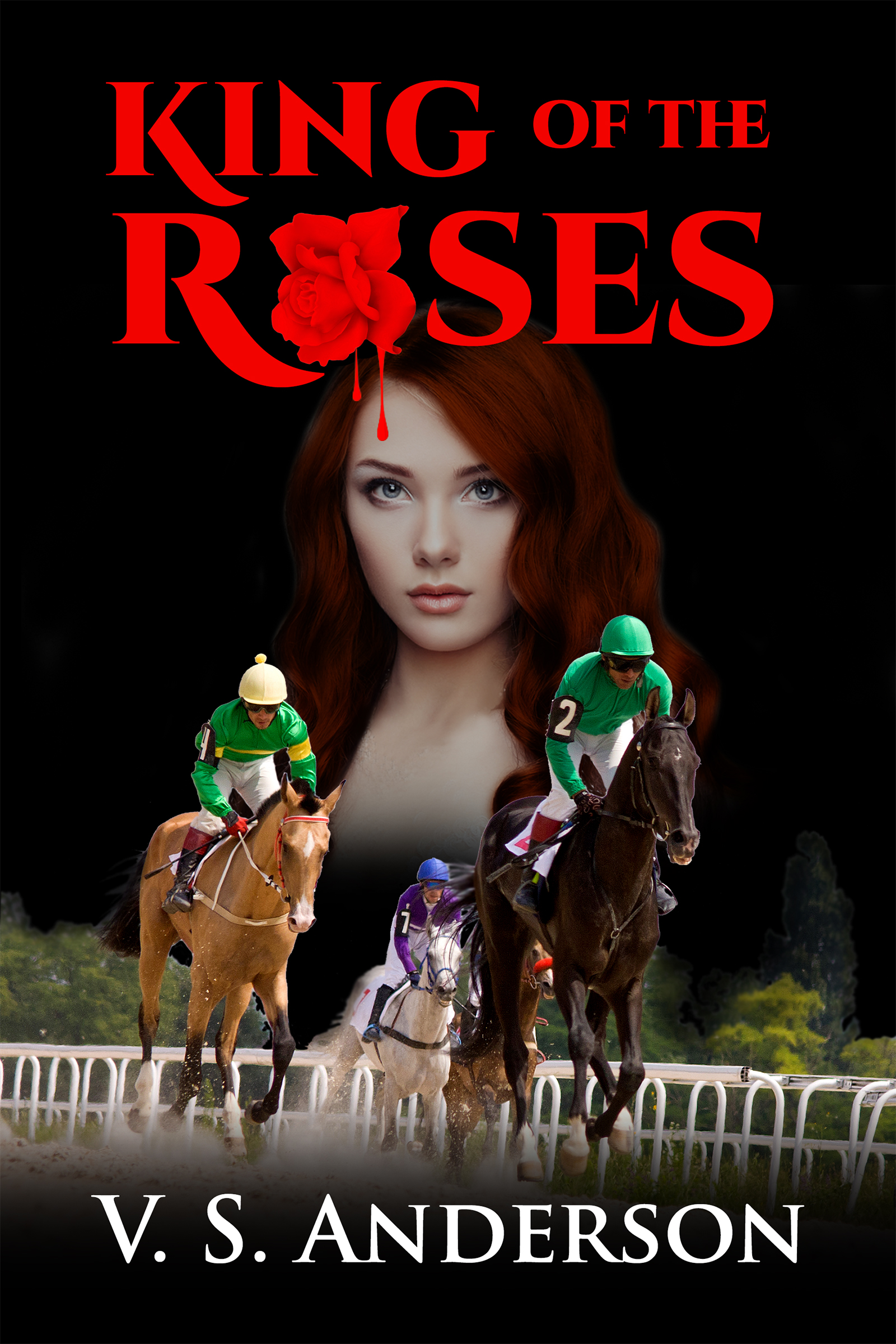
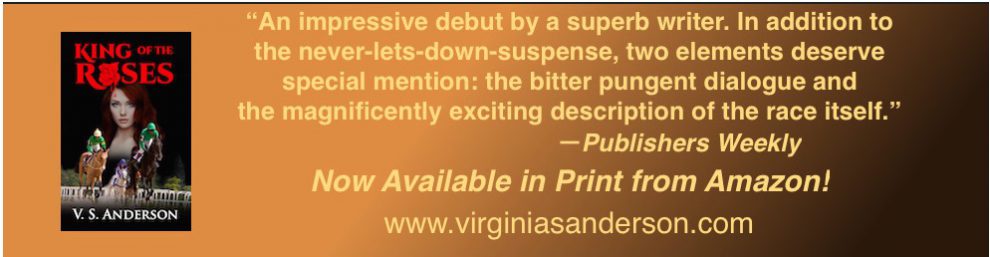
The first episode occurred when King of the Roses was in its pre-agent, pre-St. Martin’s state: stacks of boxes of typed-upon sheets, not quite as imposing as the purported five feet of manuscript that constituted the original draft of Gone with the Wind, but nothing you could tote in a shopping bag, either. I was very young (excuse).

I met this man at the conference my local university regularly hosted (now defunct, sadly—it was a wonderful conference). I don’t recall exactly how we made contact; I must have approached him after his session. I don’t remember exactly how much I paid, but it would have been less than $500. Of him, I can say this: he was conscientious. He did what he said he’d do, in a timely manner. He read the whole book and regularly sent me sections festooned with comments. Recently, in the process of dumping piles upon piles of old rough drafts, I came across the pages he had edited. I set them in the “save even though you know better” stack, to look back at one day. Did anything he told me help me? Possibly. Good advice, in whatever form, is worth reviewing. It’s so hard to come by.

The bait was his assurance that, once we had chiseled the book into shape, he would put me in touch with the New York editors with whom he had professional relationships. Who wouldn’t spend $500 on that?

What rises to the top, probably flushed out by the memories of what finally happened, are not deep, global insights that would eventually make that book publishable; no, they were idiosyncrasies that left me about where I’d started, still wondering whether my ambitious plot (yeah, they’re all ambitious, more’s the pity) was working and what to do if it wasn’t.

Continue reading

Leave a comment

Filed under Learning to write, looking for literary editors and publishers, Money issues for writers, Myths and Truths for writers, Teaching writing, Writers' conferences, Writers' groups, Writing and teaching writing

Okay, So What Did I Learn about NOT Writing a Failed Novel?

I’ve already written about some of the things I learned: Listen to your characters. Assume that you’ll be the one bailing when the ship starts to sink. Be in a position to pull out (e.g., have a day job) if there’s no hope: you gain nothing by having a bad book to your name. Use the resources available to you if you’re lucky enough to have some: for example, if dangerous channels need to be navigated, let your agents steer; that’s what you’re paying them for. Give editors the benefit of the doubt (just as you should your writing teachers: writing—and figuring out what to tell people about their writing—is HARD).

But here are Nos. 1, 2, and 3:

  1. Get feedback
  2. Get feedback
  3. Get feedback

Of course, that lesson learned begs several questions.

  • Where can you get this magical feedback?
  • Can feedback really make your book work?
  • What is good feedback? How can you recognize it?
  • Should you be a slave to feedback (after all, it is your book)?

One thing at a time.

How to get feedback? I’m offering my experiences, interested in hearing from others. Maybe you’ve been where I have, maybe you’ve been somewhere better. I haven’t yet participated in online groups; when I do (soon), I’ll report on that.

In the meantime, I’ve previously written about face-to-face writing groups, their virtues and limitations—especially for a novelist. It helps to speculate as well that a writing group can get too large. Yesterday ten people instead of the usual six or seven showed up for our regular three-hour session. People voluntarily cut their submissions in half, but we barely had time to nibble around the edges of what we wanted to say. But most cities have multiple writing groups, each with a different culture. I’ll never be without one again.

You can ask your colleagues to read for you: people whose expertise you recognize and whose views you respect—and who like the kind of writing you do and actually read in that genre. Beware: it’s terrifying. Continue reading

1 Comment

Filed under Learning to write, Myths and Truths for writers, Teaching writing, What Not To Do in Writing Novels, Working with literary editors, Writers' groups, Writing and teaching writing