Tag Archives: creative writng

I’m venturing into self-publishing …

I’m venturing into self-publishing ….

From brittneysahin, who reposted it from Nicola Prentis. When you click through Brittney’s site to the full piece (Prentis), BE SURE to follow her link to the Dean Wesley Smith argument for self-publishing over traditional publishing. I’m really rethinking all this. I think we get caught up in the fantasy of that six-figure advance, when the reality is going to be much different. And just having retrieved the rights to my earlier novels from Bantam, I’m appalled at the “Life-of-Copyright” language that Smith says is now standard in contracts. If so, that’s a deal breaker, and it should be for us all.

Leave a comment

Filed under Finding literary agents for writers, Myths and Truths for writers, Self-publishing

How Much “Grammar” Do You Need? Part II

In which I continue to make my case that we may not need as much as we think:

In 1982, the late Joseph M. Williams, then a professor of English and Linguistics at the University of Chicago and author of the book Style: Ten Lessons in Clarity and Grace, played a trick on his academic colleagues in English. In an article in a major journal for writing teachers, he challenged the idea that there were sacred grammar rules that every educated person recognized and blasted when they turned up in other people’s writing.

Torn up draftsHis argument had several parts:

  • There are several categories of “error”: the ones educated English speakers definitely would recognize and avoid, but also those that even the most well-trained among us read right over—even in our own writing!
  • Whether you are likely to see errors that you and other people make depends on why you’re reading: If you’re specifically looking for mistakes, as teachers tend to do when reading student papers, you see them, but if you’re reading for content, you gloss right over them.
  • Most of us are all too likely to accept something as a rule because some supposed authority said so, not because the rule actually matters in communication—or even makes sense!
  • And many supposed rules DON’T make any difference in communication, which is why we read right past them (and I just made one of those errors in this sentence).

To support his claims, Williams looked at rules from many of the “language mavens” of the time, including some revered experts like E. B. White of Strunk & White fame, William Zinsser, author of the perennial classic On Writing Well, and George Orwell, whose essay, “Politics and the English Language,” has been a staple of many an English classroom since it was published in 1946. In each case, Williams shows that these authors broke their own stated rules with apparent abandon.

Particularly delicious is his takedown of Orwell’s rule that we should avoid the passive voice. As Williams illustrates, “Orwell, in the very act of criticising [sic] the passive, not only casts his proscription against it in the passive, but almost all the sentences around it, as well.” What’s interesting to him, Williams says, is not that Orwell made this egregious stylistic “mistake.” What’s interesting is that he and his editors never noticed it! Nor have the legions of English teachers who’ve praised Orwell as an example of good writing for eons. None of these experts have ever noticed that he was wallowing in the very slough of error he told us to avoid. Question marks(I just inserted another one of those mistakes that I would argue we tend to read right past.)

At the end of his article, Williams challenges his readers: In the article, he says, he’s made more than 100 of the kinds of “errors” his colleagues swear they would never commit and never tolerate. How many, he demands to know, did you spot on first reading (no cheating, going back and doing an error hunt)? He filed a marked-up copy with a respected college-writing professional to document that he really played this trick.

His point again: to document that many things we think are wrong are only visible if we’re actively looking for them.

Where does that leave us lowly query writers? Just possibly, our readers (agents and editors) are reading for mistakes. After all, with thousands of queries to slog through, an error is a good excuse to move on to the next letter in the stack.

I agree: Agents and editors reading queries and pages are likely to be much more sensitive to error than many of us are in our casual reading. But here’s the rub: we can’t possibly know which errors he or she will recognize, let alone which ones are likely to kill the deal.

For example:

  • How many passive-voice constructions am I allowed? One? Three? None? Or is she like the woman who once critiqued some pages for me at a conference. She told me to stop using the passive voice so much. Turns out she meant I was overusing the past progressive. (She was right, however, that I was relying on the past progressive too much —as just now?).
  • Or does he care about the difference between “that” and “which”?
  • Or what is her stance on “hopefully”? On split infinitives? On ending sentences with prepositions?
  • Does he want me to say “Everyone ate his or her lunch,” or is he okay with “their”?

Sometimes we just have to make tough judgment calls. I started a sentence with “but” a few lines back. Is she the kind of editor for whom that is forbidden? But what if that capitalized “but” works beautifully to illustrate the contrast and transition I want to make visible? Should I edit my prose to follow a rule that I may not even think is valid, or should I take a chance?Happy editing!

I agree with Williams that there are different levels of error. In the next post I’ll share his categorizations and begin making the case for my own.

In the meantime—ain’t this fun?
8 Comments

Filed under correct grammar for writers of fiction, Editing your novel, grammar rules for writers, Learning to write, Myths and Truths for writers, self editing for fiction writers, Self-publishing, style for writers

How Much “Grammar” Do You Really Need?

Put Your Editing Nightmares to Bed!

Across the online landscape for writers, there’s a lot of anxiety about producing that error-free query, synopsis, or draft. With reason—the first letter in “professional” is “p” for “perfect.” There’s no wiggle room on this one, is there? It’s got to be capital-R Right.Sad Editing!

As someone who taught college writing for 25 years and as a published novelist, I’ve been on the front lines of the effort to spread “good grammar.” The fact is, the whole question of what’s Right is more complicated than you think.

In the next few posts, I’m going to make an argument that we don’t need to obsess quite as much as we do. In fact, there are some “grammar rules” we can even trash!

Yes, You Have to be Able to Edit Your Work. . . .

I’m not for one minute telling you that your command of English syntax and usage is not important. It’s vital. But writers can all too easily get bogged down on trivia and even on myths (“OMG! I ended a sentence with a preposition! :-0”). One common cause of writer’s block is thinking that every comma is radioactive, ready to explode and destroy the known universe if mishandled. So for us writers, a little bit of a reality check is a good thing!

Today’s topic: What is good grammar? Answer: Depends on whom you ask.

(Yep, whom you ask. Why? Because it’s the object of the verb “ask.” Eeek! Relax. Nine times out of ten, “who” would be just fine in that line. Hang around; later I’ll explain why.)

Linguists, people who study how languages work, generally agree on three things: Continue reading

5 Comments

Filed under College writing, correct grammar for writers of fiction, Finding literary agents for writers, grammar rules for writers, Learning to write, looking for literary editors and publishers, Myths and Truths for writers, punctuation for writers of novels, self editing for fiction writers, style for writers, Working with literary editors

A New “Amazon Kindle Direct” Report

Amazon Pricing

After creating considerable confusion earlier about how I could sign up for a 70% royalty rate for my two books, I returned to my site to change my settings to the higher rate. I seem to have succeeded, but not without a further bit of confusion, which I now hope I have clarified.

This time, more intelligently, I queried the support team via the email option, and received a  helpful and timely reply. (One of my hoped-fors for my online ventures: a quick “help” response process.)

Who, exactly, is Amazon.com”?

Here was the problem: When you pick “70%,” you receive a chart showing in which sales territories you will earn 70%. For some (e.g., Brazil, Japan), a small box informs you that in order to earn the higher amount in these countries, you must enroll in Kindle Select, which, you may know, requires you to give Amazon an exclusive for several months. Because I had already uploaded to Smashwords, I couldn’t easlly make this choice, and I’m not sure I would want to.

The confusion for me arose because sales made at “Amazon.com” were shown as paying only the lower rate of 35%. So what sales, specifically, were these? In my idiom, items bought at “Amazon.com” include books bought by U. S. buyers. Did this chart mean that books bought in the U. S. would never earn more than 35% royalty?

Here’s the reply to my query:

“Hello,
You’ll receive 70% royalty for books sold to U.S customers from Amazon.com.
However, customers outside of the U.S. often purchase books on the Amazon.com Kindle store. The books sold to customers outside of the applicable sales territories will be calculated at 35% royalty rate.
The 70% Royalty Option is only applicable for sales to customers in these sales territories:

[I’ve cropped the long list of the countries in which the 70% option is available.]

*70% Royalty in Brazil, Japan, Mexico, and India: Digital Books enrolled in KDP Select are eligible to earn 70% royalty for sales to customers in these countries as long as the 70% List Price requirements are met. Otherwise, you will earn 35% royalty.
Sales to customers in all other locations will receive a 35% royalty and are recorded separately in your royalty reports at the 35% rate.
For more information, please visit our Help Page:
https://kdp.amazon.com/help?topicId=A30F3VI2TH1FR8
I hope this helps. Thanks for using Amazon KDP. Have a nice day!”

Therefore, it looks as if I was successful in making the change, and as if I’ll earn 70% in most cases.

Questions I had about Logging into Amazon Direct Publishing

I had some difficulty figuring out exactly how to return to my KDP account. When I signed in using the account I had created to associate with the books, I could find no links to my KDP account. The customer-service representatives with whom I initiated a chat for help had no idea what to tell me. Finally they directed me to the “contact us” link for KDP, which is apparently a separate section of Amazon. I know now to log in at kdp.amazon.com/bookshelf, where I then sign in with the email address I created.

I hope this help others easing into the process. I assure you, the Smashwords process was less complex, almost certainly because of the complex royalty and distribution components of Amazon.

Leave a comment

Filed under Amazon Kindle Direct Publishing, Amazon pricing policy, ebooks publishing and selling, Self-publishing, Smashwords, writing novels

Amazon Pricing Confusion Resolved!

Brittneysahin (below) got it right (unless I am misreading again :-))!

Here is the text:

“But if you choose the 70% Royalty Option, you must further set and adjust your List Price so that it is at least 20% below the list price in any sales channel for any physical edition of the Digital Book.”

Obviously the operative word here is “physical” edition. In other words, a book can be priced the SAME as a DIGITAL edition at any other sales channel. The 20% reduction is only necessary if you have a print edition (I assume this includes POD editions but that is not clear).

In my defense for missing this word, I was taking in a lot of information at once and was probably not attuned to the idea of a physical versus digital edition, since “physical” versions of my books are out of print. Of course, they’re being sold by used book dealers at all sorts of prices, but presumably this is not relevant since I earn nothing from these used book sales and have no control over them.

If you’re tempted to buy a copy of the old paperbacks for like $0.01, or some such price, let me know and I’ll send you a Smashwords coupon for a cheaper (yes!) edition. Both books have been revised, Blood Lies a fair amount.

Thanks so much to Brittneysahin and others for input on this. If anyone gets any new information via direct communication with Amazon, thanks in advance for letting us all know. And I’m going to change my royalty rate to 70%.

4 Comments

Filed under Amazon Kindle Direct Publishing, Amazon pricing policy, ebooks publishing and selling, Money issues for writers, Self-publishing, Smashwords, V. S. Anderson, Virginia S. Anderson, writing novels

Creative Nonfiction Conference

Check out this conference if you write creative nonfiction of any sort:

Hippocamp15 bannerAugust 7-9, Lancaster, PA.

Leave a comment

Filed under Writers' conferences

Off to Upload to Amazon Kindle Direct Publishing

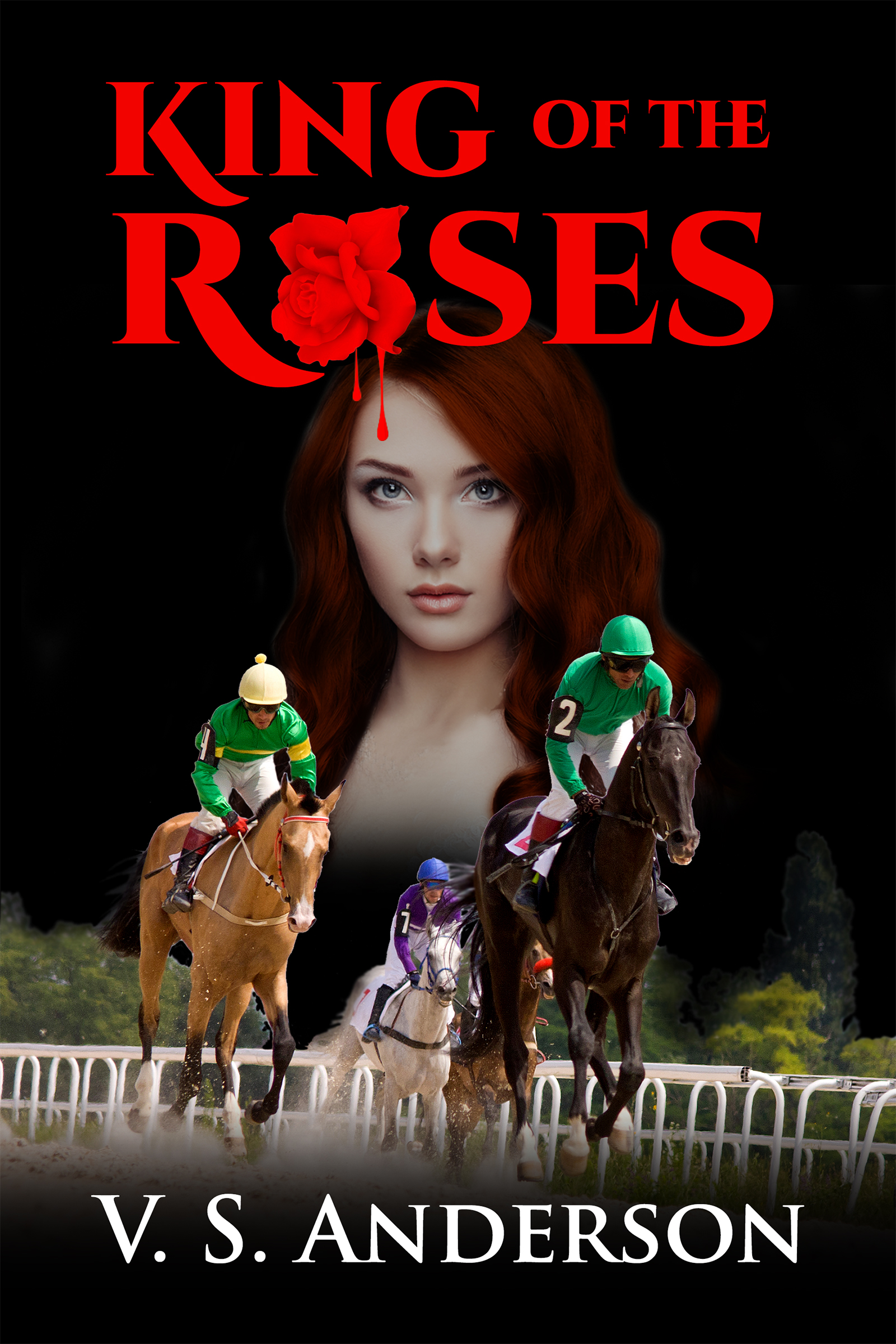
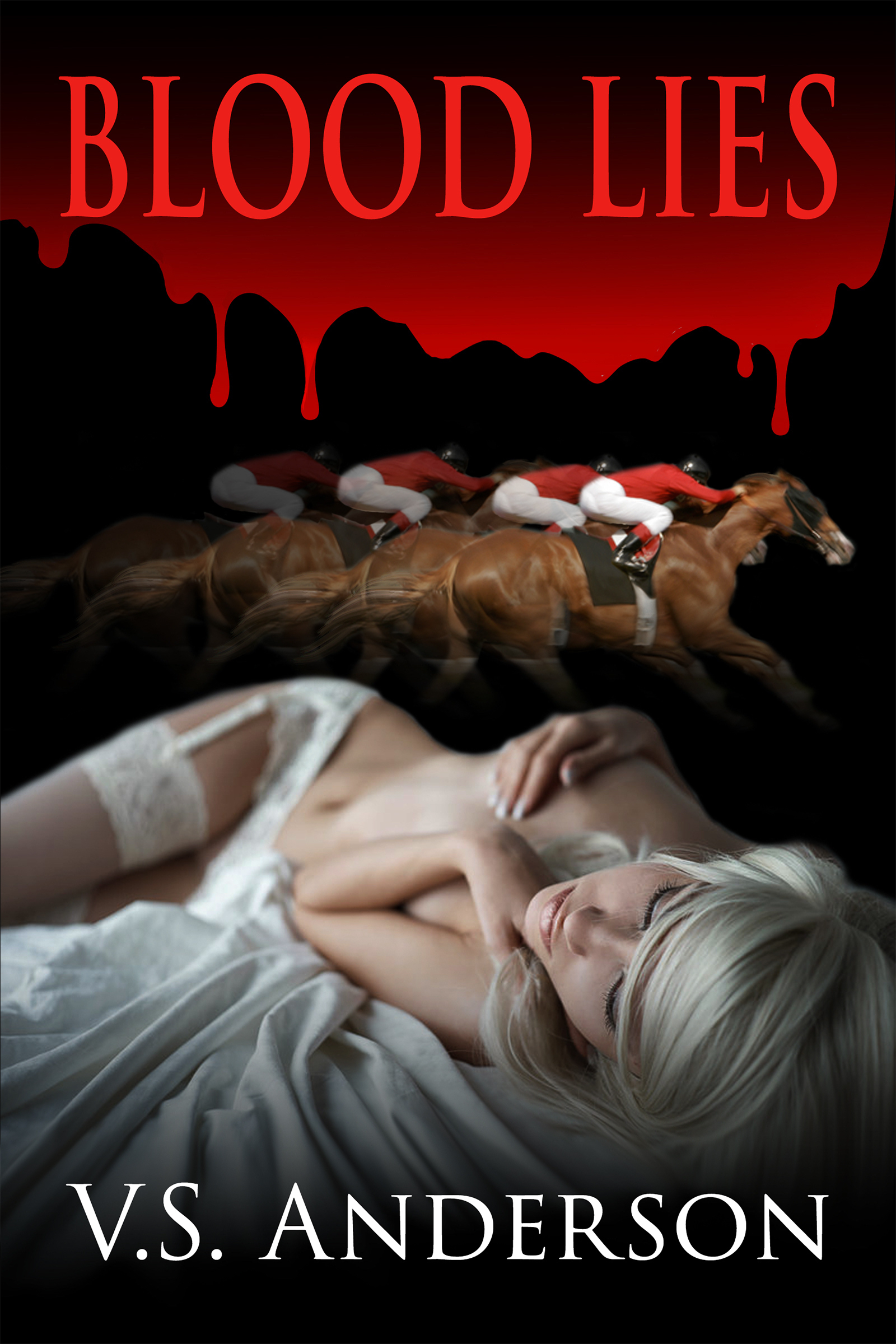
SELF-PUBLISHED BOOK LAUNCH DAY at Smashwords! And the day I bite the bullet and upload to Amazon! So far it looks a lot more complex than uploading to Smashwords. If any of you have been through this process and have any advice for me, please let me hear from you! In the next day or two, I’ll report back on my own experiences. King of the Roses coverIn the meantime, you can now order the books at Smashwords.com in addition to ordering them through any of your favorite ebook retailers, including Barnes and Noble and iBooks. Blood Lies coverLet me know if you run into problems. I may not be able to help, but I will try! Also later today I will post some direct links on my web site, www.virginiasanderson.com.

Leave a comment

Filed under Amazon Kindle Direct Publishing, Blood Lies, ebooks publishing and selling, King of the Roses, Self-publishing, Smashwords, V. S. Anderson, Virginia S. Anderson, writing novels

How I Got More Reviews On My Self-Published Book | BookDaily #AuthorTips

I came across this just now and thought I would share it with anyone who is interested. As soon as my books are officially released, I’m going to follow this practical tip. BTW, I Blood Lies coverwelcome (and wish for) reviews of King of the Roses and Blood Lies! KOTR_F300They’ll be up at Amazon soon.

Leave a comment

Filed under ebooks publishing and selling, Free Books, Reviews, Self-publishing, V. S. Anderson, writing novels

Charles Suddeth’s new novel!

I want to give a shout-out to my Green River Writers colleague Chuck Suddeth for the publication of his novel, The Eighth Mask, with Library Tales Publishing. We’ve been through lots of words together over the years at GRW meetings. To learn more, visit Chuck’s website, http://ctsuddeth.com/.

Leave a comment

Filed under Green River Writers, Writers' groups, writing novels

Speaking of Punctuation. . . .

Cormac McCarthy has a different take on things like commas. Do you agree with him?

Leave a comment

Filed under Learning to write, punctuation for writers of novels, style for writers, Writing and teaching writing