
Via Chris the Story Reading Ape, this post by M. L. Davis at Uninspired Writers provides another template for tackling that hateful beast, the synopsis. We can never have enough weapons in this struggle, IMHO. Let me know if you try this!
Via Chris the Story Reading Ape, this post by M. L. Davis at Uninspired Writers provides another template for tackling that hateful beast, the synopsis. We can never have enough weapons in this struggle, IMHO. Let me know if you try this!

Are You Being Scammed?
Victoria Strauss is a gem. She does our research for us. What’s especially useful about this post is that she not only reviews specific scammers but also lists some specific clues that an author is being scammed. If you’ve been approached by a “company” that is just dying to publish your book—Beware!
150 year old open Bible with copyspace
I’m not a Young Adult author, but I found this piece from the New York Times intriguing. What do you think? Is “religion” as a central topic actually taboo (outside of the Christian publishing world, I guess)? Have you read or written mainstream Y.A. books that seem to address religion in the sense that the author seems to mean—and I’m not sure I understand exactly what she means.
Again, what do you think?
Filed under genres for writers, writing novels

I came across this post via Chris the Story Reading Ape (a crucial source for publishing tips and news). Steven Spatz, president of BookBaby.com, a book packager for independent publishers, lays out “Six Myths (and a Few Facts) about Traditional Publishing.”
Just to be clear, “traditional publishing” means having your book produced by an established, for-profit publishing company that will pay you an advance, provide you with an editor and a publicity department, physically manufacture your book—including the cover and format—and, ideally, get it to sell.
In contrast, independent or self-publishing means writing a book and getting it edited, producing a formatted copy with a cover, uploading it as an ebook to an ebook vendor like Amazon or Smashwords or as a “real” book like a paperback or hardcover to a company that “packages” it for you and that may supply some editing, cover production, and marketing, depending on what you pay for.
Whew.
When I contemplated this post, I didn’t know those definitions could be so hard.
Bottom line: A traditional publisher PAYS YOU and does it all (or much of it) for you. As an indie publisher, you either do it all yourself, possibly for free, or pay for certain services you don’t feel you can do well.

With that out of the way, the very first comment on Mr. Spatz’s article pointed out that BookBaby specialized in packaging books for “indie publishing,” and is therefore biased against traditional publishing.
Okay, Spatz may be biased. But as I read, I found myself saying, yeah, yeah, that’s exactly what I found out during my all-too-brief existence as a traditionally published author. Spatz’s observations, in my view, offer a useful “wait-a-minute!” that prospective authors need before they decide how they want to enter the publishing melee.
Note that the experiences I cite here are grounded in my own career: I was traditionally published by three MAJOR houses, St. Martin’s, Bantam/Doubleday, and New American Library. Today’s traditional publishing field is surely more competitive, not less, than in those glory days.
So, with eternal gratitude to Victoria Strauss, read these thoughts as a version of Writer Beware.
This was my first devastating revelation. And my mother’s. We’d walk into a bookstore and she’d gesture at the extravagant front-door displays and demand, “Why don’t they put your books out here?”
Because, I learned, shelf space is a precious, much fought-over commodity. In order to be provided so much as a sliver of space the width of a spine, my books had to have a mega advertising budget behind them. Mega. I had to be Paris Hilton. Or Michelle Obama. Or . . . you know who I mean.
My mass-market paperbacks (these still do exist) did get rack space in drugstores. For about a month.
I can now get my books into independent bookstores by carrying them there and asking for shelf space while presenting a reason why I deserve it. This was as true before indie publishing as it is now. Only it never occurred to me. I didn’t know that was part of my job.
This hope meant almost zilch thirty-five years ago. I can’t imagine it means more now.
No one told me that I really needed to get out there and market. They told me, write the next book. At least now they’re honest about this.
Marketing is the hardest thing asked of authors who really would rather be writing the next book (well, hardest after writing the synopsis). Only some of us have marketing in our blood. I found that my houses had standard “marketing” practices that gave the books a chance to take off but didn’t do anything out of the way to grow them wings. A smart author (I was not) would have noticed all the other things that could have been done, and would have done them.
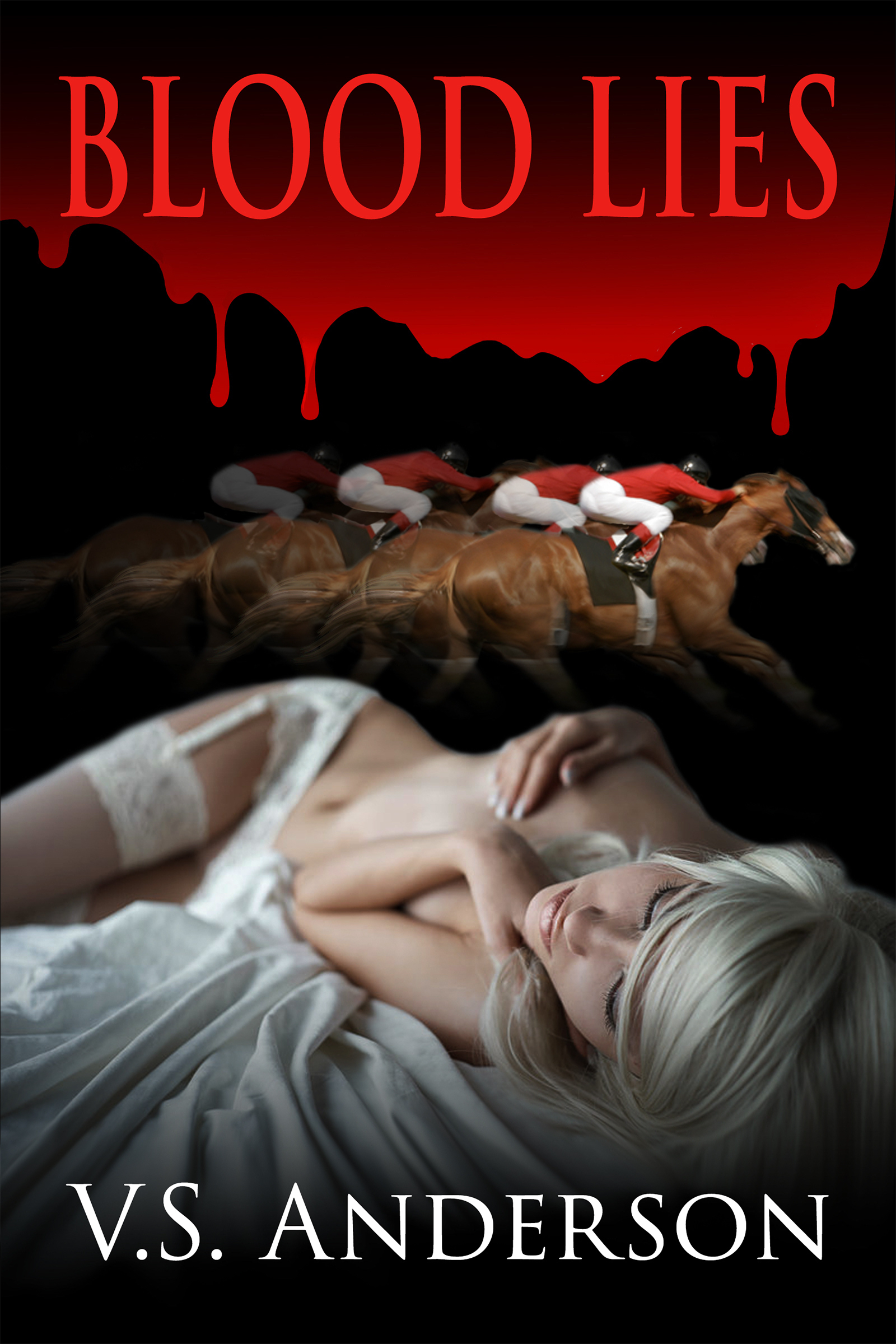
I did do something. For King of the Roses, they asked me for a list of horse-racing celebrities who would endorse the book. I compiled such a list. They wanted to know who on that list I knew whom I could personally ask. Um, no one.
I said, since this book is about the Kentucky Derby, why not run an ad in the Daily Racing Form on Derby Day? Not cost-effective, they said. So I paid for it. Myself. They may have been right. In those days, you couldn’t track clicks to see who responded to what ad.
What a traditional house can do is send your book out to reviewers. They have lists of people who will possibly read your book and write it up in a highly visible place. Much more effective than begging for reader reviews. If the right reviewer—say, at the New York Times—takes a shine to your cover or back-of-book copy, you might really end up on Oprah! (No way of knowing what my brief mention in the prestigious Atlantic Monthly meant to my sales.)

No.
Your career with a traditional publisher will last only as long as you write a) what the publisher thinks will sell; or b) what actually does sell. You want a career in a traditional house, YOU better make sure what you write sells. See Myth 3.
And if what you wrote the first time around doesn’t sell well above average, second chances are hard to come by. More than once agents I’ve approached want sales figures from my previous books. At the very least, they want my platform. How many famous people do I know who will endorse my book?
It takes only one “disappointing” book to end this kind of career. I know.
That doesn’t mean there aren’t ways back into the fold. But they are at least as hard as that first foray, when you stood a chance of being a “discovery” that sent the sales team into raptures. I was there. I know.
**It will take at least a year and probably longer for your traditionally published book to make it into print.
**You have to fight for control over your metadata and cover. If you don’t like cover or the back-cover copy or the book description, you have to assert yourself. I was able to protest the inner jacket flap copy for one of my books and rewrite it. But it was when I saw the back-cover copy of that book that I knew the book was doomed. No blurbs quoting the excellent reviews for my first two books, both in paperback from Bantam. Instead, just an excerpt from the book.
Decent writing, I guess, albeit arguably overwritten. Of course, in Bantam’s defense, in those days, no one could order a mass-market paperback once it was out of print.
**And if your traditionally published book does make it onto bookstore shelves, it will run out its welcome fast. Once it’s last month’s sensation, it’s gone. Maybe you’ll get a paperback deal that may hang onto shelf space in row 6 a little longer. But it if doesn’t sell, bookstores will pull it for this month’s New Thing. People will buy your book from Half-Priced Books or from third-party sellers on Amazon, and you won’t make a cent.

My editor at St. Martin’s was superb, my editor at Bantam horrible, and my editor at NAL nice but not inspirational. (They are all long gone, so don’t ask.) I learned that, in the end, I alone was responsible for the words that got published under my name.
I regularly depressed people at writing conferences by sharing these experiences.
If I’ve depressed you, at least you are forewarned.
If this sounds as if I am biased in favor of self-publishing, well, to a certain extent yes. I would like to be traditionally published again because a “published” book, however doomed in the market, would give me credentials for speaking and guest-posting. I would also like reviews. And my feeble, newbie marketing efforts are unlikely to earn me what I would make from even the most anemic advance.
What I do like about self-publishing is that my prospects are limited only by my energy and creativity. There is no shelf-life for my books. I can try new marketing techniques indefinitely without knowing that next week, or the week after, my books will show up on that pile labeled “remaindered.” I can even revise and republish. I can be a completely new author, in a completely new genre, as fast as I can write.

If you want to submit traditionally, haul out all those grammar books and all those tomes on how to structure a story. Editors and agents do gatekeep based on how much work you’re going to mean for them versus how much you can earn for them. A badly edited, unstructured book means more work for them. A great idea can die because it looks as if it will take too much time to slap into shape. Make their job as easy as you can.
If you want to self-publish, do your due diligence. Book packagers (that includes Kindle Direct Print and Ingram as well as BookBaby, Lulu, etc.) vary widely in quality and cost. Make sure you understand how the self-publishing universe works (it’s all out there online) and don’t pay for anything you can do yourself. You can publish your ebook in an hour at Smashwords or Amazon for free. Your paperback may take a little longer, but you can do it. Don’t pay for anything you can do yourself.
I’ve included a chapter on ISBNs in my little book on formatting your paperback interior with Adobe InDesign (soon to be republished in an updated version), but this post from AuthorImprints is extremely clear, concise, and helpful. It explains in detail why you need an ISBN for your paperback, but may not want to accept the Kindle Direct Publishing free ISBN. According to the author, David Wogahn, Amazon is using the migration to KDP Print to persuade writers to accept the free ISBN. As his article makes clear, that is a fraught decision we all need to make with our eyes open.

You CAN format your book!

This article by guest poster Romi Summer on Jami Gold’s site is one of the clearest synopsis-writing templates I’ve seen yet (thanks again to Chris the Story Reading Ape!). I especially like that it’s a primer on story structure as well. I don’t care if you do write Literary Stuff—if you don’t have these elements, you don’t have a story.
 Courtesy of Indies Unlimited, Melinda Clayton shares her experiences with the changeover from CreateSpace to KDP Print. Straightforward tips that you may find useful. I’m going to tackle this soon. Read the comments; they are helpful as well.

Yet again, on a Facebook page for writers of fiction, someone asked about a clear vanity press scam. Page members quickly jumped in with the appropriate answer for such a query: RUN!
But what amazes me is that I see so many of these kinds of questions. I’m not a particularly patient soul myself, so I had to throttle my immediate response: Don’t you have a computer? Don’t you know how to Google? Shouldn’t basic research be the first step for someone thinking about publishing? Doesn’t it occur to folks that in this day and age, How-To is there for the asking? All you have to do is look.
I consider the answer I composed reasonably tactful (for me):
These days, when we all clearly have access to the Internet, it surprises me that people don’t actively search for information on “how to publish a book.” Of course, a search like that will turn up lots of scams and vanity presses, but it will also turn up many useful sites that offer advice. Everyone who is thinking seriously about publishing should be compiling a personal list of the most helpful FREE sites that lay out the ins and outs of today’s publishing options. A search for “best websites for writers” would yield a ton of these. Yes, you will get some conflicting opinions–some people love Amazon, some hate it–but you’ll begin to get the lay of the land. After a while you begin to get a sense of which bloggers know their business and which don’t. In my earlier comment, I listed Jane Friedman and Victoria Strauss (Writer Beware): invaluable. I also recommend The Book Designer (Joel Friedlander). You can buy books by the carload that will walk you through every step; most are cheap enough as ebooks that you can buy more than one and get a wider set of options. Takes a little time, yes, but not nearly as much time as you have devoted to writing your book, and this basic research will save you many hours by helping you make the best choice for you. Chris the Story Reading Ape also offers regular links to excellent advice. I found these people by Googling, attending conferences, and searching Amazon. Don’t put less energy into this than you would in buying a car!
Okay, I get it that posting questions to Facebook groups is a step in this process. But Facebook friends can’t offer the kind of education we writers need. Learning about style and grammar and showing-not-telling are basic skills, but so are the fundamentals of the business you are thinking of entering. For example, one respondent said she couldn’t afford to self-publish! Facebook friends can’t possibly slap up a full explanation of why this comment is unfounded. They basically have to say, “Go look it up!”
So that’s what I’m saying: Want to be a writer? Go look it up.
Am I completely off base here?
This article (via that incredible resource, Chris the Story Reading Ape) rings so true for me. I, too, have “lost novels,” one of which actually got published, to my everlasting regret—even with a supposedly top editor! Just goes to show you (me): it’s YOUR book, and you are the one who either makes it work or not. K. M. Weiland’s focus on story—on structure, on having an arc that provides readers with the narrative pull to keep reading: vital. I’ve written and reblogged about that (just some examples), because I learned the hard way. Take her advice to heart.
Do you have a “lost novel”? What did you take away?


Mistakes are unavoidable. To fear them is to fear life itself. To try to eliminate them is to waste life in a futile struggle against reality itself.
I daresay no one has more opportunities to learn these truths than does a writer.
As writers, our lives are a never-ending litany of mistakes. Certainly mine has been full of mistakes—everything from the opening sentences I wrote for this post, thought better of, and replaced—to literally hundreds of thousands of deleted words I’ve carefully saved from all my rough drafts—to entire story ideas (representing hundreds of hours of dedicated, hopeful work) that have proven themselves unsalvageable and earned a dusty place in a back corner of a closet shelf.
I won’t say I don’t regret these mistakes. I do. I regret the wasted time and effort. I regret the bereavement of loving and nurturing something that never…
View original post 48 more words
Here’s a terrific follow-up to an earlier post of mine, “Why I Quit Reading Your Book.” The Red Ant hits some specifics that resonate for me. Especially this one, which addresses a problem I’ve seen over and over:
So you have a great plot and good, strong characters (quirky individuals or admirable, real people), and now… nothing keeps happening. The characters chat, hang out, look at the landscape, wait for the curtain to go up so the show can start… how long will you keep the reader waiting?
Folks, something has to happen—fast. Not necessarily a bomb going off, but something. Some really great advice from a conference I attended: Start with conflict, not crisis. Get those characters arguing about a challenge or a problem that’s got to be taken care of. They’ll start talking, and you and your readers (me, at least) will soon be taking sides!
I also echo the points about finding the balance between too much and too little world-building. Exposition and description piled up in the first pages are static. Get people doing things, and let their world settle into place around them.
More great advice in this post. Check it out!
I just came across this post again:
Back then I thought she had nailed it. I still think she does, as do some of the commentators. I agree with Roughseas that it’s more than just Voice; but I also agree with Virginia, there has to be Voice.
Ireland is amazing. (I knew it would be.)
Almost everyone I encounter here is a natural storyteller. So it’s hard to understand, if this comes so natural to people here, how others can struggle to write so it engages the reader.
You write a story the way you would tell it to a crowd of avid listeners.
Those passages that make you blush? Strike them from the manuscript! The parts where your audience starts yawning and looking around? You know you’ve lost them, you need to intensify the writing. Maybe lie…
View original post 1,171 more words

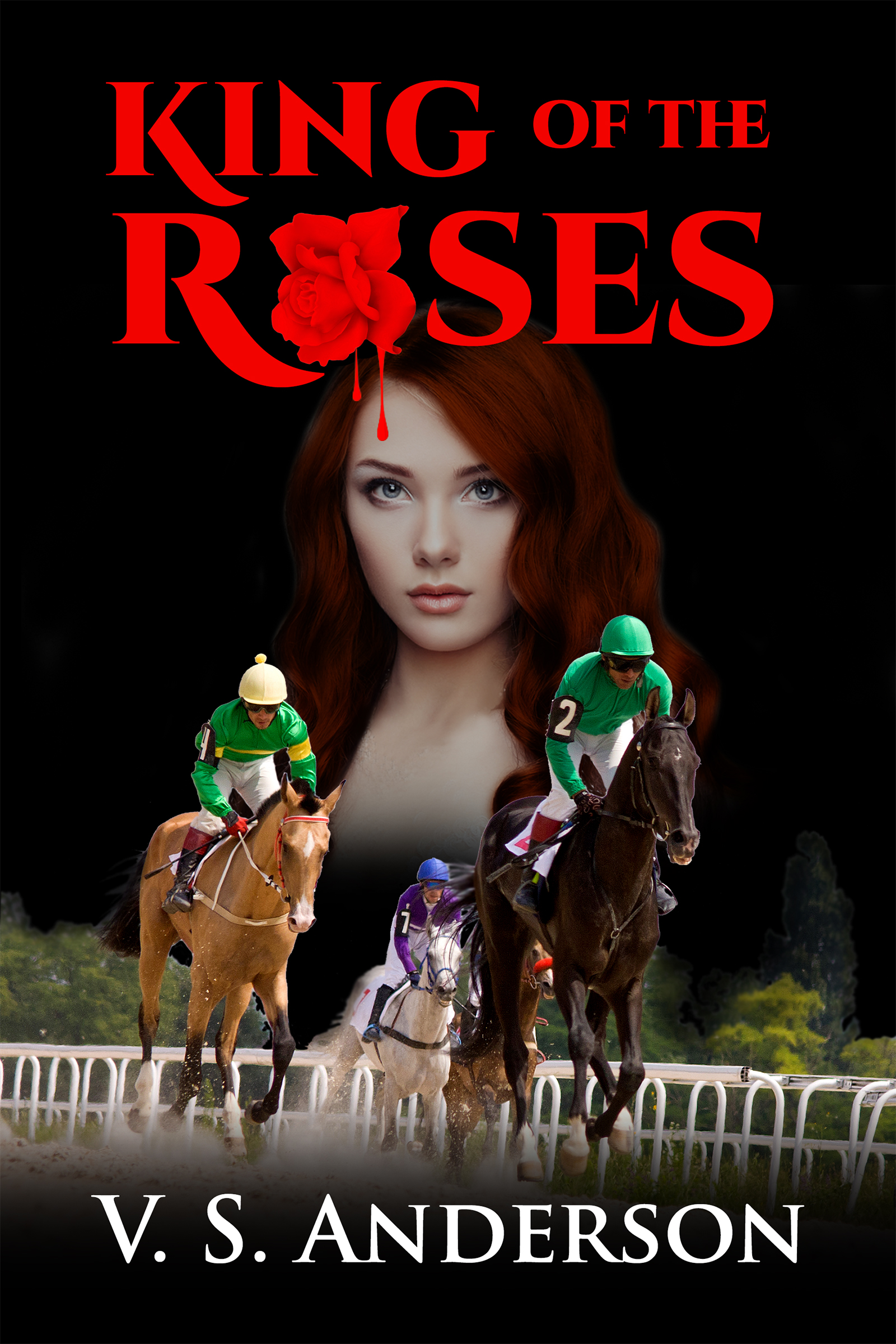
Paddy and his mom!


 Just Can't Help Writing