I’m back to recount my various publishing trials as I encounter them, and right now they involve battles with website creation. The hair-tearing-out, hate-every-form-of-tech-but-especially-upgrades, you-call-this-support? kind.
This will be a grumpy post, so be forewarned.
I won’t detail every frustration. I actually need to write now and then. But I am curious as to the degree to which I am merely displaying my incompetence, or, alternatively, expressing widespread angst.
Basically, a group that I have recently joined as a volunteer has a website of the thrown-together sort at Squarespace. Thrown-together because in volunteer groups, people do what they can. I had had good luck with WordPress in the past, so I thought a) Squarespace is not easy for beginners in a hurry; b) it’s more expensive than a WordPress premium account; and c) maybe I can recreate the Squarespace site on WordPress and we can switch.
Fail.
When I first discovered WordPress, say around 2015, it was a joy. I built multiple sites, including this one. You picked a simple theme, made your changes, set your static home page, and went to town.
No more. When I began trying to build a simple page in a new site, I found myself in thrown into a train wreck of incomprehensible “blocks” that often didn’t let me enter text or images, that didn’t show me what I thought I had entered, and often didn’t let me make even the most basic changes even though I was able to find a “settings” panel that claimed I could. As for those panels, if you didn’t know exactly how many panels deep to look for a particular setting or on which side of the screen to look—well, happy hunting. Support consisted of screen shots of the documentation I had already found unhelpful. At least I had the sense I was talking to real people—who often gave contradictory advice or advice at odds with the onscreen instruction.
E.g., the mysterious “Post content block” that monopolized every screen. I was told, first, what I’d already read, which told me nothing about how to enter my text and media; then, that I could type into/over the text in the PCB, (not so); and finally that I could simply remove it (HIGHLY forbidden if you try).
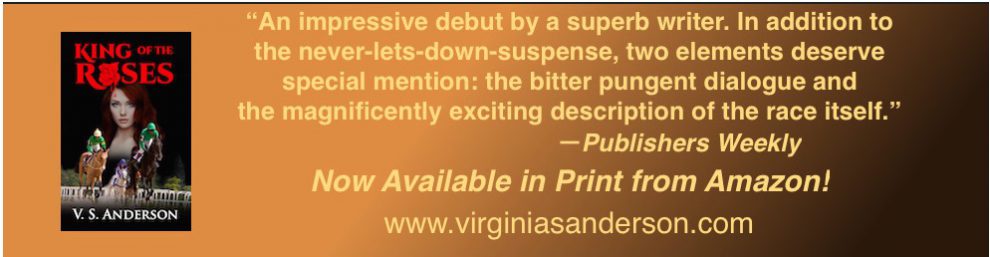
Now, three books, several websites, and multiple YT videos into fighting back, I think I have realized that to return to the WYSIWYG technology I revered in the past, I need a third-party program that will show me what I’m actually doing, and that in successfully revising my website, virginiasanderson.com, I was unknowingly using one.
Suffice it to say that my group has renewed its Squarespace site for the time being; this site is actually simpler than WP, so for now we’ll play with what it can do. I warn WP, though: I will win. I will reclaim the WP I once loved.
Spoiler for a future post: DO NOT TRY TO PUBLISH A WEBSITE IN CANVA. Main reason: No human beings work at Canva. None.
Any advice out there for the WP lovelorn? Share.




 Because I have a lot of articles out there on publishing scams, I get frequent messages from writers who fear they’ve been ensnared by a scammer.
 My father used to tell me it was Winston Churchill who said, “That is something up with which I will not put.” Since then, I’ve seen that line inserted into the mouths of many different luminaries; regardless of who said it, the point is the same. Shoehorning the prepositions “up” and “with” into the middle of a sentence can throw the whole construction out of kilter.
 Way back in the annals of time, language mavens revered mostly by the small class of literati experienced an inferiority complex, believing that for English to grow up, it needed to become more like classical Latin. Well, in Latin and in most languages that are largely based on its rules, “infinitives” consist of one word. In English, which is not a Latin-based “romance” language but rather has roots in what we can most simply think of as Germanic, “infinitives” are created with the word “to” and the root form of the verb. Thus, in French, a romance language, “manger” means “to eat.” You’d have a hard time splitting “manger,” but “to eat” is a completely different animal. So feel free to say “To boldly go,” with the added perk of thus being able to use the same “meter,” iambic pentameter, that Shakespeare used.
 I do notice this mistake because I’m sensitive to the restrictive/nonrestrictive issue, which many people struggle to punctuate properly, often leaving me struggling to figure out where a nonrestrictive phrase ends and the main sentence resumes. But my point is that if your story is sweeping your readers along, this is the kind of mistake most of them will be swept right past. If you use whichever option sounds right in your sentence, you probably won’t spend your valuable creative energy thinking about the choice at all.


 Image licensed from Shutterstock.



 Just Can't Help Writing