Category Archives: Writers’ groups

Indie Writers: Do you WANT two-star reviews?

Recently, as part of my education in self-publishing, I’ve expanded my reading to include indie books about horses, as my own republished novels feature racing backdrops. My selections have mostly been prompted by mentions in Goodreads groups and the “customers also bought” list at Amazon.

In the past, I’ve tended to stick with books off “year’s best” lists, like those at NPR or the New York Times, so this new reading has taken me into new territory. It has also led me to do a lot of thinking about what works for me and what doesn’t—and whether I’m managing to purge my own writing of a pile of sins.

And it has created a dilemma I’ve read that others face: whether or not to review a book when I can’t give it at least a three-star rating.

As a teacher, I’ve seen enough students’ faces fall to know what a strong critique can do to the kind of relationships I’ve been enjoying through social media, even when the comments are intended in the most constructive of spirits and embedded in the most voluminous praise I can conjure. Do I really want to hurt people whose conversations I’ve enjoyed? And as the recipient of more than one one-star review (in places that, sadly, mattered to a budding career), I know how it feels.

But as I read this new-to-me category of book, I found myself thinking about what’s potentially lost when readers hold back from honest, thoughtful reviews because they’re negative. And I began to wonder:

Do authors of indie books WANT to know what turns readers off?

Should they?

I’ve increasingly subscribed to the view that we don’t know what we’ve written until a reader tells us. We’re too close to our work. Even if we know what to do, what not to do, it’s often only when a sharp reader points out the pitfalls we’ve stumbled into that we realize that we’re in them up to our necks.

Of course, we all know that some one- or two-star reviews offer nothing constructive. The reader didn’t like sci-fi, but reviewed a sci-fi novel and gave it one star because of the sci-fi conventions the reviewer hates! I admit that I am less likely to give even well-done category romances more than three stars, because of the predictability of the plots and conventions I find problematic.

But I’ve given five stars to a very good romance, one in which the circumstances of the predictable elements are so unique and intriguing that I forgot I was technically reading a romance.

So would an aspiring indie romance writer want to know what kept her book from rising in my ranks?

True, she’d have to come in knowing that accepting potential one-star reviews does lay the task of sorting the gold from the pique at the author’s door. Personally, I learned from my negative reviews (although I couldn’t help wishing that my editor and I had been a little more in sync so that we could have headed them off). While I didn’t completely rewrite the book in question, when the chance came to revise for self-publication, I did spot things that had flown completely under my radar the first time around. And I got put on notice about my most persistent pitfall as a writer: the tendency to complicate my plots way too much.

The author of a book I’m reading now commits so many of those writerly sins we all hear about so often that I wonder whether I actually might have something useful to say to him/her. Far too many characters; characters whose relationships with each other and the plot, let alone their goals, are unclear; way too much classic “telling”: in short, can a review serve as a mini-beta reading? Or is it better to hold off on that kind of reading until the author asks?

So—one- and two-star reviews:

Should we as readers write them?

Should we as fellow authors risk writing them?

Should we as authors WANT them?

What qualities make a bad review worth the pain?

What do you think?
Leave a comment

Filed under ebooks publishing and selling, Goodreads, indie publishing, Learning to write, Publishing, Reviews, self editing for fiction writers, Self-publishing, What Not To Do in Writing Novels, Writers' groups, Writing, writing novels

3 Lessons, 4 Resolutions from the Indiana Writers’ Workshop, October 24, 2015

Novel!It’s unusual to find a conference that changes the way I think about my novel and about myself as a writer. This one-day conference, less than a day’s drive away, did just that.

The Workshop featured presentations by Brian Klems, online editor for WritersDigest.com. The basic fee covered four all-group presentations by Klems and a “first-page” critique by four agents of randomly selected submissions. Participants could pay extra for ten-minute pitch sessions with up to six agents and for a personal query-letter critique by Chuck Sambuchino, author of a number of books and blogs on writing as well as humor books.

Klems’s presentations covered a huge amount of nuts-and-bolts information most valuable to writers who had not attended many conferences or mined the web for information on the business of writing. The pitch sessions were well-coordinated; all three of the agents I queried were generous listeners. The published schedule did not build in meals or receptions for the social networking that many writers find rewarding.

So what made this conference so productive? Two things: Sambuchino’s critique of my query and the “first-page” session, at which some 20 or so of the first pages submitted were thrown down and stomped upon.

First: Query-Letter Critique

I didn’t receive Sambuchino’s comments until the Thursday night before the conference, and Friday was hectic, so it was evening before I could settle into my motel room to digest the veritable armada of comments he had supplied. Everyone reading this can probably empathize with my stomach-twisting lurch when I realized that the back-of-the-book blurb I had workshopped over and over with multiple audiences was No Good. Basic questions—what is Michael’s wound, his need? What is at stake? How does this event lead to this one?—still loomed. Sambuchino wanted A LOT more information than any back-of-the-book was going to accommodate.

The feeling of utter inadequacy that settled over me produced a complete rewrite. Was that the right strategy? All I know is that when I sat across from agents and talked from the notes they were glad to let me use, not one broke in with a confused frown to tell me I wasn’t making any sense. (Believe me, this has happened.) There’s no experiment that could tell me whether my response to Sambuchino’s comments made the difference. But I do know that when I revise my query letter, the pitch itself will look a lot more like the one I wrote Friday night than the one I have now.

Lesson learned? First let me talk about

First Page Armageddon

Continue reading

2 Comments

Filed under business of writing, Editing your novel, Finding literary agents for writers, Learning to write, looking for literary editors and publishers, Publishing, self editing for fiction writers, Working with literary editors, Writers' conferences, Writers' groups, Writing, writing novels

Note to Self: Four Editing Rules to Follow THIS TIME!

Do you have rules for your own self-editing sessions? Can you suggest some I ought to apply?

Editing a manuscript that I wrote some time ago has actually turned out to be quite a bit of fun. The story’s there, almost solid; now it’s time to make sure nothing in my style, my pacing, my voice, keeps it from getting across. Line-editing this novel is a lot like cleaning out a closet and finding out which of my old treasures really are treasures and which ones are junk.letter scatter novel

And the thing that’s great about cleaning up the text of your novel: it’s not quite as likely as a closet to get cluttered again.

Actually, “self-editing” is a little bit of a misnomer. A lot of what I’m doing as I revisit the manuscript of my long-shelved “Sarah” novel is responding to the comments and suggestions of my wonderful Green River Writers critique group (see here, for example, to learn more about how and why they’re wonderful). But at the same time, coming back to my writing after a hiatus changes the way I see and hear it. Distance makes the heart grow smarter? Or am I just hearing myself through other people’s ears now?

Since those of us who want to be read (and published) need more than anything to know what we sound like outside of the wind cave of our own brilliance, I hope I’ve assimilated the collective wisdom of my writing group, in which people just plain tell me when I’ve made them start checking the number of pages to see how much more of my brilliance they have to take.

Typewriter and flowersHere are four editing moves that give me consummate pleasure. Who would have thought that slashing a big X across half a page or a black line through a sentence could be so fun? Continue reading

3 Comments

Filed under Editing your novel, Learning to write, self editing for fiction writers, Self-publishing, style for writers, What Not To Do in Writing Novels, Writers' groups, Writing, writing novels

Great Post from Writers in the Storm: 7 Mistakes on the Way to a Publishing Contract

Couldn’t reblog this from Colleen M. Story on Writers in the Storm (no button), but I wish I could. It’s a great post that really resonated with me and might with you.

(Can anybody tell me why some WordPress sites have reblog buttons and others don’t? Is thiis a choice the blogger makes? I HATE seeing good posts I can’t share in their entirety.)

In any case, this could so be me! I’m just now trying to decide whether to self-publish my way-outside-the-conventional-genres novel or to go on submitting to agents. I haven’t gone the small press route because I found myself thinking that if I have to do all the marketing, why share the net? But this post makes me realize that I’m probably thinking too short-term. Having a new novel picked up by a press (I published five with big presses before going back to school) would letter scatter novelbe a gateway to new contacts and new opportunities.

Story’s thoughts on feedback also resonated. Having gone the beta-reader route as well as working with my writing group, I’ve decided not to tear up my work unless it’s for someone who has made a commitment to the book, for the very reasons Story states: six reviews, six different ideas as to what just has to be done. In my excellent writing group, I listen for consensus and a good argument that the advice is well-grounded. I often receive the kind of feedback Story praises, the kind that strikes me instinctively as valuable, sometimes pinpointing a problem I knew at heart needed attention but which I hadn’t quite identified.

Check out the post for her seven inspirational messages. They were a call to action for me, and might be for you.

Leave a comment

Filed under Blood Lies, business of writing, Editing your novel, Finding literary agents for writers, Publishing, Self-publishing, Writers' groups, Writing

THE STORY OF GREEN RIVER WRITERS: History of a Successful Writing Group

This is the second post in the story of Green River Writers, a long-lived, successful writers’ group based in Louisville, Kentucky. In my last post, I introduced the president and founder, Mary “Ernie” O’Dell, and shared a little of her writing journey. Today I’m sharing the story of Green River Writers: how it started and why it’s thrived so long.River in Kentucky

First Days

The group was born shortly after Ernie met her second husband, Jim (she calls him her “real husband”).

We were both writers; he was living in North Carolina and I was living in Louisville—and there were no writers in my life except him and a few people that I met at writers’ conferences, so I thought, by golly, I need some other writers. So I called up a few of the people that I knew that wrote, and I said, let’s get together. Jim came up from North Carolina for a four-day weekend at Rough River State Park in Kentucky. We decided to have a real retreat in the summer of that year, 1986, I believe, and we couldn’t find housing cheap enough for all us poor people, so we rented a girls’ dormitory at Campbellsville College in Campbellsville, Kentucky, for a week at $5 a night per room. We changed from Rough River to Green River because the Green River flows right through Campbellsville.

At that time, we had 12 or 15 members. Campbellsville College (University now) was fairly conservative; they frowned upon us having men and women in the same building, much less on the same corridor. I went into the office and said, “I need to make something clear to you. When we come here, we no longer have men and woman, we have writers, and there are times when are up all night, there are times we need to consult with a fellow writer, and we don’t want to have to go down a floor or to a different building, so please put us all on the same corridor,” and they did. But they were watching us carefully. I got called on the carpet because downstairs in the public restroom, someone had left a beer can. I said, “Are we the only people in this building?” and they said, “Well, no,” and I said, “Well, we didn’t do it.” Another time someone went outside to smoke and came back and exhaled smoke into the hallway and they called me on the carpet for that. So I had to be righteously indignant many times while we were there.Eyeglasses and pen

Continue reading

1 Comment

Filed under Green River Writers, Interviews, poetry, Writers' groups, writing contests, writing novels

INTERVIEW: MARY “ERNIE” O’DELL, PRESIDENT OF GREEN RIVER WRITERS—PART ONE

Today: Ernie’s Writing Journey

If, like me, you go through stages in your writing career where you feel isolated and in need of connections with other writers, you may have sought out a writing group–or perhaps even considered starting one. Of course, online resources let us share our writing and collect tips from a plethora of experts. But these tips can be generic, not specific to our needs, and even strong online critique groups can suffer from the limitation of all online “teaching”: the loss of body language and verbal cues and the difficulty of eliciting immediate responses when we have questions about a comment or need follow up.

Recently I’ve read and shared several posts about writing groups, and I’ve written before about my group and how I value it. Some commenters have mentioned joining groups that folded or that didn’t work for them. I realized that my group, Green River Writers, based in Louisville, Kentucky, is an example of a group that has held together for decades. What exactly does make for a successful, long-lived writing group?Book with heart for writers

One important factor in the group’s longevity and success is its founder and president, Mary “Ernie” O’Dell. I cornered Ernie to learn about how the group began and why it has succeeded.

Today’s post introduces Ernie and her journey as a writer—a journey many of us can identify with in some ways.

A little about Ernie

I immediately asked about one thing I’d often puzzled over: where “Ernie” came from.

It comes from Mary Ernestine O’Dell. Dad’s name was Ernest Forbis Houck. I was named after him and his friends called him Ernie, so when I got in junior high, and was asked what my name was, I said Ernie. So that’s where that was born.Stephen King quote

Three of Ernie’s novels have been published by Turquoise Morning Press in Louisville: Cyn, The Sweet Letting Go, and Banger’s People. I asked Ernie about the settings and ideas that fed into her books.

I grew up in West Virginia and the southern and eastern Kentucky region. All the books have the flavor of that region; two of my books involve the West Virginia coal-mining industry: Cyn and the one I’m working on now, which I’m calling “Hope” for the time being. [Hope is one of the main characters, a high-schooler who lives with her older sister Lily and their parents and siblings in a coal-mining town just at the outbreak of World War II.]

Cyn takes place in the neighborhood of little row houses where my daughter became friends with the next door neighbor when they were seven or eight. The opening scene, the little girls in the elderberry bushes getting elderberry stains on their clothes, that was me: I would play in the bushes behind our house with my little cousin and get stains on me and my mother would not like that.

The interesting thing about Cyn was that I wrote in five different points of view. When Sheri McClaren, my mentor, read the first draft, she loved all these characters except the little girl’s father. She needed to know why the child loved him, because she wouldn’t have loved him if he had been her father. So I had to go back and rewrite the little girl’s father, and in doing so I had to figure out where I found him, who he was, and why he was so judgmental and vindictive. I discovered that he was my first husband who was a minister for some years. Then I had to find out why this fictional person would be this negative. I made him the son of an alcoholic and youngest son of three brothers, two of whom were alcoholics; they all made fun of him the time. I had to really deepen his character so he wouldn’t be such a bad guy that no one would care about him.

I wrote The Sweet Letting Go a few years after my second husband (my real husband) died of lung cancer. I was his main caretaker, but I didn’t want to make it autobiographical. I turned the whole thing around to make the female the one with the serious illness with the male as her caregiver.

Books and ladder

Ernie’s Writing Journey

Ernie’s writing career began during her career as an elementary teacher in Louisville. Continue reading

Leave a comment

Filed under Editing your novel, Green River Writers, Interviews, Learning to write, Writers' groups, Writing, Writing and teaching writing, writing novels

Charles Suddeth’s new novel!

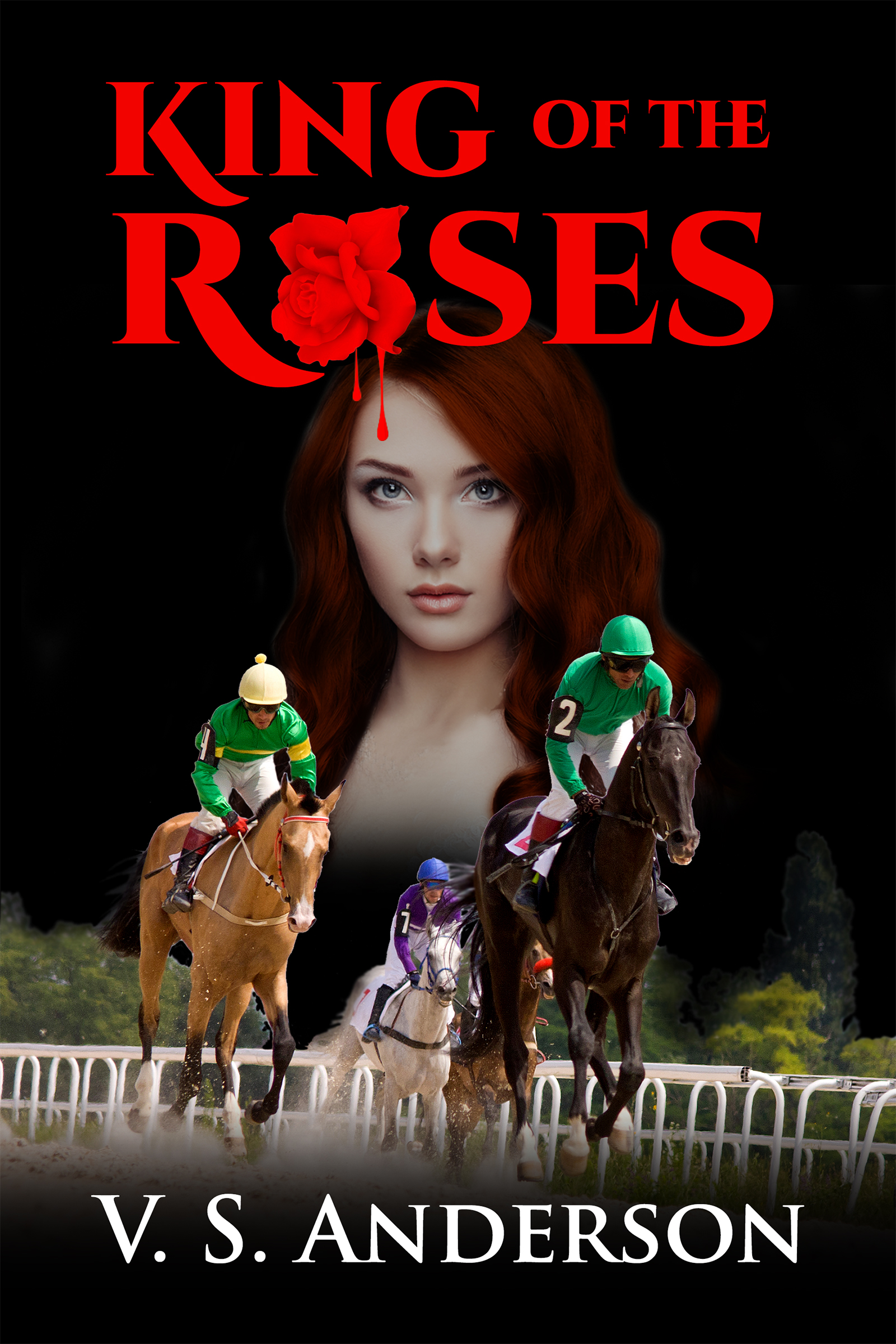
I want to give a shout-out to my Green River Writers colleague Chuck Suddeth for the publication of his novel, The Eighth Mask, with Library Tales Publishing. We’ve been through lots of words together over the years at GRW meetings. To learn more, visit Chuck’s website, http://ctsuddeth.com/.

Leave a comment

Filed under Green River Writers, Writers' groups, writing novels

Contest! Contest! Contest!

Green River Writers 2015 Writing Contest

Green River Writers 2015 Writing Contest. Two Grand Prizes and 14 other categories, including fiction, non-fiction, & poetry. Over $1700 in prizes. Grand prize categories- $3 each entry for GRW members; $5 each entry for non-members. All other categories- $2 each entry or $12 maximum for GRW members; $3 each entry for non-members, but they may join GRW and receive the member rate.  Deadline: August 31, 2015. Details: http://www.greenriverwriters.org/

Will Lavender, the NYT-bestselling author who recently honored us with an interview, will be judging the “Novel First-Chapter” category I’m sponsoring. If you have a novel in progress, enter your first chapter!

BTW, if you’re in the Louisville area, Green River Writers is a wonderful community. I don’t know what I would do without my monthly GRW group!

Leave a comment

Filed under Interviews, Writers' groups, writing contests

The Answer is 42

Having had the benefit of a nice road trip during which I was able to contemplate the issue I’ve been exploring in the last few posts—the virtues or lack thereof of letting learners figure things out for themselves—I’ve arrived at an unexpected conclusion. The answer to the question of whether this is the ideal pedagogical method, for teaching writing or many other things, is—drum roll—42!

No, seriously, the definitive answer is yes and no. Or, put differently, it depends. Or: on one hand, on the other. Or possibly: sometimes.

A quick recap: I’ve always wanted to learn programming. Told that Python was useful and accessible, I bought a $35 book. Within hours, I was just barely resisting the urge to hurl the book at the stupidly blinking computer screen. The author adopted the “throw them in and they’ll teach themselves to swim (or not)” school at its most extreme. He provided readers with code they were to dutifully copy, producing a simple game called “Find the Wumpus.” I copied, I played, I found the Wumpus. But throughout, I had to puzzle out for myself what different commands meant—for that matter, even how to write and run a command, which was one of the numerous things this author assumed I already knew how to do!

I showed this book to a mathematician friend adept at programming. He told me to go to Louisville and throw it off the Big 4 Bridge. “This is completely wrong. The way to teach programming is to provide short bits of code that illustrate specific commands and functions. Get another book.”

I already had, being a Very Smart Girl. I bought two on my Kindle. I perused the first one. Within just a few screens, I knew what operators were, and what some major ones did. I knew what functions were. (I already pretty much knew what variables were.) I knew the difference between a number and a string! (It’s just a matter of punctuation. If it’s inside quote marks, it’s “text” and it’s a “string,” Ain’t that cool?)

And yet.

I learned how to tell the computer to add 2 and 3 and get 5. I learned how to convert the price of an Apple computer into euros using functions. I learned how many spaces I could insert before a decimal.

No doubt there are people out there who need to do these things. Who want to do them. It was unclear to me why I would want to do them.

Here’s the upshot. The Find-the-Wumpus game, maddening though it was, Continue reading

Leave a comment

Filed under College writing, Learning to write, Teaching writing, Writers' groups, Writing and teaching writing

Maybe Just a Tiny Bit More Rant. . . .

And some thoughts on what it means for writing.

Last time, I wrote about the tendency of the author of my beginning Python book (computer programming) to leave out what seemed to me simple yet rather foundational instructions for the beginners he was supposedly addressing, my implication being that he failed to understand his readers’ needs, thus undercutting the effectiveness of his text. I wanted to take the experience of trying to follow his directions toward a discussion of why (in my experience) many writers, including writers of fiction, seem to actively resent being asked to explain themselves to readers.

But I have a new gripe after working through Chapter 2. (I suppose I’ll have to take a vow not to collapse into a rant after every chapter! I do plan to buy another book to supplement this one, so if you were thinking of suggesting that. . . .)

In this chapter he gives you lots of steps. He gives you whole programs to copy into your text editor (characteristically without explaining that it’s in the text editor that you’ll find that rather essential “run” command!).

But along with these whole-cloth programs, does he tell you what you just did, why you did it, and how it worked?

You have probably intuited that no, he does not.

Nor does he define terms as consistently as he would have you believe. “Because the player enters a string instead of a number—” Excuse me. I most certainly entered a number. I assume he doesn’t mean we’re doing some version of string theory here.

He implies—actually more than implies—that he’s operating under the theory that readers will learn best by doing and then by figuring out the “grammar” of this language on their own as they go along. I think he’ll eventually tell me some of the stuff I want so much to know. In the Find-the-Wumpus game he has me coding, in “raw­_input(“>”),” what in the world is that little caret for? In “for i in cave_numbers” when you’re setting up caves that the player can see from a given cave, where did that “i” come from? Is it some arbitrary identifier? I could pick “s” or “m” just as easily? Maybe I should try the substitution and see what happens. But why not tell me instead of just dropping an unexplained item into the program for me to copy? Am I really better off figuring such things out on my own? Continue reading

Leave a comment

Filed under College writing, Learning to write, Teaching writing, Writers' groups, Writing and teaching writing