Category Archives: Writers’ conferences

Writers’ Conference VII: Post-Coda

I promised to report on the fates of my colleagues at the conference I attended a few years ago.

I obviously don’t know all their stories. Emails began to circulate, friendly requests for updates. Not everyone responded. I did not.

Now that I’m contemplating creating (from scratch) a “platform” for the non-fiction book I’m working on (tentatively titled Survive College Writing: What No One Will Tell You about Your First-Year Writing Class), I realize that not becoming part of that somewhat nostalgic network was a missed opportunity. At the time, it seemed clear to me that my job had hustled any real involvement in my personal projects right off the stage. So I withdrew, sat silent, packed away the emotional energy I wanted to invest in writing in hopes it would ferment in its dark corner. I think it has. I get up ready to write every day.

So with regard to the fate of my colleagues at the conference, all I have to go on is that flurry of emails. About ten people took part.

Of those few, up to the last email I received, only one had found a commercial publisher for the book she pitched at the conference. Gail Strickland found a small press (Curiosity Quills Press) that publishes the kind of book she has written and offers her the kind of support she hoped for. Her book, a YA historical fantasy titled Night of Pan can be pre-ordered through her Web site. I’m hoping Gail will give a blog interview about her experiences taking her book through from idea to promotion; if so, I’ll post the date.

The most impressive of the several self-publishing stories is that of one of the attendees who perfected his pitch (not about zombies) and scored a review from Publishers Weekly Select. John J. Kelley’s The Fallen Snow is worth a look–and I especially admire the attention his hard work at promotion has garnered. He’s gotten wonderful reviews! With his permission, I’ve posted his very informative account of the PW Select process here.

Another attendee ended up self-publishing a cookbook based on her expertise at gardening and raising bees. At last account she was still at work on her fiction.

John found the conference helpful in expanding his options for his work. I am still thinking about what I learned, including what I knew before and how the conference changed what I thought I knew. Even so much later (nearly three years), I still have much to process. I think that will take another post.

Leave a comment

Filed under looking for literary editors and publishers, Self-publishing, Working with literary editors, Writers' conferences

Writers’ Conference Saga: Pre-Coda

My abortive meeting with my assigned editor took place on the penultimate afternoon of the conference. The next morning we were to finish up in a group summary meeting with Our Leader.

For some reason I can’t recall, I was eager to meet with him one more time. I made my way to the conference site before daylight in order to be at the front of the line. Along with a woman with whom I had been friendly, I managed to get a slot at the table as we ate breakfast in a crowded coffee shop. What in the world did I want from him at that point? To salvage something from the ruins of my experience (“Is it time travel? Reincarnation? Oh, wait, he must be already dead!”)? To pitch my other book? Who knows.

I do remember that he rewrote my friend’s pitch, ad hoc, in one breath, and that, were I a fan of such topics, I would have found his version immeasurably better. She still had her meeting ahead of her. So she faced the day armed with his words.

I remember as well talking about my other book, my “Sarah” book. He began excitedly weaving a resolution to the deep personal crisis Sarah faces, one that in my formulation would carry her through three books, each with its own sub-crisis and plot. I said, “That sounds like something to consider for the third book.”

“Oh, no,” he responded. “That’s the first book!”

I have already written the first book. I said, “I write my own books, thanks.”

I don’t recall that he took offense at this. Perhaps he secretly did.

Our final meeting consisted of congratulations for all those (most) who had been invited to submit manuscripts to major New York houses. This fortunate group included my friend, who was now supposed to write the book she had been given. I think he generously pretended that I had been given permission to send along my Sarah book. Then he said something I didn’t expect.

“I worry,” he said, “that you’ll all send in your stuff before it’s ready. Don’t do that. Make sure it’s ready.”

My perhaps ungenerous translation: “My business is running these workshops. I have to be able to say that publications come out of them. Most of you have no manuscripts, just ideas. Most of you have never produced anything like a book-length manuscript. You don’t actually know what you’re getting into. Please, some of you, take the time to write something that won’t waste these editors’ time.”

I find myself thinking about several things, remembering this comment. We were apparently selected to attend, to have the chance to meet with REAL EDITORS, on the basis of a one-page synopsis and a bio. Such application materials gave us the chance to make a preliminary pitch and gave the conference planners a chance to verify that we could actually construct reasonable English prose. But I wonder: is that enough? Are you really ready to write a book if you can sell an idea?

I have learned enough about my writing process to know, that for me, the answer is an emphatic NO. For me, there is nothing so demoralizing as knowing that the book isn’t working but that I must deliver. Write a draft. Share the draft with a conscientious critique group. Yes, it takes more time, with no more guarantees of eventual attention from an agent or publisher than if I had simply mailed off the first chapter and a treatment. But it makes the process rewarding. I can write a book that has a chance of working. Not being a genius, and not having a formula, for me, that is feat enough.

Leave a comment

Filed under Learning to write, Myths and Truths for writers, Writers' conferences

Paying for It: Story II

Okay, let’s get the rant out of the way so we can move on to practical applications.

Like applying due diligence, perhaps?

It’s embarrassing because my second attempt to purchase good feedback was as much of a foreordained conclusion as the first.

I found this fellow in my search for likely looking conferences and workshops. I don’t actually remember his name. I do have the material he finally sent me (see below), but it supplies only a first name. Perhaps that’s just as well.

The workshop was small, private, held on a major university campus, where I was able to acquire a dorm room. The apparent imprimatur of the university disarmed me. And the workshop itself, me and a couple of other people, working with this genial individual with a bucketful of droppable names, was stimulating, full of good exercises, with some useful discussion of our projects. I was beguiled.

I had two efforts underway. I had decided to rewrite my failed novel. And I had a terrific premise that I had turned into a very rough draft of a screenplay. For $450, this person was to advise me on the screenplay. Then he would partner with me to edit my novel, parts of which I had shared at the workshop. (He did not warn me, as a conference panelist was to do soon thereafter, that revising that novel in hopes some editor would take on a chance on republishing a better version of it was pointless: “If it didn’t sell the first time, why would they think it might sell now?”).

In any case, off he went with my $450.

I waited six months.

I emailed him a couple of times, only to be assured my critique was on the way.

We’re used to this from agents. But I had paid.

I finally wrote and asked that he either send my critique or give my money back.

Bad move? I honestly don’t know. It triggered two things. I got my critique. I also got an email, since lost (as an act of psychological self-defense?), that I remember as a bruising, sarcastic excoriation that I would dare to make such an unprofessional, harassing request.

I’ve fished out the critique. Nine pages. Up to about the midpoint of the script, very detailed discussion of problems interspersed with often-specific praise, focusing largely on the nuances of scriptwriting versus writing prose, help I desperately needed as I was a complete beginner at scripts. Rich as well with the kinds of global comments I also desperately needed to hear: What is the story question? It’s hard to know what this character needs or wants. Too many characters playing redundant roles. Some logical missteps, obvious when pointed out. But at midpoint, I’m told, the story veers so far off course that it doesn’t warrant further comment (“organizing deck chairs on the Titanic”). But then: “Tremendous potential. The ending is emotionally arresting and disturbing, the eoncept is unique.” And finally, a cryptic “Well done.”

Of course, now I couldn’t do what I most wanted: arrange a (paid) follow up meeting to nail down my understanding of the technical advice and to talk through how to make the shift of direction in Act II organic and supportive of my larger hope for the story.

I see now that I could have learned from this man. But, struggling under the devastating collapse of relations (by my doing? by his?), I did a further unprofessional thing. I simply set it all aside. I could persuade myself not to trust it. Did his anger at me color his response to the story? Did he really read past page 55? In the end I gave up on the screenplay, turning the premise into a novel. (And rereading that long-ago critique, I am glad for the reminder to ask that crucial question that I’ve heard myself ask others in our writing group: Do we know what this character wants and needs? Now that I’m back to writing, time to double-check, make sure.)

But the more immediate question is whether I could have prevented these two disasters (begging the question, of course, as to whether they really were disasters). The first one, possibly, by not wanting so badly to be misled. The second one, surely. Preditors and Editors existed then; a quick trip to http://pred-ed.com/general.ht?t1 would have given me the basic advice I should have followed, to wit: a) get a written contract specifying what was to be done and when; b) start small and see how it works out.

In short, good advice is worth paying for, but with much greater caution than I exercised.


Leave a comment

Filed under Learning to write, Money issues for writers, Writers' conferences, Writers' groups, Writing and teaching writing

Paying for It: Story I

For “book doctor” services, I mean.

I apologize for this long post. This story turned out to take a long time to tell. I apologize as well for what may be my most carping posts, as I have disastrous encounters to report. So you may want to wait for a sunnier discussion. On the other hand, yet again, you may find my mistakes instructive—even though they do tend to fall into the category of “what was she thinking?” if I do say so myself.

At least in each case I wasn’t out more money than I could afford at the time. And I did go into each with the attitude that the money was all I really had to lose.

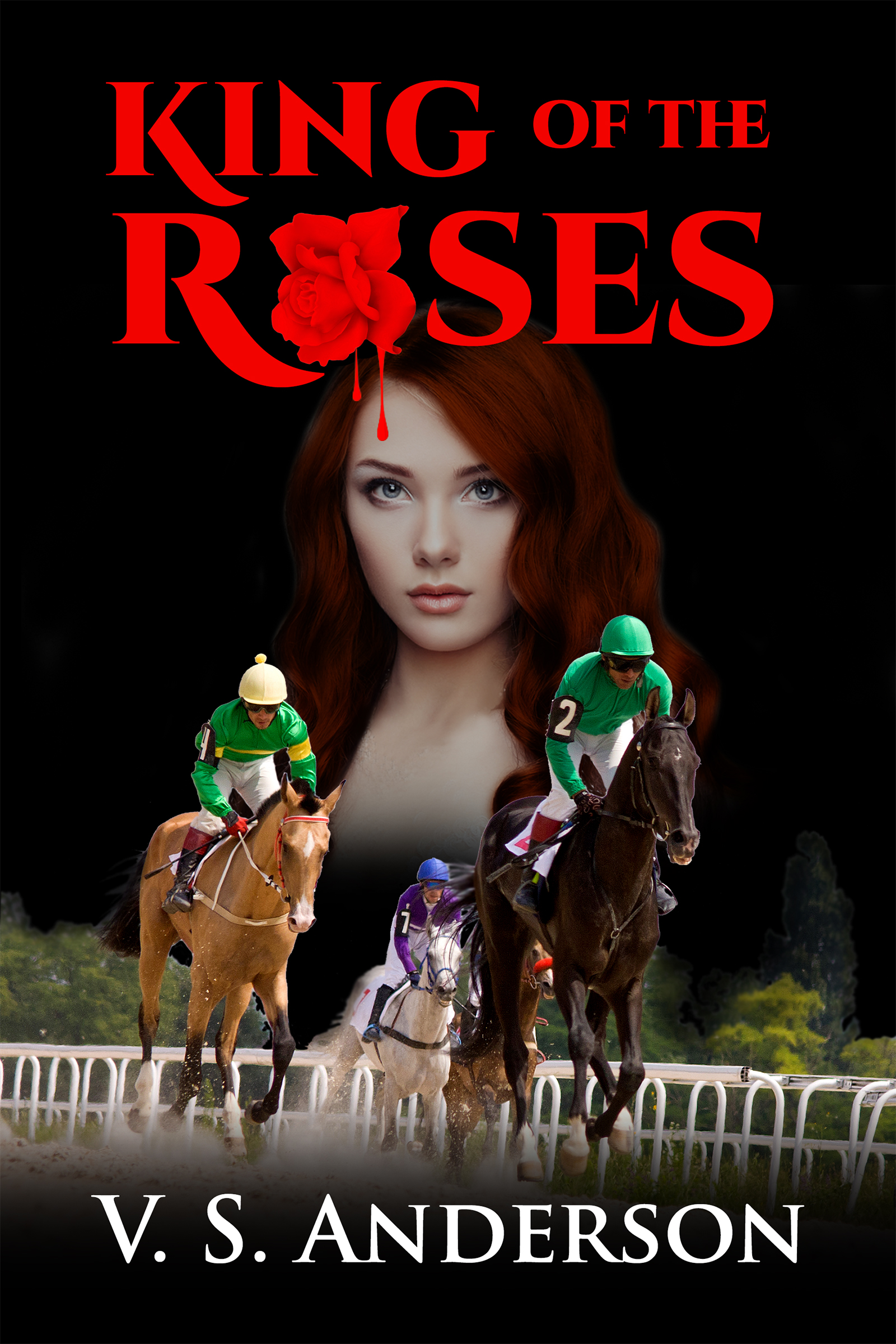
The first episode occurred when King of the Roses was in its pre-agent, pre-St. Martin’s state: stacks of boxes of typed-upon sheets, not quite as imposing as the purported five feet of manuscript that constituted the original draft of Gone with the Wind, but nothing you could tote in a shopping bag, either. I was very young (excuse).

I met this man at the conference my local university regularly hosted (now defunct, sadly—it was a wonderful conference). I don’t recall exactly how we made contact; I must have approached him after his session. I don’t remember exactly how much I paid, but it would have been less than $500. Of him, I can say this: he was conscientious. He did what he said he’d do, in a timely manner. He read the whole book and regularly sent me sections festooned with comments. Recently, in the process of dumping piles upon piles of old rough drafts, I came across the pages he had edited. I set them in the “save even though you know better” stack, to look back at one day. Did anything he told me help me? Possibly. Good advice, in whatever form, is worth reviewing. It’s so hard to come by.

The bait was his assurance that, once we had chiseled the book into shape, he would put me in touch with the New York editors with whom he had professional relationships. Who wouldn’t spend $500 on that?

What rises to the top, probably flushed out by the memories of what finally happened, are not deep, global insights that would eventually make that book publishable; no, they were idiosyncrasies that left me about where I’d started, still wondering whether my ambitious plot (yeah, they’re all ambitious, more’s the pity) was working and what to do if it wasn’t.

Continue reading

Leave a comment

Filed under Learning to write, looking for literary editors and publishers, Money issues for writers, Myths and Truths for writers, Teaching writing, Writers' conferences, Writers' groups, Writing and teaching writing

The Next Thing I Learned

They don’t promote your book.

Nowadays, that seems like the kind of thing I should have known. With as much information as is available online, I assume everyone now knows that publishers no longer do any serious promotion unless you’re a celebrity. But I was truly naive.

Of course, they hadn’t paid me very much and didn’t have much to try to recover. In fact, they sold my book to their affiliate in England and made back the advance instantly. Moral: make them give you a couple of million in advance money, and then they’ll worry about getting it back.

They asked me for lists of famous people I knew who would read my book and write blurbs for it. I gave them lists of famous people, but I didn’t know any of them. They did send the book out for review. The reviews were extremely strong. They got it into some libraries. But that was the extent of it on their end. Maybe there were efforts I never heard about or saw.

I contacted local bookstores and got the book on the shelf in a couple of them. But I learned about bookstores. Your book–my book–wasn’t going to appear in Barnes & Noble or Borders or any of the bookstores then extant unless it had $$$$ behind it in advertising. Since it was a hardback (and they never sold the paperback), it didn’t appear on any drugstore shelves. I was advised to make the rounds of all the bookstores and find out who the book reps were and make friends with them and sell them on my book, so they would push it to the independent bookstores.

This is all so far away from the kind of person I was (still am) comfortable being that my efforts in this direction fell way short of a lick, let alone a promise. Self-promotion has never been easy for me. It’s why I can’t really pitch well. Besides, I was still working, making about 8K a year (a sum not as bad then as it would be now), and the idea of driving all over the country glad-handing book reps felt like something that wouldn’t happen unless I had a personality transplant. My agents and my editor both said, “Let go of it. Get on with the next book.” (I think today that translates into “Less tweeting, more writing.”)

At a few conferences I’ve been to, when the resident agents learn that you’ve been previously published, they ask for sales figures on your books. The idea seems to be that if you weren’t writing bestsellers then, you never will. KOTR sold, as best I can tell, about 20,000 copies. Not sure if this includes the later Bantam paperback. I have begun to think that I am almost better off not to tell some of these people that I ever was published. Let them think they’ve “discovered” me.

That is if I truly want to work with someone like that.

I have slowly come to believe that the ongoing changes in publishing are for the better. At least now you go in knowing that if anybody’s going to market, it will be you. I have read mixed reports and have mixed feelings about the various gung-ho marketing schemes people recommend, so I don’t know which will work for me. At least I also know now that I will not be getting the 2 million in advance and so that worry is off my mind. What a relief.


Leave a comment

Filed under Finding literary agents for writers, Myths and Truths for writers, Writers' conferences

Being Trolled

Why agents go to conferences is not a mystery. They think, perhaps with good reason, they’re going to discover the next John Grisham, a prolific but hitherto undiscovered writer who has struck a vein without noticing that what is flowing out is lifeblood. I wonder, if one could ever know, what the stats are. How many eventual bestselling authors are discovered at conferences versus those who are “discovered” through steadfast efforts at publication in small magazines or through driven submissions to slush piles? No one seems to calculate such odds.

I do think that one stands a better chance of being “discovered” by new, hungry agents who hope to find and promote the next John Grisham than by those who already have quasi-John-Grishams in their “stables” (sorry to offend any agents happening by with my barnyard metaphor). That is what happened to me. J and L had both been editors at major publishing houses. They had decided their future lay in agenting rather than editing, and from the little I really know of what editors even at major houses get paid and what they go through, I suspect they were right. So they came to the conference I had recently begun attending, and there they “discovered” me and my seven-hundred-page manuscript.

L told me later, “When I saw you, I thought, ‘This girl has something to do with horses.'” I do not reveal this as a very good strategem to getting published: looking like you have something to do with horses. Or maybe it is. I have lost the ability to tell what might be the deciding factor. Oddly, I remember the dress I was wearing. It was powder blue and flowing, a bit longer than the dresses and “hot pants” I wore a decade earlier when I was writing the novel. I was a blonde then. I looked like I had something to do with horses.  This sold. They asked me to send them the ms.

Leave a comment

Filed under Finding literary agents for writers, Writers' conferences

I conference

A lot of the chronology has blurred. This was all so long ago that “far, far away” refers to next door in comparison.

But.

I did undergraduate work at a Florida university. Because all I wanted to do in life at that point was ride horses, I didn’t finish: stopped 31 hours short of an English degree. But I had contacts there, whom I bugged with my deathless prose. The first professor I asked to read my opus was gentle and generous but not much help. I don’t recall what he said about my book. I do recall he had kept a test of mine on the metaphysical poets. “You’re the girl who writes really, really small.” (I may be allowed to brag that he’d kept the test because my answers were really, really good, not because he liked small handwriting. I have always been a good taker of every kind of test.)

I knew of, but had not taken courses from, a genial older professor who ran a yearly writers’ conference. I begged him to read one of my best chapters. He told me, “If the rest of it is as exciting as this, I don’t see why you can’t get published.”

Of course, the whole point is you can’t tell whether it’s all that exciting. Only readers can tell you that.

Anyway, it must have been that very spring I went to his conference. It was one of those that early on saw the benefit to inviting actual agents and actual editors to come and troll for new authors.

I have these things to say about my eligibility for getting trolled for: I was young. I was pretty. I had what might be called a “fresh innocence.” I smelled like the outdoors. I had a complete manuscript about the Kentucky Derby. I was trollable.

I was trolled.


Leave a comment

Filed under Finding literary agents for writers, Writers' conferences