Found this on Twitter today. Absolutely essential knowledge for all of us approaching this point. This information mirrors much of what I learned the hard way when I published in the 1980s and 1990s: for example, that you never get the lump sum you think your advance is going to be. I am lucky in that I had reversion-of-rights language in my contracts (thanks, J and L) so that I have been able to self-publish my previously published books as ebooks. But it looks as if not everyone is so fortunate. In any case, this information is worth keeping up with:
Category Archives: Myths and Truths for writers
Interview: NYT Best-Seller Will Lavender!
Hello, all,
This is first of our two-part interview with Will Lavender, author of Obedience and Dominance. It’s always great to hear from people working their way through the publishing world!
Please send comments and questions. If we have some, perhaps we can arrange for a Q&A down the road!
1. Give us a sense of your writing trajectory. For example, what kinds of writing have you done and how have these experiences informed (or not) your fiction writing?
I write what the publisher calls “literary thrillers.” My novels are all set in or around college campuses, and I use my experience as a former writing instructor often in my work. I use not only my interactions with students but also simple things like the geography of the campuses where I’ve taught. For my first novel, Obedience, it was really important for me to have the campus mapped out in my mind, so I used bits and pieces of all the colleges I attended and appropriated certain quirks of each of them to my fictional campus.
Otherwise I think we’re always using bits and pieces of ourselves. It’s impossible to write well without some sense of the biographical. I find myself using phrases and words I overhear in the world; I’ll catch a turn of phrase on NPR and it will invariably end up in my writing. Writers are sort of receptacles for language and culture. The best writers use that information wisely and artfully.
2. Where do you get your ideas for your novels? Do you have a particular creative process for coming up with ideas?
The best ideas I come up with are what-ifs. I find that playing out a scenario in my mind helps kickstart my imagination. When I’m really writing well, I’m coming up with stuff—language, prose, ideas—that’s borderline weird. It’s only in the editing process that you reign in those things. But in the drafting itself, I think writers who really allow themselves to explore and hunt out unfamiliar territories have the most success. It definitely makes the drudgery of writing a novel easier.
3. What, in your experience were the most challenging parts of the publication process (e.g., finding agents and editors, working with editors, working with publishers, etc.) and how did you address these challenges? What were the most rewarding?
The most challenging part about publishing is staying published. I found getting an agent and my first book deal relatively calm. After that things got hectic, because when that first book comes out you’re saddled with the one thing that keeps writers afloat: sales numbers. My second novel didn’t do as well, but I was lucky to have a two-book contract in the bag before that book was released. Fulfilling that contract has taken me the better part of three years, because the publisher is concerned about the numbers of my second book. It’s a nerve-jangling thing, and it’s one of the reasons that I think it’s always better to work from a finished product rather than a novel-in-progress. My first novel was finished except for the editing. My other novels have been unfinished and have been bought at various stages of their completion. This means that the writer has to fulfill the contract by finishing the novel—that feels to me like working backwards. I would rather be rewarded for a completed thing than have to push to complete that thing under a set of parameters that are at times not my own.
4. Writers in all genres today have to do a lot of self-promotion. Have you been involved in promotion for your books, and if so, what has that experience been like? For example, what has been most difficult, what has been most effective, how did you develop your marketing skills?
All writers are going to have to do some marketing. I’ve done a little, but I’m not very good at it. Some people—a friend I went to college with named Tiffany Reisz writes erotic romance, and she’s hellaciously skilled at interacting with her fans; it’s something that intrigues me but I don’t have the wit or creativity to do it well—are great at it. Others, like me, not so much.
One thing I try to do is answer all my e-mail, even if it’s negative. I always respond when people write to me, and I’ve been lucky to receive quite a bit of correspondence from readers.
Otherwise I do what everyone else does. I Facebook a little, tweet a tad, go to conferences and so on. I think people will be interested in a good book. Bad books don’t get much publicity even if the writer is a kind of PR savant. It helps if you have an online footprint, but it always comes back to the writing.
5. Are there books or other sources of advice or information that you would recommend for aspiring fiction writers?
Stephen King’s On Writing. For me, that’s the list.
Tomorrow: Part 2!
I’m in Like Flint
I’ve just been reading Becky Lerner’s The Forest for the Trees: An Editor’s Advice to Writers. At least in the first few chapters, Lerner, a poet-turned-editor-turned-agent (and I gather still all of these things), offers advice at one end of a continuum I’ve noticed. Hers is what I would call a “soft” book for writers: strong on inspiration, on the emotional landscape of writing, on how you’ll know if you’re really meant to write and how to persevere through the cold winter of a writer’s disenchantment. At the other end of the continuum: books like Michael Larson’s book on non-fiction proposals, which I downloaded for help writing my proposal for Survive College Writing (a future bestseller currently interred in a massive data dump of all the things I want to say to the students I saw struggle so hard). Larson is in the “how-to” school; this is what you do and this is what it should look like, down to how long paragraphs should be. Quit yer belly-achin’ and just get going. What’s so damn hard?
In the middle I’d place Susan Rabiner’s Thinking Like Your Editor: How to Write Great Serious Nonfiction and Get It Published. This claims to be a how-to, but there’s a good amount of inspiration here–for example, she maintains that if you’re passionate about your topic, your heart will beat through your prose. But there’s also some of that hard-headed get-on-with=it spirit: All the passion in the world won’t help if you don’t do these X or Y Most Important Things.
Reading Lerner, I find myself thinking about the many conferences I’ve attended over the years. Lerner tells ms, forget about writing the next X or Y; forget about “Marley and Me meets ET.” Write what you’re obsessive about, what haunts you. Write the book that’s your book. Thus far, the implication is that if anything is going to sell and hit, that’s the book that will.
The real question is, where’s that line between “what we’ve seen before” and “we don’t know what the heck it is”? Lerner will presumably tell me if I’ve just gone too far, according to one of the Amazon reviews. I will await the event.
If I were in the inspiration queue–I’m not exactly; I know I’ll always write–I would find some solace in sentences like these from Lerner:
“It takes a certain kind of person to understand and cope with rejection as an appraisal instead of a judgment.” (See this post for another take on criticism of our work.)
“[T]he degree of one’s perseverance is the best predictor of success.”
I value information about what’s not working more than ever, and God knows, I persevere.
Writers’ Conference Saga: Pre-Coda
My abortive meeting with my assigned editor took place on the penultimate afternoon of the conference. The next morning we were to finish up in a group summary meeting with Our Leader.
For some reason I can’t recall, I was eager to meet with him one more time. I made my way to the conference site before daylight in order to be at the front of the line. Along with a woman with whom I had been friendly, I managed to get a slot at the table as we ate breakfast in a crowded coffee shop. What in the world did I want from him at that point? To salvage something from the ruins of my experience (“Is it time travel? Reincarnation? Oh, wait, he must be already dead!”)? To pitch my other book? Who knows.
I do remember that he rewrote my friend’s pitch, ad hoc, in one breath, and that, were I a fan of such topics, I would have found his version immeasurably better. She still had her meeting ahead of her. So she faced the day armed with his words.
I remember as well talking about my other book, my “Sarah” book. He began excitedly weaving a resolution to the deep personal crisis Sarah faces, one that in my formulation would carry her through three books, each with its own sub-crisis and plot. I said, “That sounds like something to consider for the third book.”
“Oh, no,” he responded. “That’s the first book!”
I have already written the first book. I said, “I write my own books, thanks.”
I don’t recall that he took offense at this. Perhaps he secretly did.
Our final meeting consisted of congratulations for all those (most) who had been invited to submit manuscripts to major New York houses. This fortunate group included my friend, who was now supposed to write the book she had been given. I think he generously pretended that I had been given permission to send along my Sarah book. Then he said something I didn’t expect.
“I worry,” he said, “that you’ll all send in your stuff before it’s ready. Don’t do that. Make sure it’s ready.”
My perhaps ungenerous translation: “My business is running these workshops. I have to be able to say that publications come out of them. Most of you have no manuscripts, just ideas. Most of you have never produced anything like a book-length manuscript. You don’t actually know what you’re getting into. Please, some of you, take the time to write something that won’t waste these editors’ time.”
I find myself thinking about several things, remembering this comment. We were apparently selected to attend, to have the chance to meet with REAL EDITORS, on the basis of a one-page synopsis and a bio. Such application materials gave us the chance to make a preliminary pitch and gave the conference planners a chance to verify that we could actually construct reasonable English prose. But I wonder: is that enough? Are you really ready to write a book if you can sell an idea?
I have learned enough about my writing process to know, that for me, the answer is an emphatic NO. For me, there is nothing so demoralizing as knowing that the book isn’t working but that I must deliver. Write a draft. Share the draft with a conscientious critique group. Yes, it takes more time, with no more guarantees of eventual attention from an agent or publisher than if I had simply mailed off the first chapter and a treatment. But it makes the process rewarding. I can write a book that has a chance of working. Not being a genius, and not having a formula, for me, that is feat enough.
On Having to Write about Vampires (and Alien Sex)
Apropos of my narrative about being categorized with the vampires and aliens at the most recent conference I went to, here’s a piece from today’s New Republic online newsletter in which a writer of memoirs, Stephen Akey, laments the apparent impossibility of selling anything that by comparison must be considered bletheringly unmarketable. What most resonates for me in this piece is what he tells us about “platform”: agents, gatekeepers to publication, asking “What type of platform do you have for speaking about the issues in your book?” “What is your access to the media or to major experts in your field?”
Because my current project is nonfiction, I’m particularly sensitive to the purported need for a “platform.” I’m fortunate in that I do have access to some “experts” in my field (and at times have passed for one myself), but I’ve been asked the same question about works of fiction. Yes, I’m sure it would be easier to sell a novel by Regis Philbin than one by one of us unknowns, at least (possibly, since Mr. Philbin might well be a stellar wordsmith) until it gets read.
But I’m not a carpenter by birth or trade, and labor as I will to build something akin to a sound platform, I’m imagining ending up with something more akin to a three-legged seesaw. I’m reminded of an admonition I found somewhere–wish I could tell you where: “Less tweeting, more writing.” Yet, I am rather enjoying picking up my HTML book and envisioning the Web site on which I will advertise and sell my otherwise doomed works of fiction. It will be vibrant, informative, interactive, irresistible. If only I could figure out how to add a background layer to my new logo in GIMP. . . .
Stop reading blogs and get back to work, you.
Against Procrastination (and Panic)
Last night, at a reception for a retiring art professor at my university, another member of the fine arts faculty asked me how my retirement was going. I was extremely busy, I told her, with the writing projects I had been putting off for so many years.
“That’s good,” she said. “I worry about my own retirement. Whenever I’ve had a sabbatical, I get kind of crazy. It’s just me and the blank canvas, alone in the studio, day after day after day.”
I ungenerously said that I didn’t have that problem because of my work strategy. And, indeed, it’s one that has stood me in good stead in many a situation when the blank page could have been an intimidating desert. Sadly, I could not make it work while I was teaching. Every morning of my professional life during the semesters, I had to get cracking on those papers, because if I hadn’t set upon them first, they would have slavered over me all day, fouling the emotional energy I needed for any other task. Summers, after a good whole-body shake, I could get back on schedule—for about ten weeks, enough sometimes to get an academic article out, but not enough for the deep-gut work of a novel. I know many people find the resolve to both teach and write creatively, but my resolve foundered on all those stacks of student words.
I want to write one day soon about reading and responding to student writing, which I consider one of the most important and necessary tasks any person of reasonable intelligence and goodwill can undertake. But anyway: Here are my strategies, for what they’re worth:
I never say, “Today, I have to write a whole chapter,” anymore than I ever said, “Today I have to write a whole article.” (Wish I could have convinced my students of this very simple rule.) Nothing makes a writing project more frightening that when it stretches across a whole day (and night!) and can’t be abandoned until it’s done. Now, I could actually handle this kind of mandate during my abortive foray into romance writing, but in that case, you have your outline, you know how long each chapter needs to be, you’re not hoping for any happy surprises. Totally different head.
Instead, I use one of two strategies.
Set a timer. While that timer’s running, you do nothing but sit in front of the computer and type words on your chosen task. It doesn’t matter how many you type (or handwrite, as I often do). It doesn’t matter how good they are, or whether they’ll even end up in the finished product. It doesn’t matter how much you slow down to self-edit or how much you kick infelicities aside for a more focused assault later. It only matters that they pile up for that particular task. You can’t feed the dogs or take out the compost. Every time you find yourself saying, “I’ll just. . . .”: No. Start short, say thirty minutes. Surprise, surprise, if you don’t have another task on your agenda, the next thing you know, the timer will go off and you’ll ignore it. There’ll be sentences lined up waiting to be written. You’ll write three times what you planned.
The other option is similar, and I’ve used it effectively many times. Say to yourself, “All I have to do is fill up this page.”
A variation on these options is the “45-15” rule I recently read about in my email newsletter from Freelancers Union*: Forty-five minutes on task, then fifteen to feed the dogs, clean up the breakfast dishes, write that thank-you note or check your bank balance. Then another forty-five on task, fifteen off. I never make it work out quite this cleanly—I tend to keep writing too long and impinge on the fifteen. But I like knowing I can get the banal necessities done AND keep writing.
Finally, unless you’re on a hot streak, STOP at a reasonable time. Your brain needs, demands, incubation time. Do something completely different, AFTER your writing quota is done. These days I generally go ride my horse. But I remember that I wrote well when I was a waitperson in the evenings. As anyone who ever waited tables can tell you, in any moderately busy establishment, from the moment the first table fills until you pull your tips out of your pocket hours later, you think of nothing but getting out the drinks and food. You get up the next morning and find out that things have happened in your brain while you were not there.
Everybody, of course, has his or her own strategies and methods. If you’re on deadline, never mind. But the next time I’m on deadline, if ever, I want to be well past the “creation” stage when that page can be so blindingly empty.
Excuse me. My timer went off ten minutes ago.
*If you’re not familiar with Freelancers Union (www.freelancersunion.org), get familiar with it. Invaluable resource.
The Best Advice I Remember Receiving. . . .
. . . . generally, ironically, came from those family members and friends we should ideally avoid.
But they are the ones who will actually read your stuff.
- My sister, who said of an early (and I suspect chaotic) draft of KOTR: “This isn’t a novel, it’s a character sketch.” Bingo. I may misremember, but I seem to recall I was on track with the trajectory that eventually did become a book within days.
- My friend and academic colleague, who said (paraphrase) of a draft of a different novel, “I was so angry at the beginning. I didn’t know who this was, where she was, what was going on. I made myself keep reading [friends may do that], and I loved it. But the beginning doesn’t do it justice. You have to give me more help than that.”
- A former student and one of the best writers and readers I know, who had the temerity to cross out whole pages of “character development” in my then-and-current-and-maybe-forever novel in progress: “They slow me down and besides they’re hard to read. I wanted to know what was going to happen.” Again, bingo. I actually had to admit they were hard for me to read, too, and beastly to write. Note to self: Most of the time, it’s the pace, stupid.
- A former teacher who heroically read everything I gave her, about an even earlier draft of KOTR that I tried to render in first person (the one I went off into the woods to write, convinced that if I did nothing but write I’d make it happen): “I got tired of hearing him whine.” Boy, did that get my attention.
- The professor and friend who said of my failed novel, “I couldn’t get into it. It was just a bunch of people sitting around a room talking.” If ever there was a wake-up call. . !
- All the friends who’ve said, “Whose story is this?” I’ve been trying to keep that question before me in my current revision project, which, like so many of my projects, wants to spill out all over the place (my curse). (And there was the generous academic colleague who said gently of yet another project, “It’s just . . . just sort of overgrown“).
Now if I can just make use of these treasures—and get more.
Filed under Learning to write, Myths and Truths for writers
Paying for It: Story I
For “book doctor” services, I mean.
I apologize for this long post. This story turned out to take a long time to tell. I apologize as well for what may be my most carping posts, as I have disastrous encounters to report. So you may want to wait for a sunnier discussion. On the other hand, yet again, you may find my mistakes instructive—even though they do tend to fall into the category of “what was she thinking?” if I do say so myself.
At least in each case I wasn’t out more money than I could afford at the time. And I did go into each with the attitude that the money was all I really had to lose.
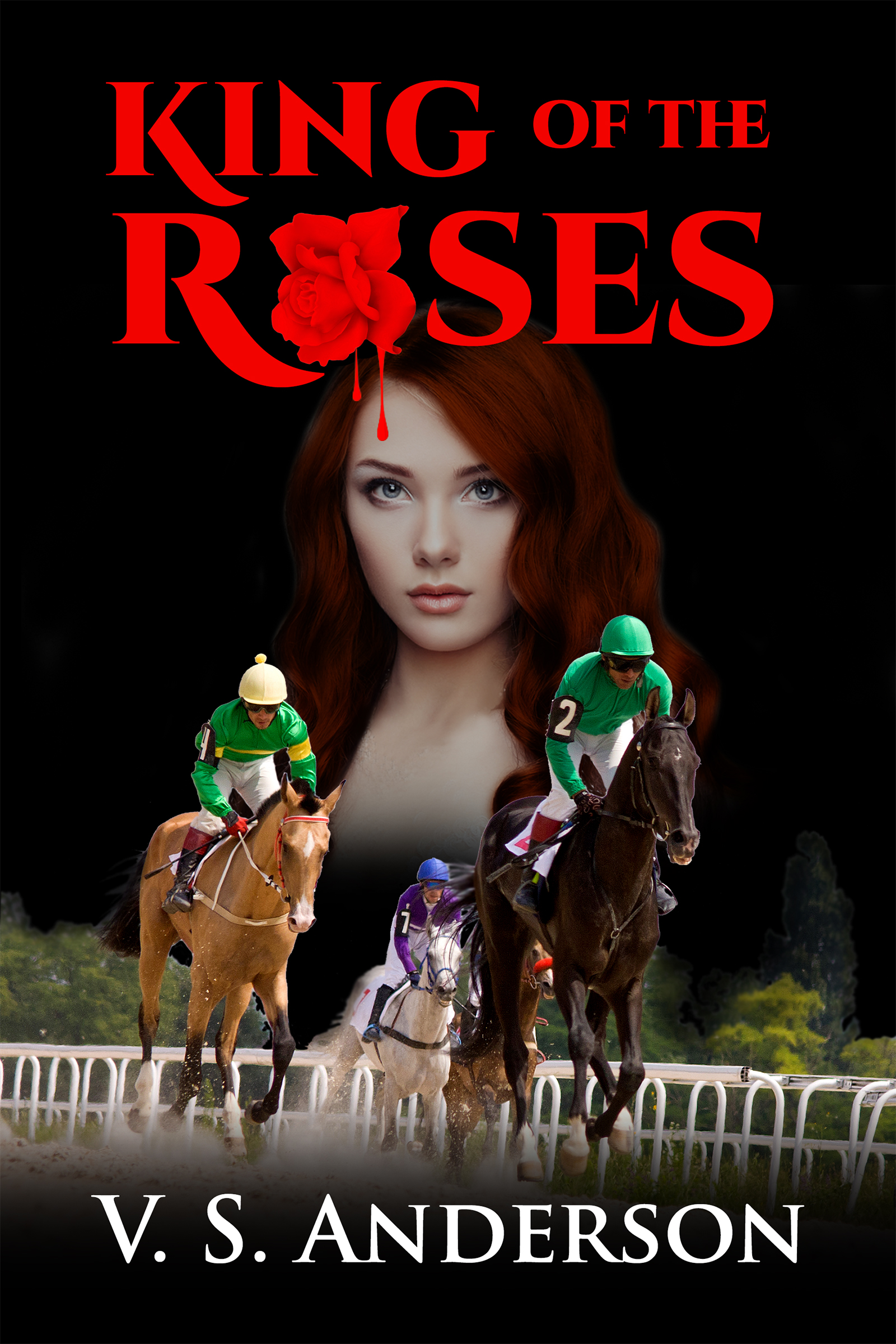
The first episode occurred when King of the Roses was in its pre-agent, pre-St. Martin’s state: stacks of boxes of typed-upon sheets, not quite as imposing as the purported five feet of manuscript that constituted the original draft of Gone with the Wind, but nothing you could tote in a shopping bag, either. I was very young (excuse).
I met this man at the conference my local university regularly hosted (now defunct, sadly—it was a wonderful conference). I don’t recall exactly how we made contact; I must have approached him after his session. I don’t remember exactly how much I paid, but it would have been less than $500. Of him, I can say this: he was conscientious. He did what he said he’d do, in a timely manner. He read the whole book and regularly sent me sections festooned with comments. Recently, in the process of dumping piles upon piles of old rough drafts, I came across the pages he had edited. I set them in the “save even though you know better” stack, to look back at one day. Did anything he told me help me? Possibly. Good advice, in whatever form, is worth reviewing. It’s so hard to come by.
The bait was his assurance that, once we had chiseled the book into shape, he would put me in touch with the New York editors with whom he had professional relationships. Who wouldn’t spend $500 on that?
What rises to the top, probably flushed out by the memories of what finally happened, are not deep, global insights that would eventually make that book publishable; no, they were idiosyncrasies that left me about where I’d started, still wondering whether my ambitious plot (yeah, they’re all ambitious, more’s the pity) was working and what to do if it wasn’t.
Okay, So What Did I Learn about NOT Writing a Failed Novel?
I’ve already written about some of the things I learned: Listen to your characters. Assume that you’ll be the one bailing when the ship starts to sink. Be in a position to pull out (e.g., have a day job) if there’s no hope: you gain nothing by having a bad book to your name. Use the resources available to you if you’re lucky enough to have some: for example, if dangerous channels need to be navigated, let your agents steer; that’s what you’re paying them for. Give editors the benefit of the doubt (just as you should your writing teachers: writing—and figuring out what to tell people about their writing—is HARD).
But here are Nos. 1, 2, and 3:
- Get feedback
- Get feedback
- Get feedback
Of course, that lesson learned begs several questions.
- Where can you get this magical feedback?
- Can feedback really make your book work?
- What is good feedback? How can you recognize it?
- Should you be a slave to feedback (after all, it is your book)?
One thing at a time.
How to get feedback? I’m offering my experiences, interested in hearing from others. Maybe you’ve been where I have, maybe you’ve been somewhere better. I haven’t yet participated in online groups; when I do (soon), I’ll report on that.
In the meantime, I’ve previously written about face-to-face writing groups, their virtues and limitations—especially for a novelist. It helps to speculate as well that a writing group can get too large. Yesterday ten people instead of the usual six or seven showed up for our regular three-hour session. People voluntarily cut their submissions in half, but we barely had time to nibble around the edges of what we wanted to say. But most cities have multiple writing groups, each with a different culture. I’ll never be without one again.
You can ask your colleagues to read for you: people whose expertise you recognize and whose views you respect—and who like the kind of writing you do and actually read in that genre. Beware: it’s terrifying. Continue reading
No Writer Writes Alone. . . .
Maybe I got an unusual implicit education: that some writers are just geniuses, that if you’re one of these geniuses, your genius will show in the brilliance of your words. Or maybe I wasn’t the only one implicitly nudged to think this. I actually had a student write something like this to me at one point, in a creative writing class at my university: something along the lines of “writing is about showing your genius to the world.”
So, what if the world doesn’t acknowledge your genius? Is the world wrong? Or are you just meant not to write?
Here’s something I wasn’t trained to think in those days, a favorite quotation that I found in a wonderful book by the neuroscientist Stanislaus Dehaene, Reading in the Brain: The New Science of How We Read. It’s from Alberto Manguel, The History of Reading, and appears as an epigraph to chapter 1:
The existence of the text is a silent existence, silent until the moment in which a reader reads it. Only when the able eye makes contact with the markings on the tablet does the text come to active life. All writing depends on the generosity of the reader.
“All writing depend on the generosity of the reader”! Who woulda thunk it?
I suppose it does occur to most of us, in that we want that reader to lend–no, gift–us his or her attention. And what a precious gift. I told my students over and over, “When someone takes the time to read what you’ve written, they’re giving you something you can never give back: their time. Be thankful to anyone who takes the time to read your work with care and make serious comments, for better or worse.”
(Be thankful even to teachers who write comments on your text or about it. Sure, they get paid, but not nearly enough. Especially when you meet with a student in conference to discuss her writing and ask, “Did my comments make sense?” and the answer is “I didn’t read those.” In a way, that’s another blog. In a way.)
My point here, which I relearn every day, is that writing of any kind is something that happens between a writer and a reader. The trick is finding ways to make that between happen. And in the 1970s and 1980s, it was quite a trick. At which I failed.


 Just Can't Help Writing