Category Archives: Money issues for writers

Tips and experiences for writers about getting paid

How Should We Think about Book Piracy in the Age of COVID? Wendig’s Take.

Here’s Chuck Wendig’s take on the decision by Internet Archive (as he points out, already on the hook for stealing and distributing copyrighted work) to provide books for free even if they are, indeed, copyrighted because people need books more than ever now. Wendig’s piece provides not only his take, elaborating on a comment that aired in a show on NPR, but also links to a response from the IA, so you can decide what you think. There is also at least one comment that takes a different stance.

Pirate ship coming for your books

I first became aware of IA’s activities through Victoria Strauss’s indispensable Writer Beware. I tracked down one of my books on IA and sent a takedown notice; supposedly they honored my request. I shared my experience on this blog (link below), then subscribed briefly to a service that promised to find all such theft of my work.

Let me tell you, that was a waste of time. The app found instance after instance. In every single case I tried to track, it was impossible to file a takedown notice. There would be no contact information, no claim of ownership, no one to protest to. Possibly, with stronger computer skills and oodles of time, I could have found the culprits. Some of these sites had takedown-notice forms, but when I sent them, they returned error messages. Long story short, I gave up.

However, one notable outcome was an exchange with a poet who is print-disabled (in his case because of vision issues), who told me about the Marrakesh Treaty, which allows “allows authorized non-profit sites to post—without permission—works for “blind and print-disabled” persons.” This was new information for me, as I suspect it will be for others.

This link will take you to the one of the later posts in my sequence about Internet Archive and book piracy, back in early 2018; there’s a link in the post to the Marrakesh Treaty, and you can read the comments from my reader. All the posts are filed under “Copyright for Writers” and can be accessed by searching for “Internet Archive.”

In any case, I also found myself consoled by an argument from Neil Gaiman that book pirates are really just helping you find readers for your work. If that claim raises eyebrows, well, maybe it should. Or not. The post contains links to several back-and-forths on whether we should be up in arms or opening our arms.

This is a fraught issue in this time of the cholera, as Wendig’s discussion shows. I probably will adhere to my non-action process for now.

If only those freebie readers would leave reviews. . . .


1 Comment

Filed under business of writing, Copyright for writers, ebooks publishing and selling, Free Books, Money issues for writers, writing novels

More Ways for Authors to Get Scammed

Watch out for literary crocodiles!

Photo by Pixabay on Pexels.com

Victoria Strauss at Writer Beware continues to let us know when new scams proliferate—in this case, crooks pretending to be literary agents who just LOVE our books! I have actually talked to people who take such come-ons seriously.

Check out the examples and the advice for recognizing these criminals.

These scams are dead ends! Dead end sign!

Photo by Dustin Tray on Pexels.com

Leave a comment

Filed under business of writing, Finding literary agents for writers, Money issues for writers, Myths and Truths for writers, writing novels, writing scams

How I’ve Come to Love Book Pirates

Well, maybe that title is just click-bait. Hope it gets some clicks! Big green smiley

More accurately, my title should read, Why I’ve Quit Worrying about Book Pirates.

Books flying into pirates' hands

Here are a few links you can check out if you’ve heard horror stories (I sort of have some), and/or if you’re interested in this debate:

My quick take—and my reasons for copping out on the anti-book-piracy crusade: Like some of the responders on Kaye’s post, I tried the beta Blasty service. I found myself on sites where I didn’t have the technical knowledge to identify the site owners (Kaye offers some tools to help with this). No address to which to send my own DMCA (Digital Millennium Copyright Act) takedown notice. Some offered their own DMCA form—but every one I completed returned an error notice.

And after I’d spent a whole morning uselessly following Blasty’s leads, I got yet another massive list of all the places where my books could be downloaded for free.

Blasty offered paid services that would send the notices for me. There are other such services; comments on the various articles I’ve linked to above provide some sources, if you want to pursue this route.

But if you read the Guest piece, you may, like me, come away with a sense of “what for?”

“The legal and tech aspects of book piracy prevention are complex and fast-evolving, but those in the know describe it very simply: it’s whack-a-mole. One of the most persistent ebook pirate sites has been taken down multiple times, only to pop back up again under a .com, a .net and a .org domain name. At least 120,000 take-down notices have been issued against it already, involving web crawlers, lawyers, its domain host and the Metropolitan police. But that website is back regardless, complete with some intimidating legal language of its own, addressed to anyone who plans to complain.”

I have read, in more than one place, that many of the “free” sites don’t even have copies of the books they’re selling; they just want people’s credit card info. A lot easier way of taking people’s money than actually scanning books and repackaging them, I suspect.

Who knows? If the big publishers are really losing a lot of money to piracy, maybe they will finally figure out a way to protect their property. And maybe some enterprising soul will pirate their methods and share them with us (in a user-friendly form). Maybe even Amazon will catch on and act. In the meantime, I have other wasteful uses of my time that are a lot more fun than hunting down all those links and filling out a new version of that form ten times a day.

I’m thinking, in fact, about making more of my work (I really do have WsIP!) available for free. The truism Kroese and others offer makes sense to me:

The biggest challenge facing a new author isn’t piracy; it’s obscurity.

So from one so-far obscure writer to others, I’ve quit worrying about people stealing my books. When you read one you like, just be sure to tell your friends.

5 Comments

Filed under business of writing, Copyright for writers, ebooks publishing and selling, Free Books, Marketing books, Money issues for writers, Myths and Truths for writers

Are We Cheating Other Authors by Buying Used Books?

Old Open Bible

This debate featured back in 2016 by Nate Hoffelder on The Digital Reader about the vice and virtue entailed in buying used books—knowing full well that the author receives no compensation—resonated for me because I’ve been feeling guilty about my own Half-Priced Book purchases. I’m not sure I’m feeling less guilty, but at least I know that some defend the practice. The short argument is that used bookstores are where readers are created when they “discover” authors they come to love.

A couple of personal observations:

I’ve long been a fan of Dick Francis (and every horse person and most mystery readers should be as well, IMHO). I reached a plateau where I had overdosed on his formula and quit reading his new ones, and at some point I lost/gave away/never owned copies of his early books, among them some of his best. Off I went one day to my local B&N to pick up new copies and rekindle the relationship. NOT. B&N had none. Not even a recent title, for example those co-authored or authored by Francis’s son Felix in the writer’s final years and after his death.

So off I went to HPB. I was able to find copies of Dead Cert, Nerve, For Kicks, Flying Finish, and many others. Now I often find more recent titles for my bedtime reading and find that Francis is as entertaining as I remember him.

I guess I could buy these on Amazon. Not from Kindle—I hate reading online at bedtime. But am I cheating Francis’s estate, or his son? In my defense, often the earlier titles are available only from third-party sellers, usually used booksellers themselves. What’s more, checking on Amazon for this post, I found that some of the older titles are being released only on Kindle, with all print editions relegated to third-party sources.

I do use HPB and other used bookstores to “discover” authors I might like. I often feel that my reading is too limited and that I ought to be more up to date with what EVERYONE is reading. Every time I venture into the store, I pick up a book by an author I’ve not yet sampled,  sometimes by authors I’ve never heard of, or by authors who have been declared the Next Great Thing. Just to see. If I’m going to toss a book to the floor after forty pages, I’d rather it be a book I paid $3.99 for rather than $29.95.

Will I then pay full price for the next title of an author I like? Hmmm. I did pay full price for a new title by Sarah Waters and might again. But I must confess, I tend to search at HPB first.

I missed this debate when it was supposedly “raging,” but it seems to me worth continuing.

What are your views on Used-Book-Buyers-Remorse?


2 Comments

Filed under Amazon Kindle Direct Publishing, business of writing, Marketing books, Money issues for writers, writing novels

Fake, Pirated And Counterfeit Books A Big Problem On Amazon – by Derek Haines…

Chris shares some frustrating news, but it’s information we should probably all be aware of–if only so that WE don’t end up buying pirated books. Check out Victoria Strauss’s account of her interaction with Internet Archive. But Derek Haines tells us that Amazon is just as guilty—and indifferent (no surprise).

Chris The Story Reading Ape's avatarChris The Story Reading Ape's Blog

on Just Publishing Advice:

Counterfeit books are still a big issue on Amazon

I can only write about the ongoing problem with books.

But Amazon has taken so little action, there could also be a problem with other counterfeit goods.

You could think that identifying counterfeit books would be easy. If you publish a book on Amazon, surely Amazon could at least check for plagiarism when pirates copy your text.

The problem is not new. I have been writing about pirated ebooks and books for a very long time.

Third party sellers are making a lot of money from pirated, fake and counterfeit books.

More importantly, so is Amazon.

Continue reading HERE

View original post

Leave a comment

Filed under Amazon Kindle Direct Publishing, business of writing, Copyright for writers, ebooks publishing and selling, Free Books, Money issues for writers, Self-publishing, writing scams

The #1 Mistake New Self-Publishers Make That Leaves Them Vulnerable to Publishing Scams – by Anne R. Allen…

Another extremely useful post from Anne R. Allen, via Chris the Story Reading Ape. A reminder to us all to DO OUR HOMEWORK if we want to publish and sell our books.

Chris The Story Reading Ape's avatarChris The Story Reading Ape's Blog

Publishing scams target babes in the woods

I hear about new publishing scams all the time. Sometimes scammers approach me personally, but more often I hear a sad tale of woe from some newbie who has fallen for the latest con.

This week I realized that almost all the victims of publishing scams have one thing in common: they don’t understand the most important part of the digital self-publishing revolution that started in 2009.

This is the thing you MUST understand in order to be a successful indie author:

Continue reading HERE

View original post

Leave a comment

Filed under business of writing, ebooks publishing and selling, indie publishing, Marketing books, Money issues for writers, Myths and Truths for writers, Print on Demand for fiction writers, publishing contracts, Self-publishing, writing novels, writing scams

You Might Be On An Illegal Book Downloading Site if…

Absolutely vital information for readers and authors alike. I found this through Chris the Story Reading Ape, to whom I am ever grateful for all the good posts he shares.

A while back, alerted by various sources, I learned that my books were turning up on “free download” sites.* Some of these sites had their own “takedown” screens, but using those led only to cryptic error messages. Takedown notices I sent independently received no response. In most cases, there were no contact options or claims of ownership. No way to actually assign responsibility for the thefts.

Bottom line: I decided I didn’t have time to hunt down all those thieves.

So, for me, as Suzan Tisdale points out, the burden is on readers and purchasers. Now that you know, beware.**

You might also be doing yourself a favor by avoiding these sites. How often do you click on a link to a dishonest service without just the slightest apprehension that you may be inviting an invasion of your own space?

*I did learn that a legitimate site can, in fact, post your books for free if they do so in formats for readers with access issues. See this thread about the Marrakesh Treaty from last year. These posts will also link you to the Digital Millennium Copyright Act (DMCA) notice disseminated by Science Fiction & Fantasy Writers of America and shared by Victoria Strauss of Writer Beware. Strauss lays out her own struggles to have pirated books taken down.

**And if you MUST download a free book from a pirate site, at least leave the author a nice review at Goodreads or Amazon!

Leave a comment

Filed under business of writing, Copyright for writers, Free Books, Money issues for writers, writing scams

“Writer Beware” Tells Us What to Watch Out For in So-called “Publishers”

A story hook is like strange headlights coming at you out of the dark on a lonely road. What lies ahead?

Are You Being Scammed?

Victoria Strauss is a gem. She does our research for us. What’s especially useful about this post is that she not only reviews specific scammers but also lists some specific clues that an author is being scammed. If you’ve been approached by a “company” that is just dying to publish your book—Beware!

Leave a comment

Filed under business of writing, Money issues for writers, Myths and Truths for writers, Publishing, publishing contracts, small presses, Writing, writing novels, writing scams

“The Book Designer” Gives Us Valuable Definitions: Copyright and License

What do copyright and license mean?

Contributing writer David Kudler explains the basic terms copyright and license that many new authors may find confusing. (Joel Friedlander’s The Book Designer is a go-to site for a lot of extremely useful information about the publishing business. Check it out!)

Leave a comment

Filed under Amazon Kindle Direct Publishing, business of writing, Copyright for writers, indie publishing, Money issues for writers, Publishing, publishing contracts, reversion of rights clauses, Self-publishing

Myths and Truths about Traditional Publishing—What It Was Like for Me.

Old Open Bible

I came across this post via Chris the Story Reading Ape (a crucial source for publishing tips and news). Steven Spatz, president of BookBaby.com, a book packager for independent publishers, lays out “Six Myths (and a Few Facts) about Traditional Publishing.

Just to be clear, “traditional publishing” means having your book produced by an established, for-profit publishing company that will pay you an advance, provide you with an editor and a publicity department, physically manufacture your book—including the cover and format—and, ideally, get it to sell.

In contrast, independent or self-publishing means writing a book and getting it edited, producing a formatted copy with a cover, uploading it as an ebook to an ebook vendor like Amazon or Smashwords or as a “real” book like a paperback or hardcover to a company that “packages” it for you and that may supply some editing, cover production, and marketing, depending on what you pay for.

Whew.

When I contemplated this post, I didn’t know those definitions could be so hard.

Bottom line: A traditional publisher PAYS YOU and does it all (or much of it) for you. As an indie publisher, you either do it all yourself, possibly for free, or pay for certain services you don’t feel you can do well.

grunge paper texture, vintage background

With that out of the way, the very first comment on Mr. Spatz’s article pointed out that BookBaby specialized in packaging books for “indie publishing,” and is therefore biased against traditional publishing.

Okay, Spatz may be biased. But as I read, I found myself saying, yeah, yeah, that’s exactly what I found out during my all-too-brief existence as a traditionally published author. Spatz’s observations, in my view, offer a useful “wait-a-minute!” that prospective authors need before they decide how they want to enter the publishing melee.

Note that the experiences I cite here are grounded in my own career: I was traditionally published by three MAJOR houses, St. Martin’s, Bantam/Doubleday, and New American Library. Today’s traditional publishing field is surely more competitive, not less, than in those glory days.

So, with eternal gratitude to Victoria Strauss, read these thoughts as a version of Writer Beware.

Spatz’s Myth 4: Publishing with a Traditional Publisher means your book will show up on bookstore shelves.

This was my first devastating revelation. And my mother’s. We’d walk into a bookstore and she’d gesture at the extravagant front-door displays and demand, “Why don’t they put your books out here?”

Because, I learned, shelf space is a precious, much fought-over commodity. In order to be provided so much as a sliver of space the width of a spine, my books had to have a mega advertising budget behind them. Mega. I had to be Paris Hilton. Or Michelle Obama. Or . . . you know who I mean.

My mass-market paperbacks (these still do exist) did get rack space in drugstores. For about a month.

I can now get my books into independent bookstores by carrying them there and asking for shelf space while presenting a reason why I deserve it. This was as true before indie publishing as it is now. Only it never occurred to me. I didn’t know that was part of my job.book word in letterpress wood type

Myth 3: A traditional publisher will market your book.

This hope meant almost zilch thirty-five years ago. I can’t imagine it means more now.

No one told me that I really needed to get out there and market. They told me, write the next book. At least now they’re honest about this.

Marketing is the hardest thing asked of authors who really would rather be writing the next book (well, hardest after writing the synopsis). Only some of us have marketing in our blood. I found that my houses had standard “marketing” practices that gave the books a chance to take off but didn’t do anything out of the way to grow them wings. A smart author (I was not) would have noticed all the other things that could have been done, and would have done them.

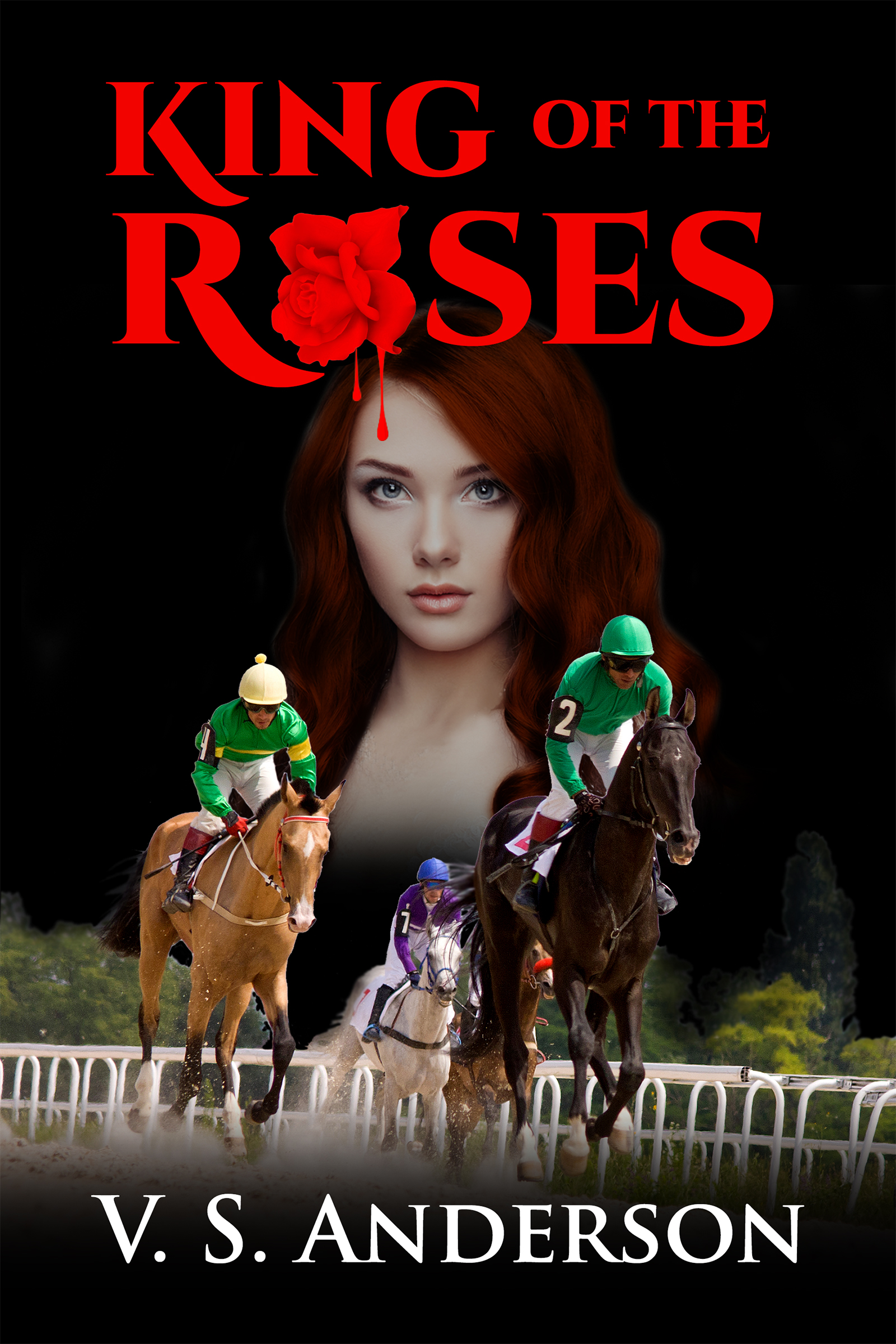
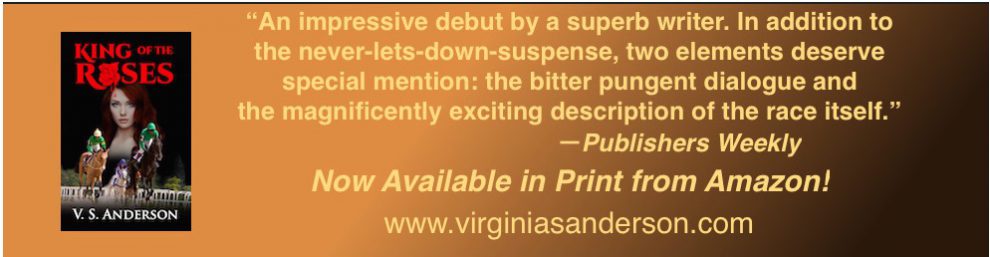
I did do something. For King of the Roses, they asked me for a list of horse-racing celebrities who would endorse the book. I compiled such a list. They wanted to know who on that list I knew whom I could personally ask. Um, no one.

I said, since this book is about the Kentucky Derby, why not run an ad in the Daily Racing Form on Derby Day? Not cost-effective, they said. So I paid for it. Myself. They may have been right. In those days, you couldn’t track clicks to see who responded to what ad.

What a traditional house can do is send your book out to reviewers. They have lists of people who will possibly read your book and write it up in a highly visible place. Much more effective than begging for reader reviews. If the right reviewer—say, at the New York Times—takes a shine to your cover or back-of-book copy, you might really end up on Oprah! (No way of knowing what my brief mention in the prestigious Atlantic Monthly meant to my sales.)

Magic book

Myth 5: Getting picked up by a major house means your writing career is set.

No.

Your career with a traditional publisher will last only as long as you write a) what the publisher thinks will sell; or b) what actually does sell. You want a career in a traditional house, YOU better make sure what you write sells. See Myth 3.

And if what you wrote the first time around doesn’t sell well above average, second chances are hard to come by. More than once agents I’ve approached want sales figures from my previous books. At the very least, they want my platform. How many famous people do I know who will endorse my book?

It takes only one “disappointing” book to end this kind of career. I know.

That doesn’t mean there aren’t ways back into the fold. But they are at least as hard as that first foray, when you stood a chance of being a “discovery” that sent the sales team into raptures. I was there. I know.

Some “truths” from Spatz I can endorse:

**It will take at least a year and probably longer for your traditionally published book to make it into print.

**You have to fight for control over your metadata and cover. If you don’t like cover or the back-cover copy or the book description, you have to assert yourself. I was able to protest the inner jacket flap copy for one of my books and rewrite it. But it was when I saw the back-cover copy of that book that I knew the book was doomed. No blurbs quoting the excellent reviews for my first two books, both in paperback from Bantam. Instead, just an excerpt from the book.

Decent writing, I guess, albeit arguably overwritten. Of course, in Bantam’s defense, in those days, no one could order a mass-market paperback once it was out of print.

**And if your traditionally published book does make it onto bookstore shelves, it will run out its welcome fast. Once it’s last month’s sensation, it’s gone. Maybe you’ll get a paperback deal that may hang onto shelf space in row 6 a little longer. But it if doesn’t sell, bookstores will pull it for this month’s New Thing. People will buy your book from Half-Priced Books or from third-party sellers on Amazon, and you won’t make a cent.

Image of earth planet on hand

A truth of my own: Working with a top editor at a major house doesn’t mean your book will get better.

My editor at St. Martin’s was superb, my editor at Bantam horrible, and my editor at NAL nice but not inspirational. (They are all long gone, so don’t ask.) I learned that, in the end, I alone was responsible for the words that got published under my name.

I regularly depressed people at writing conferences by sharing these experiences.

If I’ve depressed you, at least you are forewarned.

If this sounds as if I am biased in favor of self-publishing, well, to a certain extent yes. I would like to be traditionally published again because a “published” book, however doomed in the market, would give me credentials for speaking and guest-posting. I would also like reviews. And my feeble, newbie marketing efforts are unlikely to earn me what I would make from even the most anemic advance.

What I do like about self-publishing is that my prospects are limited only by my energy and creativity. There is no shelf-life for my books. I can try new marketing techniques indefinitely without knowing that next week, or the week after, my books will show up on that pile labeled “remaindered.” I can even revise and republish. I can be a completely new author, in a completely new genre, as fast as I can write.

When lightning strikes an author!

My final words of “wait-a-minute”:

If you want to submit traditionally, haul out all those grammar books and all those tomes on how to structure a story. Editors and agents do gatekeep based on how much work you’re going to mean for them versus how much you can earn for them. A badly edited, unstructured book means more work for them. A great idea can die because it looks as if it will take too much time to slap into shape. Make their job as easy as you can.

If you want to self-publish, do your due diligence. Book packagers (that includes Kindle Direct Print and Ingram as well as BookBaby, Lulu, etc.) vary widely in quality and cost. Make sure you understand how the self-publishing universe works (it’s all out there online) and don’t pay for anything you can do yourself. You can publish your ebook in an hour at Smashwords or Amazon for free. Your paperback may take a little longer, but you can do it. Don’t pay for anything you can do yourself.

Ask me anything you want about my days as a “published author.” I’ll tell you everything but the names.
 

11 Comments

Filed under Amazon Kindle Direct Publishing, business of writing, indie publishing, King of the Roses, looking for literary editors and publishers, Marketing books, Money issues for writers, Myths and Truths for writers, Publishing, Self-publishing, Writing, writing novels, writing scams