Tag Archives: writing novels

Paying for It: Story II

Okay, let’s get the rant out of the way so we can move on to practical applications.

Like applying due diligence, perhaps?

It’s embarrassing because my second attempt to purchase good feedback was as much of a foreordained conclusion as the first.

I found this fellow in my search for likely looking conferences and workshops. I don’t actually remember his name. I do have the material he finally sent me (see below), but it supplies only a first name. Perhaps that’s just as well.

The workshop was small, private, held on a major university campus, where I was able to acquire a dorm room. The apparent imprimatur of the university disarmed me. And the workshop itself, me and a couple of other people, working with this genial individual with a bucketful of droppable names, was stimulating, full of good exercises, with some useful discussion of our projects. I was beguiled.

I had two efforts underway. I had decided to rewrite my failed novel. And I had a terrific premise that I had turned into a very rough draft of a screenplay. For $450, this person was to advise me on the screenplay. Then he would partner with me to edit my novel, parts of which I had shared at the workshop. (He did not warn me, as a conference panelist was to do soon thereafter, that revising that novel in hopes some editor would take on a chance on republishing a better version of it was pointless: “If it didn’t sell the first time, why would they think it might sell now?”).

In any case, off he went with my $450.

I waited six months.

I emailed him a couple of times, only to be assured my critique was on the way.

We’re used to this from agents. But I had paid.

I finally wrote and asked that he either send my critique or give my money back.

Bad move? I honestly don’t know. It triggered two things. I got my critique. I also got an email, since lost (as an act of psychological self-defense?), that I remember as a bruising, sarcastic excoriation that I would dare to make such an unprofessional, harassing request.

I’ve fished out the critique. Nine pages. Up to about the midpoint of the script, very detailed discussion of problems interspersed with often-specific praise, focusing largely on the nuances of scriptwriting versus writing prose, help I desperately needed as I was a complete beginner at scripts. Rich as well with the kinds of global comments I also desperately needed to hear: What is the story question? It’s hard to know what this character needs or wants. Too many characters playing redundant roles. Some logical missteps, obvious when pointed out. But at midpoint, I’m told, the story veers so far off course that it doesn’t warrant further comment (“organizing deck chairs on the Titanic”). But then: “Tremendous potential. The ending is emotionally arresting and disturbing, the eoncept is unique.” And finally, a cryptic “Well done.”

Of course, now I couldn’t do what I most wanted: arrange a (paid) follow up meeting to nail down my understanding of the technical advice and to talk through how to make the shift of direction in Act II organic and supportive of my larger hope for the story.

I see now that I could have learned from this man. But, struggling under the devastating collapse of relations (by my doing? by his?), I did a further unprofessional thing. I simply set it all aside. I could persuade myself not to trust it. Did his anger at me color his response to the story? Did he really read past page 55? In the end I gave up on the screenplay, turning the premise into a novel. (And rereading that long-ago critique, I am glad for the reminder to ask that crucial question that I’ve heard myself ask others in our writing group: Do we know what this character wants and needs? Now that I’m back to writing, time to double-check, make sure.)

But the more immediate question is whether I could have prevented these two disasters (begging the question, of course, as to whether they really were disasters). The first one, possibly, by not wanting so badly to be misled. The second one, surely. Preditors and Editors existed then; a quick trip to http://pred-ed.com/general.ht?t1 would have given me the basic advice I should have followed, to wit: a) get a written contract specifying what was to be done and when; b) start small and see how it works out.

In short, good advice is worth paying for, but with much greater caution than I exercised.


Leave a comment

Filed under Learning to write, Money issues for writers, Writers' conferences, Writers' groups, Writing and teaching writing

Paying for It: Story I

For “book doctor” services, I mean.

I apologize for this long post. This story turned out to take a long time to tell. I apologize as well for what may be my most carping posts, as I have disastrous encounters to report. So you may want to wait for a sunnier discussion. On the other hand, yet again, you may find my mistakes instructive—even though they do tend to fall into the category of “what was she thinking?” if I do say so myself.

At least in each case I wasn’t out more money than I could afford at the time. And I did go into each with the attitude that the money was all I really had to lose.

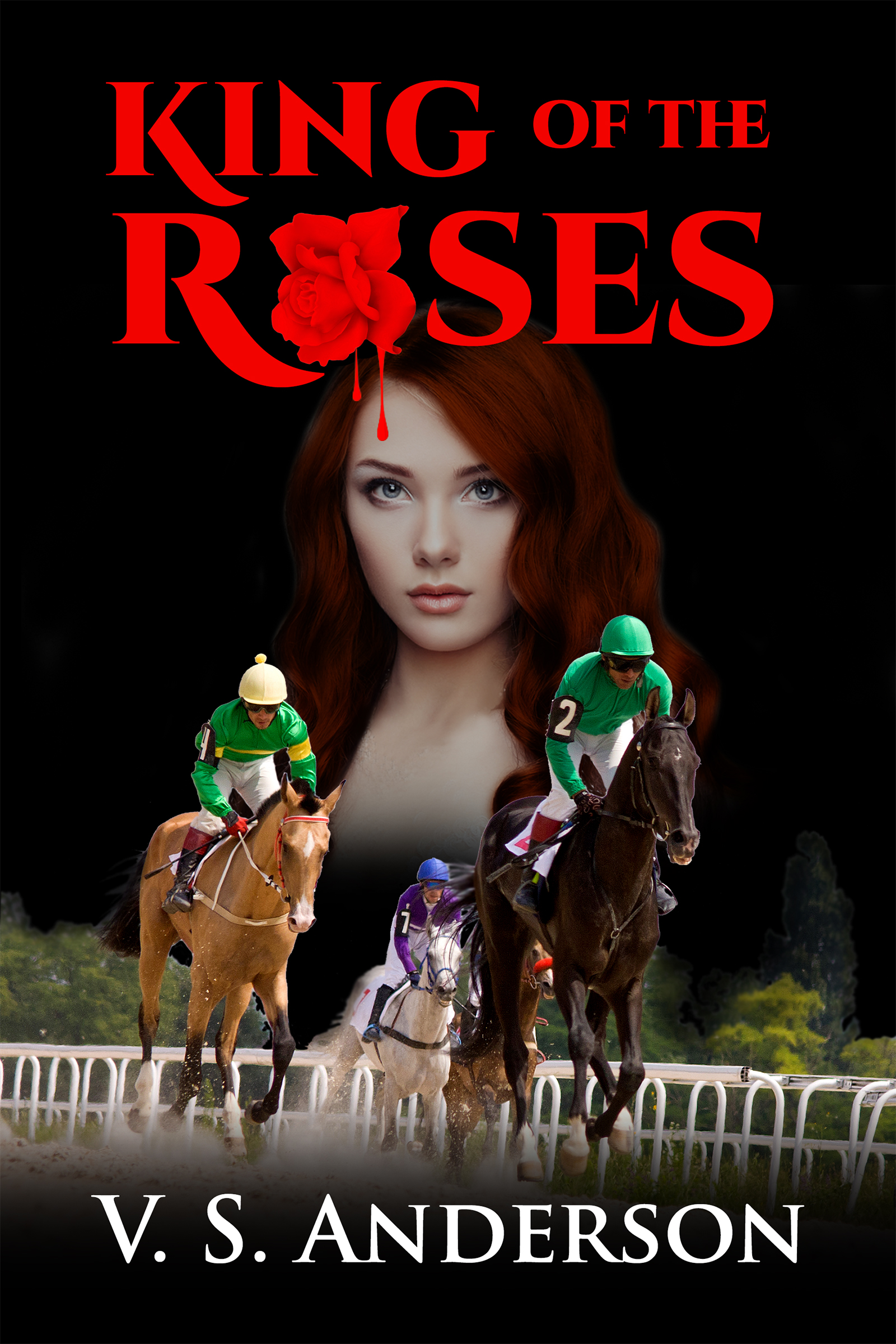
The first episode occurred when King of the Roses was in its pre-agent, pre-St. Martin’s state: stacks of boxes of typed-upon sheets, not quite as imposing as the purported five feet of manuscript that constituted the original draft of Gone with the Wind, but nothing you could tote in a shopping bag, either. I was very young (excuse).

I met this man at the conference my local university regularly hosted (now defunct, sadly—it was a wonderful conference). I don’t recall exactly how we made contact; I must have approached him after his session. I don’t remember exactly how much I paid, but it would have been less than $500. Of him, I can say this: he was conscientious. He did what he said he’d do, in a timely manner. He read the whole book and regularly sent me sections festooned with comments. Recently, in the process of dumping piles upon piles of old rough drafts, I came across the pages he had edited. I set them in the “save even though you know better” stack, to look back at one day. Did anything he told me help me? Possibly. Good advice, in whatever form, is worth reviewing. It’s so hard to come by.

The bait was his assurance that, once we had chiseled the book into shape, he would put me in touch with the New York editors with whom he had professional relationships. Who wouldn’t spend $500 on that?

What rises to the top, probably flushed out by the memories of what finally happened, are not deep, global insights that would eventually make that book publishable; no, they were idiosyncrasies that left me about where I’d started, still wondering whether my ambitious plot (yeah, they’re all ambitious, more’s the pity) was working and what to do if it wasn’t.

Continue reading

Leave a comment

Filed under Learning to write, looking for literary editors and publishers, Money issues for writers, Myths and Truths for writers, Teaching writing, Writers' conferences, Writers' groups, Writing and teaching writing

Okay, So What Did I Learn about NOT Writing a Failed Novel?

I’ve already written about some of the things I learned: Listen to your characters. Assume that you’ll be the one bailing when the ship starts to sink. Be in a position to pull out (e.g., have a day job) if there’s no hope: you gain nothing by having a bad book to your name. Use the resources available to you if you’re lucky enough to have some: for example, if dangerous channels need to be navigated, let your agents steer; that’s what you’re paying them for. Give editors the benefit of the doubt (just as you should your writing teachers: writing—and figuring out what to tell people about their writing—is HARD).

But here are Nos. 1, 2, and 3:

  1. Get feedback
  2. Get feedback
  3. Get feedback

Of course, that lesson learned begs several questions.

  • Where can you get this magical feedback?
  • Can feedback really make your book work?
  • What is good feedback? How can you recognize it?
  • Should you be a slave to feedback (after all, it is your book)?

One thing at a time.

How to get feedback? I’m offering my experiences, interested in hearing from others. Maybe you’ve been where I have, maybe you’ve been somewhere better. I haven’t yet participated in online groups; when I do (soon), I’ll report on that.

In the meantime, I’ve previously written about face-to-face writing groups, their virtues and limitations—especially for a novelist. It helps to speculate as well that a writing group can get too large. Yesterday ten people instead of the usual six or seven showed up for our regular three-hour session. People voluntarily cut their submissions in half, but we barely had time to nibble around the edges of what we wanted to say. But most cities have multiple writing groups, each with a different culture. I’ll never be without one again.

You can ask your colleagues to read for you: people whose expertise you recognize and whose views you respect—and who like the kind of writing you do and actually read in that genre. Beware: it’s terrifying. Continue reading

1 Comment

Filed under Learning to write, Myths and Truths for writers, Teaching writing, What Not To Do in Writing Novels, Working with literary editors, Writers' groups, Writing and teaching writing

Quick Digression: On Thinking about Criticism of Our Work

I came across an article in today’s New York Times, “Learning to Love Criticism” by a writer named Tara Mohr. She is meditating on a study that found that in performance reviews on the job, women receive many more (and more personal) criticisms than do men. The column discusses strategies for defusing the debilitating pain of such challenges to a person’s sense of self-worth and to the value of her work. It occurred to me as I read that some of her points might apply to writers of all genders, in particular this passage.

Women [and others faced with negative reactions from critics of their work] can also benefit from interpreting feedback as providing information about the preferences and point of view of the person giving the feedback, rather than information about themselves. In other words, a negative reaction from five investors doesn’t tell a woman anything about the quality of her business idea or her aptitude for entrepreneurship; it just tells her something about what those investors are looking for.

And if those five investors love her pitch? That also doesn’t tell her about her merit as an entrepreneur; it tells her about what they are looking for in an investment. In other words, feedback is useful because it provides insight about the people we want to reach, influence and engage. With that reframing, women can filter which feedback they need to incorporate to achieve their aims, without the taxing emotional highs and lows.

I like here the idea that criticism allows us to classify the different audiences we’re reaching, to determine whether there is an audience for what we’re doing, and to make practical decisions based on those assessments. For example, if I dare open a chapter with a line of reflection by a character, one member of my group, trained in an action-action-only-action school, always crosses it out. The advice above allows me to recognize that I’m not writing the kind of book he’s ever likely to read. When others don’t attack the offending sentence, I can assume there are other audiences with other philosophies of effective prose.

Yet there are dangers. Continue reading

2 Comments

Filed under Learning to write, Writers' groups

What Not To Do: Don’t Write Alone II

In the 1980s and ’90s, there were no Internet forums for people to share their work.

There were writers’ groups. I just didn’t realize how much I needed one.

Having joined one during grad school and having now been a regular participant in a very good writers’ group in the city of my university employment for some years, I can compile lists of what to expect and what not to expect from a writers’ group. Since this is (at present, anyway) about what not to do, here is a do not:

Do not expect a writers’ group to tell you how good your work really is. Some people’s experiences may lead them to conclude that this advice is incorrect because someone in their group definitely DID tell them how wonderful or how lousy their work is. But in a good group, by my definition, you won’t find out the answer to that question.

Because in a good group, a) members support each other, which will lead them to say many nice things; and b) in a good group, members support each other, which will prevent them from saying many potentially painful but possibly true things. I believe that you can get enough uniform enthusiasm to persuade you that your group really does like what you’re doing, but with all due respect to the best of groups, like mine, group members are not agents or publishers and use very different criteria to click “Like.”

Do not number 2: Do not expect global feedback on your novel, especially if it is a mystery. Check back to see whether you agree with my reasons for this claim.

Leave a comment

Filed under Learning to write, What Not To Do in Writing Novels, Writers' groups, Writing and teaching writing

No Writer Writes Alone. . . .

Maybe I got an unusual implicit education: that some writers are just geniuses, that if you’re one of these geniuses, your genius will show in the brilliance of your words. Or maybe I wasn’t the only one implicitly nudged to think this. I actually had a student write something like this to me at one point, in a creative writing class at my university: something along the lines of “writing is about showing your genius to the world.”

So, what if the world doesn’t acknowledge your genius? Is the world wrong? Or are you just meant not to write?

Here’s something I wasn’t trained to think in those days, a favorite quotation that I found in a wonderful book by the neuroscientist Stanislaus Dehaene, Reading in the Brain: The New Science of How We Read. It’s from Alberto Manguel, The History of Reading, and appears as an epigraph to chapter 1:

The existence of the text is a silent existence, silent until the moment in which a reader reads it. Only when the able eye makes contact with the markings on the tablet does the text come to active life. All writing depends on the generosity of the reader.

“All writing depend on the generosity of the reader”! Who woulda thunk it?

I suppose it does occur to most of us, in that we want that reader to lend–no, gift–us his or her attention. And what a precious gift. I told my students over and over, “When someone takes the time to read what you’ve written, they’re giving you something you can never give back: their time. Be thankful to anyone who takes the time to read your work with care and make serious comments, for better or worse.”

(Be thankful even to teachers who write comments on your text or about it. Sure, they get paid, but not nearly enough. Especially when you meet with a student in conference to discuss her writing and ask, “Did my comments make sense?” and the answer is “I didn’t read those.” In a way, that’s another blog. In a way.)

My point here, which I relearn every day, is that writing of any kind is something that happens between a writer and a reader. The trick is finding ways to make that between happen. And in the 1970s and 1980s, it was quite a trick. At which I failed.

1 Comment

Filed under Learning to write, Myths and Truths for writers, Teaching writing, Writing and teaching writing

Since This is about What Not to Do. . . .

Here’s a basic truth I learned about fiction writing itself (and about how not to write a failed novel): When your characters tell you they don’t want to do something, listen. Don’t make them do something when they’re screaming No!

In my failed novel (at least the one I’ve written most about here), my plot, to which I was inextricably wedded, required my two main characters to have passionate, illicit sex about three quarters of the way through the book. I spent many lives trying to get them to the point where that moment felt right. It never did, but I stomped my foot and made them do it anyway.

At the time, I thought I was writing about how the drives of sex in combination with desperate emotional need could cause people to act irrationally, to get in all kinds of trouble when they knew better. Since I consider this tendency a basic human truth, you’d think my characters would have said, “Sure, we get what you want people to think. Stand back.” But the book’s critics–and the important reviewers were definitely critics–called the actions of my male protagonist “stupid.” Actually, he thought so, too.

My editor told me, “The chemistry feels wrong.” I  knew she was giving me good advice: it was wrong. But I was lost in a project beyond my then-powers (possibly beyond any powers I’ll ever have), and I was working in total isolation.

Working in total isolation: that’s Thing Not To Do #2.

1 Comment

Filed under Learning to write, Myths and Truths for writers, What Not To Do in Writing Novels, Working with literary editors

The Next Thing I Learned

They don’t promote your book.

Nowadays, that seems like the kind of thing I should have known. With as much information as is available online, I assume everyone now knows that publishers no longer do any serious promotion unless you’re a celebrity. But I was truly naive.

Of course, they hadn’t paid me very much and didn’t have much to try to recover. In fact, they sold my book to their affiliate in England and made back the advance instantly. Moral: make them give you a couple of million in advance money, and then they’ll worry about getting it back.

They asked me for lists of famous people I knew who would read my book and write blurbs for it. I gave them lists of famous people, but I didn’t know any of them. They did send the book out for review. The reviews were extremely strong. They got it into some libraries. But that was the extent of it on their end. Maybe there were efforts I never heard about or saw.

I contacted local bookstores and got the book on the shelf in a couple of them. But I learned about bookstores. Your book–my book–wasn’t going to appear in Barnes & Noble or Borders or any of the bookstores then extant unless it had $$$$ behind it in advertising. Since it was a hardback (and they never sold the paperback), it didn’t appear on any drugstore shelves. I was advised to make the rounds of all the bookstores and find out who the book reps were and make friends with them and sell them on my book, so they would push it to the independent bookstores.

This is all so far away from the kind of person I was (still am) comfortable being that my efforts in this direction fell way short of a lick, let alone a promise. Self-promotion has never been easy for me. It’s why I can’t really pitch well. Besides, I was still working, making about 8K a year (a sum not as bad then as it would be now), and the idea of driving all over the country glad-handing book reps felt like something that wouldn’t happen unless I had a personality transplant. My agents and my editor both said, “Let go of it. Get on with the next book.” (I think today that translates into “Less tweeting, more writing.”)

At a few conferences I’ve been to, when the resident agents learn that you’ve been previously published, they ask for sales figures on your books. The idea seems to be that if you weren’t writing bestsellers then, you never will. KOTR sold, as best I can tell, about 20,000 copies. Not sure if this includes the later Bantam paperback. I have begun to think that I am almost better off not to tell some of these people that I ever was published. Let them think they’ve “discovered” me.

That is if I truly want to work with someone like that.

I have slowly come to believe that the ongoing changes in publishing are for the better. At least now you go in knowing that if anybody’s going to market, it will be you. I have read mixed reports and have mixed feelings about the various gung-ho marketing schemes people recommend, so I don’t know which will work for me. At least I also know now that I will not be getting the 2 million in advance and so that worry is off my mind. What a relief.


Leave a comment

Filed under Finding literary agents for writers, Myths and Truths for writers, Writers' conferences

How I Got Here, Next Step: The Plot Develops Lumps as It Thickens

I’ve tried to recall the problems that kept my 700-page ms. from getting snapped up for a hefty advance. I suspect it had to do with “700-page ms.” It was clear that the book was going to take work to get in shape. It takes a special editor to want to put in that kind of work. Out of the blue one day, that special editor called me.

L and J had sent him my 700 pages. He couldn’t wait to get going on them. His first instructions: change the ending. No argument, just do it. His second: cut 200 pages.

I use this account in my classes, even expository writing classes. He was going to publish my book. I said, “Yes, sir.”

So how do you know when to say “Yes, sir” or “Yes, ma’am” and when to argue? Lord help me, I don’t know. I do know that in that case, I had no choice. First novel, major publisher, erudite editor who said he “pulled all-nighters” with my book and who wrote me 30-page letters exploring its strengths and pushing me to think about its weaknesses: in fact, he was a teacher of the art of writing commercially viable fiction, and I wish I had known enough to practice everything I learned from him.

He said something along the lines of (I have the actual letter with the exact quote in my university office) “There’s enough wonderfulness here for four books. We need to decide which of the four is the best and save all the rest for some other time.” He said, “I’m going to show you how to tighten by doing the first 40 pages for you. Then I want you to follow my example on the rest.” I show those pages, with those big slash marks across whole pages, to my students. I show them my own slash marks, following his example. He said, “If a scene’s just repeating the work you’ve already done somewhere else and telling readers what they already know, get rid of it.” He showed me how to give scenes and dialogue their own internal life, what screenwriters call “beats.” I learned how to find the lines that carried the weight and slice out the shaky bridges between them.

I can’t tell you how much better that book became.

Leave a comment

Filed under Learning to write, Working with literary editors

Coda to “I believe I’ve been gone for a while”

I had a conversation Thursday afternoon of last week with one of our part-time instructors, who, with an MFA, just got a full-time job teaching CW and will be leaving us. He is an exceptional example: lots of credentials and publications. He asked me how I balanced my creative writing and my academic life. I said, “I don’t.”

Leave a comment

Filed under Teaching writing, Writing and teaching writing