Tag Archives: tips for writers

10 Cliches in Mystery Novels

As a mystery writer, I love the analysis in this list! My favorites:

No. 2) Isn’t it great when the police are conveniently so stupid that the detective can look smart with very little effort? That dates at least to Arthur Conan Doyle (remember Lestrade?), but it’s a long way from the truth. Rachel is absolutely right that police work can be a difficult and thankless task.

No. 3) Follows from No. 2, as Rachel points out. The detective is the only one with the basic common sense to detect foul play.

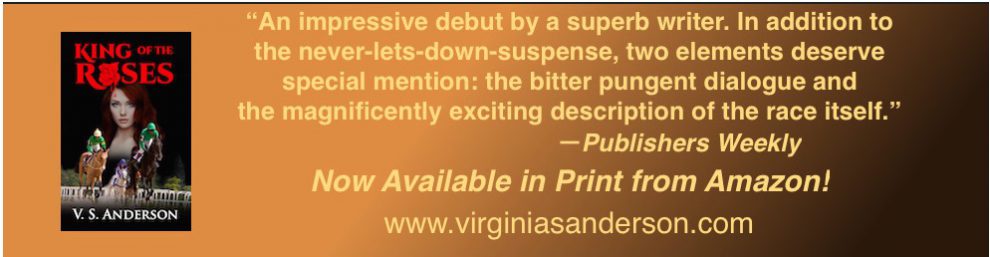
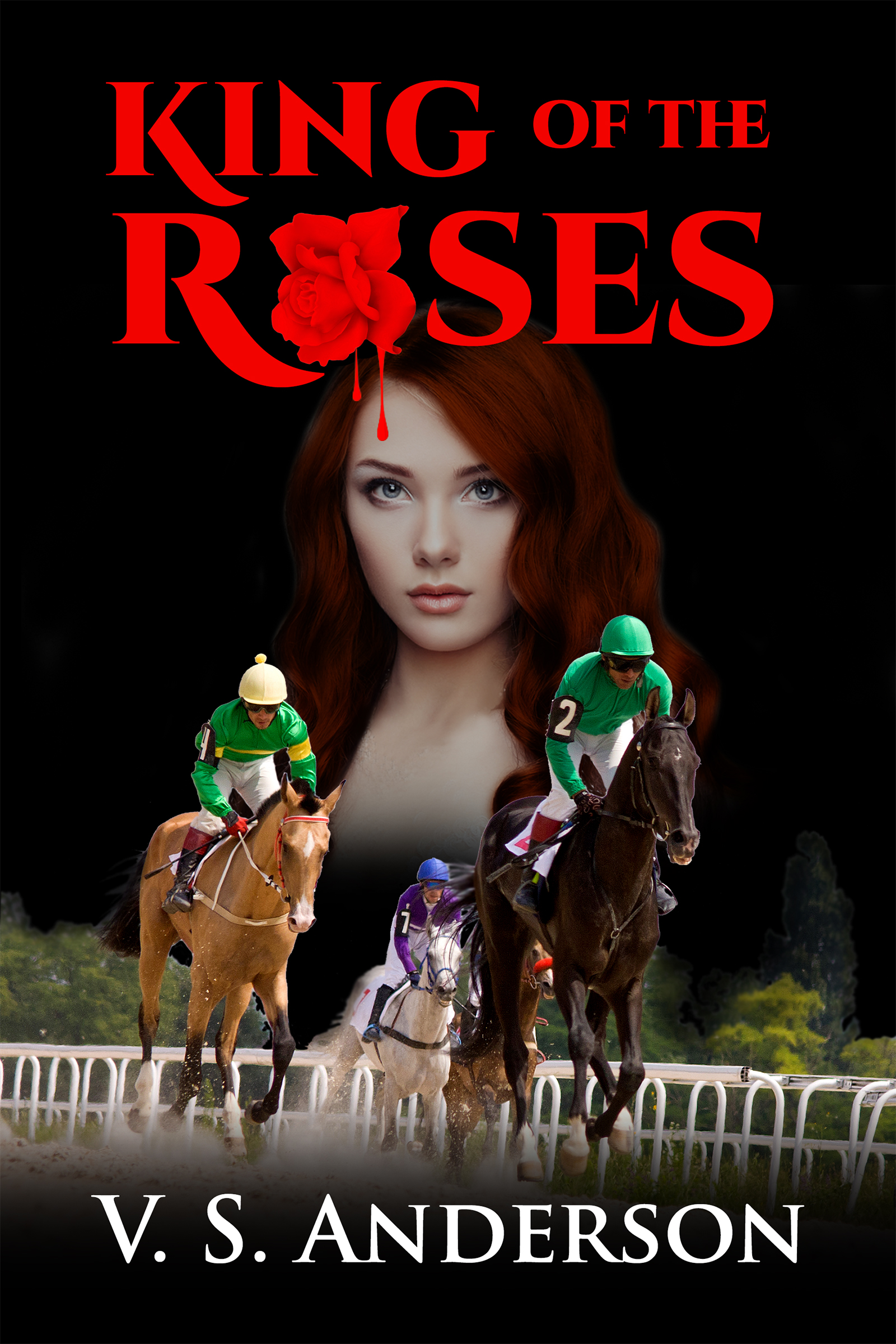
What am I guilty of? Well, My Failed Novel had a depressed detective hero. Never again. I plead guilty to inserting some attractive female characters in my first two books, now online. I hope these women are just a little bit nuanced so that they’re not total clichés.

What would I add?

  • The info dump at the end where the hero lines all the characters up and exhibits his or her brilliance by explaining the whole case, which he or she was the only one smart enough to unravel.
  • That, and books where people just tell the detective what he or she needs to know rather than allowing the detective to work for his or her discoveries.
  • And finally, detectives who don’t share things they’ve learned. Of course they’re smarter than everybody else if they’re keeping secrets!

    What would you add?

Leave a comment

Filed under indie publishing, Learning to write, Plot Development for writers, self editing for fiction writers, Self-publishing, What Not To Do in Writing Novels, Writing, writing novels

THE ULTIMATE GUIDE TO GOOGLE DOCS FOR WRITERS (+ WORKFLOW VIDEO & PDF CHECKLIST)

Everything you want to know about Google Docs. I plan to learn more about this platform, and this post will be a go-to source!

Chris The Story Reading Ape's avatarChris The Story Reading Ape's Blog

Extract from an article by E.A. Deverell (Eva) founder of the Lady Writers League:

I’ve been learning so many new Google Docs features as I work on THE STORY CHALLENGE, that I felt I had to document them and share them with my fellow writers!

I’ve created a detailed workflow which you can download at the end of this post and use as the basis of your own experimentation.

I think you’ll still be surprised by some of GD’s secret features.

You can now watch the workshop below!

Hopefully it’ll help to see the features rather than just read about them.

To read the full (long and detailed with lots of related useful links), click on the link or image below:

Google Documents for Writers

googledocs

View original post

Leave a comment

Filed under indie publishing, Self-publishing, Tech tips for writers, Writing, writing novels

8 Common Creative Writing Mistakes | Writing Forward

I’ve responded to this post with the thoughts and comments below. Share your own additions!

I agree on these issues! It’s amazing how many cuts I can find when I know I have to. And the result is almost always an improvement.

I especially have to catch redundancy. It’s a good tool for drafting, since you can try out six different ways of capturing a setting or an emotion. But then come back and pick the best one of the six!
A few points:

  • Additional “filler” (or “filter”) words are “**She heard** the wind whistling through the trees” vs. “The wind whistled through the trees,” and “**She saw,**” which works similarly. These are so hard to catch.
  • RE spell-check: Instead of turning off spell-check, turn off “autocorrect” functions. You will be notified of typos, but the computer will not try to guess what you really intended. I’ve seen some pretty crazy computer-supplied corrections!
  • Also, grammar-checkers are notoriously poor substitutes for your own knowledge. The one on my Word program misidentifies fragments and rails against all kinds of style choices that work beautifully to establish voice.
  • Finally, do give “older” books a chance, even if you know that these days, you don’t dare write in an older style. The Victorians, for example, lived in a slower age, but they wrote some of the most gripping fiction you’ll ever read.

Leave a comment

Filed under correct grammar for writers of fiction, ebooks publishing and selling, Editing your novel, grammar rules for writers, indie publishing, Learning to write, Plot Development for writers, self editing for fiction writers, Self-publishing, style for writers, Writing, writing novels

How you can avoid my mistakes

Check out these software tools from Jean. Do you use any of them? What was your experience like? Do you have others to recommend?

Jean M. Cogdell's avatarJean's Writing

And boy do I make a lot of them. Or so it seems.

I hope by sharing with you, these posts will stand as a reminder to myself, not to repeat the same mistakes over again.big mistakes

Why? Because mistakes are costly.

Mistakes cost when you have to do something over and over, not just in time but often in money too.

How you can avoid my mistakes…

  • Use the right software for the right job.

I tried to use “workaround” software but that only make the job harder and take longer. You know what I mean like using a shoe to hang a picture instead of hunting down that long-lost hammer in the garage.

  • A little investment is worth your time and sanity.

No one software does everything. Pick the one that works best for each task.

Listed at the bottom are some of the ones I discovered and love.

View original post 379 more words

Leave a comment

Filed under business of writing, ebooks publishing and selling, indie publishing, Self-publishing, Tech tips for writers, Writing, writing novels

Survey Question-Why do you put that book down?

I’ve been writing about this issue quite a bit on this blog, mostly because I’ve been disappointed by a number of the books I’ve picked up recently. My own concern is whether I’m being too curmudgeonly, since the books I can’t make it through often seem to have many fans. Here, I posted about the value of voice for smoothing over glitches that would otherwise stop me. And here, just recently, about a plot device in mysteries and thrillers that made me quit in the final chapters.

Others include what I call “illogic“: people who just don’t act like normal people or events that couldn’t happen because the author needs characters to behave bizarrely or the world to reorganize itself to make the plot work out. Hate that!

And not too long ago I stopped reading a book where everybody was so terminally nice that even when conflict reared its leonine head, everybody smiled and and gave it a gentle hug.

Finally, when I read a scene I could have written myself based on the hundred+ times I’ve already seen that exact scene or read that dialogue (e.g., “I want to be there for you”), I have a hard time pressing on.

Am I being too persnickety? I’m eternally grateful for books that surprise me, even if only just a little, with a view of the world I couldn’t get anywhere else.

Jog on over to the original post and add your thoughts, or share them  here.

Ronovan's avatarLit World Interviews

Here is the first of our LWI Survey Questions. Never a list, just the one. Yes, I know there are two but the second is clarifying the first. The results will be shared, minus names provided.

Make sure to share this post around through social media and reblogging.

View original post

3 Comments

Filed under ebooks publishing and selling, indie publishing, Plot Development for writers, self editing for fiction writers, Self-publishing, style for writers, What Not To Do in Writing Novels, Writing, writing novels

Tech Tips for Writers #116: How to Screenshot

In addition to the very helpful hints in this post about taking screen shots from Jacqui Murray, Mac users can try the Grab utility. The only real advantage I see to Grab is that it opens your shot in a separate window so that you don’t have to hunt for it on your desktop. However, this process is faster than opening Grab from your Go–>Utilities menu. Enjoy!

Jacqui Murray's avatar

Tech Tips for Writers is an (almost) weekly post on overcoming Tech Dread. I’ll cover issues that friends, both real-time and virtual, have shared. Feel free to post a comment about a question you have. I’ll cover it in a future Tip.

Q: I need to take a screenshot with my Chromebook.

Here’s the shortkey: Hold down the Ctrl key and press the Window Switcher key. The screenshot is placed on the clipboard and in the download folder. If you have trouble finding the Download file, click Alt+Shift+M to open the File Manager. Download will be one of the options on the left sidebar.

In case you use a different digital device, here are the screenshot shortkeys for other platforms:

View original post 166 more words

2 Comments

Filed under blogging, Tech tips for writers, Writing

Mystery Fiction Suspense: A Useful Post

Here something instructive about building suspense in mystery fiction by using unreliable narrators, from Jane K. Cleland, posted on Jane Friedman’s blog. Do you use these techniques?

1 Comment

Filed under indie publishing, Learning to write, Plot Development for writers, Writing, writing novels

Parallelism in Writing for Voice and Style!

Bleu curveOne of the hardest writing strategies to teach effectively is “parallel structure.” Yet it’s incredibly useful in all kinds of writing, argumentative and expository as well as literary.

In my last post, I used an example from a terrific education site on grammar to illustrate how sentences could be packed with detail using “absolutes.” This example powerfully illustrates, as well, how parallel structure works.

“Down the long concourse they came unsteadily, Enid favouring her damaged hip, Alfred paddling at the air with loose-hinged hands and slapping the airport carpeting with poorly controlled feet, both of them carrying Nordic Pleasurelines shoulder bags and concentrating on the floor in front of them, measuring out the hazardous distance three paces at a time.
(Jonathan Franzen, The Corrections. Farrar Straus & Giroux, 2001)

What makes this an example of parallelism?

orange curve glippedEach descriptive phrase (in this case absolutes, which consist of a noun and its modifiers) precisely mirrors the grammatical form of the one that came before, with all the phrases ultimately connected to each other by an “coordinating conjunction,” in this case, “and.”

favouring

paddling

slapping

carrying

concentrating

measuring

In this example there’s also a parallelism of meaning: the first two phrases compare Enid’s and Alfred’s physical actions

favouring her damaged hip

paddling at the air with loose-hinged hands and slapping the airport carpeting with poorly controlled feet

But the heart of the parallel structure lies in the perfect repetition of the main verb forms.

green curve

Here’s another example, using participles (“-ing” forms) and nouns to create two parallel scaffolds:

“Her moving wings ignited like tissue paper, enlarging the circle of light in the clearing and creating out of the darkness the sudden blue sleeves of my sweater, the green leaves of jewelweed by my side, the ragged red trunk of a pine.”
(Annie Dillard, Holy the Firm. Harper & Row, 1977)

Note the grammatical precision of the noun set: not just nouns preceded by “the” and adjectives but also each followed with a three-word prepositional phrase:

the sudden blue sleeves of my sweater

the green leaves of jewelweed by my side

the ragged red trunk of a pine

orange curveIn literary writing, the use of parallelism, like the use of absolutes, can help you flow into your details so that they seem to be rhythmic extensions of your original clause, much like water flowing down a stream. In expository or argumentative writing, careful attention to parallelism can keep readers on track as you move through related ideas.

Here’s an example from one of my recent summaries on my other blog, College Composition Weekly (where I summarize recent research on the teaching of college writing). I’m presenting Steve Lamos’s argument in the March 2016 College English that job security for writing teachers not on the tenure track will remain elusive if the negative attitudes of college administrators and other powerful stakeholders are not addressed:

Although emotional labor is devalued across most educational contexts, Lamos writes, within more prestigious research universities it is especially “subject to a kind of gendered dismissal” based on a sense that it involves work that women find “inherently satisfying” and thus not in need of other compensation and that, by its nature, consists more of “pandering to difference” rather than enforcing academic standards (366).*

Whimsical road Depositphotos_17645691_s-2015

Use parallelism to eliminate tangles in your writing!

This sentence appears in the context of an academic discussion and is part of a “summary,” so it requires me to incorporate fairly complex information in a taut space. Parallelism holds the two points of this sentence together through the repetition of “that”:

on a sense

that it involves

and

that, by its nature, [it] consists

Readers of dense texts like this can benefit from knowing that as long as the long clauses are introduced by a repeated word and structure (“that + verb” in this case), they’re still in the same sentence, progressing through related points.

Writers surrender the power of parallelism when they forget that the last element of a list should echo the previous elements:

The lecture was accessible, helpful, and it gave me lots of good information.

He came in dripping sweat, panting for breath, and he was trembling with exhaustion.

Why not:

The lecture was accessible, helpful, and informative.

He came in dripping sweat, panting for breath, and trembling with exhaustion.

In both cases, parallelism has allowed you to cut empty words (in the second case, you could even cut “and”).

So for fiction and essay writers (as well as poets!), parallelism is a tool for adding detail, creating rhythm, and connecting ideas. For writers in other contexts, it can serve as a logical, connective tool.

*Bonus: many constructions other than lists joined with “and” benefit from—and usually actually require—parallelism. Here, the “more of/rather than” construction is cemented through the mirroring verbs “pandering”/”enforcing.” Other constructions requiring parallelism include “neither/nor”; “not only/but also”; and “both/and.”green curve flipped

Do you have favorite examples of parallelism as a literary device, from your own or others’ writing? Share!

1 Comment

Filed under correct grammar for writers of fiction, ebooks publishing and selling, Editing your novel, grammar rules for writers, indie publishing, Learning to write, self editing for fiction writers, Self-publishing, style for writers, Writing, writing novels

Cut Back on “To Be” with “Absolutes”

scissors1We’re told all the time to cut back on the verb “to be”: you know, “was” and all its cousins, like “is” and “are” and “were.” Sometimes we get so paranoid about these ubiquitous little linkers (linking nouns and pronouns with other nouns, linking nouns and pronouns with adjectives) that we twist ourselves into pretzels trying to eliminate them:

Does

He is a good horseman

Improve if it turns into

“Good” characterizes his horsemanship

?

I doubt it.

scissors2But one use of “to be” that often can be easily eliminated is its use in the “progressive tenses”: the tenses that combine a form of “to be” with the “-ing” form of the main verb. (Btw, note how invisible “to be” can become: I used it twice above, once in a passive voice construction and once as a linking verb, as well as within this parenthesis).

For example, these use the progressive tense:

I am writing.

I was dreaming.

She was driving through her neighborhood on a beautiful spring day.

scissors3

Sometimes you can easily substitute the simple past of your verb without consequence, eliminating the “to be” auxiliary:

She drove through her neighborhood on a beautiful spring day

may work just as well if you mainly need to place her on that sunny street.

But in other cases, the progressive verb tenses serve special purposes. Note the big difference between

He was taking a bath when I knocked on the door

and

He took a bath when I knocked on the door.

As this example illustrates, if you want to describe an ongoing action, especially one already taking place when another action commences, a progressive tense does essential work.

scissors4Still, there’s no doubt that “to be” can clutter your writing. “Is,” “was,” “were,” and their ilk don’t convey much action; they can bog down your prose. So if you can cut back on them without making the effort look like a strain, often you should. And sometimes eliminating them in a progressive tense construction is an easy call.

Look at this example:

He came to the door. His hair was dripping wet and he was wearing a towel around his waist.

I’ve written sentences like this. Nothing grammatically wrong, of course. But if you’re overbudget on your “to be” account, this kind of sentence offers an easy savings of two “to be” verbs.

He came to the door, his hair dripping wet, a towel around his waist.

scissors5This specific strategy involves the use of “absolutes,” which consist of a noun and whatever modifiers come attached to it. In this case, the nouns are “hair” and “towel”; in the first case, an “-ing” form, a participle, modifies “hair,” and a prepositional phrase modifies “towel.”

Ages ago (the 1960s, to be precise), a rhetoric and writing teacher named Frances Christiansen argued that “absolutes” were among the kinds of modifiers that enrich sentences by adding detail. Such sentence-building practices, he pointed out, show up regularly in the work of expert writers, particularly literary ones, and can be effectively taught to students as a way of avoiding choppy, boring sentences.

scissors3Above all, absolutes and similar modifiers allow you to move from a general description to tighter and tighter detail without having to figure out how to tack together independent sentences. Here’s an example from an excellent site with many other examples of how to use absolutes in your writing:

“Six boys came over the hill half an hour early that afternoon, running hard, their heads down, their forearms working, their breath whistling.”
(John Steinbeck, The Red Pony)

And as this example from the site illustrates, the absolute modifier can appear in the middle of a sentence (or at the beginning) as easily as at the end:

“The superintendent, his head on his chest, was slowly poking the ground with his stick.”
(George Orwell, “A Hanging,” 1931)

Among the most enjoyable functions of absolutes is the rhythm they can create, one of those elements that imbue plain prose with that elusive thing called “voice.” Again from the site:

“Down the long concourse they came unsteadily, Enid favouring her damaged hip, Alfred paddling at the air with loose-hinged hands and slapping the airport carpeting with poorly controlled feet, both of them carrying Nordic Pleasurelines shoulder bags and concentrating on the floor in front of them, measuring out the hazardous distance three paces at a time.
(Jonathan Franzen, The Corrections. Farrar Straus & Giroux, 2001)

Note how these slow, complicated absolutes, with their parallel structure, make us feel the long, “unsteady” progress of the characters as they approach.

scissors2

Do you use this tool? Share your examples.


http://grammar.about.com/od/ab/g/absoluteterm.htm


http://grammar.about.com/od/c/g/cumulativesentencegloss.htm

1 Comment

Filed under Editing your novel, Learning to write, self editing for fiction writers, style for writers, Writing

World-Buiding: Not Just for Fantasy or SciFi!

world building photo

I recall being asked about my enthusiasm for Patrick O’Brian’s 20-novel series about British sea captain Jack Aubrey and his eccentric friend Stephen Maturin as they navigated the Napoleonic Wars. Why would I keep returning to these books, beginning with Master and Commander (in 2003 a movie starring Russell Crowe)? I’d answer, “What’s amazing about these books is that you enter such a complete world!”

This memory has come back recently as I’ve traveled through new reading experiences: sampling indie authors, returning to old favorites, and meeting new traditionally published and often best-selling authors. Like all readers, I’ve found books that work for me and books that don’t. A writer myself, I’m always interested in what makes a book spring into gear or stall out, even if only for me, since I want to sort out strong and weak strategies in my own work.

I know that “voice” can override glitches that try to pull me out of the story. I’ve enjoyed books with plot flaws because I enjoyed hearing the writer talking to me through characters, description, and style.

Image of earth planet on hand

But there’s another important quality akin to voice: the writer’s ability to build a world.

In fact, I’ll take a big chance here: the ability to build a complete, believable world may make a difference if being traditionally published is ever a goal.

What builds such a world?

The quality that makes a book impossible to put down is our total immersion in its reality. That metaphor implies that when we enter a book’s world, we lose sight of our familiar world in which we have to clean house and go to work and wash the car. For that to happen, this new world must be divorced from the mundane. It has to provide us with a set of eyes that see differently, that notice things we would not have noticed until the author seized our gaze.

Writers of historical fiction may find monopolizing our imaginations easier to achieve; even touches of daily life illuminate corners of a universe that takes us out of our own. For example, in Sarah Waters’s The Paying Guests, there’s the sound of shillings clunking into the gas meter, there’s the slog across the yard to the outdoor WC. But modern stories should also be flush with such mind-capturing details. In Americanah, Chimamanda Ngozi Adichie takes me into a Trenton, New Jersey, hair-braiding salon, an atmosphere completely alien to me but starkly evocative in the world she invites me into. I had never seen this corner of a modern city. I walked with her, across the divide between our worlds.

globe concept of idyllic green world

But the trust that sustains that journey is fragile. It can be shaken in many ways. Somehow, above all, a creator of worlds must convince us that her world really could exist, really does exist, even if only in mind.

A sense of accuracy is essential. Creators of worlds in sci-fi and fantasy have more leeway than authors in other genres; details need mostly to be consistent. True, in historical novels we are at the mercy of an author’s research. Patrick O’Brian never sailed on one of the ships he wrote about; how can we trust his depictions of 1800s British naval life?tall-ship-silhouette-1449207-639x931

He seduces with details: How the ship’s company had to tap their biscuits to knock the weevils out before eating; how the men at the cannons had to arch their bodies to avoid being killed by the guns’ recoil. If he knows these things, surely he knows the rest. Again, we’re sucked out of our daily worlds into his by the precision and clarity of what he puts before us. We’re too busy absorbing all the surprising pieces of his universe to look away.

Accuracy is especially vital if you’re writing for a specific community that knows its own contours well. I felt kicked out of a horse book when, among other glitches, the writer had a teenage girl galloping up on one of her farm’s “yearling thoroughbreds.” Now, they do back late yearlings on Thoroughbred farms, since the young horses will all officially turn two on January 1, and these babies often run their first races before they actually turn two. But if this is a real farm, training real racehorses, no teenage girl will be galloping around pastures on a newly broken baby destined for the track. When just a few pages later, a character attached crossties to a bridle. . . !

But this need for convincing accuracy lies at the heart of the world-builder’s dilemma. Immersion depends on strangeness. The details that capture me cannot be details I could have supplied myself. Want me to stick with you on a spring morning in the countryside? Don’t tell me about the bright blue sky or the fluffy clouds or the green fields. I know about those without your help. No, tell me something I wouldn’t have noticed or cared about until you opened my eyes.weird bleu world Depositphotos_12196361_s-2015

Yet if we are to believe, we must be able to connect these new worlds to landscapes where our usual compasses will work. The minute a reader says, “Oh, that would never happen!” or “People wouldn’t act that way!” or “I know that’s not true!”, the trust is gone.

So world-builders must construct double journeys: along a mysterious new road that keeps us gasping, yet one that parallels the world we do know. For example, Bev Pettersen’s Backstretch Baby showed me specifics of racetrack life I hadn’t witnessed myself, but the details that did match what I’d seen for myself prepared me for what she wanted me to accept. I felt I’d entered her version of a world I’d been in before, a version that was going to show me something I’d never have guessed.

In dialogue, this essential double journey shows clear.

Dialogue must be accurate to its time and place. Our characters need to “talk like real people.”

And yet nothing can be deadlier to our immersion in a story’s world than characters who talk like real people. All the little “hellos,” “how are yous,” “fine, thank yous,” with which we coat our exchanges have to be mercilessly expunged. Dialogue has to sound “natural” to the worlds we know while obsessively, ferociously, devoting itself to building the one we don’t.

flipped comma1   flipped comma1              small comma 2     small comma 2

Rereading National Velvet recently showed me how dialogue contributed to the world of this stunningly realized plot. Here’s Mi Taylor (the Mickey Rooney character in the movie) to Velvet early on—he’s just given her money to put down on the raffle ticket for the Piebald:

“. . . And see this, Velvet, I’m a fool to do it. That piebald’s as big a perisher’s the fellow that tipped me the five. ‘M going up to look at him this afternoon and likely I’ll be sorry when I see his murdering white eye.”

“Can we come too, can we come too?”

“You got yer muslins to iron.”

“MUSLINS!” said Velvet, outraged.

“Yer ma’s just wrung ’em out of the suds. I seen ’em. For the Fair.”

“I’m not going to wear MUSLIN,” said Velvet with a voice of iron.

“You’ll wear what yer told,” said Mi placidly. “I’ll slip up after dinner. Nearer one. I got them sheep at twelve. . . .”

If you’ve read the book, you know that its world forms around families and dreams and how they play out or fail in the environment of a small English village in the 1930s. The detail of what the Brown girls will wear to the fair and the distinct voice in which Mi delivers that detail become, in this dialogue, a demonstration of how authority functions in this world, warning of the challenge to that authority from the magical horse with the “murdering white eye.”

bay arabian horse runs gallop

World-building is a little like trying to catch skittish mice. We want to entice readers along the paths we’ve laid with tiny bits of carefully laid-out cheese. If the cheese is stale, they’ll turn up their noses. If the tidbits are too far apart, asking for too much empty wandering between offerings, they’ll venture off the path. If the cheese isn’t recognizable as cheese, if it’s too alien, they’ll be too wary to bite.

When I read your book, I want to follow that path without looking back or aside. I want to be captured. I want to find myself helplessly enclosed in your world. You have a double journey to accomplish; I want you to keep me pressing toward the vista straight ahead.

WHAT MAKES A WORLD COME ALIVE FOR YOU?

Romantic woman using laptop


2 Comments

Filed under ebooks publishing and selling, Editing your novel, indie publishing, Learning to write, Publishing, self editing for fiction writers, Self-publishing, Writing, writing novels