Tag Archives: creative writng

The Next Thing I Learned

They don’t promote your book.

Nowadays, that seems like the kind of thing I should have known. With as much information as is available online, I assume everyone now knows that publishers no longer do any serious promotion unless you’re a celebrity. But I was truly naive.

Of course, they hadn’t paid me very much and didn’t have much to try to recover. In fact, they sold my book to their affiliate in England and made back the advance instantly. Moral: make them give you a couple of million in advance money, and then they’ll worry about getting it back.

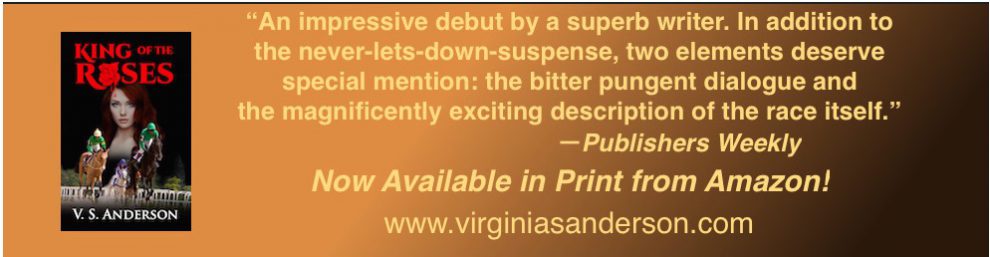
They asked me for lists of famous people I knew who would read my book and write blurbs for it. I gave them lists of famous people, but I didn’t know any of them. They did send the book out for review. The reviews were extremely strong. They got it into some libraries. But that was the extent of it on their end. Maybe there were efforts I never heard about or saw.

I contacted local bookstores and got the book on the shelf in a couple of them. But I learned about bookstores. Your book–my book–wasn’t going to appear in Barnes & Noble or Borders or any of the bookstores then extant unless it had $$$$ behind it in advertising. Since it was a hardback (and they never sold the paperback), it didn’t appear on any drugstore shelves. I was advised to make the rounds of all the bookstores and find out who the book reps were and make friends with them and sell them on my book, so they would push it to the independent bookstores.

This is all so far away from the kind of person I was (still am) comfortable being that my efforts in this direction fell way short of a lick, let alone a promise. Self-promotion has never been easy for me. It’s why I can’t really pitch well. Besides, I was still working, making about 8K a year (a sum not as bad then as it would be now), and the idea of driving all over the country glad-handing book reps felt like something that wouldn’t happen unless I had a personality transplant. My agents and my editor both said, “Let go of it. Get on with the next book.” (I think today that translates into “Less tweeting, more writing.”)

At a few conferences I’ve been to, when the resident agents learn that you’ve been previously published, they ask for sales figures on your books. The idea seems to be that if you weren’t writing bestsellers then, you never will. KOTR sold, as best I can tell, about 20,000 copies. Not sure if this includes the later Bantam paperback. I have begun to think that I am almost better off not to tell some of these people that I ever was published. Let them think they’ve “discovered” me.

That is if I truly want to work with someone like that.

I have slowly come to believe that the ongoing changes in publishing are for the better. At least now you go in knowing that if anybody’s going to market, it will be you. I have read mixed reports and have mixed feelings about the various gung-ho marketing schemes people recommend, so I don’t know which will work for me. At least I also know now that I will not be getting the 2 million in advance and so that worry is off my mind. What a relief.


 

Leave a comment

Filed under Finding literary agents for writers, Myths and Truths for writers, Writers' conferences

Coda to “I believe I’ve been gone for a while”

I had a conversation Thursday afternoon of last week with one of our part-time instructors, who, with an MFA, just got a full-time job teaching CW and will be leaving us. He is an exceptional example: lots of credentials and publications. He asked me how I balanced my creative writing and my academic life. I said, “I don’t.”

Leave a comment

Filed under Teaching writing, Writing and teaching writing

I believe I’ve been gone for a while. . . .

. . . . as will be obvious from the dates.

I find that I’ve had many (silent) visitors in the meantime.

Here’s what happened: Spring term was hell. Two faculty searches. Major curriculum overhauls (state-mandated). Two sections of research writing that, for the most part, were disasters (more on that down the road, at least if I can get to it before it all starts up again in August). Regular committee work; many, many student complaints to adjudicate in my role as a writing program administrator (co-administrator–thank God for my counterpart). Since classes ended in May, we’ve been frantically interviewing to fill our part-time slots for fall (we can no longer offer three sections due to the provisions about benefits in the ACA). Two months into “summer” with less than six weeks of relative peace left, I find myself back here with all sorts of promises to self about being more diligent. We’ll see.

Yesterday, I had a long phone conversation with a newly minted MFA in creative writing who wanted to make sure we had received her application for a part-time teaching position. Yes, we had; we’d filed it under “not qualified for our job.” She was delightful to talk to, but I doubt she was delighted with me.

She wasn’t qualified because the only thing she’d ever taught was a poetry class. I told her we need people with experience teaching college composition. We didn’t quite get into the details as to why that matters, but I did suggest the truth: it matters because until you’ve faced four papers in fifteen weeks (multiple drafts as well as various pre-writing work for each), you can’t know what teaching college composition will be like for you. We don’t have the time or resources to teach someone who’s never done it how to structure and conduct a college writing class. We look for people with backgrounds in college composition through their graduate work, or failing that, people who have taught enough to know what they’re getting into and who can “talk the talk” to us in an interview (“How would you structure an assignment sequence to move students from personal writing to academic writing?” “How do you see the role of grammar instruction in a college writing course?” “What do students need to be able to do when they leave a first-year writing course?” Etc.) While we do make mistakes, we can usually tell in the first few sentences of the answers to such questions whether we will be able to offer the applicant a job.

But I also told her she ought to consider very carefully whether, as an aspiring poet (I think she actually had been told in some contexts that she could earn a living publishing her poetry), she really wanted to teach.

I have mainly my own experience to go on. Yes, I have a relatively good job in that it’s secure (tenured) and pays enough for a safe life and some luxuries, and has good benefits. But it has meant the death of my own “creative” writing. I’ve published academic journal articles–I like writing them, and I’m good at them–but as I told the young woman, I haven’t seriously worked on my “own” writing in ten years.

I told her, “You need a job that you can walk away from at the end of the day. One you can tailor to your own work habits (evenings if you write best in the mornings and vice versa). One that makes minimal emotional demands on you. I told her, “If you teach writing, every bit of emotional energy you can generate will be invested in students’ writing–other people’s writing.” For me, only the release of summer allows enough of that energy to bubble up again that I can even do something like this. Once school starts again, my job seizes my life. A lot of it has to do with trying to get my mind around what “writing” “is” and “means” for people who’ve never written, who almost never read, who fear writing or have no experience of it as a way of getting things done in the world, for whom, sometimes, a sentence is a mystery. And who don’t realize that writing is work. I can’t make it easy for them. Not being able to make it easy for them makes it hard for and on me.

My experience doesn’t match everyone’s. We do have people with MFAs who continue to do their own work and who find that they LOVE teaching. That it energizes them, expands them. I told the woman to apply to the community colleges (which, around here, readily hire people with no experience) and see what teaching feels like. But in the meantime–I told her, and I mean it–jobs for MFAs are few and far between. We have ten people on staff who can teach creative writing, and they covet those classes. If we were to hire someone specifically to take them over, we’d hire someone very well-published with lots of publishing contacts who could professionalize our program. Not a just-graduated MFA. Many of our students want MFAs–for what? A lifetime of teaching first-year comp part-time for less than $15,000 a year?

I could go on quite a bit more. But I believe I had begun several stories. If I am a good girl, I will work on catching up on them. For now, to close: the aspiring MFAs in our program have no idea what “real” publishing is like. They don’t want to know. Maybe that is as it should be. Maybe no one would ever write a word if they did know. And that would be quite a loss.

Leave a comment

Filed under Myths and Truths for writers, Teaching writing, Writing and teaching writing