Tag Archives: creative writing

Do you know how to publish an ebook with pictures?

Here’s some simple advice that may prove useful even if you’re not working on a children’s picture book! Jean Cogdell tries things out for us and shares!

Jean M. Cogdell's avatarJean's Writing

Using MS-Word?

Success at last! When I loaded it up to KDP, everything worked!i-did-it

If you write children’s books or comic books, I’m sure you’ve heard of Kindle Kids’ Book Creator. This program is terrific. However, the program limits which electronic devices that can open and read the book.

I wanted my picture books to be available on e-readers and tablets. I found out after using KKBC for A Most Reluctant Princess; this wasn’t possible. Using KKBC limits which electronic devices available.  Since publishing my first picture book, I’ve read tips, blogs, instructions, and watched videos searching a way to use MS-Word.

No one had the answers I needed. So, I began experimenting until I figured out a process that worked.

My new book, A Reluctant Little Prince, in e-book form, is written on MS-Word and can be read on a Kindle. Yay!

For the print version…

View original post 132 more words

1 Comment

Filed under Amazon Kindle Direct Publishing, book design for creative writers, ebooks publishing and selling, indie publishing, Self-publishing, Tech tips for writers, Writing

Some Helpful Advice on Copyright, ISBNs, and More

Books leading to a door in a brick wallJoel Friedlander is always a wonderful resource. Today’s “Mailbag” covers some important questions about copyright and ISBNs, as well as some questions about vendors and formatting decisions. Check it out!

Leave a comment

Filed under Amazon Kindle Direct Publishing, business of writing, Copyright for writers, ebooks publishing and selling, indie publishing, Money issues for writers, Print on Demand for fiction writers, Publishing, Self-publishing, Writing, writing novels

A Perennial Question: What is Literary Fiction?

Check out this discussion about the definition of literary fiction and add your opinion. While you’re at it, here’s literary agent Donald Maass’s answer. I like it. What do you think?Writer with questions

Leave a comment

Filed under ebooks publishing and selling, genres for writers, indie publishing, Marketing books, Myths and Truths for writers, Plot Development for writers, Self-publishing, small presses, style for writers, Writing, writing novels

Aliens and guillotines- 6 reasons to break the editing rules

Here’s a great piece from Sue Vincent that echoes what I’ve often thought about those mechanical editing programs that try to lure us into their World of Rules.

I will add to this: The darn programs are all too often just plain wrong! Can’t tell you how many sentences Word’s editor labeled fragments, and how many actual fragments it missed! And any time a mechanical “editor” gives you a piece of advice about punctuation, check the editor’s rule against at least a couple of standard handbooks before kowtowing to some dictator’s orders.

I can’t say enough for real readers. Okay, so they, too, are sometimes “wrong.” Or wrong-headed. But a) they can and usually do explain why they reacted a certain way to something you wrote, and b) they respond to the very things the robots and aliens discussed in this article glide right past—the emotion, the rhythm, the energy, the joy.

Don’t pore over some grammar or editing site. Join a writers’ group!

Sue Vincent's avatarSue Vincent's Daily Echo

From the archives – May 2015:

sheffield book weekend 468

I was curious. Being a writer, I keep seeing articles about the editing software available online to help writers and, over coffee, I thought I would have a quick look. I browsed a number of them, duly pasting a chunk of text into their little blank boxes to see what they had to offer.

After five minutes, my blood was boiling.

Writers, it seems, are being encouraged to use these programmes. Not, as I mistakenly supposed, in order to check their grammar, spelling and punctuation… say, as an extension to spellcheck or as a different perspective on work we are too fond of, and too involved with, to see clearly. No. We are being encouraged to use them in order to erase our personal voice.

Okay, I know… that probably isn’t entirely fair.

There are those who swear by their usefulness, though these, I…

View original post 1,436 more words

3 Comments

Filed under correct grammar for writers of fiction, Editing your novel, grammar rules for writers, indie publishing, Learning to write, Myths and Truths for writers, punctuation for writers of novels, self editing for fiction writers, Self-publishing, style for writers, Writers' groups, Writing

The Story Question is Vital

This article addresses what I find is the most pressing issue in developing a novel. It’s the one I come back to again and again, hoping I’ve made it work and struggling if I think I haven’t.

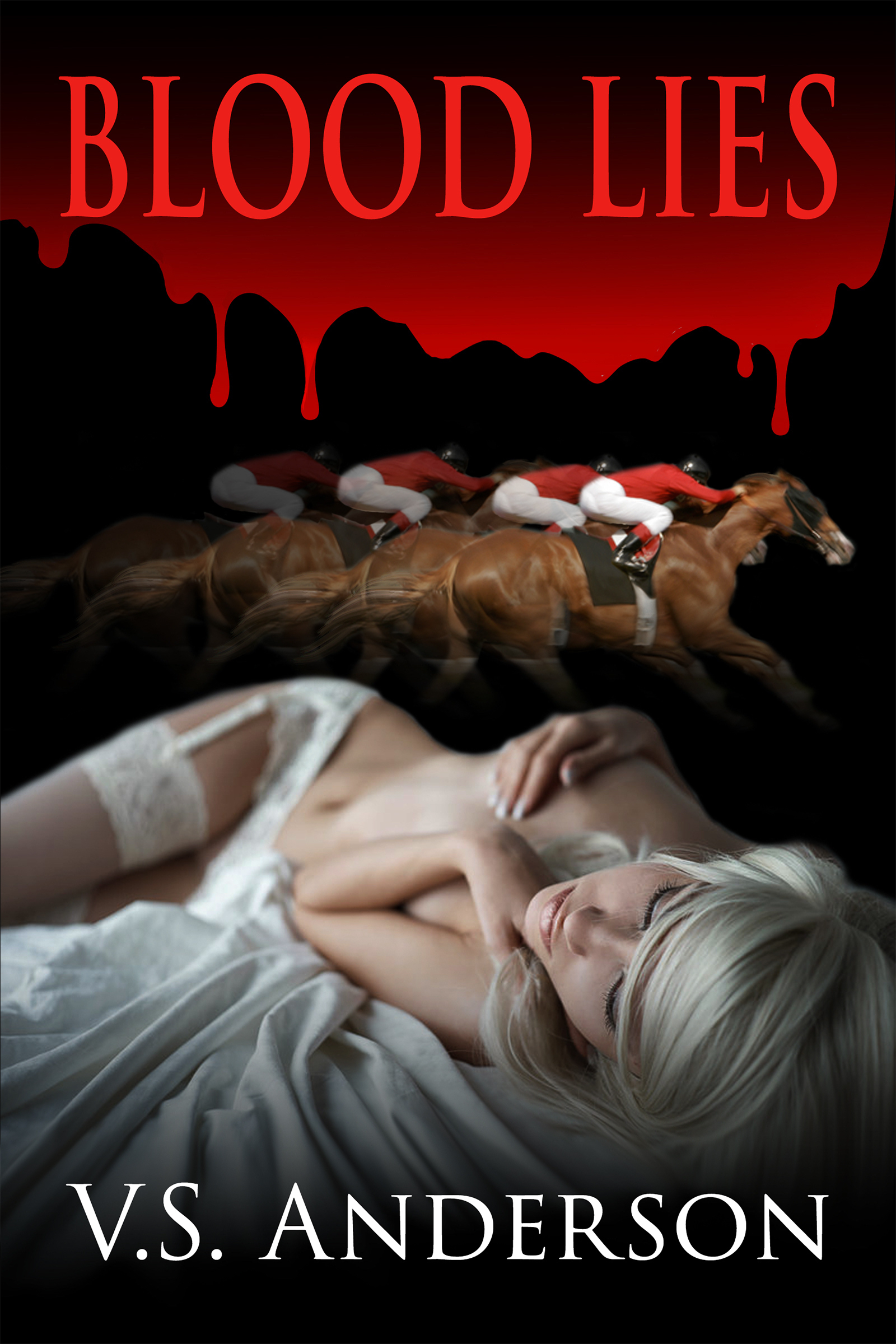
In some ways, I think this article may distill the question down a bit more than I like; sometimes there’s a story question embedded in another story question, and both have to be answered. In Blood Lies, the obvious story question is whether Ted will find out who murdered Alejo. But the larger question that drives and even overrides this one is whether, in the process, Ted will become the man he needs to be to respect himself. So a corollary question to ask in working on story questions is whether the two (or more) questions serve each other. Does finding his best self help Ted find the murderer? Does finding the murderer help Ted find his best self?

In any case, in many unpublished novels I read, it’s the story question that’s missing–or just isn’t compelling. So this article is an excellent primer on this central issue in fiction.

Both the story question and the story problem are vital for crafting cohesive stories and strong fiction. A discussion of the story question in fiction.

Source: The Story Question is Vital

Leave a comment

Filed under Blood Lies, ebooks publishing and selling, Editing your novel, indie publishing, Learning to write, Plot Development for writers, self editing for fiction writers, Self-publishing, Writing, writing novels

Grammar Check! The Who/Whom Conundrum: When What’s Wrong is Right!

Who/Whom is kind of an odd choice. I call it a conundrum because you’ll do better, much of the time, to go ahead and get it wrong.

That’s because most people won’t even notice if you get it wrong—most of the time. But they probably will notice when you try extra hard to get it right and THEN get it wrong.

alarmed smiley

Simply speaking, only a rabid grammar termagant will rage if you just use ‘who” ninety-nine percent of the time.

After all, doesn’t it sound more natural to say, “Who did you give that to?” than “Whom did you give that to?”

The “whom” in the second is correct because it’s the object of the preposition “to” and objects have to be in the objective case (like “him,” “her,” “us,” and “me”). But our minds these days just aren’t trained to worry about all such distinctions.

What should you choose, who or whom?

Our rabid termagant will sputter that you shouldn’t end a sentence with a preposition, but that’s another argument. People DO end sentences with prepositions, and the principle stands: the incorrect “who” sounds more natural than the correct “whom,” so most people won’t even blink at this “mistake.”

The only time most people will want “whom” is when it directly follows its preposition, and that usually happens in a question that’s been re-ordered:

  • To whom did you give it?
  • With whom were you going?
  • I don’t remember for whom I bought this hat.

But do you have to write these particular sentences?

Who cares if you get who/whom wrong?

I suppose you may if you are writing Downton Abbey fan fiction. But in my view, don’t bother unless you have one of those hyperactive grammar consciences that wake you up in the middle of the night to go fix that comma you misplaced.

But ordinary people will be perfectly okay with

  • Who did you give it to?
  • Who were you going with?
  • I don’t remember who I bought this hat for.

Happy editingThe problem arises when people assume that because “whom” sounds so much more formal, one MUST use it whenever one wants to sound formal. One word for making choices like this is “hypercorrectness”: going so gaga trying to get it right that we actually get it wrong. For example:

  • Whom is going with us?

Ouch, that really grates. Subjects of verbs are always in the “subjective case”: I, you, he, she, it, we, and they. And “who.”

  • Who is going with us?

Who/whom solution

The messier­—and understandably more confusing—situation occurs when the who/whom pair has to be sorted out at the beginning of a dependent clause acting as an object. The handbook rule is that you choose “who” or “whom” depending on what it’s doing in its own clause, not in the larger sentence.

  • Did you say who is going with us?

(Correct: “who is going with us” is a noun clause acting as the direct object of “say,” but “who” is the subject of its own verb, “Is going.”)

  • Did you say whom the hat is for?

(Again correct:  Again, “whom the hat is for” is a noun phrase acting as the direct object of “say.” “Whom” is the object of the preposition “for.“).

The hypercorrectness bullyBut the troll of hypercorrectness comes charging out from under the bridge to wreak havoc on your writing when a writer gets paranoid and decides that “whom” sounds like what a smart person would say regardless of the role “who/whom” is playing in its own clause. Then we end up with

  • Did you say whom is going with us?

(Incorrect: yes, once again, “whom is going with us” is the direct object of “say.” BUT “whom” is holding the place of subject of the verb “is going” IN ITS OWN CLAUSE and should be in the subjective case—that is, “who.”)

  • Don’t give money to whomever asks for it.

(Again, incorrect. Yes, “whomever asks for it” is the object of the preposition “to.” BUT IN ITS OWN CLAUSE, “whomever” is trying to be the subject of “asks” and therefore should be in the subjective case—that is, “whoever.”)

Brain reeling? Too hard to sort all this out?

I agree.

Getting who/whom right!

And to repeat the point of this post, THERE IS NO REASON ON EARTH not to go ahead and use the perfectly natural-sounding”who,” and quit worrying about whether it is technically a mistake. Then you will say

  • Did you say who is going with us?

or

  • Don’t give money to whoever asks for it.

And you’ll not only be right, you’ll sound right. and the bonus is, you’ll sound right even if you say

  • Did you say who you bought the hat for?

So just kick “whom” out of your vocabulary rather than sticking it where it doesn’t belong (here’s a wise soul who agrees!).

Book open to the stars

3 Comments

Filed under correct grammar for writers of fiction, ebooks publishing and selling, Editing your novel, grammar rules for writers, indie publishing, Learning to write, Myths and Truths for writers, self editing for fiction writers, Self-publishing, Writing

Five Things Writers Need to Know About Facebook

This article answers some questions I’ve had recently about my rather desultory use of my Facebook resources. Please let me know if you’ve had a different experience, or if you agree!

mdellert's avatarMDellert-dot-Com

“If you try to use Facebook for something it’s not designed to do, you’re just going to get frustrated over the lack of results.” — Tim Grahl, author of Your First 1000 Copies

Recently, I was posting my latest giveaway opportunity to a variety of promotional groups on Facebook. A fellow author and Facebook friend noticed and messaged me soon after: “You’re posting a lot on Facebook recently. How’s that working out for you?”

What he was really asking me: “How does one successfully use Facebook for author marketing?”

Tim Grahl recently addressed this question on his blog (Facebook and Author Marketing, September 17, 2016), and my own experience in growing my social media platform confirms many of the assertions that he makes in his article. To understand how to use Facebook for author marketing requires an understanding of what Facebook was designed to do.

Facebook is a Peer-to-Peer Network

Exclusivity

Firstly…

View original post 957 more words

Leave a comment

Filed under business of writing, ebooks publishing and selling, indie publishing, Marketing books, Money issues for writers, Myths and Truths for writers, Print on Demand for fiction writers, Self-publishing, Tech tips for writers, Writing, writing novels

Free Book Promotions? What Do You Think?

Book open to the starsHere are some evaluations of book promotion services from The Book Designer (a great site for all things indie). The question is whether sites like these are better than membership in KDP Select.

Share with us your own views! Have you tried any of these services? Do you have others to recommend?


Leave a comment

Filed under Amazon Kindle Direct Publishing, business of writing, ebooks publishing and selling, Free Books, indie publishing, Marketing books, Money issues for writers, Print on Demand for fiction writers, Self-publishing, Writing, writing novels