Great Suggestion for Friends & Family Reviews on Amazon…?

I got to this through Chris The Story Reading Ape’s blog. Since I’m new to being published on Amazon, I appreciate all the advice of this sort I can get. Tweet to Amazon to support this!

chrismcmullen's avatarchrismcmullen

Background image from ShutterStock. Background image from ShutterStock.

REVIEW SUGGESTION FOR AMAZON

Friend and family reviews are a touchy subject among both authors and customers:

  • For the customer review system to be effective, customers need to be able to trust the system. This is why Amazon removes and blocks reviews suspected of being posted by the author’s friends or family members.
  • For the customer who posted the review, having it blocked or removed is time wasted, and discourages the customer from posting reviews in the future.
  • For the self-published author, an invaluable part of marketing entails creating personal relationships. Sometimes, the occasional personal interactions with a fan who didn’t previously know the author causes a book review to be blocked or removed.
  • Unlike the big publishers, self-published authors and indie presses can’t afford to send out hundreds of review copies to strangers. They can get friends to help get the ball rolling, except that…

View original post 761 more words

Leave a comment

Filed under writing novels

THE STORY OF GREEN RIVER WRITERS: History of a Successful Writing Group

This is the second post in the story of Green River Writers, a long-lived, successful writers’ group based in Louisville, Kentucky. In my last post, I introduced the president and founder, Mary “Ernie” O’Dell, and shared a little of her writing journey. Today I’m sharing the story of Green River Writers: how it started and why it’s thrived so long.River in Kentucky

First Days

The group was born shortly after Ernie met her second husband, Jim (she calls him her “real husband”).

We were both writers; he was living in North Carolina and I was living in Louisville—and there were no writers in my life except him and a few people that I met at writers’ conferences, so I thought, by golly, I need some other writers. So I called up a few of the people that I knew that wrote, and I said, let’s get together. Jim came up from North Carolina for a four-day weekend at Rough River State Park in Kentucky. We decided to have a real retreat in the summer of that year, 1986, I believe, and we couldn’t find housing cheap enough for all us poor people, so we rented a girls’ dormitory at Campbellsville College in Campbellsville, Kentucky, for a week at $5 a night per room. We changed from Rough River to Green River because the Green River flows right through Campbellsville.

At that time, we had 12 or 15 members. Campbellsville College (University now) was fairly conservative; they frowned upon us having men and women in the same building, much less on the same corridor. I went into the office and said, “I need to make something clear to you. When we come here, we no longer have men and woman, we have writers, and there are times when are up all night, there are times we need to consult with a fellow writer, and we don’t want to have to go down a floor or to a different building, so please put us all on the same corridor,” and they did. But they were watching us carefully. I got called on the carpet because downstairs in the public restroom, someone had left a beer can. I said, “Are we the only people in this building?” and they said, “Well, no,” and I said, “Well, we didn’t do it.” Another time someone went outside to smoke and came back and exhaled smoke into the hallway and they called me on the carpet for that. So I had to be righteously indignant many times while we were there.Eyeglasses and pen

Continue reading

1 Comment

Filed under Green River Writers, Interviews, poetry, Writers' groups, writing contests, writing novels

INTERVIEW: MARY “ERNIE” O’DELL, PRESIDENT OF GREEN RIVER WRITERS—PART ONE

Today: Ernie’s Writing Journey

If, like me, you go through stages in your writing career where you feel isolated and in need of connections with other writers, you may have sought out a writing group–or perhaps even considered starting one. Of course, online resources let us share our writing and collect tips from a plethora of experts. But these tips can be generic, not specific to our needs, and even strong online critique groups can suffer from the limitation of all online “teaching”: the loss of body language and verbal cues and the difficulty of eliciting immediate responses when we have questions about a comment or need follow up.

Recently I’ve read and shared several posts about writing groups, and I’ve written before about my group and how I value it. Some commenters have mentioned joining groups that folded or that didn’t work for them. I realized that my group, Green River Writers, based in Louisville, Kentucky, is an example of a group that has held together for decades. What exactly does make for a successful, long-lived writing group?Book with heart for writers

One important factor in the group’s longevity and success is its founder and president, Mary “Ernie” O’Dell. I cornered Ernie to learn about how the group began and why it has succeeded.

Today’s post introduces Ernie and her journey as a writer—a journey many of us can identify with in some ways.

A little about Ernie

I immediately asked about one thing I’d often puzzled over: where “Ernie” came from.

It comes from Mary Ernestine O’Dell. Dad’s name was Ernest Forbis Houck. I was named after him and his friends called him Ernie, so when I got in junior high, and was asked what my name was, I said Ernie. So that’s where that was born.Stephen King quote

Three of Ernie’s novels have been published by Turquoise Morning Press in Louisville: Cyn, The Sweet Letting Go, and Banger’s People. I asked Ernie about the settings and ideas that fed into her books.

I grew up in West Virginia and the southern and eastern Kentucky region. All the books have the flavor of that region; two of my books involve the West Virginia coal-mining industry: Cyn and the one I’m working on now, which I’m calling “Hope” for the time being. [Hope is one of the main characters, a high-schooler who lives with her older sister Lily and their parents and siblings in a coal-mining town just at the outbreak of World War II.]

Cyn takes place in the neighborhood of little row houses where my daughter became friends with the next door neighbor when they were seven or eight. The opening scene, the little girls in the elderberry bushes getting elderberry stains on their clothes, that was me: I would play in the bushes behind our house with my little cousin and get stains on me and my mother would not like that.

The interesting thing about Cyn was that I wrote in five different points of view. When Sheri McClaren, my mentor, read the first draft, she loved all these characters except the little girl’s father. She needed to know why the child loved him, because she wouldn’t have loved him if he had been her father. So I had to go back and rewrite the little girl’s father, and in doing so I had to figure out where I found him, who he was, and why he was so judgmental and vindictive. I discovered that he was my first husband who was a minister for some years. Then I had to find out why this fictional person would be this negative. I made him the son of an alcoholic and youngest son of three brothers, two of whom were alcoholics; they all made fun of him the time. I had to really deepen his character so he wouldn’t be such a bad guy that no one would care about him.

I wrote The Sweet Letting Go a few years after my second husband (my real husband) died of lung cancer. I was his main caretaker, but I didn’t want to make it autobiographical. I turned the whole thing around to make the female the one with the serious illness with the male as her caregiver.

Books and ladder

Ernie’s Writing Journey

Ernie’s writing career began during her career as an elementary teacher in Louisville. Continue reading

Leave a comment

Filed under Editing your novel, Green River Writers, Interviews, Learning to write, Writers' groups, Writing, Writing and teaching writing, writing novels

How Do You Keep Up Your Writing Productivity?

After a year and a half of blogging and working on a non-fiction project for the future, this summer I’m getting back into a fiction routine. I’m remembering how writing an 80- or 90-thousand word novel differs from blogging or posting Facebook updates. It takes some pretty effective strategies to ward off boredom, burnout, and the temptation to clean house instead.

My strategies probably differ from most people’s. I don’t have kids, and I’m retired, which is actually the only reason I can work on a novel at all. When I was teaching, first light saw me reading student research and papers; the rest of the day outside of class went to administrative tasks. But finally, now! A new routine!

Woman writing

Wish it worked this way!

I did worry that my new lack of structure would undercut this new chance to write. So I made myself some rules. So far, good prognosis: My new “Sarah” book is coming, words sneaking out onto the page.

I’m wondering whether these are the same kinds of rules that work for you, or whether you have tweaks to make them work even better. Let me know!

Write FIRST.

Some people actually write before daylight. I wish! First I read in the bathtub and then read the newspaper online. But when I begin my self-defined “workday,” Activity No. 1 is WRITING. Not blog posts, not query letters, not emails: no, writing on the book.

Write EVERY DAY.

Even on weekends. Okay, I confess, Saturday I’m going to a horse show, and I won’t write that day. Then there’s doctors’ appointments, taking the car for an oil change. Or the dog to the vet. Or, if you have kids, a thousand reasons to say, “I just can’t today!” But this next strategy is the one that keeps me writing almost every day:

Keep it DOABLE.

I developed this strategy when I was writing seminar papers in grad school and grading reams of student papers. Some colleagues would slog through twenty-five research papers at one sitting. Freed them up the next day, they said. But when you’re writing a novel, ten hours today won’t give you a free day tomorrow. And ten hours saps me, leaving me drained.

Man worrying about his writing

After 25 papers!

Instead, when I taught, I figured out how much I had to do each day to meet my deadlines. I’d do that, and no more. For my novel, I’ve been setting myself an easy, non-intimidating daily quota. Right now it’s one college-ruled notebook page. The secret, of course, is that when you get to the end of that page, you almost always keep going. But there are very few days when there’s not enough time to write just that one.

Find A GOOD PLACE TO WRITE.

In Florida that good place was in my canoe tucked into a quiet elbow on the Hillsborough River. Those live oaks just seemed to drip words. Sure, I would get distracted when a gator cruised down the inky river, or a wood stork slow-walked past. These days, I sit on my back deck with my feet propped on the railing. I admit I got distracted the other day when a bald eagle flew overhead. But there’s something about being outside, enveloped by trees and sky, that gifts me with language. Don’t know yet what I’ll do when the snow comes. I have a nice chair with a nice window. If I can keep the dog and the cats out of my lap, there’s hope.

A good place to write

Hillsborough River outside of Tampa

Find something FUN TO WRITE WITH.

Okay, for those who compose on a computer, this one is moot. But I’ve always done creative first drafts in longhand. I love having margins for ideas, reminders, or metaphors to try out. Transferring text to the screen gives me an amazing edit. When you have to type a sentence, it isn’t all that hard to ask, “Do I really need this?”

For years I preferred Schaeffer cartridge pens, black ink, turning the nib upside down for a finer line. My handwriting is small, and I loved the actual shape of the letters as they flowed onto the page. Those days of near-calligraphy are gone; now it’s all barely decipherable scribbles. Schaeffers became harder to find. I’ve switched to a refillable fountain pen, still turning the nib upside down.

And finally, STOP WHEN YOU KNOW WHAT’S GOING TO HAPPEN NEXT—SORT OF.

If I know, really know—that’s boring. But if I’ve created a situation, like Stephen King suggests, and plopped my characters on the verge of it, I seem to have given myself my own cliffhanger. Okay, Sarah and Nick have reached Enchanted Rock, and she worries he’s about to commit suicide. I know I’ll be back tomorrow to find out what happens next.

Bill, the dog, critiques

A dog in your face is always helpful

But here’s one of my main questions:

I’d progress faster if I wrote for longer stretches. Do you have a strategy for doing that? How do you keep yourself fresh to start again the next day? What other strategies help with your productivity? If you’re juggling family and a job, how do you get those words on the page?

Coffee mug for writers

Coffee helps!

7 Comments

Filed under indie publishing, Self-publishing, Writing, writing novels

Dun Writin’—Now Whut? – 56 ‘Shoulda Woulda Coulda’ (A series by Susan Uttendorfsky – Owner of Adirondack Editing)

Some fine grammatical distinctions that can easily get lost!

3 Comments

Filed under writing novels

GREEN RIVER WRITERS CONTEST DEADLINE TOMORROW!

See here for contest details: 17 categories, including a Novel First Chapter category for unpublished and self-published novels (judge: NYT best-selling author Will Lavender!). Still time to get yours postmarked tomorrow. Send yours in!Contest Time!

1 Comment

Filed under ebooks publishing and selling, Green River Writers, indie publishing, Self-publishing, writing contests, writing novels

#Bloggers Beware: You CAN get SUED for using Pics on your Blog…

Chris the Story Reading Ape posted this link; it’s important reading. For the record, the pictures I’ve begun using are from stock photo sites that state expressly that they can be used for blogs, book covers, web sites, etc. These sites use the terms “resale and distribution” in ways that I find confusing; for example, depositphotos, which I have used quite a bit, says that the regular license is fine for book covers, but then says this license is only appropriate for ebooks if the photo file plays “a minor role” in the product. Since many of the book-cover designers on Mark’s List at Smashwords use sites like this, it would seem to this non-lawyer that the images are available for such use in ebooks just as in regular books.
In any case, I have found the sites I’ve used to be easy and inexpensive. You can buy images for as little as $1.00. The article this post links to lists a number of free sites, including Creative Commons sites. When I checked out Wiki Commons, I wasn’t particularly impressed with the selection there; the pay (royalty-free) sites seemed to have a larger selection of what I was looking for.
Perhaps others can share their experiences and expertise on this topic!

Chris The Story Reading Ape's avatarChris The Story Reading Ape's Blog

Further to an update from my blog partner

Professional Editor Susan Uttendorfsky

Dun Writin’—Now Whut?

Sharing Content, Copyrights, and Permissions

54 Part 1 and 55 Part 2

also apply to using photos

See this blog post of a blogger who was sued over using a copyrighted photo,

even with a disclaimer:

By clicking on the image or link below:

image

bloggers-beware-you-can-get-sued-for-using-pics-on-your-blog

View original post

3 Comments

Filed under blogging, business of writing, ebooks publishing and selling, indie publishing, Self-publishing, Smashwords, writing novels

How Much Grammar Do You Need, Part V: Rules I’ve Seen Erudite People Break–

—but that other erudite people will definitely notice!

One of Joe Williams’s categories included errors erudite people make but no one notices. Even the erudite people preaching against the error make it and don’t catch themselves.
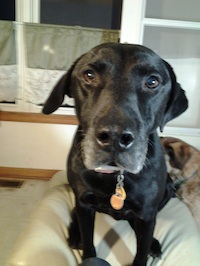
Bill, the dog, critiques

He tells me when I’m wrong!

But another category: errors erudite people DO notice, and react negatively to—the implication being that these are errors erudite people scrupulously avoid.

Ahem.

I recently read the following in the New York Times:

The Arlington police had went to the Classic Buick GMC dealership Friday just after 1 a.m. when a caller reported that a man was standing on top of a car in the lot “stamping on the windshield trying to break it,” according to a 911 call.

I’m not posting this here as a statement on the events being described (you can learn about that elsewhere.) I’m providing it because it commits—in the New York Times of all places!—one of those fairly egregious errors an agent or editor or any other “well-educated” reader definitely will notice—and judge.Sad Editing!

(Tip for that NYT writer: if “have” or “had” is part of the verb phrase, go with the past participle. Otherwise choose the simple past.)

So Rule #1 that won’t be overlooked is use the correct verb form!

Rule # 2 on this list: Know the difference between “its” and “it’s.”

Trivial? Absolutely. Will not knowing the difference really matter? In some cases, you bet.

I suspect this one results from writing too quickly and proofing on the screen with a deadline looming. If by some chance keeping these straight plagues you, there’s unfortunately no easy way to remember, unless it’s to go with the one that makes the least sense. You’d think a possessive, like “The dog chased its/it’s ball,” would take an apostrophe, wouldn’t you, since possessives are formed with apostrophes? But “its,” the correct choice, is kin to “her” and “his.” Just fix in your mind how silly “He ate hi’s supper” would look, and you may be able to remember to pick the one without the apostrophe.

While we’re on the subject of apostrophes,

Rule #3 on this list is do not form plurals with apostrophes.

I saw this done in the crawl on Good Morning America! But it’s like announcing that the writer has been reading more roadside veggie stands than novels.

Rule #4? Do not put commas in these two places.

Comma rules can look complicated. Recently I eavesdropped on professional editors trying to decide whether to insert a comma based on whether they heard “a pause” or not. But people hear pauses in different places. There are “rules” for commas. I find that the basic list of uses for commas in handbooks, or on sites like this one, make sense.

I consider commas one of the most important tools for clear writing. They mark off sections of sentences and help me, as a reader, know what’s coming next (are we still in the appositive, or have we returned to the independent clause?). In this post, I just want to emphasize two places where I’ve seen commas sneak in. (And my agent from years back said specifically that she’d stop reading a query the minute she spotted one of these.)

Forbidden place A) Between a subject and its verb. “Gloria, went out to lunch.” I don’t hear a pause there. Do you? Or, more understandably: “One of the reasons I don’t like that play, is. . . .” Here, the length of the subject phrase may make a writer feel as if it’s time for a pause.

The only time a subject should be followed by a comma is when some kind of “interrupting” element comes between the subject and its verb: “Gloria, however, hated the restaurant we’d chosen.” Or “Gloria, who hates Chinese food, went with us to the Chinese buffet because it was cheap.”

Forbidden Place B) After a coordinating conjunction.

The most dangerous place for this interloping comma is after the conjunction between two complete sentences: “I hope you will consider representing my novel but, I know you have many submissions to read.” The comma goes before the “but,” never after, unless there’s an interrupter, and then you need two commas: “I hope you will consider representing my novel, but, like all agents, you have many submissions to read.”

None of these errors directly impacts communication. At worst, they create little hiccups in the flow of the text. Except that, as Williams points out, error is in the eye of the beholder. What’s a hiccup for me might well be a coughing fit for someone else. Agents and editors qualify, at least in general, as erudite readers. Even if the staff of the New York Times didn’t catch that “had went,” they probably will.

Do you have your own candidates for rules you really can’t get away with breaking? Leave a comment and let me know!
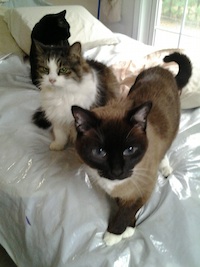
Cats as kibbitzers

They have their opinions, too!

Leave a comment

Filed under correct grammar for writers of fiction, Editing your novel, grammar rules for writers, indie publishing, Learning to write, punctuation for writers of novels, self editing for fiction writers, Self-publishing, style for writers, Writing, writing novels

How do you determine what level of language to use for children and YAs?

Here’s a comprehensive follow-up to yesterday’s post about readability scales. This article, from a library site, was sent to me in response to a comment I made on the Web of Language blog. The article explores many of the scales available. I’m curious: how do writers of young adult and children’s books make these decisions? Is there a scale or set of guidelines widely in use for this purpose? If so, how does it compare to the scales and tools discussed here? I’d love to hear from authors of YA and children’s books. What tools for selecting the right level of language would you recommend?

Leave a comment

Filed under self editing for fiction writers, style for writers, Writing, writing novels

Interesting Post on Reading-Level Scales—for Children’s and YA authors?

Here’s a post by Dennis Baron at The Web of Language about the readability scales used by various organizations to dictate the “grade-level” writers should aim for. He argues that these scales are useless, by virtue of the fact that they contradict each other, at the very least, and don’t provide help in creating “clear” language at any level. I’m not sure how these scales relate to the guidelines on language in children’s and YA books that writers in those genres follow. Check out the post, and let me know if you have used scales like these.

Leave a comment

Filed under self editing for fiction writers, Self-publishing, style for writers, Working with literary editors, Writing, writing novels