Category Archives: writing novels

Writing, revising, selling your fiction books

How reviews help writers… I didn’t know Amazon worked this way…

Apropos of this information (which I guessed but didn’t *know*), if you are interested in reviewing one of my books, let me know and I’ll send along a coupon for a free copy at Smashwords! (I think Amazon prefers “verified purchasers,” but I’d love a Goodreads review as well.)

Kawanee Hamilton's avatar

I didn’t know Amazon worked  this way… I sure could use the reviews. I know there’s enough people who bought it. Review review people!

View original post

Leave a comment

Filed under writing novels

Writing By Hand

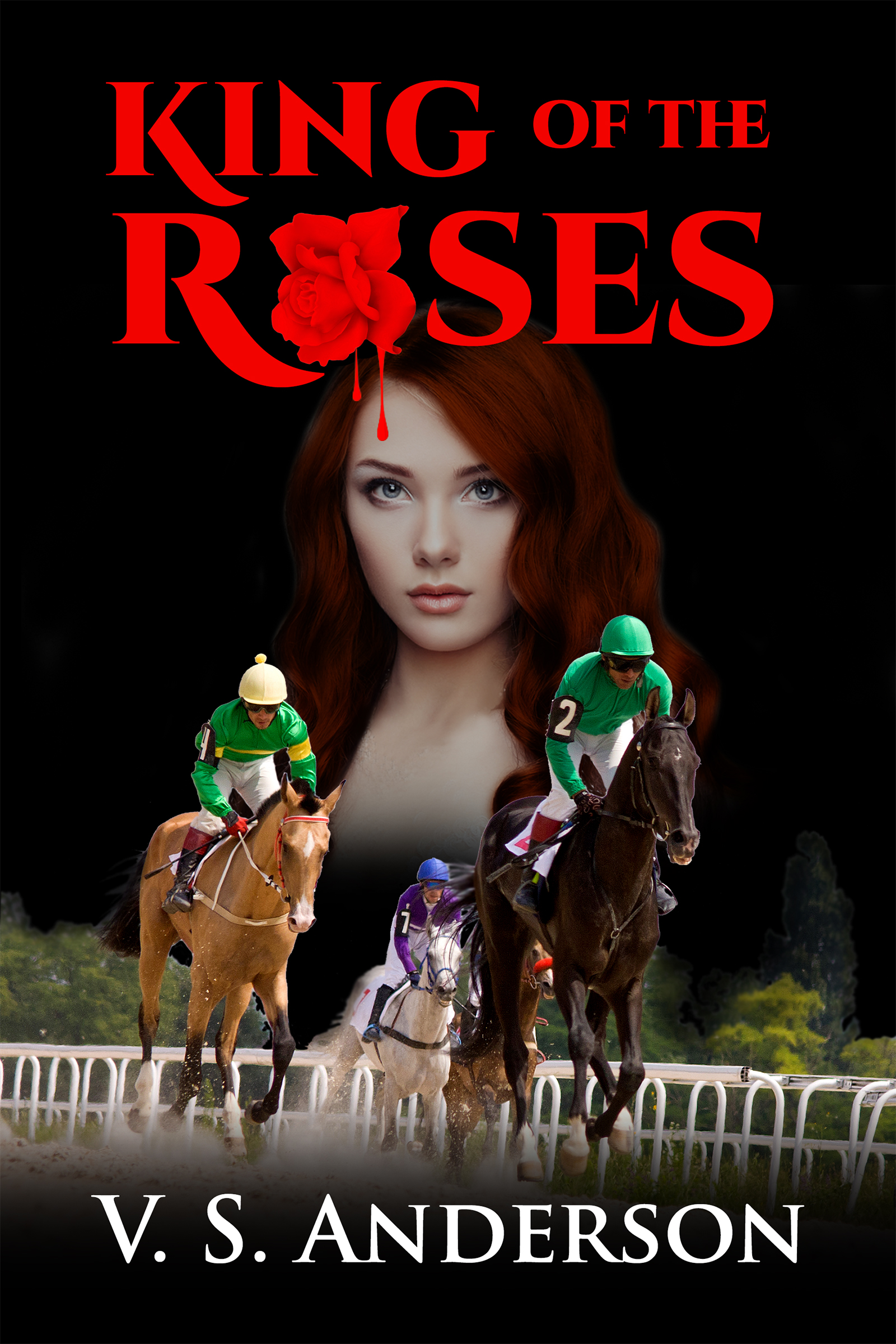
I could have written this post! Deborah Lee Luskin sounds like my cognitive sister. I agree with many of the comments as well. An article by a famous college writing scholar, Janet Emig, made the case in the 1980s that one reason writing works so well as a learning tool is that it involves mind, eye, and hand/body, giving information more ways to connect throughout our neural pathways–and this is doubly true for handwriting. Also, the effect generated by slowing down–time for incubation and connections to kick in–fuels creativity. And I’ll add one thing I realized when I had to retype the 500-page ms. of King of the Roses, before computers: transferring text from handwritten notebook to machine gives you the most amazing extra edit, especially for an over-writer like me; when I have to retype it, it’s a lot easier to ask, “Do I really need this?” So when you’re stuck or when you just want to see what flows out, try writing by hand. Make sure you’re in a nice place, with a pen or pencil that allows your hand and mind to flow. Enjoy!

Deborah Lee Luskin's avatarLive to Write - Write to Live

writing by handWhen I don’t know what I want to say, when I’m stuck in an essay or a scene or a business letter, or even when I’ve just been away on vacation and need to settle back at my desk, I always rediscover my voice by writing by hand.

Handwriting is like a fingerprint, unique to each individual; my handwriting’s lousy.

My handwriting has deteriorated in direct proportion to my keyboarding skills, which are fierce – and fast. Writing by hand slows me down, which is a good way to find my way to the page.

Writing by hand grounds me. It keeps my eyes focused on my words and my mind trained on my ideas, holding them long enough to scrawl them in ink on narrow-lined paper. The problem is that the scrawl is sometimes quite hard to decipher – even for me, even within minutes of scribbling them down.

View original post 309 more words

3 Comments

Filed under writing novels

10 Learnings Over 4 Years of Publishing

Sarah M. Cradit's avatar...and then there was Sarah

Become-a-writerI published my first book, St. Charles at Dusk, on September 26th, 2011. Four years have passed, and with them, more learnings than I could ever fully wrap my mind around. In those early days, I was a woman alone on an island, getting all my advice from Google. I didn’t know a single other author who had published their work.

Flash forward four years. I’m no longer a woman alone on an island, but one surrounded by hundreds of authors, thousands of readers, and years of experience (with many years still ahead). I have seventeen original titles out (and numerous boxed sets), and an endless quantity of ideas. I’ve been lauded by esteemed authors, and appeared on the USA Today Bestsellers list, twice. I’m nowhere near an expert, and far from perfect. I’ve had successes and setbacks, like any author, and I move forward knowing I’ll have more of both…

View original post 1,642 more words

2 Comments

Filed under writing novels

Things No One Tells You About Self Publishing

Reblogged on WordPress.com

Source: Things No One Tells You About Self Publishing

Leave a comment

Filed under writing novels

How to Reach Readers on Goodreads

I am just getting started on Goodreads. How do you use Goodreads? What advice do you have for getting an Author page noticed? I’m a complete novice, so let me know what you can add to this post from readers+writersjournal (which I reached through Chris the Story Reading Ape, as so often happens!).

readers+writers journal's avatarreaders+writers journal

finding readers on goodreads3 Steps to Connecting with Potential Readers

by Carmen Amato, via Book Marketing Tools

Serious readers live on Goodreads.com, the giant social reading site, and so should serious authors. Goodreads, which was acquired by Amazon in 2013, likely will integrate more with the big retailer this year. That means a new opportunity for authors.

The key to Goodreads for authors, which has had some unfortunate incidents of fake review bots and author bullying, is to establish and maintain a professional and polished author presence. Goodreads gives authors numerous opportunities to build that presence but the site is neither intuitive nor full of handy guides or tutorials. In addition, building your Goodreads author presence is best done on a computer. The site has a suite of apps for tablets and mobile devices but these don’t have the same range of options.

Here are my latest hot tips for finding your…

View original post 604 more words

Leave a comment

Filed under writing novels

Great Suggestion for Friends & Family Reviews on Amazon…?

I got to this through Chris The Story Reading Ape’s blog. Since I’m new to being published on Amazon, I appreciate all the advice of this sort I can get. Tweet to Amazon to support this!

chrismcmullen's avatarchrismcmullen

Background image from ShutterStock. Background image from ShutterStock.

REVIEW SUGGESTION FOR AMAZON

Friend and family reviews are a touchy subject among both authors and customers:

  • For the customer review system to be effective, customers need to be able to trust the system. This is why Amazon removes and blocks reviews suspected of being posted by the author’s friends or family members.
  • For the customer who posted the review, having it blocked or removed is time wasted, and discourages the customer from posting reviews in the future.
  • For the self-published author, an invaluable part of marketing entails creating personal relationships. Sometimes, the occasional personal interactions with a fan who didn’t previously know the author causes a book review to be blocked or removed.
  • Unlike the big publishers, self-published authors and indie presses can’t afford to send out hundreds of review copies to strangers. They can get friends to help get the ball rolling, except that…

View original post 761 more words

Leave a comment

Filed under writing novels

THE STORY OF GREEN RIVER WRITERS: History of a Successful Writing Group

This is the second post in the story of Green River Writers, a long-lived, successful writers’ group based in Louisville, Kentucky. In my last post, I introduced the president and founder, Mary “Ernie” O’Dell, and shared a little of her writing journey. Today I’m sharing the story of Green River Writers: how it started and why it’s thrived so long.River in Kentucky

First Days

The group was born shortly after Ernie met her second husband, Jim (she calls him her “real husband”).

We were both writers; he was living in North Carolina and I was living in Louisville—and there were no writers in my life except him and a few people that I met at writers’ conferences, so I thought, by golly, I need some other writers. So I called up a few of the people that I knew that wrote, and I said, let’s get together. Jim came up from North Carolina for a four-day weekend at Rough River State Park in Kentucky. We decided to have a real retreat in the summer of that year, 1986, I believe, and we couldn’t find housing cheap enough for all us poor people, so we rented a girls’ dormitory at Campbellsville College in Campbellsville, Kentucky, for a week at $5 a night per room. We changed from Rough River to Green River because the Green River flows right through Campbellsville.

At that time, we had 12 or 15 members. Campbellsville College (University now) was fairly conservative; they frowned upon us having men and women in the same building, much less on the same corridor. I went into the office and said, “I need to make something clear to you. When we come here, we no longer have men and woman, we have writers, and there are times when are up all night, there are times we need to consult with a fellow writer, and we don’t want to have to go down a floor or to a different building, so please put us all on the same corridor,” and they did. But they were watching us carefully. I got called on the carpet because downstairs in the public restroom, someone had left a beer can. I said, “Are we the only people in this building?” and they said, “Well, no,” and I said, “Well, we didn’t do it.” Another time someone went outside to smoke and came back and exhaled smoke into the hallway and they called me on the carpet for that. So I had to be righteously indignant many times while we were there.Eyeglasses and pen

Continue reading →

1 Comment

Filed under Green River Writers, Interviews, poetry, Writers' groups, writing contests, writing novels

INTERVIEW: MARY “ERNIE” O’DELL, PRESIDENT OF GREEN RIVER WRITERS—PART ONE

Today: Ernie’s Writing Journey

If, like me, you go through stages in your writing career where you feel isolated and in need of connections with other writers, you may have sought out a writing group–or perhaps even considered starting one. Of course, online resources let us share our writing and collect tips from a plethora of experts. But these tips can be generic, not specific to our needs, and even strong online critique groups can suffer from the limitation of all online “teaching”: the loss of body language and verbal cues and the difficulty of eliciting immediate responses when we have questions about a comment or need follow up.

Recently I’ve read and shared several posts about writing groups, and I’ve written before about my group and how I value it. Some commenters have mentioned joining groups that folded or that didn’t work for them. I realized that my group, Green River Writers, based in Louisville, Kentucky, is an example of a group that has held together for decades. What exactly does make for a successful, long-lived writing group?Book with heart for writers

One important factor in the group’s longevity and success is its founder and president, Mary “Ernie” O’Dell. I cornered Ernie to learn about how the group began and why it has succeeded.

Today’s post introduces Ernie and her journey as a writer—a journey many of us can identify with in some ways.

A little about Ernie

I immediately asked about one thing I’d often puzzled over: where “Ernie” came from.

It comes from Mary Ernestine O’Dell. Dad’s name was Ernest Forbis Houck. I was named after him and his friends called him Ernie, so when I got in junior high, and was asked what my name was, I said Ernie. So that’s where that was born.Stephen King quote

Three of Ernie’s novels have been published by Turquoise Morning Press in Louisville: Cyn, The Sweet Letting Go, and Banger’s People. I asked Ernie about the settings and ideas that fed into her books.

I grew up in West Virginia and the southern and eastern Kentucky region. All the books have the flavor of that region; two of my books involve the West Virginia coal-mining industry: Cyn and the one I’m working on now, which I’m calling “Hope” for the time being. [Hope is one of the main characters, a high-schooler who lives with her older sister Lily and their parents and siblings in a coal-mining town just at the outbreak of World War II.]

Cyn takes place in the neighborhood of little row houses where my daughter became friends with the next door neighbor when they were seven or eight. The opening scene, the little girls in the elderberry bushes getting elderberry stains on their clothes, that was me: I would play in the bushes behind our house with my little cousin and get stains on me and my mother would not like that.

The interesting thing about Cyn was that I wrote in five different points of view. When Sheri McClaren, my mentor, read the first draft, she loved all these characters except the little girl’s father. She needed to know why the child loved him, because she wouldn’t have loved him if he had been her father. So I had to go back and rewrite the little girl’s father, and in doing so I had to figure out where I found him, who he was, and why he was so judgmental and vindictive. I discovered that he was my first husband who was a minister for some years. Then I had to find out why this fictional person would be this negative. I made him the son of an alcoholic and youngest son of three brothers, two of whom were alcoholics; they all made fun of him the time. I had to really deepen his character so he wouldn’t be such a bad guy that no one would care about him.

I wrote The Sweet Letting Go a few years after my second husband (my real husband) died of lung cancer. I was his main caretaker, but I didn’t want to make it autobiographical. I turned the whole thing around to make the female the one with the serious illness with the male as her caregiver.

Books and ladder

Ernie’s Writing Journey

Ernie’s writing career began during her career as an elementary teacher in Louisville. Continue reading →

Leave a comment

Filed under Editing your novel, Green River Writers, Interviews, Learning to write, Writers' groups, Writing, Writing and teaching writing, writing novels

How Do You Keep Up Your Writing Productivity?

After a year and a half of blogging and working on a non-fiction project for the future, this summer I’m getting back into a fiction routine. I’m remembering how writing an 80- or 90-thousand word novel differs from blogging or posting Facebook updates. It takes some pretty effective strategies to ward off boredom, burnout, and the temptation to clean house instead.

My strategies probably differ from most people’s. I don’t have kids, and I’m retired, which is actually the only reason I can work on a novel at all. When I was teaching, first light saw me reading student research and papers; the rest of the day outside of class went to administrative tasks. But finally, now! A new routine!

Woman writing

Wish it worked this way!

I did worry that my new lack of structure would undercut this new chance to write. So I made myself some rules. So far, good prognosis: My new “Sarah” book is coming, words sneaking out onto the page.

I’m wondering whether these are the same kinds of rules that work for you, or whether you have tweaks to make them work even better. Let me know!

Write FIRST.

Some people actually write before daylight. I wish! First I read in the bathtub and then read the newspaper online. But when I begin my self-defined “workday,” Activity No. 1 is WRITING. Not blog posts, not query letters, not emails: no, writing on the book.

Write EVERY DAY.

Even on weekends. Okay, I confess, Saturday I’m going to a horse show, and I won’t write that day. Then there’s doctors’ appointments, taking the car for an oil change. Or the dog to the vet. Or, if you have kids, a thousand reasons to say, “I just can’t today!” But this next strategy is the one that keeps me writing almost every day:

Keep it DOABLE.

I developed this strategy when I was writing seminar papers in grad school and grading reams of student papers. Some colleagues would slog through twenty-five research papers at one sitting. Freed them up the next day, they said. But when you’re writing a novel, ten hours today won’t give you a free day tomorrow. And ten hours saps me, leaving me drained.

Man worrying about his writing

After 25 papers!

Instead, when I taught, I figured out how much I had to do each day to meet my deadlines. I’d do that, and no more. For my novel, I’ve been setting myself an easy, non-intimidating daily quota. Right now it’s one college-ruled notebook page. The secret, of course, is that when you get to the end of that page, you almost always keep going. But there are very few days when there’s not enough time to write just that one.

Find A GOOD PLACE TO WRITE.

In Florida that good place was in my canoe tucked into a quiet elbow on the Hillsborough River. Those live oaks just seemed to drip words. Sure, I would get distracted when a gator cruised down the inky river, or a wood stork slow-walked past. These days, I sit on my back deck with my feet propped on the railing. I admit I got distracted the other day when a bald eagle flew overhead. But there’s something about being outside, enveloped by trees and sky, that gifts me with language. Don’t know yet what I’ll do when the snow comes. I have a nice chair with a nice window. If I can keep the dog and the cats out of my lap, there’s hope.

A good place to write

Hillsborough River outside of Tampa

Find something FUN TO WRITE WITH.

Okay, for those who compose on a computer, this one is moot. But I’ve always done creative first drafts in longhand. I love having margins for ideas, reminders, or metaphors to try out. Transferring text to the screen gives me an amazing edit. When you have to type a sentence, it isn’t all that hard to ask, “Do I really need this?”

For years I preferred Schaeffer cartridge pens, black ink, turning the nib upside down for a finer line. My handwriting is small, and I loved the actual shape of the letters as they flowed onto the page. Those days of near-calligraphy are gone; now it’s all barely decipherable scribbles. Schaeffers became harder to find. I’ve switched to a refillable fountain pen, still turning the nib upside down.

And finally, STOP WHEN YOU KNOW WHAT’S GOING TO HAPPEN NEXT—SORT OF.

If I know, really know—that’s boring. But if I’ve created a situation, like Stephen King suggests, and plopped my characters on the verge of it, I seem to have given myself my own cliffhanger. Okay, Sarah and Nick have reached Enchanted Rock, and she worries he’s about to commit suicide. I know I’ll be back tomorrow to find out what happens next.
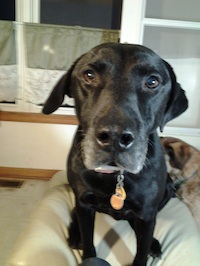
Bill, the dog, critiques

A dog in your face is always helpful

But here’s one of my main questions:

I’d progress faster if I wrote for longer stretches. Do you have a strategy for doing that? How do you keep yourself fresh to start again the next day? What other strategies help with your productivity? If you’re juggling family and a job, how do you get those words on the page?

Coffee mug for writers

Coffee helps!

7 Comments

Filed under indie publishing, Self-publishing, Writing, writing novels

Dun Writin’—Now Whut? – 56 ‘Shoulda Woulda Coulda’ (A series by Susan Uttendorfsky – Owner of Adirondack Editing)

Some fine grammatical distinctions that can easily get lost!

3 Comments

Filed under writing novels