Category Archives: indie publishing

#Bloggers Beware: You CAN get SUED for using Pics on your Blog…

Chris the Story Reading Ape posted this link; it’s important reading. For the record, the pictures I’ve begun using are from stock photo sites that state expressly that they can be used for blogs, book covers, web sites, etc. These sites use the terms “resale and distribution” in ways that I find confusing; for example, depositphotos, which I have used quite a bit, says that the regular license is fine for book covers, but then says this license is only appropriate for ebooks if the photo file plays “a minor role” in the product. Since many of the book-cover designers on Mark’s List at Smashwords use sites like this, it would seem to this non-lawyer that the images are available for such use in ebooks just as in regular books.
In any case, I have found the sites I’ve used to be easy and inexpensive. You can buy images for as little as $1.00. The article this post links to lists a number of free sites, including Creative Commons sites. When I checked out Wiki Commons, I wasn’t particularly impressed with the selection there; the pay (royalty-free) sites seemed to have a larger selection of what I was looking for.
Perhaps others can share their experiences and expertise on this topic!

Chris The Story Reading Ape's avatarChris The Story Reading Ape's Blog

Further to an update from my blog partner

Professional Editor Susan Uttendorfsky

Dun Writin’—Now Whut?

Sharing Content, Copyrights, and Permissions

54 Part 1 and 55 Part 2

also apply to using photos

See this blog post of a blogger who was sued over using a copyrighted photo,

even with a disclaimer:

By clicking on the image or link below:

image

bloggers-beware-you-can-get-sued-for-using-pics-on-your-blog

View original post

3 Comments

Filed under blogging, business of writing, ebooks publishing and selling, indie publishing, Self-publishing, Smashwords, writing novels

How Much Grammar Do You Need, Part V: Rules I’ve Seen Erudite People Break–

—but that other erudite people will definitely notice!

One of Joe Williams’s categories included errors erudite people make but no one notices. Even the erudite people preaching against the error make it and don’t catch themselves.
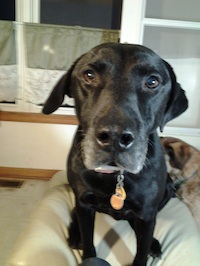
Bill, the dog, critiques

He tells me when I’m wrong!

But another category: errors erudite people DO notice, and react negatively to—the implication being that these are errors erudite people scrupulously avoid.

Ahem.

I recently read the following in the New York Times:

The Arlington police had went to the Classic Buick GMC dealership Friday just after 1 a.m. when a caller reported that a man was standing on top of a car in the lot “stamping on the windshield trying to break it,” according to a 911 call.

I’m not posting this here as a statement on the events being described (you can learn about that elsewhere.) I’m providing it because it commits—in the New York Times of all places!—one of those fairly egregious errors an agent or editor or any other “well-educated” reader definitely will notice—and judge.Sad Editing!

(Tip for that NYT writer: if “have” or “had” is part of the verb phrase, go with the past participle. Otherwise choose the simple past.)

So Rule #1 that won’t be overlooked is use the correct verb form!

Rule # 2 on this list: Know the difference between “its” and “it’s.”

Trivial? Absolutely. Will not knowing the difference really matter? In some cases, you bet.

I suspect this one results from writing too quickly and proofing on the screen with a deadline looming. If by some chance keeping these straight plagues you, there’s unfortunately no easy way to remember, unless it’s to go with the one that makes the least sense. You’d think a possessive, like “The dog chased its/it’s ball,” would take an apostrophe, wouldn’t you, since possessives are formed with apostrophes? But “its,” the correct choice, is kin to “her” and “his.” Just fix in your mind how silly “He ate hi’s supper” would look, and you may be able to remember to pick the one without the apostrophe.

While we’re on the subject of apostrophes,

Rule #3 on this list is do not form plurals with apostrophes.

I saw this done in the crawl on Good Morning America! But it’s like announcing that the writer has been reading more roadside veggie stands than novels.

Rule #4? Do not put commas in these two places.

Comma rules can look complicated. Recently I eavesdropped on professional editors trying to decide whether to insert a comma based on whether they heard “a pause” or not. But people hear pauses in different places. There are “rules” for commas. I find that the basic list of uses for commas in handbooks, or on sites like this one, make sense.

I consider commas one of the most important tools for clear writing. They mark off sections of sentences and help me, as a reader, know what’s coming next (are we still in the appositive, or have we returned to the independent clause?). In this post, I just want to emphasize two places where I’ve seen commas sneak in. (And my agent from years back said specifically that she’d stop reading a query the minute she spotted one of these.)

Forbidden place A) Between a subject and its verb. “Gloria, went out to lunch.” I don’t hear a pause there. Do you? Or, more understandably: “One of the reasons I don’t like that play, is. . . .” Here, the length of the subject phrase may make a writer feel as if it’s time for a pause.

The only time a subject should be followed by a comma is when some kind of “interrupting” element comes between the subject and its verb: “Gloria, however, hated the restaurant we’d chosen.” Or “Gloria, who hates Chinese food, went with us to the Chinese buffet because it was cheap.”

Forbidden Place B) After a coordinating conjunction.

The most dangerous place for this interloping comma is after the conjunction between two complete sentences: “I hope you will consider representing my novel but, I know you have many submissions to read.” The comma goes before the “but,” never after, unless there’s an interrupter, and then you need two commas: “I hope you will consider representing my novel, but, like all agents, you have many submissions to read.”

None of these errors directly impacts communication. At worst, they create little hiccups in the flow of the text. Except that, as Williams points out, error is in the eye of the beholder. What’s a hiccup for me might well be a coughing fit for someone else. Agents and editors qualify, at least in general, as erudite readers. Even if the staff of the New York Times didn’t catch that “had went,” they probably will.

Do you have your own candidates for rules you really can’t get away with breaking? Leave a comment and let me know!
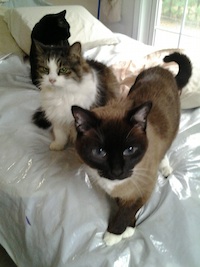
Cats as kibbitzers

They have their opinions, too!

Leave a comment

Filed under correct grammar for writers of fiction, Editing your novel, grammar rules for writers, indie publishing, Learning to write, punctuation for writers of novels, self editing for fiction writers, Self-publishing, style for writers, Writing, writing novels

I Continue to Learn about Publishing. . . .

Following up on the rather alarming article by Dean Wesley Smith that one of my earlier posts linked to, I wrote to some agents and publishing experts requesting their thoughts. Question marksDespite dealing with a family emergency, Victoria Strauss of Writer Beware took the time to write back with a compelling clarification of Smith’s more extreme claims. With her permission, I reproduce her reply here. You’ll note a link to a very thorough article on the issue of reversion-of-rights clauses in contracts. If you’re on the verge of querying or have an offer, this article is well worth your time.

Here is Victoria’s reply to my questions:

Taking your questions in order:

1) Is it true that “life-of-copyright” is now the industry standard,
so that rights never revert, regardless of the original publisher’s
intentions for the book?

Life of copyright has _always_ been the industry standard among large and medium-size publishers. This is nothing new, and I’m bemused that Dean Wesley Smith would say that it is.

I do think that a limited-term contract is far more desirable, if you’re going with a small press (and small presses do often offer limited-term contracts–though life-of-copyright is not at all uncommon in the small press world). But life of copyright doesn’t have to be a problem–as long as there’s a detailed, specific reversion clause that ties rights reversion to minimum sales (for instance, making rights reversion automatic on author request once sales drop below 100 copies in any 12-month period). I’ve written about this in detail here: http://accrispin.blogspot.com/2012/04/importance-of-reversion-clauses-in-book.html .

Unfortunately, it’s not unusual to encounter life of copyright contracts that _don’t_ have adequate reversion clauses–especially in the small press world, where people often don’t know what they’re doing. You may be able to negotiate to add a good reversion clause–my agent has negotiated sales-dependent reversion clauses into all my contracts since at least the early 2000’s–but, depending on the publisher, you may also choose to walk away from a life of copyright contract offer with inadequate reversion provisions. It’s definitely something to watch out for. But the reality is a lot more nuanced than what’s presented in Dean Wesley Smith’s post.

2) Is it true that authors who were once seen as “midlist” should
now assume they will most likely be offered $5000 or less as an
advance? (I received that amount for my first novel, but much more
for subsequent submissions that definitely did not quality as
“best-sellers,” though they sold respectably.)

Advances have generally fallen, especially since the 2008 economic downturn. But they are all over the map, so it’s impossible to make a blanket declaration. Advance amounts depend on all kinds of factors, including your agent (or if you have one; authors without agents tend to get lower advances), the publisher (smaller publishers generally offer smaller advances), what the publisher’s expectations of your books are–and, unfortunately, if you have a publishing track record, the sales of your previous books. In any case, if your sales are good, you’ll get the money owed to you regardless of the advance amount.

As for the whole “midlist” thing (that word doesn’t mean what it used to)–a lot has changed in the publishing world over the past 15 to 20 years, and one of the things that’s changed most is how hard it is to stay in the game. I don’t think it’s any more difficult to break into traditional publishing than it ever was (possibly easier, given the huge volume of books that are being published), but it is a lot more difficult to maintain a career, especially if your sales aren’t stellar.

   3) the proliferation of “royalty only” publishers. How are such
entities regarded in the industry at present? Is this a coming wave?

This really is a phenomenon only in the small press world, which has expanded hugely over the past 15 or so years thanks to digital technology. These days, anyone can set up a publishing company just by registering with CreateSpace or LightningSpark. One of the ways many small presses try to limit their financial outlay is to eliminate advances. This is extremely common, and has been for some time. However, don’t believe anyone who tells you that advances are becoming less common among large and medium-sized publishers, or that debut authors no longer receive advances. This simply isn’t true.

There are some great small presses, but an awful lot of amateur and predatory ones whose staff know little about editing, production, design, and marketing. When Writer Beware was founded in 1998, we mostly got complaints about literary agents and scam vanity publishers; these days, small press problems make up by far the biggest volume of complaints we receive. In many cases, self-publishing is preferable.

– Victoria

1 Comment

Filed under business of writing, ebooks publishing and selling, Finding literary agents for writers, indie publishing, Money issues for writers, Myths and Truths for writers, publishing contracts, reversion of rights clauses, Self-publishing, Working with literary editors, writing novels