J and L made so little money off me that I am truly glad they even took the time to do what they did. They made 15%. I assure you they did not retire on that. I owe them much. I just wish I had called on them more and perhaps more insistently. I think I could have learned a great deal that I did not. I think they could have saved me some heartache if I had just asked.
Tag Archives: writing novels
Brave souls
So J and L had a 700-page manuscript to deal with.
Admittedly their investment was small–from the writer’s point of view, anyway. They had to pay whatever it cost them (before email and Facebook) to get it to publishers. They had to “talk it up” at lunches in New York, but I assume that my book was one of many they pitched. I guess they spent some time on the phone, but not, I also assume, long distance. They had to read it, of course, in order to decide they wanted to invest even this much. So these were their losses if the book did not sell.
Mine? I didn’t figure those. As far as I was concerned, I was going to write it anyway, whether it ever sold or not. I suppose I should have calculated opportunity costs. Could I have become a millionaire if I had invested all those hours in learning to beat the stock market or in becoming much sooner what I eventually became, a university professor? (Of course I would have been a biologist if I had planned better, not a writing teacher. Moms, don’t let your babies teach writing. . . .) But all I wanted to do was ride horses and write. Two guaranteed ways not to make money. But I have never regretted writing that book. Or riding horses. But that’s another story.
J and L said, we don’t like to edit. We don’t want to impose our views on what the editor will want, when you get one. At the time, that seemed smart. For that book, it probably was. But later, I wished I could have relied on them more as strong, knowledgeable readers. I have come to see readers willing to plow through and respond to drafts as essential to any writer’s attempts to find a market. Now I am hungry for the simplest chance to talk to someone about my work.
Being Trolled
Why agents go to conferences is not a mystery. They think, perhaps with good reason, they’re going to discover the next John Grisham, a prolific but hitherto undiscovered writer who has struck a vein without noticing that what is flowing out is lifeblood. I wonder, if one could ever know, what the stats are. How many eventual bestselling authors are discovered at conferences versus those who are “discovered” through steadfast efforts at publication in small magazines or through driven submissions to slush piles? No one seems to calculate such odds.
I do think that one stands a better chance of being “discovered” by new, hungry agents who hope to find and promote the next John Grisham than by those who already have quasi-John-Grishams in their “stables” (sorry to offend any agents happening by with my barnyard metaphor). That is what happened to me. J and L had both been editors at major publishing houses. They had decided their future lay in agenting rather than editing, and from the little I really know of what editors even at major houses get paid and what they go through, I suspect they were right. So they came to the conference I had recently begun attending, and there they “discovered” me and my seven-hundred-page manuscript.
L told me later, “When I saw you, I thought, ‘This girl has something to do with horses.'” I do not reveal this as a very good strategem to getting published: looking like you have something to do with horses. Or maybe it is. I have lost the ability to tell what might be the deciding factor. Oddly, I remember the dress I was wearing. It was powder blue and flowing, a bit longer than the dresses and “hot pants” I wore a decade earlier when I was writing the novel. I was a blonde then. I looked like I had something to do with horses. This sold. They asked me to send them the ms.
I conference
A lot of the chronology has blurred. This was all so long ago that “far, far away” refers to next door in comparison.
But.
I did undergraduate work at a Florida university. Because all I wanted to do in life at that point was ride horses, I didn’t finish: stopped 31 hours short of an English degree. But I had contacts there, whom I bugged with my deathless prose. The first professor I asked to read my opus was gentle and generous but not much help. I don’t recall what he said about my book. I do recall he had kept a test of mine on the metaphysical poets. “You’re the girl who writes really, really small.” (I may be allowed to brag that he’d kept the test because my answers were really, really good, not because he liked small handwriting. I have always been a good taker of every kind of test.)
I knew of, but had not taken courses from, a genial older professor who ran a yearly writers’ conference. I begged him to read one of my best chapters. He told me, “If the rest of it is as exciting as this, I don’t see why you can’t get published.”
Of course, the whole point is you can’t tell whether it’s all that exciting. Only readers can tell you that.
Anyway, it must have been that very spring I went to his conference. It was one of those that early on saw the benefit to inviting actual agents and actual editors to come and troll for new authors.
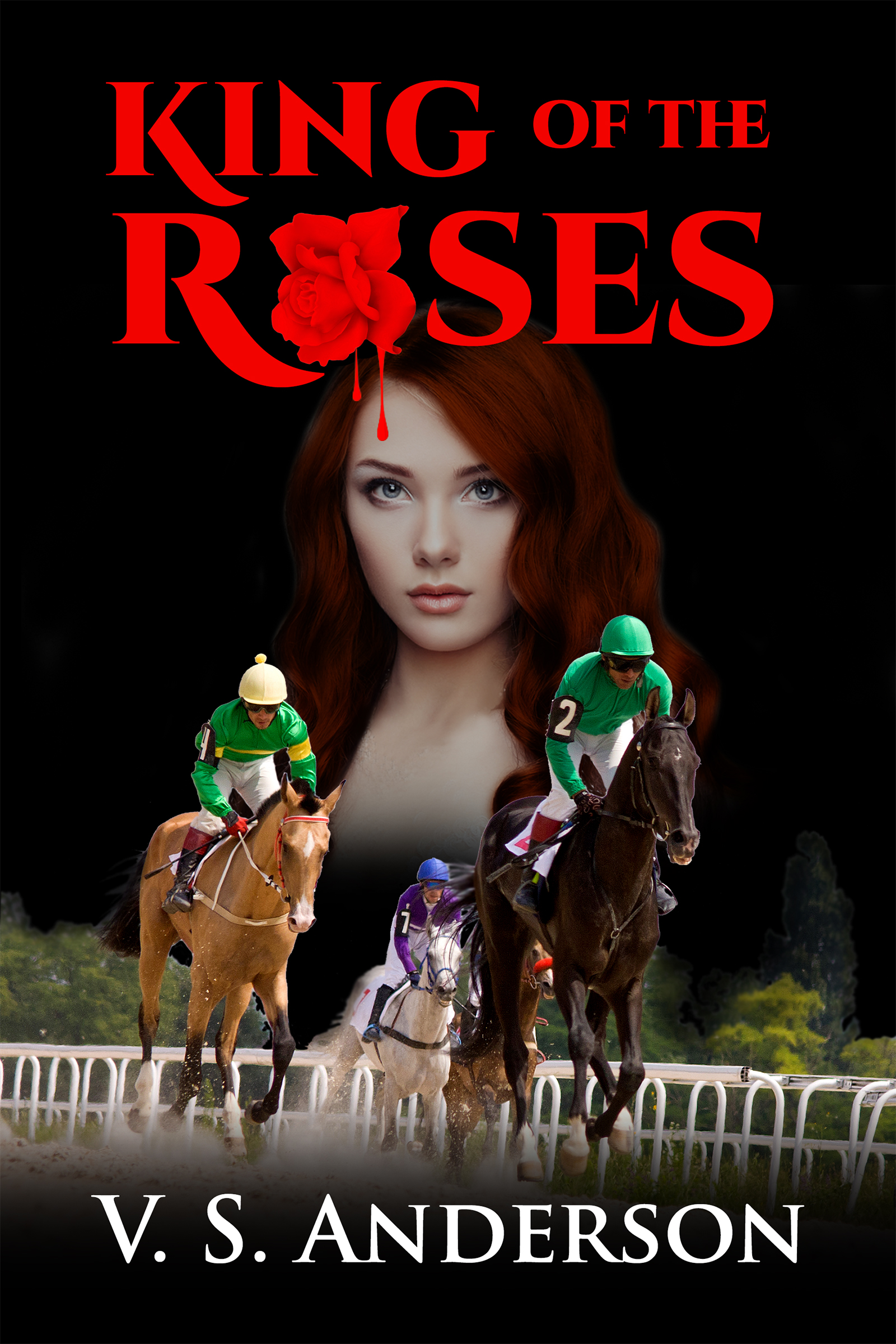
I have these things to say about my eligibility for getting trolled for: I was young. I was pretty. I had what might be called a “fresh innocence.” I smelled like the outdoors. I had a complete manuscript about the Kentucky Derby. I was trollable.
I was trolled.
Let me tell you my publication story
I’ll just get it started here.
I’m just one of those people who always wrote. Long narrative poems full of excitable adjectives and labored rhymes when I was ten. Whole novels in pencil about wild horses when I was eight. A rather strange novel a friend said was full of homoerotic subtexts (she didn’t use either of those words but that’s what she meant) when I was sixteen. A lyric prose/poem about my equally strange infatuation when I was twenty-five.
You’re not really going to hear about any of those, so stop salivating.
I had a labor of love. I won’t go into the details (I said don’t salivate). I wrote and wrote on it, version after version, convinced it was a story worth telling, for at least ten years. At one point, I went away for a month to do nothing but write. Wrong. I produced drivel. Of my beloved character, whose voice I had so carefully echoed in a hundred typed pages, a friend and sweetly masochistic reader said, “I got sick of hearing him whine.” Back to wondering what this story was about and why no one loved him like I did. My best reader turned out to be my sister, who said of a later and less annoying draft, “This is a character sketch, not a novel.” Back to drafting. Make some things happen. Let people get killed. Joy.
It came out to 700 pages. It had a wonderful beginning. I knew the day I wrote that first paragraph I had nailed it. It had an existentially tragic and profound ending. I had a feeling I hadn’t nailed that, but I was stubborn. My character’s glorious adventure had to end in an abyss of ironies. Only then could I be writing a great novel.
(Truth #1–or have I already listed some truths?): Endings are HARD.
So I began the Sisyphean task of sending bits of it out to the editors listed in Writers’ Markets. I don’t think in those days one wrote query letters; in any case, I didn’t know I should. You know how that effort ended. You’ve been there.
I don’t begin to remember any of the rejections I got.
Then I discovered writers’ conferences. The next chapter begins.
Filed under Myths and Truths for writers
Help!
The motto of the writers’ group I attend each month is “Writers Helping Writers.” As much as I believe we do help each other, and as much as I would never be without a writers’ group, finding the right kind of help can be a nightmare for a writer.
My group can do a lot of wonderful things. It can tell me when I’ve written an ambiguous sentence. It can tell me when it’s not clear who’s talking. It can tell me that (not when because they usually are) the chapter is really easy to follow and maybe even interesting. It cannot tell me whether my book is working or not.
See, I don’t write short stories. This is not a boast. I wish I could. I keep sort of poking at the possibility. But my mind doesn’t traffic in elliptical elegance. It likes narrative and jumbles of cause and effect and explosions portended by the long, spitting self-immolation of a lit fuse. Moreover, I realized long ago that in order to write a decent short story, you had to work just as hard, know your characters just as well, understand a whole universe just as completely, as to write a novel, and you did all this for just possibly fifty bucks. Who wants to work that hard for fifty bucks and maybe some free copies? Must be somebody who loves language more than I do. And to love language more than I do, you have to be pretty extreme.
I sometimes write poems.
But back to the point. When you write novels, you take a chapter at a time to monthly meetings. If you have a book with forty-four chapters, you’re talking about forty-four months to get through it all. Nearly four years. During this time, group members come and go; the newer ones can’t even understand what the chapter is about because you don’t have an hour to catch them up on what they’ve missed. Even the mainstays have a tough time remembering what happened in last month’s installment. It’s useful to know that what happens in a given chapter rings true, but it would be nice to know whether the character arc is proceeding apace and whether the themes you thought you were building actually exist. Can’t tell that from writers’ groups.
That said, a writers’ group is essential. You can’t tell that you’re not making sense until someone tells you you’re not, and writers’ groups are wonderful at saying, “I can’t visualize this setting from your description”; “On page 2, you told me these two people didn’t like each other, but on page 4 they seem to be buddy-buddy”; “I don’t know why she said that, seems odd in this context.” Etc. Important feedback. Essential. But I’m pretty good at those kinds of things. I’m not good at plotting. My plots turn byzantine and, in the words of one reviewer, “dilute the suspense.”
So if writers’ groups are limited in what they can offer, what?
For the future: I do know some ways to get that next layer of help.
Filed under writing novels
How to Write a Failed Novel, Part 2
You can believe in Myth 2: Good writers don’t need help. All they need is genius. As a student of mine in a college writing course once wrote in his evaluation, “Writing is about showing your genius to the world.”
Oh, yeah?
All right, there are geniuses out there. I’ve never taught one. But I’ve taught lots of students who thought they had genius. If I didn’t swoon over their writing, I was revealing my philistine ignorance. Only geniuses know genius when they see it.
I just remember too well when I thought I had a flicker of genius, and how painfully I learned that I don’t.
What I did learn, and what I tell students: You don’t know what you’ve written until somebody reads it and tells you.
This isn’t a bad thing. Sometimes a reader tells you things about something you’ve written that you never dreamed you were saying, and you find that you don’t mind saying it at all.
Another way of putting it: Texts belong to readers. Once that page leaves your hands, they’re going to do with it what they like. You thought it was about the power of love; they think it’s about surviving betrayal. You thought it was about truth; they think it’s about family. They don’t write you back and ask. They read the way they want to read.
Here’s a quote that I now use to open my syllabus each term:
“The existence of the text is a silent existence, silent until the moment in which a reader reads it. Only when the able eye makes contact with the markings on the tablet does the text come to active life. All writing depends on the generosity of the reader.”
–Alberto Manguel, The History of Reading (qtd. in Stanislas Dehaene, Reading in the Brain: The New Science of How We Read 12)
All writing depends on the generosity of the reader. How many of us, when we write, ever really think about readers that way?
And if you haven’t read Reading in the Brain, I highly recommend it. A wonderful window on what goes on in our heads when we read.
Filed under Myths and Truths for writers
There’s something gained. . . .
It’s not that I didn’t gain anything from this experience. Now, when I teach creative writing (which I do less often than I might, because so many people in my program want to do it), I know what to tell my students not to do.
Here’s Rule Not To Do #1: Don’t write for yourself.
I can hear the shrieks of protest now.
I suppose I do need to qualify. If you hate what you feel you have to write, why do it?–unless somehow you discover that you can make a million dollars by forcing yourself to do it. But yes, above all, if you’re to keep doing it without becoming rich, you have to enjoy it yourself; you have to take some pleasure from what you’re doing. I’ve read plenty of testimonials from people who say that they succeeded as commercial writers by writing the kinds of books they’d like to read.
But in the process of doing that, they’re putting themselves at least somewhat in the minds of readers. That’s the key.
Because the easiest way to write a failed novel is to do what I did: Write what you love to hear yourself saying. Write what sounds just lovely every time you read it aloud. Admire your metaphors, your sentence rhythms, your choices of such idiosyncratic, tantalizing words. Write what you like to hear.
I tell my students, whether they’re writing fiction or research papers or magazine articles, that once they leave college, nobody ever again has to read a word they write. They have to give people a reason to commit even five minutes to hearing what they have to say. In college, your teacher has to read it, your classmates have to read it–but once you’re out, you have to compete with reality shows on TV (at this historical moment, I use American Idol as my example–or Dancing with the Stars). When readers give you their time, they’re giving you something precious. You better earn it. If you’re one of those lucky folks for whom what sings in your ear sings in everyone else’s, more power to you. That wasn’t the case for me.
So remember that writing is communication.
I have to admit I still have trouble finding the exact line between what I want to write and what I want to communicate. But when I wrote my failed novel, I think I was just too far my side of that line.
Filed under Myths and Truths for writers
How to Write a Failed Novel: Part 1
For those who can’t live without this information.
So what do I mean by “a failed novel”?
I mean a novel that sounded exciting when you wrote the first pages. A novel that still sounded exciting deep into the bliss of writing. A novel you had no trouble dashing through, day after day. A novel that made you love words and what you could make them do.
. . . . And a novel that, when you read the galley proofs, turned out to be terrible. Even you knew it was terrible. And you didn’t know what to do.
They’d already paid you the money. You’d already paid a year’s estimated taxes. You’d spent what was left so you could keep on writing. You couldn’t pay it back.
And you couldn’t pay what it would have taken to fix it. Even to fix what you knew how to fix.
And you couldn’t talk to your editor. You’d already found that out the hard way.
So how did this come about?
Well, for one thing, it happened because I didn’t know that a lot of what I thought I knew about writing for publication was myth. Wrong. And because I didn’t know important things about myself.
Maybe these things aren’t myths to you. Maybe they’re truths. If so, let me know. Continue reading
Filed under Myths and Truths for writers


 Just Can't Help Writing